Which Georgia County Kills the Most Deer
Every Georgia deer hunter has probably, at some point, scrolled through harvest reports or chatted with buddies, wondering where the absolute most deer are being taken. It's a natural curiosity, especially when you're trying to figure out where to focus your efforts for the upcoming season or simply understand the lay of the land across our beautiful state. Trying to pinpoint that one magical county can feel like searching for a needle in a haystack of data, but this guide is here to break down what those numbers really mean and help you understand which parts of Georgia consistently lead in deer harvest.
Understanding Georgia's Deer Harvest Data
When we talk about which Georgia county "kills the most deer," it's easy to jump straight to a mental image of a single, overflowing butcher shop. But the reality behind those harvest numbers is a bit more nuanced than just raw totals. It involves everything from how data is collected to the sheer amount of accessible land and the number of passionate hunters out there. Understanding these factors is key to interpreting the data and applying it to your own hunting strategy.
Deciphering Harvest Reports and Their Limitations
Georgia's wildlife agency does an excellent job of collecting data through their Game Check system, requiring hunters to report their kills. This gives us a treasure trove of information, including total deer harvested, broken down by antlered bucks and antlerless deer, and even by the method used (archery, primitive weapons, firearms). You can dive into this data and see county-by-county breakdowns, which is exactly what sparks the "which county kills the most" question.
However, it's crucial to remember that these are harvest numbers, not necessarily a direct measure of deer density or "best hunting." A county might show high harvest simply because it has a huge land base, a large number of hunters, or an extended season. It doesn't always mean that individual hunter success rates are higher, or that every square acre is teeming with deer. For example, a smaller county with fewer hunters might have fantastic deer hunting but won't show up at the top of a total harvest list because there simply aren't as many opportunities or people hunting there. It's about scale and opportunity as much as it is about absolute deer numbers. The data also doesn't always account for every single deer taken, as reporting compliance, while high, is never 100%.
Public vs. Private Land Contributions
A significant portion of Georgia's deer harvest, especially the truly high numbers that push a county to the top, comes from private land. This isn't a knock on our incredible public lands, but it's a simple fact of economics and land ownership. Private landowners, hunting clubs, and agricultural operations often manage their properties specifically for wildlife, including deer. This can mean food plots, timber management, and controlled hunting pressure, all contributing to healthy deer populations and higher harvest potential.
Wildlife Management Areas (WMAs) and other public lands certainly contribute to the overall state harvest, offering fantastic opportunities for hunters who might not have access to private ground. However, when you look at overall county harvest totals, the counties with vast stretches of productive private land, particularly those with significant agricultural acreage, tend to dominate. Public lands often have higher hunter densities per acre and more restrictive regulations or shorter seasons, which can impact the total harvest, even if the individual hunting experience is phenomenal. For hunters primarily focused on public land, checking out resources like Public Hunting Land in Georgia can help pinpoint specific areas that consistently produce, even if they're not in the "top" county for overall deer killed.
The Perennial Top Deer-Producing Counties
When you look at Georgia's deer harvest data year after year, a pattern emerges. Certain counties consistently appear at the top or near the top of the list for total deer harvested. These aren't always the counties that produce the biggest bucks, mind you, but they are the ones where hunters are taking the most deer overall.
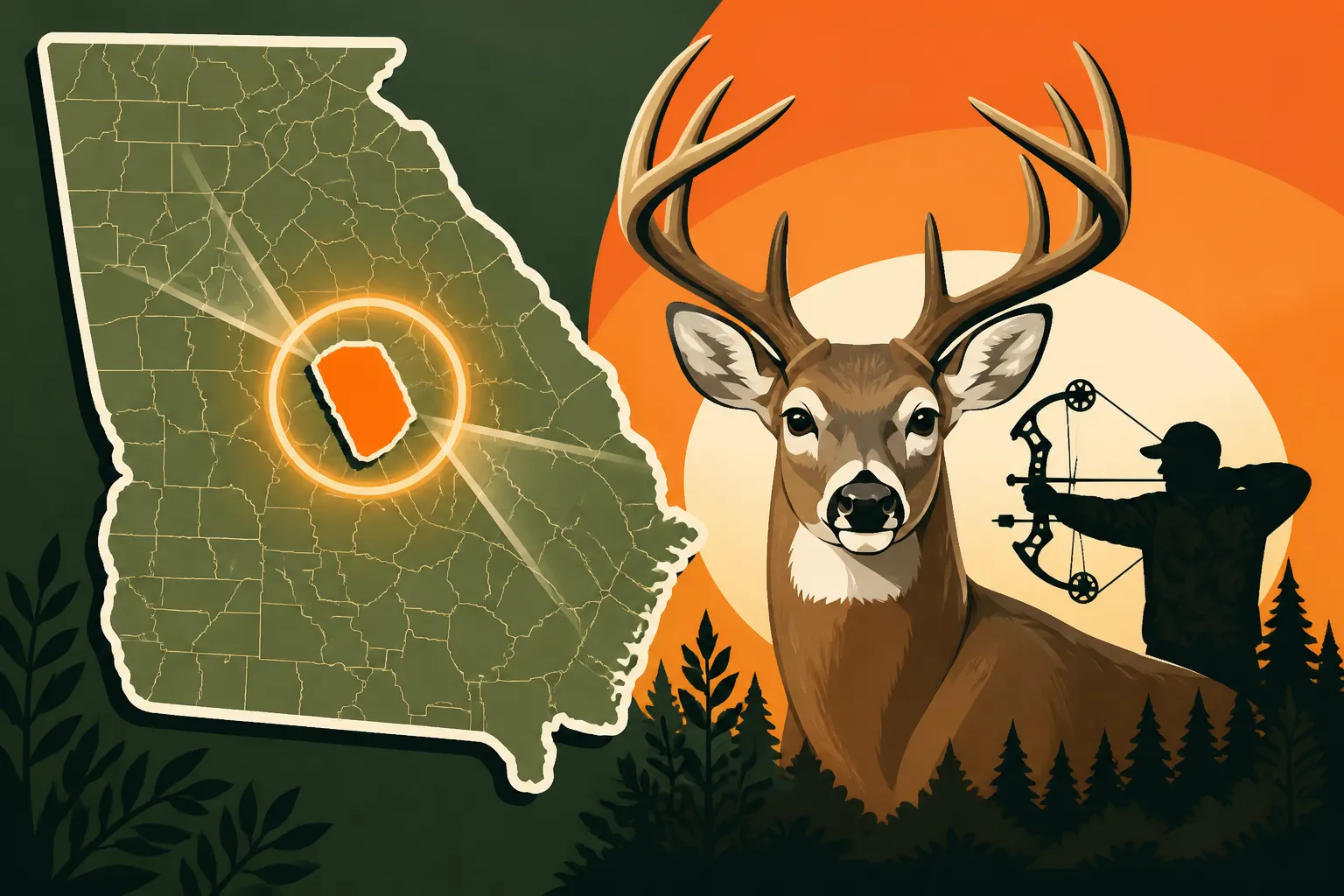
While specific rankings can shift slightly from one season to the next, counties with a strong agricultural base and extensive timberland are often found leading the pack. Historically, places like Houston, Laurens, Burke, Washington, and Taylor counties have demonstrated impressive harvest numbers. These counties are generally situated in the Piedmont and Upper Coastal Plain regions, where a rich mix of habitat features supports a thriving deer population.
Key Characteristics of High-Harvest Counties
What makes these counties such powerhouses for deer harvest? It's typically a combination of several factors:
- Abundant and Diverse Habitat: The top counties usually boast a mosaic of habitats. Think vast agricultural fields (corn, peanuts, soybeans) providing endless food sources, interspersed with hardwood creek bottoms, pine plantations, and dense thickets for bedding and cover. This diverse landscape ensures deer have everything they need to thrive year-round.
- Strong Deer Populations: Simply put, these counties have a lot of deer. Years of good management, favorable weather, and robust habitat have allowed the populations to grow and sustain themselves, often with high deer densities per square mile. You can often see this reflected in general figures like the Georgia Deer Population Estimate and Deer Density by Georgia Region reports.
- Significant Private Land Acreage: As mentioned before, a large amount of private land, particularly that managed by hunting clubs or landowners with a focus on deer, contributes heavily. These properties might feature year-round food plots, selective timber harvesting, and a more controlled hunting pressure that allows for a higher overall take while maintaining population health.
- Lower Human Population Density (relatively): While not exclusively rural, these counties often have fewer sprawling urban areas, meaning more undeveloped land available for deer habitat and hunting. This reduces habitat fragmentation and provides larger contiguous areas for deer to roam.
Regional Differences in Deer Abundance and Hunting Pressure
Georgia is a geographically diverse state, and deer populations, along with hunting pressure, vary significantly from one region to another.
- North Georgia Mountains: This region, encompassing areas like the Chattahoochee National Forest, tends to have lower deer densities due to rugged terrain, dense forest cover, and less agricultural food sources. While it can produce some truly impressive, older-age-class bucks, the overall harvest numbers per square mile are typically lower than in other regions. Hunting here is often more physically demanding and requires different tactics, as outlined in guides like Treestand Setups in North Georgia Mountains.
- Piedmont Region: This central belt of Georgia, characterized by rolling hills, mixed pine-hardwood forests, and a fair amount of agriculture, often boasts excellent deer numbers. Many of the consistently high-harvest counties fall within this region. The blend of food and cover allows for high densities, and private land hunting is very popular. Hunters often find success here by Hunting Piedmont Farmland Deer.
- Coastal Plain / South Georgia: This expansive southern portion of the state is a deer hunting paradise. With extensive agriculture, vast pine plantations, and river bottoms, it offers incredible habitat. Deer densities can be exceptionally high, and the extended hunting seasons in some areas contribute to substantial harvests. This is where you find many large plantations that practice intensive deer management, contributing significantly to county totals. Hunting South Georgia Plantation Country delves deeper into this experience. The opportunity to harvest many antlerless deer under the Filling a Twelve-Deer Bag Limit is very real here, which boosts overall numbers.
The table below illustrates the general characteristics that often correlate with high deer harvest, though specific numbers vary annually.
| Characteristic | North Georgia Mountains | Piedmont Region | South Georgia / Coastal Plain |
|---|---|---|---|
| Deer Density | Moderate to Low | High | Very High |
| Habitat Type | Rugged forest, mixed hardwoods | Mixed agriculture, pine-hardwood | Extensive agriculture, pine timber, swamps |
| Average Buck Age | Can be older, elusive | Good age structure | Good age structure, high recruitment |
| Hunting Pressure | Moderate (public land can be high) | High (especially private land) | Moderate to High |
| Primary Food Sources | Acorns, browse | Agriculture, acorns, browse | Agriculture, browse, planted pines |
| Typical Harvest | Lower total numbers, quality bucks | High total numbers, good quality | Highest total numbers, good quality |
Factors Influencing Deer Harvest Numbers
Understanding which counties report the most deer is one thing, but knowing why they do is even more important for a hunter. It's not just about deer density; it's about the entire ecosystem of land use, habitat, and human activity. These elements combine to create the conditions that allow for robust deer populations and, consequently, high harvest numbers.
Habitat and Food Sources
The old adage "food, water, and cover" rings true for deer, and nowhere is it more evident than in Georgia's top deer-producing counties. These areas are typically a smorgasbord of everything a deer could want:
- Agricultural Abundance: This is a massive driver. Counties with extensive corn, soybean, peanut, or pecan operations provide a nearly endless buffet for deer, allowing them to pack on weight and support higher densities. Deer don't have to travel far to find high-energy food, which leads to better fawn survival and healthier adults. These crop fields often become prime hunting spots, especially during phases like Hunting a Standing Soybean Field or Entry Routes Through a Standing Peanut Field.
- Diverse Timber Management: A mix of mature hardwoods (especially oak flats for acorns), regenerating clear-cuts, and pine plantations (both young and mature) creates ideal cover and secondary food sources. Young pine plantations offer incredible bedding and browse, while mature hardwoods provide mast crops crucial for deer health, particularly Hunting After a Poor Acorn Year.
- Water Sources: Georgia is blessed with numerous creeks, rivers, and swamps. Counties crisscrossed by these water features provide consistent hydration and often feature rich bottomland soils that grow lush vegetation, offering both food and sanctuary. Hunting Georgia Swamp and River Bottom Deer is a distinct and often productive strategy in these areas.
Essentially, counties that hit the jackpot with a healthy blend of agriculture, diverse timber, and reliable water sources are almost guaranteed to support more deer, leading to higher harvest numbers.
Land Use and Hunter Access
The way land is used and who has access to it plays a huge, often underestimated, role in deer harvest statistics.
- Private Land Dominance: As previously mentioned, private land is where the vast majority of deer are harvested in Georgia. Counties with large tracts of privately owned timberland or farmland that are managed by hunting clubs or leased to hunters will naturally see higher overall harvest numbers. These areas benefit from consistent, often selective, harvesting strategies that keep populations healthy and balanced with the habitat. This is different from public land, which, while great, often deals with higher and less predictable hunter pressure, impacting deer behavior and harvest rates.
- Hunting Lease Culture: Georgia has a strong tradition of hunting leases and clubs. In many high-harvest counties, significant portions of the private land are leased out, providing dedicated hunters with consistent access and the ability to implement management practices. This concentration of hunting effort, combined with good habitat, drives up the county-wide harvest totals. Tools like GoHunt can be invaluable for understanding property lines and potential access points when scouting.
- Proximity to Hunter Populations: While not always the case, counties that are within a reasonable driving distance of larger population centers might see more hunting pressure simply due to convenience. More hunters in the woods, even if individual success rates aren't extraordinary, can translate to higher overall harvest numbers for that county.
Local Regulations and Management Zones
While Georgia has statewide regulations for deer hunting, specific areas might have unique rules or fall within special management zones that influence harvest.
- Chronic Wasting Disease (CWD) Management Area: Georgia established a Georgia's Chronic Wasting Disease Management Area in certain counties after the detection of CWD. These areas often have enhanced surveillance and specific rules regarding carcass movement, and while the goal is disease management, they can influence hunter behavior and reporting within those zones. Mandatory testing and specific rules can make hunting more complex, but the overall aim is to maintain a healthy herd.
- Quality Deer Management (QDM) Programs: Some private lands or even specific WMAs might implement their own QDM strategies, which often involve passing on younger bucks to allow them to mature. While these programs are designed to improve buck age structure and overall herd health, they might temporarily shift harvest toward more antlerless deer or older, larger-antlered bucks, impacting the type of deer harvested rather than just the total number.
- Extended Seasons: While most of Georgia follows a standard season structure (e.g., How Georgia's Deer Season Runs Archery to January), certain areas, like Southwest Georgia, have The Extended Southwest Georgia Season which can allow for hunting into late January. This extended opportunity naturally contributes to higher total deer harvests in those specific counties simply by providing more days in the field.
Beyond the Numbers: Finding Your Own Best Hunt
While knowing which Georgia county kills the most deer is interesting, and gives you a general idea of high-density areas, it's really just a starting point. The true art of hunting lies in finding your best hunt, which might not always be in the county with the highest overall numbers. Sometimes, it's about quality over quantity, or simply finding a spot where you can consistently be successful and enjoy the experience.
Leveraging Data for Personal Scouting
Think of the harvest data as a wide-angle lens, showing you the big picture. Now it's time to zoom in. Once you've identified regions or counties that consistently perform well, or even areas that simply appeal to you for their habitat type, it's time to get specific:
- Detailed Map Study: Use online mapping tools or apps like GoHunt to scrutinize aerial photos. Look for the habitat components we discussed: field edges, pinch points, creek bottoms, dense cover, and transitions between different timber types. Understanding how deer move through an area is critical. You can learn a lot by Reading Aerial Photos for Piedmont Deer or Finding Sign in Big Chattahoochee Timber.
- Ground Scouting: There's no substitute for boots on the ground. Visit during the off-season, or even just before the season opens, to look for deer sign (tracks, droppings, rubs, scrapes), identify bedding areas, and pinpoint travel corridors. Scouting Georgia Public Land Before Season is a non-negotiable step for public land hunters. This personal recon will give you a much better feel for the local deer activity than any broad county data ever could.
- Utilize Public Land Resources: If public land is your focus, dive into WMA maps and specific hunt regulations. Some WMAs have excellent deer populations, even if their county as a whole doesn't top the state list. These areas are managed specifically for wildlife and hunter access, and sometimes offer truly exceptional hunting if you're willing to put in the work.
The Importance of Local Knowledge and Adaptability
Even the best data or a perfect map won't replace genuine local knowledge and the ability to adapt to changing conditions. Deer are constantly on the move, influenced by weather, food availability, and hunting pressure.
- Understand Local Deer Movement: Deer movement patterns can vary significantly even within the same county. Knowing when
The Georgia Rut in Mid-Octoberpeaks in your specific area, or how deer use a particular funnel Hunting a Funnel Between Two Swamps, is far more valuable than a county-wide harvest number. - Adapt Your Tactics: Be prepared to change your approach based on what you're seeing in the woods. If deer aren't using one food source, where are they going? Is the pressure too high in one spot, forcing deer to seek refuge elsewhere? Whether you're Still-Hunting South Georgia Pine Flats or setting up for a Deer Drives With Three or Four Hunters, flexibility is key to consistent success.
- Talk to Other Hunters (Respectfully!): While everyone guards their honey holes, friendly conversations with local hunters, tackle shop owners, or even farmers can sometimes yield invaluable insights into local deer behavior or specific areas worth investigating. Remember to be respectful and offer to share your own general observations, building goodwill in the hunting community.
Ultimately, the best Georgia county for deer hunting is the one where you can consistently find success and enjoy your time in the woods. Use the harvest data as a guide, but trust your own scouting, learn the nuances of your chosen hunting grounds, and adapt your strategies. That's the real secret to a satisfying deer season in Georgia, no matter what the statewide county rankings say.
Disclaimer
This article is for general informational purposes only and does not constitute professional advice. Laws, prices and regulations vary by location and change over time. Consult a qualified professional for guidance on your specific situation.