Deer Density by Georgia Region
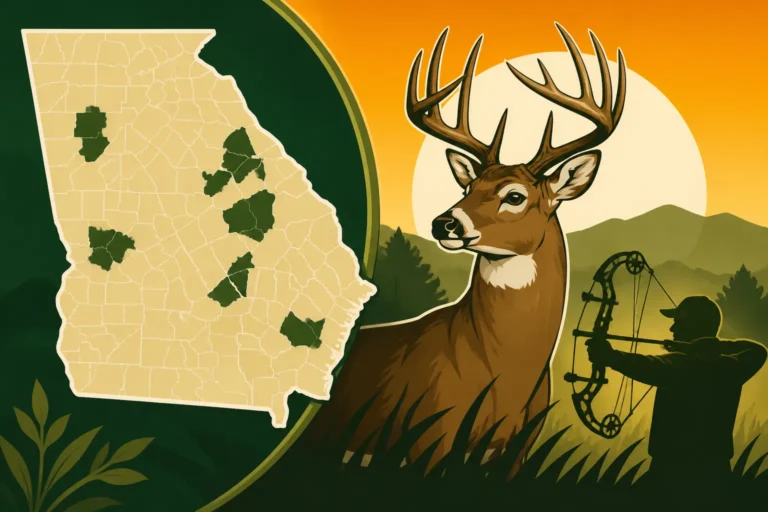
It’s a common frustration for Georgia deer hunters: you hear about folks filling their tags easily in one part of the state, while you’re struggling to even see a deer in another. The truth is, Georgia's deer population isn't evenly distributed, and understanding the regional deer density is absolutely crucial for planning a successful hunt. This comprehensive guide will break down where the deer are, and why, helping you pinpoint those productive spots across our incredibly diverse state.
Georgia's Diverse Landscapes and Deer Habitat
Georgia is a state of remarkable ecological variety, stretching from the rugged peaks of the Appalachians down to the flat, marshy coast of the Atlantic. This topographical and environmental diversity directly translates into vastly different habitats, each with its own capacity to support a thriving deer herd. Ignoring these regional distinctions is like trying to use the same fishing lure for trout in a mountain stream and bass in a lowland pond – you might get lucky, but you’re mostly missing the mark. A truly effective deer hunter in Georgia learns to read the land and understand its inherent strengths and weaknesses for whitetails.
The Ecological Divisions of the Peach State
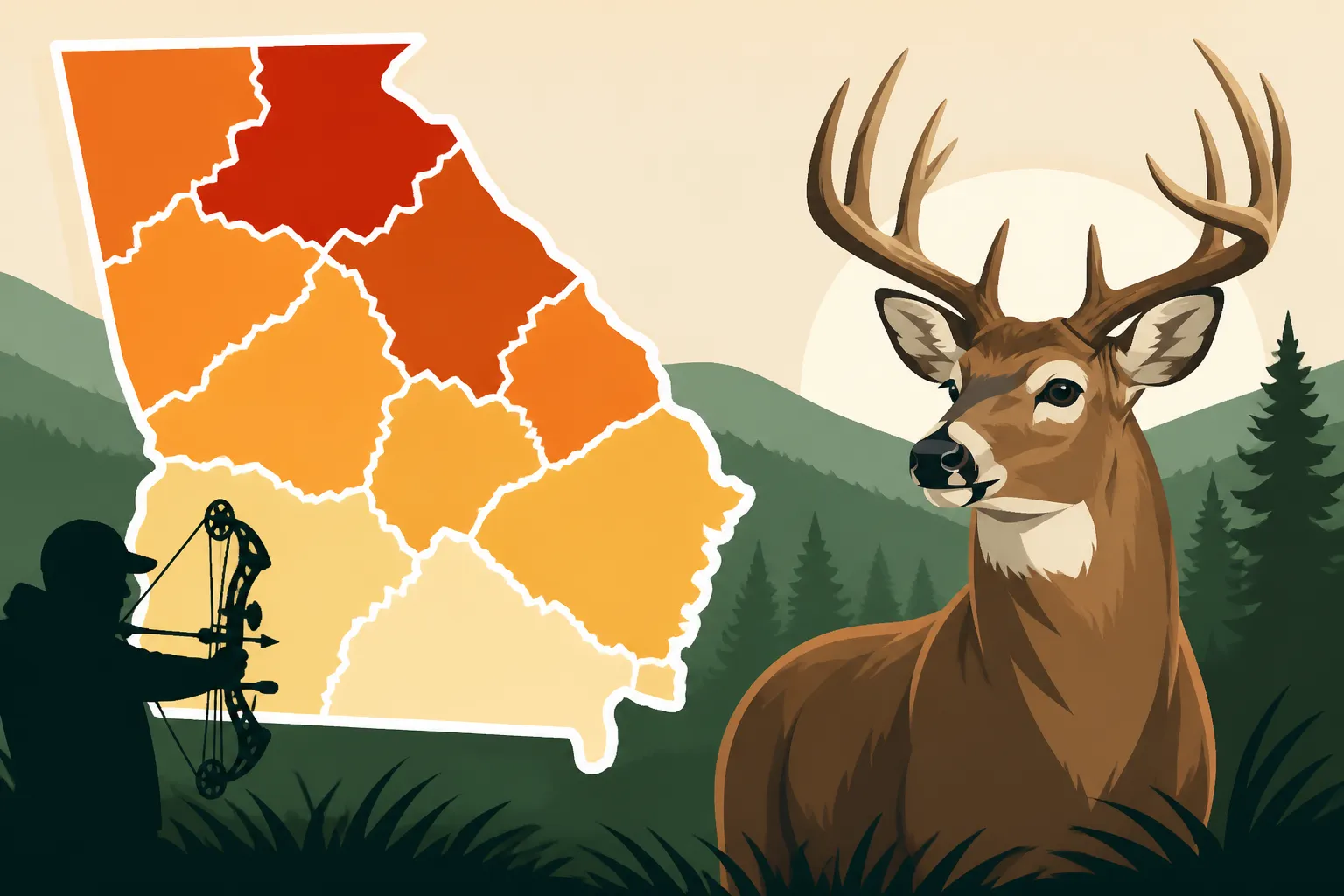
For hunting purposes, Georgia can generally be broken down into three primary ecological regions: the North Georgia Mountains, the central Piedmont, and the vast Coastal Plain. Each of these zones presents a unique set of challenges and opportunities for deer, dictating not only how many deer can live there but also how they behave and where they concentrate. The mountainous terrain, with its steep slopes and dense hardwood forests, offers a vastly different living arrangement for a whitetail than the rolling hills and farmlands of the Piedmont or the expansive pine plantations and swamps of the Coastal Plain.
Understanding these divisions is the first step in appreciating the nuances of deer density. For instance, the sheer vastness of public land in the northern reaches, such as portions of the Chattahoochee-Oconee National Forest, means deer often have to range farther for food and cover, leading to lower observable densities. Conversely, the rich agricultural lands of the Coastal Plain provide an almost endless buffet, allowing deer to thrive in higher numbers. When considering the overall Georgia Deer Population Estimate, it's vital to remember that this number is an aggregate, masking significant variations from one county to the next.
How Habitat Types Impact Deer Carrying Capacity
The concept of "carrying capacity" is fundamental to grasping deer density. Simply put, it's the maximum number of animals a given habitat can sustain without degrading the environment. In Georgia, this capacity is influenced by everything from soil quality to timber practices. Areas with poor soil may struggle to produce the nutrient-rich forage deer need, regardless of rainfall. Conversely, fertile agricultural fields, particularly those rotating crops like corn, soybeans, and peanuts, are essentially deer cafeterias, providing abundant, high-energy food sources that allow deer populations to swell.
Timber management also plays a huge role. Young, regenerating clear-cuts, for example, can be incredible deer magnets, offering dense cover and a bounty of new browse plants. Older, mature timber stands, while beautiful, often have a much sparser understory and less available forage, reducing their carrying capacity for deer. The presence of consistent water sources, from natural springs in the mountains to sprawling river systems in the lowlands, is another non-negotiable factor. Without reliable water, deer cannot survive, and areas with limited access will naturally see lower densities. It’s a complex ecological puzzle, and every piece, from the smallest acorn to the largest clear-cut, influences the final picture of deer numbers.
Deer Density in the North Georgia Mountains
Ah, the North Georgia Mountains. A beautiful, rugged, and sometimes humbling place to hunt. If you’re used to seeing deer every time you step foot in the woods in south Georgia, prepare for a different experience here. The deer density in these higher elevations is generally the lowest in the state, making success often a hard-won victory. But lower density doesn't mean no deer; it just means you have to work harder, think smarter, and understand where these mountain monarchs choose to live.
Challenging Terrain and Sparse Populations
The mountainous terrain of North Georgia is breathtaking, but it presents significant challenges for deer populations. Steep slopes, dense canopy cover, and thin, rocky soils limit the amount of natural forage available. Unlike the agricultural powerhouses of the Piedmont and Coastal Plain, large-scale farming is practically non-existent in many mountain counties, meaning deer rely almost exclusively on natural browse, acorns, and other mast crops. When a mast crop is poor, deer can be incredibly dispersed, following whatever food source might be available, which often means migrating across vast areas.
Public lands dominate much of this region, particularly within the Chattahoochee-Oconee National Forest. While this offers incredible hunting access, it also means deer are subjected to consistent pressure across wide areas, especially during firearms season. Hunters who are used to private land or less pressured areas might find the going tough. Success often hinges on getting off the beaten path, climbing higher, and finding areas that other hunters overlook. If you're planning a trip to Hunting North Georgia Mountain Country, be prepared for physically demanding hunts and understand that deer sightings might be fewer, but the reward of a mountain buck is truly special.
Pockets of Plenty: Creek Bottoms and Logging Activity
Even in areas of generally low deer density, whitetails are creatures of habit and will concentrate where resources are most abundant. In the North Georgia Mountains, creek bottoms are absolute magnets. These low-lying areas often have richer soil, more diverse vegetation, and a more consistent water supply, creating lush pockets of habitat amidst the drier, rockier slopes. Deer will often bed on higher ground but travel to these bottoms to feed and water, creating discernible travel corridors. Learning to read these subtle shifts in topography and vegetation can be a game-changer.
Furthermore, recent logging activity, even small-scale operations, can create temporary oases for deer. A clear-cut, once it begins to regenerate, offers an explosion of new growth – tender shoots, small trees, and bushes that provide excellent browse and cover. While these areas might be a tangled mess for a hunter to navigate, they can hold surprisingly high numbers of deer for a few years after the cut. Similarly, old logging roads, even those long overgrown, can provide easier travel routes and access to different levels of the forest canopy, acting as natural funnels. Effective hunters in this region learn to identify these habitat pockets and focus their efforts where the resources are concentrated, rather than just randomly wandering the vast timber. When you're trying your hand at Reading a Ridge for North Georgia Deer, don't just look for scrapes and rubs on top; follow those signs down into the hollows and along the water.
Understanding the Piedmont Region's Deer Numbers
The Piedmont region, stretching across central Georgia, offers a fascinating and often complex landscape for deer hunters. It’s a mix of rolling hills, hardwood bottoms, pine timber, and, crucially, a significant amount of agriculture and suburban sprawl. This blend creates a unique set of conditions for deer, often resulting in moderate to high densities, but also intense pressure and fragmented habitats.
Suburban Edges and Fragmented Habitats
One of the defining characteristics of the Georgia Piedmont is the creeping expansion of suburban areas. This creates a challenging but often highly productive scenario for deer. While the actual "wild" habitat might be fragmented into smaller woodlots, creek corridors, and undeveloped tracts, these areas are often surrounded by manicured lawns, gardens, and even small agricultural fields that provide an abundant, low-pressure food source. Deer in these suburban edges can become incredibly nocturnal and adept at navigating human landscapes, leading to frustrations for hunters who find plenty of sign but few deer during legal hunting hours.
However, for those with access to smaller, private parcels or bowhunting opportunities in designated Georgia Bowhunting-Only Suburban Zones, these areas can offer incredible hunting. The deer are often well-fed, grow large, and can be less pressured than those on expansive public lands. This isn't your grandfather's deer hunting; it requires patience, discreet access, and a keen understanding of how deer use limited cover to move between feeding and bedding areas. It's a prime example of how deer density, while potentially high, doesn't always translate to easy hunting.
Agricultural Influence and Mixed Forests
Beyond the suburban interface, much of the Piedmont is characterized by a blend of agricultural fields and mixed pine-hardwood forests. This combination creates an excellent environment for deer to thrive. Row crops like corn, soybeans, and even winter wheat provide seasonal high-energy food sources, drawing deer out of the timber. The diverse forest types offer a year-round buffet of browse, acorns, and other mast, along with crucial cover for bedding and security. This mix of food and cover generally leads to robust deer populations across the region.
Hunters in the Piedmont often find success by focusing on the edges where these habitat types meet. A field edge backed by a thick hardwood drain is a classic setup. Deer will move from the security of the woods into the fields to feed, especially in the late evenings and early mornings. Understanding the patterns of crop rotation can also be vital. A freshly cut cornfield might be barren, but the standing beans next door could be a goldmine. For specific strategies on Hunting Piedmont Farmland Deer, you'll want to study the individual fields and the timberlines around them. Thinking about wind direction and entry/exit routes when Setting Up on a Piedmont Field Edge becomes paramount, as deer here often become incredibly wary of human scent and activity.
The Coastal Plain: South Georgia's Deer Powerhouse
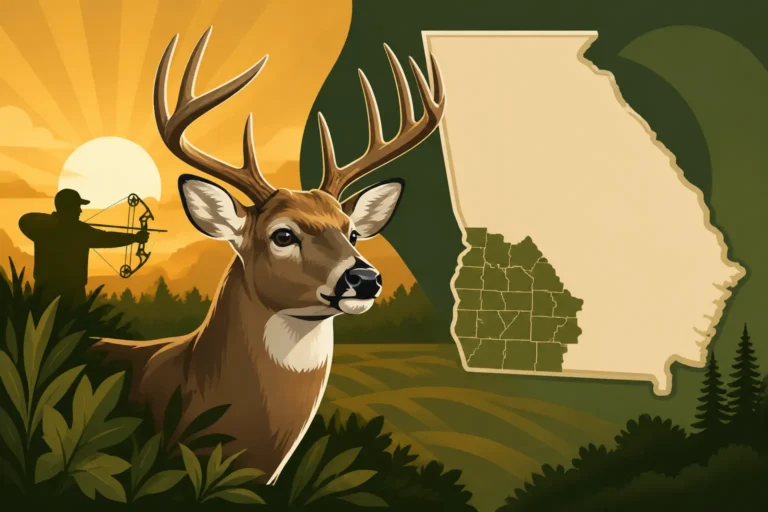
If you're looking for sheer numbers and consistent opportunity in Georgia, the Coastal Plain, especially the southwestern portion of the state, is often the answer. This vast, relatively flat region is a deer factory, boasting some of the highest deer densities and harvest rates in the state. But just like anywhere else, understanding why it's so good and how to leverage that knowledge is key to success.
Pine Plantations and Expansive Agricultural Lands
The combination of commercial pine plantations and extensive agricultural operations is the engine that drives high deer densities in the Coastal Plain. Millions of acres of pine timber, managed through various stages of growth, provide a constantly regenerating supply of deer food and cover. Young pine stands, often in the early stages of regrowth after a clear-cut, are thick with browse and offer incredible bedding and sanctuary cover. As these stands mature, controlled burns are often used to maintain an open understory, promoting native grasses and forbs that deer love.
Interspersed with these vast timberlands are massive tracts of agriculture – peanuts, cotton, corn, soybeans, and pecans. These provide an incredibly rich and consistent food source for deer, often available for extended periods. Deer don't have to travel far to find a meal, leading to smaller home ranges and higher concentrations. This abundance of food and cover is precisely Why Southwest Georgia Grows Big Bucks, as deer have the nutrition to reach their full genetic potential. Hunting these areas requires understanding how deer utilize the distinct edges between pine timber and open fields, or how they navigate the rows of a standing crop. It's a land of plenty, but the sheer scale means pinpointing specific deer can still be a challenge.
River Bottoms and Swamp Systems as Deer Sanctuaries
While pine plantations and agricultural fields draw deer for feeding, the numerous river bottoms and swamp systems of the Coastal Plain provide crucial, year-round sanctuary and additional food sources. Rivers like the Altamaha, Ocmulgee, and Flint, with their sprawling floodplains and dense, often impenetrable bottomland hardwoods and cypress swamps, act as natural refuges from hunting pressure. Deer can retreat deep into these wet, tangled environments, finding security and a different array of forage, including water oak acorns, palmetto berries, and various wetland plants.
These river and swamp systems often serve as major travel corridors for deer, connecting different habitat types and providing pathways through more open terrain. Hunters who are willing to navigate the unique challenges of Hunting Georgia Swamp and River Bottom Deer can find mature bucks that rarely leave the security of the water. This might mean investing in rubber boots or even a small boat to access remote islands or elevated ridges within the swamp. The deer density within these specific microhabitats can be incredibly high, even if the surrounding uplands seem sparse. Learning to read water levels, identify high ground, and understand deer movement patterns in these challenging environments is essential for unlocking their potential.
Key Factors Influencing Regional Deer Density
Deer density isn't a static number; it's a dynamic reflection of a complex interplay of environmental, biological, and human-induced factors. Understanding these underlying influences is critical for any hunter looking to consistently find deer, regardless of the region. It’s not just about where the deer are, but why they are there, and what might change those numbers from one season to the next.
Habitat Quality and Food Availability
At the core of deer density is the quality and quantity of available habitat and, more specifically, food. A healthy habitat provides not only forage but also cover for bedding, fawning, and escaping predators. In Georgia, this can range from the diverse mast crops of a mature hardwood forest to the endless rows of agriculture in the Coastal Plain. When food is abundant and nutritious, deer can support higher densities, experience better fawn survival rates, and grow larger body and antler sizes. Conversely, a poor mast crop year, particularly for acorns, can send deer scrambling, forcing them to disperse widely in search of alternative food sources, making them harder to pattern.
Consider the ripple effect of a tough year for acorns in the mountains, a primary food source. Deer might have to travel much farther, increasing their exposure to predators and hunters, and potentially leading to lower body weights. In agricultural areas, deer density often correlates directly with the type and timing of crops. Standing corn or peanuts will hold deer like a magnet, but once harvested, those deer will shift to other fields or timber. Therefore, truly understanding deer density means understanding the local food buffet and how it changes throughout the year. For more on how these shifts impact deer, you might find insight in Hunting After a Poor Acorn Year.
Hunting Pressure and Management Practices
Human activity, particularly hunting pressure and wildlife management practices, profoundly impacts deer density and distribution. Areas with high hunting pressure, especially on public lands, can cause deer to become more nocturnal, move into thicker cover, or simply disperse to less disturbed areas. Conversely, well-managed private lands, with controlled harvest strategies and often supplementary feeding or food plot programs, can maintain incredibly high deer densities and quality.
Georgia's deer management approach, including its generous Georgia's Twelve-Deer Bag Limit (two antlered bucks, ten antlerless deer), is designed to allow hunters to help manage the population effectively. In regions where doe harvest is high, density can be controlled, leading to healthier animals. In areas where antlerless harvest is low, densities can skyrocket, potentially leading to habitat degradation and smaller deer. Regulations like antler restrictions in some private land cooperatives also aim to shift the age structure of the buck herd, but these are generally voluntary. The presence of hunter education requirements and specific season dates also influences when and where pressure is applied. It's a constant balance between providing opportunity for hunters and maintaining a healthy, sustainable deer herd.
Disease and Predation Impacts
While often less directly apparent than habitat or hunting pressure, disease and predation can significantly impact regional deer densities. Chronic Wasting Disease (CWD), while currently contained to a small management area in Georgia, poses a serious long-term threat. Should it spread, it has the potential to drastically reduce deer populations and alter management strategies statewide. Other diseases, like Epizootic Hemorrhagic Disease (EHD), periodically sweep through deer populations, especially during dry summers, causing localized die-offs that can temporarily depress densities in affected areas.
Predation, primarily from coyotes, also plays a role, especially in fawn survival. While coyotes rarely take adult, healthy deer, their impact on vulnerable fawns can be significant, particularly in regions where other fawn predators (like bobcats or black bears) are also present. A high coyote population, combined with poor fawn cover, can lead to lower recruitment rates, meaning fewer young deer survive to adulthood, which over time can reduce overall deer density. Black bears, especially in the North Georgia Mountains and some parts of the Coastal Plain, can also prey on fawns. For more information on diseases like CWD, it’s worth reading up on Chronic Wasting Disease Risk in Georgia to understand the precautions being taken.
Leveraging Density Data for Your Hunting Strategy
Knowing the general deer density in a region is one thing, but actively using that information to improve your hunting success is where the rubber meets the road. It's about translating broad trends into actionable steps for your next hunt. This means going beyond simple maps and understanding the nuances of how deer interact with their environment, wherever you choose to hunt in Georgia.
Using Mapping Tools and Scouting Techniques
In today's hunting world, advanced mapping tools are your best friend for understanding deer density and movement, especially when you can't be in the woods physically. Platforms like GoHunt allow you to layer public and private land boundaries, topographical maps, aerial imagery, and even historical satellite data. This lets you identify potential pinch points, bedding areas, food sources, and travel corridors before you ever step foot on the property. For example, by studying aerial photos, you can spot those regenerating clear-cuts in the mountains or the precise edges between pine timber and agriculture in the Coastal Plain – areas where deer density is likely to be higher due to concentrated resources.
Combine these digital tools with boots-on-the-ground scouting, and you create an incredibly powerful strategy. Walking potential hunting areas, looking for rubs, scrapes, tracks, and droppings, verifies what your maps suggest and reveals fresh movement. Even in areas of lower density, like parts of public land in the Piedmont, identifying subtle changes in terrain or vegetation that create small pockets of preferred habitat can be the difference between seeing nothing and connecting with a deer. This blend of remote intelligence and physical reconnaissance is key for Scouting Georgia Public Land Before Season effectively, no matter the regional density. GoHunt and similar tools can also help you understand access points and how to minimize your footprint, crucial for success in pressured zones.
Adapting Tactics to Local Deer Concentrations
Once you have a handle on the general and specific deer densities in your hunting area, it's time to adapt your tactics. In high-density areas, deer might be more accustomed to human presence, but they are also more numerous, meaning you might have more opportunities. Here, focusing on specific food sources, understanding how deer move from bedding to feeding, and managing your scent can be paramount. Stands overlooking expansive food plots or crop fields in south Georgia are classic examples.
In lower-density regions, particularly the mountains or heavily pressured public lands in the Piedmont, your tactics need to shift dramatically. You'll likely need to cover more ground, become a more proficient still-hunter, or focus on strategic ambush points near limited resources. This might involve deep dives into remote hollows, targeting specific acorn ridges, or patiently waiting near water sources during dry spells. For instance, Still-Hunting South Georgia Pine Flats is an art form, requiring slow, deliberate movement and keen observation, often more effective in lower-density timber than sitting over a food plot. When using a tool like GoHunt to scout, remember to mark potential routes and alternative access points, allowing you to adapt on the fly based on fresh sign or shifting conditions. The best hunters aren't just good at one thing; they're adaptable strategists who understand that deer hunting is always a game of localized knowledge and precise execution, informed by a deep understanding of density and habitat.
| Georgia Deer Region | Estimated Density (Deer/Sq. Mile) | Primary Habitat Types | Hunting Challenges | Hunting Opportunities |
|---|---|---|---|---|
| North Georgia Mtns. | 10-20 (Lower) | Hardwood forests, steep slopes, creek bottoms, public lands | Low density, rugged terrain, high pressure on accessible areas | Solitude, quality bucks in specific pockets, rewarding hunt |
| Piedmont | 25-45 (Moderate to High) | Mixed forests, farmland edges, suburban interface, fragmented habitat | Pressure, nocturnal deer, gaining access to private land | Good numbers, quality bucks, diverse hunting scenarios |
| Coastal Plain | 40-70+ (Highest) | Pine plantations, extensive agriculture, river bottoms, swamps | Vastness, insect pressure, private land dominance | Abundant deer, highest harvest rates, potential for large bucks |
Disclaimer
Hunting regulations and deer populations can change. Always consult the Georgia Department of Natural Resources (DNR) official regulations before heading afield to ensure you are up-to-date on all seasons, bag limits, and licensing requirements. This guide is for informational purposes only and does not replace official state wildlife agency information.