Hunting Piedmont Farmland Deer
For many deer hunters in Georgia, the rolling hills and agricultural patchwork of the Piedmont region present a unique set of challenges and opportunities. Unlike the dense mountains or sprawling pine plantations, hunting Piedmont farmland deer means navigating diverse habitats, from mature hardwoods and creek bottoms to open fields of corn, soybeans, and peanuts. It's a landscape where deer are constantly adapting to human activity and changing food sources, making consistent success feel like a puzzle. This guide will walk you through understanding these specific dynamics, from effective scouting methods to strategic stand placement, ensuring you're well-equipped to tag out in Georgia's productive heartland.
Understanding the Piedmont Landscape for Deer
The Georgia Piedmont is a captivating blend of old farms, timberland, and suburban sprawl, creating a mosaic of habitats that deer thrive in. It’s not just about the crops; it’s about how deer use the surrounding cover and natural food sources in conjunction with those agricultural offerings. If you want to consistently find deer here, you need to think like a deer moving through this complex environment, constantly weighing risk and reward.
Habitat Diversity and Deer Movement
The Piedmont is characterized by its rolling topography, often featuring alternating patches of mature hardwood timber, mixed pine-hardwood stands, and open fields. This creates incredible edge habitat, which deer absolutely adore. You'll find deer bedding in dense thickets or small woodlots, only to emerge into a neighboring field at dusk. Their travel routes often follow creek drainages, old fencelines, or the edges of different cover types, providing natural funnels that can be exploited. Think about those narrow strips of woods connecting two larger blocks of timber across a field – those are highways for deer.
Beyond the major timber blocks, even small, overlooked pockets of cover can be crucial. An overgrown ditch, a neglected kudzu patch, or a briar thicket too small for most hunters to consider can hold a mature buck during daylight hours, especially when hunting pressure is high. These micro-habitats offer security and a place to browse unnoticed. Understanding how deer transition between these various cover types based on time of day, weather, and hunting pressure is paramount to success.
Food Sources and Agricultural Impact
Deer in the Piedmont are truly creatures of opportunity when it comes to food. While natural browse, acorns, and soft mast provide sustenance, the real magnet during much of the season is agriculture. Corn, soybeans, peanuts, and wheat fields are massive food plots, drawing deer in from surrounding areas. The timing of planting and harvesting these crops dramatically impacts deer movement and feeding patterns. A standing cornfield in September can be an impenetrable fortress and a primary food source, but once harvested, deer will shift their focus to spilled grains or newly available forage.
Beyond the major row crops, smaller food plots planted by landowners, like winter wheat, clover, or brassicas, can be incredibly attractive during the late season when natural food sources dwindle. Even overlooked areas like pecan groves or persimmon trees can be hotbeds of activity. Your scouting efforts should always consider what crops are planted, when they're harvested, and what natural food sources are available at any given time. Observing these patterns closely is key to success, and sometimes, a little chat with a local farmer can provide invaluable insight into crop rotations.
Water Sources and Travel Corridors
In Georgia’s generally warm climate, water is a critical, though often underestimated, component of deer habitat, even in the Piedmont. While deer don't always need to drink from open water daily if their forage is succulent, readily available water sources like creeks, small ponds, or seepages can dictate travel patterns and bedding areas. A well-worn trail leading to a creek crossing or a shaded spring is often a highway for deer, especially during warmer periods of the season or after a long night of feeding on dry crops.
Creek bottoms, river corridors, and even small drainages lined with dense cover often serve as primary travel routes, allowing deer to move between bedding areas and food sources with a sense of security. These natural funnels are perfect places to intercept deer. They provide shelter from the sun, easy access to water, and a low-impact way for deer to traverse the landscape without exposing themselves in open fields. When you're Reading Aerial Photos for Piedmont Deer, always look for these linear features; they're almost always associated with significant deer activity.
Scouting Strategies for Farmland Bucks
Effective scouting is the backbone of successful deer hunting in the Georgia Piedmont. You're not just looking for deer; you're looking for patterns, habits, and vulnerabilities in their movements. With a mix of ag fields, hardwoods, and suburban fringes, understanding how to scout this diverse terrain is crucial. It’s a year-round job, not just a pre-season dash.
Aerial Imagery and Topo Map Analysis
Before you ever set foot in the woods, spend significant time studying the property from above. Tools like GoHunt's mapping features or other aerial imagery platforms are invaluable. Look for key features: field edges, pinch points between woodlots, creek drainages, power line cuts, and areas where different types of timber meet. Identify potential bedding areas (dense, dark timber patches, thickets) and feeding areas (agricultural fields, oak flats, planted food plots). Pinpoint access routes that allow you to get to and from potential stand locations undetected.
Topographical maps, though less critical in the generally gentler Piedmont than in the mountains, can still reveal subtle elevation changes that deer use to their advantage, especially when dealing with wind and thermals. A slight ridge running through a woodlot can offer a natural travel corridor or a high point for a buck to survey his surroundings. Use these digital tools to create a game plan, marking potential stand sites and escape routes. This pre-season reconnaissance saves countless hours of aimless wandering and minimizes disturbance on the ground.
Early Season Field Scouting
Once the digital scouting is done, it's time to put boots on the ground, ideally in the late summer or very early archery season before hunting pressure really picks up. Focus your efforts on the edges of agricultural fields. Look for well-worn trails leading into and out of corn, soybean, or peanut fields. Pay close attention to entry points where deer feel most secure, often where cover extends furthest into the field or where a ditch provides a natural hidden approach.
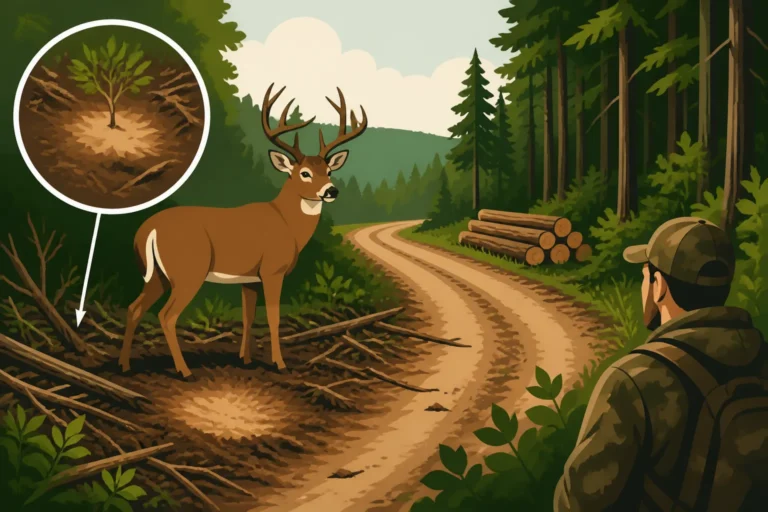
Beyond trails, look for specific sign: fresh droppings, rubs on saplings, and scrapes along field edges or natural travel corridors. A cluster of fresh rubs can indicate a buck is active in the area. Early season scouting allows you to identify primary food sources, observe actual deer movement (if you're careful), and gauge how deer are interacting with the available cover. Remember, the goal is to find consistent sign, not just a single track. For more insights on this, check out Scouting Georgia Public Land Before Season.
Trail Camera Placement and Interpretation
Trail cameras are your eyes in the woods when you're not there, and they are particularly effective in the Piedmont. Place cameras on active trails leading to food sources, near scrapes or rub lines, or along natural funnels like creek crossings or fencelines. Consider using cellular cameras in areas with good service to get real-time updates without disturbing the area. However, always be mindful of privacy and local regulations when deploying cameras, especially on public land.
The data from your trail cameras will help you understand deer movement patterns, identify individual bucks, and determine their preferred times of activity. Look for patterns related to weather, moon phase, and time of day. Are deer hitting fields primarily at night? Are mature bucks showing up during daylight hours? This information is gold and can guide your stand placement and hunting times. Just remember to check cameras strategically and infrequently to avoid spooking deer. If you're using them near a food plot, for example, consider pairing them with a deer mineral site to draw consistent activity for your camera, just be sure to check local baiting regulations.
Stand Placement and Hunting Tactics
Once you've done your homework scouting, the next critical step is selecting and setting up your stand. In the diverse Piedmont landscape, there's no one-size-fits-all approach. Your setup needs to be adaptable to field edges, dense woodlots, and everything in between, always keeping wind direction, access, and deer behavior in mind.
Field Edge Setups
Hunting field edges is a classic Piedmont tactic, especially during the early season when crops are still standing or immediately after harvest. The key here is stealth and wind. Deer often stage in the timber just inside the field edge before committing to the open, so positioning your stand 10-20 yards into the woods, downwind of their anticipated entry point, is often more effective than hugging the very edge. This allows you to catch them while they're still in cover and less wary.
Consider the angle of the sun at dawn and dusk, and ensure your entry and exit routes are silent and undetected. Deer crossing a peanut field at sunset are scanning for danger, so any noise or movement will instantly put them on high alert. A good strategy is to set up a stand overlooking a point or a finger of timber that extends into the field, forcing deer to walk past you. For more detailed advice on this specific strategy, refer to Setting Up on a Piedmont Field Edge.
Woodlot and Creek Bottom Tactics
Beyond the fields, the woodlots and creek bottoms offer different, often less pressured, opportunities. These areas are prime for bedding, natural browsing, and secure travel. Look for pinch points where deer are funneled through a narrow strip of timber between two fields or where a creek makes a sharp bend, creating a natural crossing. These areas often have heavy cover and sign like rubs and scrapes.
When setting up in these areas, consider a stand location that allows you to see both the travel corridor and any small clearings or bedding areas within the woodlot. You might be targeting deer moving between bedding and feeding, or simply cruising for does during the rut. Pay close attention to the wind, as thermals can be tricky in creek bottoms, often pulling scent downhill in the mornings and pushing it up in the evenings.
Using Ground Blinds Effectively
Sometimes, a tree stand isn't feasible or the best option. Dense cover, short trees, or the need for mobility make ground blinds an excellent choice for hunting Piedmont farmland deer. They offer concealment, scent containment, and protection from the elements, which is especially useful when waiting out a long sit. You can effectively use a ground blind on a field edge, nestled into a hedgerow, or tucked into a thicket within a woodlot.
The trick to ground blind success is placement and brushing in. Deploy your blind well in advance if possible, allowing deer to get used to its presence. Camouflage it heavily with natural vegetation from the surrounding area – branches, leaves, grass. This helps it blend seamlessly into the environment. Make sure your shooting lanes are clear but keep enough cover around to break up your silhouette. For an in-depth look at this tactic, check out Using a Ground Blind on Georgia Public Land.
Dealing with Hunting Pressure and Property Boundaries
Hunting in the Georgia Piedmont, particularly near more populated areas, means encountering hunting pressure. Deer adapt quickly to human presence, often becoming nocturnal or seeking refuge in overlooked pockets of cover. Understanding how to navigate this reality, especially with fragmented property ownership, is key to consistent success.
Public vs. Private Land Dynamics
Much of the Piedmont is privately owned, but there are significant tracts of public land, including Wildlife Management Areas (WMAs) and portions of the Chattahoochee-Oconee National Forest, that offer hunting opportunities. The dynamics on public versus private land can be vastly different. Private land often has controlled access, potentially leading to less pressure, but also means dealing with specific landowner rules and potential cost. On private land, you might have the luxury of planting food plots or having exclusive access.
Public land, on the other hand, means sharing the woods with other hunters. Deer on public land are often warier and quickly learn to avoid easy-to-access areas. To succeed on public land, you often need to walk further, hunt harder, and seek out overlooked sanctuaries. Always carry your Georgia Hunting Licenses and What They Cost and adhere strictly to all WMA rules or National Forest regulations. Being adaptable and willing to go the extra mile will set you apart.
Navigating Adjacent Properties
With many smaller land parcels in the Piedmont, hunting near property lines is a common scenario. This requires utmost respect for boundaries and a clear understanding of Georgia's trespass laws. Always know exactly where property lines are – use a reliable mapping app like GoHunt, which shows property boundaries, or physical maps and clearly marked lines if available. Never shoot across property lines or retrieve game without permission from the adjacent landowner.
It’s often beneficial to establish a good relationship with neighboring landowners. A friendly conversation can sometimes open doors for retrieving a downed deer or even gaining future hunting access. Remember, deer don’t respect property lines, and a buck might bed on an adjacent parcel before slipping onto your hunting land. Your strategy should account for deer moving between properties, focusing on funnels or travel corridors that cross boundaries.
Minimizing Your Impact
Every time you step into the woods, you leave a trace. Minimizing your impact is especially important in pressured areas of the Piedmont. This means scouting smartly, using quiet access routes, and only going into your hunting area when necessary. Avoid unnecessary scent contamination by wearing clean clothes, using scent control products, and being mindful of wind direction when accessing your stand. The deer in the Piedmont have a keen sense of when they are being hunted.
Consider limiting your presence on stands, especially after a hunt where you might have bumped deer or made too much noise. The less pressure deer feel, the more likely they are to maintain their natural patterns. This might mean adjusting your entry and exit times, taking longer routes to your stand, or even choosing a different stand location entirely if conditions aren't perfect for your primary spot. Smart hunters prioritize stealth and patience.
Rut Hunting and Late Season Opportunities
The whitetail rut is the most anticipated time for many deer hunters, and the Georgia Piedmont is no exception. While the exact timing can vary slightly, understanding the general phases of the rut and how deer behavior changes throughout the season will maximize your chances of success. And don't dismiss the late season – it often offers overlooked opportunities for those willing to brave the colder weather.
Mid-October Rut Activity
While the peak of the rut in Georgia often hits in November, significant pre-rut and early rut activity can be observed in the Piedmont as early as mid-October. This is when bucks start to get on their feet more during daylight hours, laying down rubs and scrapes as they begin to seek out the first receptive does. You'll see increased cruising behavior as bucks test the waters and establish their presence. This can be a fantastic time to be in the woods.
During this period, focus your efforts on active scrape lines and rub routes, particularly those along field edges, creek bottoms, and property lines. Bucks are actively communicating their presence. Does are still largely in their regular feeding and bedding patterns, so hunting travel corridors between these areas can be highly effective. Patience is crucial, as bucks might be making sporadic appearances rather than consistent ones. For a deeper dive into this exciting time, read our guide on Hunting the Rut in Mid-October.
Hunting the January Lull
After the frenzy of the rut, deer often enter a period known as the "January Lull" or post-rut. Bucks are exhausted, and does are less receptive. Deer are primarily focused on recovery and finding adequate food to rebuild their energy reserves for the upcoming winter. This period can be challenging, but it's not without its rewards for the dedicated hunter. Deer activity might seem to slow down, but their need for sustenance remains.
During the January lull, prioritize food sources. Deer will gravitate towards the most nutritious and accessible forage, often winter food plots like clover, wheat, or brassicas, or late-dropping acorns if any remain. They'll minimize unnecessary movement to conserve energy. Look for areas where dense cover is close to a prime food source. A buck might only travel a few hundred yards from his bed to eat, so setting up tight to these areas, especially on cold, clear mornings, can be very productive. To understand this phase better, explore Hunting the Late-Season January Rut Lull.
Cold Weather Food Sources
As winter fully settles into the Piedmont, natural food sources become scarce. This is when planted green fields, remaining agricultural crops, and specific natural browse become absolute magnets. Consider hunting over standing or recently cut soybean or corn fields where there's still ample residual grain. Winter wheat and clover plots are invaluable as they provide green forage when other options have dried up.
Even in natural settings, look for honeysuckle, green briar, and other evergreen browse that deer will rely on. Often, these are found in thicker areas or along creek bottoms where they receive more moisture. The colder the weather, the more deer will need to feed to maintain their body temperature, concentrating them around these critical food sources.
Here's a quick look at common Piedmont food sources and their peak attractiveness:
| Food Source | Early Season (Sept-Oct) | Mid-Season (Nov-Dec) | Late Season (Jan) | Notes |
|---|---|---|---|---|
| Corn | High (standing) | Medium (harvested/spill) | Low (only residual) | Excellent cover when standing. |
| Soybeans | High (standing/pods) | Medium (harvested/spill) | Low (only residual) | High protein, deer love the pods. |
| Peanuts | High (standing/pods) | Medium (harvested/spill) | Low (only residual) | Deer will dig for them after harvest. |
| Acorns | High (early droppers) | High (peak drop) | Low (if any left) | White oaks preferred first, then reds. |
| Persimmons/Soft Mast | High (ripening) | Medium (if still available) | Low | Localized but can be very attractive. |
| Winter Wheat/Clover Plots | Low (emerging) | Medium (growing) | High (green forage) | Essential for late-season sustenance. |
| Browse (Honeysuckle, etc.) | Medium | Medium | High (when other food is scarce) | Always available, but becomes primary. |
This table highlights how deer shift their dietary focus throughout the season, a critical piece of the puzzle when hunting in an agricultural landscape. Understanding these changes will help you plan your hunts more effectively, especially if you're targeting specific food plots. Don't forget, sometimes the most productive spots are the most difficult to access, and companies like GoHunt provide excellent tools to visualize these remote locations and plan your route.
Disclaimer
Always consult the Georgia Department of Natural Resources (DNR) official regulations before heading afield, as rules and seasons can change. This guide is for informational purposes only and does not supersede state hunting laws.