Mourning Doves in Georgia
There's nothing quite like the late summer hum of a Georgia dove field, the air thick with anticipation, the scent of cut sunflowers, and the promise of fast-flying action. But for many, especially new hunters or those looking to expand their knowledge, deciphering dove behavior, understanding regulations, and finding productive spots can feel like a maze. This comprehensive guide is designed to demystify mourning dove hunting in Georgia, providing you with everything you need to know to enjoy this beloved southern tradition, from understanding the birds themselves to mastering field tactics and preparing your harvest.
Understanding the Mourning Dove in Georgia: A Hunter's Perspective
Mourning doves hold a special place in the hearts of Georgia hunters. They signal the unofficial start of hunting season, bringing families and friends together for a social hunt unlike almost any other. But beyond the tradition, these birds are fascinating creatures, perfectly adapted to our diverse Georgia landscape.
The Ubiquitous Southern Dove: Why They're So Popular
Mourning doves are, without a doubt, one of Georgia's most widespread and recognizable game birds. You see them everywhere – in your backyard, perched on power lines, or fluttering along rural roadsides. This ubiquity makes them incredibly accessible for hunters across the state, whether you're in the suburbs outside Atlanta, the sprawling fields of the Piedmont, or the pine plantations of South Georgia. Their rapid, erratic flight patterns also make them a challenging and exciting target, demanding quick reflexes and precise shotgun skills. It's a humbling experience to watch a flock zip by, seemingly impervious to your best efforts, but that challenge is precisely what keeps hunters coming back year after year.
Their widespread nature means that even without access to vast private land, many opportunities exist on smaller parcels, especially those with agricultural components. The social aspect of dove hunting also sets it apart. Unlike the solitary pursuit of deer or turkeys, dove hunts are often communal affairs, a chance to gather, share stories, and introduce new generations to the outdoors. Many of us grew up attending these hunts, learning the ropes from elders, and forging bonds that last a lifetime. This blend of accessibility, challenge, and camaraderie makes the mourning dove a true southern icon in the hunting world.
Identifying Mourning Doves: Key Characteristics for Hunters
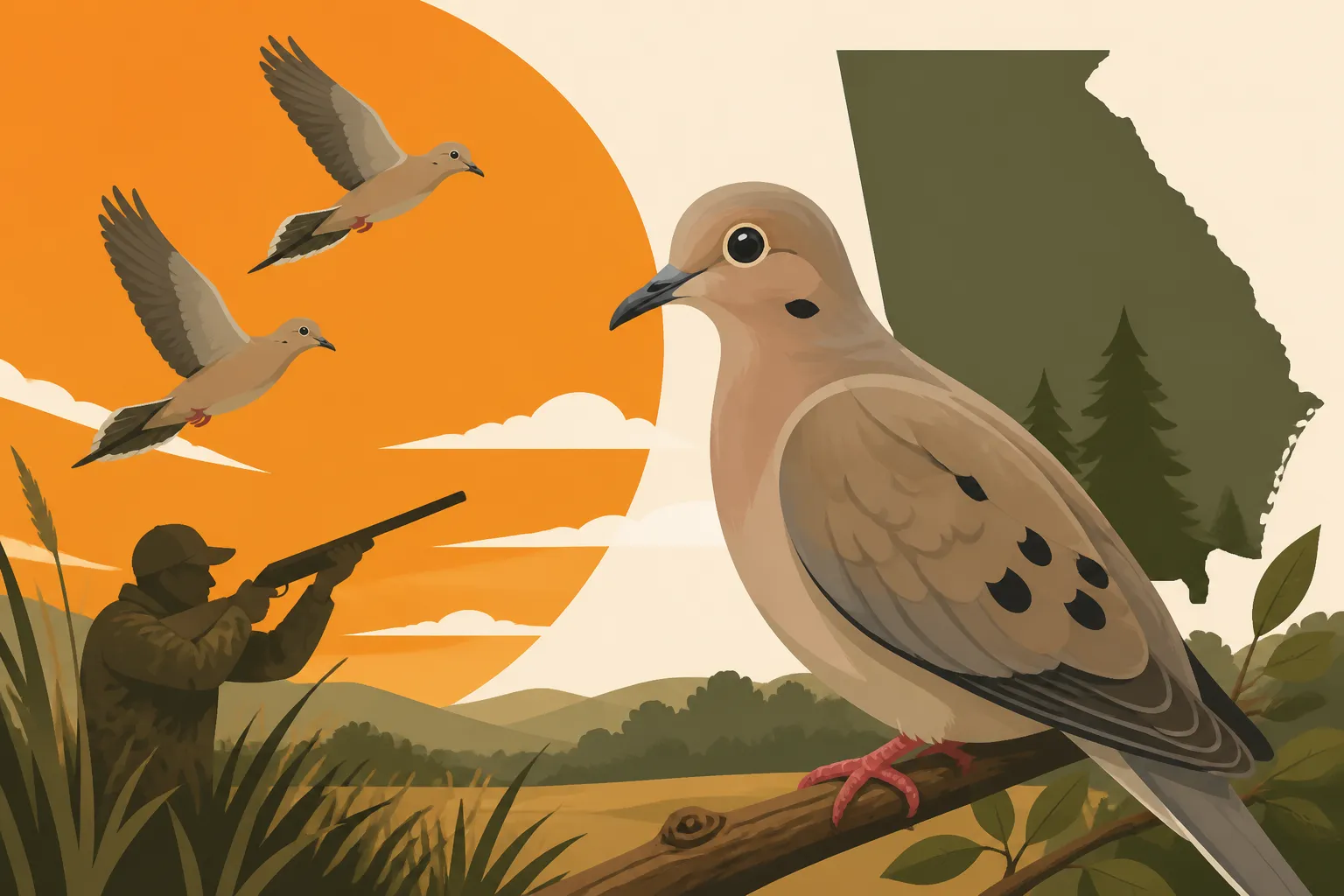
While most seasoned hunters can identify a mourning dove in a heartbeat, understanding their key characteristics is vital for responsible hunting and ensuring you're targeting the correct species. Mourning doves are medium-sized, slender birds, typically about 12 inches long with a wingspan of 18 inches. Their plumage is a soft, muted brownish-gray, with lighter, almost buffy undersides. What truly sets them apart is their pointed tail, bordered by white tips that become obvious in flight. Look for the small, iridescent patch on their neck, which can appear pinkish-purple or greenish in certain light, and a distinctive black spot below the eye.
Their mournful cooing call, often described as a soft "coo-OO-woo-woo-woo," is another unmistakable characteristic and the origin of their name. In flight, they produce a unique whistling sound from their wings, especially noticeable during takeoff and landing. This sound is a key identifier when you're scanning the skies above a noisy dove field, allowing you to differentiate them from other birds that might pass through. Being able to quickly and accurately identify a mourning dove is not just about bragging rights; it's about ethical hunting and respecting wildlife regulations that protect non-game birds.
Dove Biology and Behavior: What Makes Them Tick
To become a successful dove hunter, you need to think like a dove. Their daily lives revolve around three primary needs: food, water, and grit, and safe roosting sites. Doves are primarily ground feeders, favoring seeds from weeds and agricultural crops like corn, wheat, millet, and sunflowers. They'll spend their mornings and late afternoons foraging in these fields, often in large flocks. Once they've filled their crops, they need water, typically flying to nearby ponds, creeks, or even puddles. After watering, they seek out grit – small pebbles or sand – to help their gizzard grind down the seeds they've consumed. This often happens at the same water sources or dusty roadsides.
Their daily flight patterns are highly predictable, establishing well-worn flight lines between these essential resources. Understanding these patterns is crucial for setting up your hunt. Doves prefer open or sparsely treed areas for feeding and watering, allowing them a clear line of sight for predators. For roosting, they'll often gather in dense trees or thickets, typically flying in just before dusk. Unlike many birds that build elaborate nests, doves are rather haphazard nesters, often reusing old nests or building flimsy platforms of twigs in trees and shrubs. They can breed multiple times a year, sometimes raising several broods, which contributes to their healthy population numbers.
Mourning Dove Population Dynamics in Georgia: Trends and Management
Understanding the health of Georgia's mourning dove population is critical for ensuring sustainable hunting for generations to come. Thankfully, these adaptable birds generally maintain robust numbers, but they face various challenges that wildlife managers continually monitor.
Current Population Estimates and Health: Are Doves Thriving?
Mourning doves are one of the most abundant bird species in North America, and Georgia is certainly no exception. Annually, Georgia's wildlife agencies, like the Georgia Department of Natural Resources (GA DNR), participate in national surveys such as the U.S. Fish and Wildlife Service's Mourning Dove Call-Count Survey. This data helps estimate population trends, breeding success, and overall abundance. While populations can fluctuate year to year due to local conditions, the overall trend for mourning doves in Georgia and the Southeast has generally been stable or slightly increasing in recent decades, which is fantastic news for hunters.
These surveys give biologists a snapshot of how many doves are out there, how many young they're producing, and how those numbers are changing over time. It's a complex science, but the takeaway for hunters is reassuring: Georgia's mourning dove population is healthy and well-managed, allowing for generous seasons and bag limits. This positive outlook is a testament to the birds' adaptability and the effective conservation strategies in place, much of which is funded directly by hunters through license and excise tax contributions on hunting equipment.
Factors Affecting Dove Numbers: Habitat, Weather, and Predation
While generally robust, dove populations are not immune to environmental pressures. Habitat availability is perhaps the most significant factor. Doves thrive in diverse landscapes that offer a mosaic of agricultural fields, open woodlands, and access to water. Changes in land use, such as urban sprawl or shifts away from dove-friendly crops, can impact local populations. For example, a decline in small grain farming could mean fewer prime feeding areas. Droughts can limit water sources, while excessive rainfall during nesting season can reduce nesting success.
Predation also plays a role, with various raptors, snakes, and mammalian predators targeting dove eggs, nestlings, and even adult birds. However, doves are prolific breeders, often raising several broods in a season, which helps them bounce back from losses. Disease outbreaks can occur but are usually localized and temporary. The GA DNR constantly monitors these factors to ensure that hunting regulations remain aligned with the population's ability to sustain itself. This ensures that while you're enjoying your hunting season, the long-term health of the species is also being considered.
Conservation Efforts and Hunter Contributions: Protecting the Resource
The sustained health of Georgia's mourning dove population is a direct result of ongoing conservation efforts, many of which are supported and funded by hunters. Revenue generated from the sale of hunting licenses, including your Georgia Resident Hunting License Options or migratory bird permits, directly supports habitat management, research, and law enforcement efforts by the GA DNR. Furthermore, the federal excise tax on firearms, ammunition, and archery equipment, known as the Pittman-Robertson Act, provides millions of dollars annually for wildlife conservation projects across the country, benefiting doves and countless other species.
Hunters also contribute through their active participation in habitat improvement. Many landowners manage their fields with doves in mind, planting specific crops like sunflowers, millet, or wheat, and leaving strips unharvested to provide feeding opportunities. These managed fields not only draw doves but also provide food and cover for other wildlife. Organizations like Quail Forever and the National Wild Turkey Federation also indirectly benefit doves through their broader habitat restoration efforts aimed at early successional habitat. Every hunter who buys a license and follows regulations is, in essence, a conservationist, playing a vital role in protecting this cherished resource for future generations.
Georgia Dove Season Rules and Regulations: What Every Hunter Needs to Know
Navigating hunting regulations can sometimes feel like a chore, but it's absolutely essential for a legal and ethical hunt. Georgia has specific rules for mourning doves that every hunter must understand before heading afield.
Season Dates and Bag Limits: Planning Your Hunts
Georgia's mourning dove season is typically structured into several "splits" throughout the fall and early winter, allowing hunters ample opportunity to pursue these birds. The opening day is arguably the most anticipated date on the Georgia hunting calendar, often falling on the first Saturday of September. This initial split usually runs for a couple of weeks, followed by a second split later in September or October, and sometimes a third split in December or January. It's always crucial to check the current year's official Georgia Hunting Seasons and Regulations guide, published by the GA DNR, as exact dates can shift slightly.
The daily bag limit for mourning doves in Georgia is currently 15 birds per hunter. This means you can legally harvest no more than 15 doves in a single day. The possession limit is three times the daily bag limit, meaning you can have up to 45 doves in your possession after multiple days of hunting, provided you did not exceed the daily limit on any given day. These limits are set based on population data and are designed to ensure sustainable harvesting. Always remember that these limits apply to mourning doves only and do not include other migratory birds that might be present in the field. To plan your hunt effectively, always confirm the Georgia dove season opening day and Georgia Dove Season Bag Limit for the current year.
Licensing and HIP Certification: Getting Legal
Before you even think about loading your shotgun, you need to make sure your paperwork is in order. All hunters in Georgia, regardless of age, must possess a valid hunting license. Residents have several options, from an annual license to a more comprehensive What the Resident Sportsman License Bundles Together. Non-residents also have various choices, including short-term or annual licenses. You can easily purchase these online through the Go Outdoors Georgia website or app, at a licensed retailer, or by phone. It's a straightforward process, but don't wait until the last minute!
In addition to your general hunting license, migratory bird hunters, including dove hunters, are required to obtain a Harvest Information Program (HIP) certification. This is a federal requirement and helps the U.S. Fish and Wildlife Service gather vital harvest data on migratory bird species. The HIP certification is free and can usually be added to your hunting license purchase. Without both a valid hunting license and HIP certification, you are not legally authorized to hunt mourning doves in Georgia. Make sure you have your Georgia Migratory Bird Certification completed well before opening day.
Baiting Laws and Ethical Hunting Practices: Staying Compliant
Dove hunting baiting laws are among the most stringent and frequently misunderstood regulations, and violating them carries severe penalties. In essence, it is illegal to hunt doves over any area where grain or other feed has been placed or scattered to attract birds. This includes "baited areas" where food is intentionally spread, as well as areas where feed has been distributed in a way that constitutes baiting, even if not intentionally to attract doves for hunting. The key is "normal agricultural practices." Doves can be hunted over fields where crops have been planted, grown, and harvested as part of a legitimate agricultural operation, or over naturally occurring feeds.
However, scattering seed or leaving piles of grain outside of what is considered a normal harvest or planting practice is considered baiting. This also applies to top-sowing millet or other seeds outside of recognized agricultural planting methods. The GA DNR provides clear guidelines on Georgia Dove Field Baiting Rules, which you should review thoroughly. It's crucial for hunters to be absolutely certain that a field is legal before hunting it. If you're hunting on private land, ensure the landowner understands and complies with these regulations. When in doubt, don't hunt! Ethical hunting also means respecting landowners, picking up spent shells, and properly disposing of your harvested birds.
Finding and Scouting Dove Fields in Georgia: Hot Spots and Hidden Gems
The most successful dove hunters aren't just good shots; they're expert scouts. Finding the right field, whether public or private, is often the biggest challenge and the most rewarding part of the preparation.
Prime Dove Habitat: Agriculture, Water, and Roost Sites
Mourning doves are creatures of habit, and their habits revolve around distinct habitat needs. They absolutely thrive in agricultural landscapes. Fields planted with corn, wheat, millet, and especially sunflowers are magnets for doves. They'll feed on the seeds left behind after harvest or on the standing crop if it's been manipulated (like disking or mowing) in a legal manner. These large, open fields provide both abundant food and good visibility against predators. Adjacent to these feeding grounds, doves need readily available water sources – ponds, streams, drainage ditches, or even cattle troughs. Doves need to drink daily, especially in the warm Georgia early season.
Finally, they need safe roosting cover, typically dense stands of trees or pine plantations where they can gather overnight. The ideal dove field will have all three components within close proximity: a prime feeding area, an accessible water source, and dense roosting cover. Look for "edge habitat" where these different elements meet. A field bordered by a wood line and within a short flight of a pond is often a prime location. Doves also love grit, so dusty field roads or gravel patches near water can be significant attractants. Pay attention to power lines, as doves frequently use these as staging areas before dropping into fields or heading to water.
Public vs. Private Land: Access Strategies
Finding a place to hunt doves in Georgia can be as simple as getting an invitation or as complex as extensive scouting on public lands. Private lands, particularly those managed for agriculture, offer some of the best dove hunting opportunities. If you know a farmer or landowner, don't be afraid to politely ask for permission to hunt. Often, offering to help with chores or sharing some of your harvest can go a long way in securing access. Many private landowners also lease their fields to hunting clubs, which can be an option if you're looking for consistent access throughout the season. These often have well-maintained fields and dedicated setups.
For those without private land access, Georgia offers some excellent public hunting opportunities. Wildlife Management Areas (WMAs) and Voluntary Public Access (VPA) lands often have designated dove fields. The GA DNR actively manages some of these fields by planting dove-friendly crops, such as sunflowers or millet, specifically for public hunting. You can find maps and information on available public dove fields on the GA DNR's website or through their Go Outdoors Georgia mobile app. However, be prepared for crowds, especially on opening day. Scouting these public fields beforehand to understand topography, flight patterns, and potential entry points is crucial. Sometimes, the less obvious corners of a large public field can hold good numbers of birds if you're willing to walk a bit further.
Using Technology for Scouting: Maps and Apps like GoHunt
In today's age, technology is an indispensable tool for scouting dove fields, both public and private. Gone are the days of just driving around hoping to spot birds. Satellite imagery, available through apps like GoHunt, Google Earth, or the GA DNR's interactive maps, allows you to "fly over" potential areas from your couch. Look for large agricultural fields, especially those showing signs of recent harvest or plantings that look like sunflowers or millet. Identify nearby water sources and potential roosting cover. Pay attention to power line corridors or distinct treelines that might serve as natural flight paths.
Once you've identified promising areas, a physical visit is essential. Drive or walk the perimeters, looking for concentrations of birds, discarded hulls (from doves feeding), and droppings. Observe flight patterns – where are birds entering the field, where are they watering, and where are they heading to roost? A good pair of binoculars is invaluable for this. For public land, using the GoHunt app can help you pinpoint property lines, access roads, and potential entry points away from the main crowds. Understanding Scouting Georgia Public Land Before Season with these tools can give you a significant advantage. This blend of virtual and on-the-ground scouting will dramatically increase your chances of finding a hot spot.
Effective Dove Hunting Tactics: From Opening Day to Late Season
Dove hunting is often fast-paced and requires adaptability. Different fields and different times of the season call for varied tactics. Having a few tricks up your sleeve will improve your success.
Field Setup Strategies: Decoys, Blinds, and Concealment
Your setup in a dove field is almost as important as your shooting skill. Doves have excellent eyesight, so concealment is key. While full camouflage isn't strictly necessary, wearing muted tones that blend into the background (khakis, greens, browns) is highly recommended. Many hunters opt for a portable chair or a bucket to sit on, finding a spot near a fence line, a clump of weeds, or a tree line that breaks up their silhouette. Sometimes, a simple pop-up blind or even just a camouflaged net draped over a fence can make all the difference. Think about where the doves are naturally flying and try to position yourself along those flight paths, but not directly under them, as doves will often flare high.
Decoys can be incredibly effective, especially spinning-wing decoys like those from Mojo Outdoors. These battery-operated decoys mimic a dove landing and are powerful attractants, drawing birds into shooting range. Place them on poles high enough to be seen over the stubble, usually 5-10 feet off the ground, often in groups of two or three. Combine these with static dove decoys placed on the ground around your shooting position, mimicking feeding birds. The goal is to make your area look inviting and safe to passing doves. Remember to consider the sun's position – you want the sun at your back so doves approaching face into it, making them harder to see you and easier for you to see them. Knowing Setting Up a Dove Field Before Opening Day can make your opening day a success.
Pass-Shooting and Decoying: Adapting to Conditions
There are generally two main tactics for dove hunting: pass-shooting and decoying. Pass-shooting involves positioning yourself along a natural flight path between a feeding area, water, or roost site and waiting for birds to fly by. This often requires quick, instinctive shooting as doves zip past at high speeds. It's exhilarating and challenging, testing your ability to lead fast-moving targets. Look for natural funnels, gaps in tree lines, or corners of fields where doves tend to concentrate their flight. Being aware of the wind direction is crucial, as doves will often use the wind to their advantage, flying faster or approaching from unexpected angles.
Decoying, on the other hand, is about drawing birds directly to your position. This is where spinning-wing decoys shine. You set up your decoys, take cover, and wait for doves to commit to your spread. This tactic can sometimes offer more consistent, closer shots as birds come in for a landing. Often, a combination of both is most effective. You might start the morning pass-shooting birds flying into the field, then switch to decoying as birds begin to work the field more actively in the late morning or afternoon. Understanding Pass-Shooting Doves Over a Water Hole can be particularly effective during the warmer early season when birds need frequent hydration.
Safety and Etiquette in the Dove Field: Being a Good Neighbor
Dove hunting is a social sport, and maintaining safety and good etiquette is paramount. Always, always be aware of your surroundings and other hunters. Establish clear zones of fire and communicate with your hunting partners. Never swing your gun barrel across another hunter or shoot at low-flying birds that might endanger others. Ear and eye protection are non-negotiable for anyone in the field. Bright clothing, like a blaze orange hat or vest, while not always required for dove hunting, can be a wise choice to increase visibility, especially on crowded public lands.
Beyond safety, courtesy goes a long way. If you're hunting with a group, respect everyone's space and don't crowd others. If a bird falls closer to another hunter, let them retrieve it. Pick up your spent shotgun shells – leaving litter is not only bad for the environment but also disrespectful to landowners and other hunters. If you're hunting on private land, thank the landowner. If on public land, leave it better than you found it. Remember that some WMAs might have specific rules for Using a Ground Blind on Georgia Public Land or other safety protocols, so always check before you hunt. Being a responsible and respectful hunter ensures that everyone has a safe and enjoyable experience, and helps maintain a positive image for our sport.
Gear Essentials for Georgia Dove Hunting: Your Checklist
A successful dove hunt doesn't require a mountain of specialized gear, but having the right essentials will significantly enhance your comfort, safety, and success in the field.
Shotgun and Ammunition Selection: Picking the Right Tools
For dove hunting, a 12-gauge or 20-gauge shotgun is the most common choice, with many hunters preferring a semi-automatic or over-and-under for quick follow-up shots. A 20-gauge is an excellent option for youth or recoil-sensitive shooters, and is perfectly capable of bringing down doves. Whatever gauge you choose, ensure it's comfortable for you to swing and shoulder quickly, as doves present fast, challenging targets. Choke selection is also important; an Improved Cylinder or Modified choke is usually ideal, providing a good pattern spread without being too tight for close-in birds. You can learn more about appropriate firearms in our guide on Shotguns for Georgia Quail and Dove.
As for ammunition, light target loads are the standard. Typically, 7 ½ or 8 shot size is sufficient for doves. These smaller pellets provide a dense pattern, increasing your chances of connecting with these agile birds. You'll go through a lot of shells, so buying a flat (10 boxes) is often a good idea, especially for opening weekend. Brands like Winchester, Federal, and Remington all offer excellent dove loads. Make sure your ammunition is appropriate for your shotgun's gauge and chamber length. Always double-check your gauge and shot size before heading afield – mixing them up can be a dangerous mistake.
Comfort and Convenience: Stools, Coolers, and Water
Georgia's early dove season can be hot. Comfort gear is often overlooked but can make or break your hunt. A sturdy, lightweight folding stool or a five-gallon bucket with a padded lid is essential for sitting comfortably for hours. You'll appreciate it more than you think, especially when the action slows down. Hydration is critical. Bring plenty of water, even more than you think you'll need. Electrolyte drinks can also be beneficial in the Georgia heat and humidity.
A cooler isn't just for your drinks; it's vital for preserving your harvested birds. Doves spoil quickly in warm weather, so get them on ice as soon as possible. A separate small cooler for birds, filled with ice, is a smart move. Many hunters will immediately field dress their doves (removing guts and feathers) and place them directly on ice to cool them down rapidly. Don't forget bug spray, especially for early season hunts, as mosquitoes and gnats can be relentless. Sunscreen and a wide-brimmed hat are also highly recommended. For more ideas on what to bring, check out Dove Stools and Field Gear.
Retrievers and Bird Handling: Making the Most of Your Harvest
Having a good retriever can dramatically improve your dove hunting experience and reduce the number of lost birds. Doves often fall into thick cover, making them notoriously difficult to find. A well-trained dog can make short work of retrieves, ensuring that every bird you shoot is recovered. Labrador Retrievers, Golden Retrievers, and various spaniel breeds are popular choices. Ensure your dog is accustomed to gunshots and the commotion of a dove field and that they stay close to avoid disturbing other hunters. Always provide your dog with plenty of water and a shady spot to rest, especially in the heat.
If you don't have a dog, be methodical in your retrieves. Mark where the bird fell, paying attention to landmarks, and walk directly to that spot. If you're hunting with friends, have someone watch the fall for you. As mentioned, get birds on ice quickly to prevent spoilage. Once home, clean your doves promptly. Plucking them entirely can be a chore, but breasting them out (removing only the breast meat) is a quick and efficient way to process your harvest. Dove breasts are delicious and versatile, perfect for grilling, frying, or wrapping in bacon.
| Gear Category | Essential Items | Why It's Needed |
|---|---|---|
| Firearm & Ammo | 12- or 20-gauge shotgun | Suitable gauges for quick, challenging shots. |
| Light target loads (7.5 or 8 shot) | Dense patterns for agile birds, minimal recoil. | |
| Eye and ear protection | Non-negotiable safety for preventing hearing damage and eye injury. | |
| Comfort & Safety | Folding stool or bucket | Essential for comfortable sitting during long waits. |
| Plenty of water/electrolytes | Crucial for staying hydrated in warm Georgia weather. | |
| Cooler (for birds and drinks) | Prevents harvested birds from spoiling, keeps drinks cold. | |
| Sunscreen, hat, bug spray | Protection from sun and insects, common in early season. | |
| First-aid kit | For minor cuts, scrapes, or emergencies in the field. | |
| Hunting Aids | Camouflage or muted clothing | Helps break up your silhouette against the background. |
| Spinning-wing/static decoys | Attracts doves to your shooting area, increasing shot opportunities. | |
| Bird vest or game bag | Conveniently carries shells, water, and harvested birds. | |
| Retriever (optional, but highly recommended) | Dramatically reduces lost birds and speeds up retrieves. |
The Georgia Dove Hunting Tradition: Culture and Community
Dove hunting in Georgia is more than just a sport; it's a deeply ingrained cultural tradition, a social event that marks the unofficial start of the fall hunting season. It's a time for gathering, celebrating, and passing on a legacy.
Opening Day Festivities: More Than Just a Hunt
For many Georgians, the opening day of dove season is akin to a holiday. It's often the first opportunity of the year to gather with friends and family in the field, making it a highly anticipated event. Fields are meticulously prepared, grills are fired up, and stories from seasons past are recounted with enthusiasm. Kids run around, eager for their turn, and experienced hunters dispense advice and jokes in equal measure. This communal aspect sets dove hunting apart from many other forms of hunting, which can often be solitary pursuits.
The atmosphere on opening day is usually electric, filled with anticipation and the camaraderie of shared experience. It’s a chance to reconnect with the outdoors and with loved ones before the busier deer and turkey seasons kick into full swing. For those who enjoy the social side, finding a private field that hosts a large, organized shoot can be an amazing experience. But even on public land, there's a palpable sense of shared excitement among the hunters. If you're new to the sport, don't be afraid to strike up a friendly conversation – you'll likely find that most dove hunters are eager to share their passion. You can experience the full excitement of Working a Dove Field on Opening Day firsthand.
Youth Hunting Opportunities: Passing on the Legacy
Dove hunting provides an excellent entry point for new and young hunters, making it a vital tradition for passing on our outdoor heritage. The relatively warm weather, plentiful game, and social environment are much more inviting for beginners than the often cold, quiet, and solitary pursuit of other species. Many landowners and clubs host youth-focused hunts, providing a safe and mentored environment for kids to learn about gun safety, shooting ethics, and the thrill of the hunt. The fast action, even with missed shots, keeps young minds engaged and excited.
Introducing youth to dove hunting teaches them about wildlife conservation, responsible gun handling, and the satisfaction of harvesting their own food. It's an opportunity to build character, resilience, and a deep appreciation for the natural world. Many state-managed WMAs also offer special youth hunting days or fields, emphasizing safety and education. By taking a child or new hunter to the dove field, you're not just sharing a day afield; you're investing in the future of hunting and conservation in Georgia.
Enjoying Your Harvest: Field to Table Dove
One of the greatest rewards of dove hunting, beyond the experience itself, is the delicious meal that follows. Mourning doves are excellent table fare, offering lean, dark meat that's rich in flavor. As mentioned earlier, breasting out doves is a quick and efficient way to prepare them for cooking. Once you have the breasts, the culinary possibilities are endless. A classic southern preparation involves wrapping the dove breasts in bacon and grilling or broiling them until the bacon is crispy and the dove is cooked through. The bacon adds moisture and flavor, preventing the lean meat from drying out.
Other popular methods include frying, pan-searing, or even incorporating them into stews or chili. Marinating the breasts before cooking can also enhance their flavor and tenderness. Don't be afraid to experiment with different seasonings and cooking techniques. Enjoying your harvest is the final, fulfilling step in the hunting process, connecting you directly to the land and the efforts you put into your hunt. It's a reminder of the sustainable nature of hunting and the quality of wild game meat.
Disclaimer
All information provided in this guide is for informational purposes only. Hunting regulations in Georgia can change annually. Always consult the official Georgia Department of Natural Resources (GA DNR) Hunting Seasons and Regulations guide for the most current and accurate information before planning any hunt. Ensure you have all required licenses and permits, and adhere strictly to all safety guidelines and ethical hunting practices.