Hunting After a Poor Acorn Year
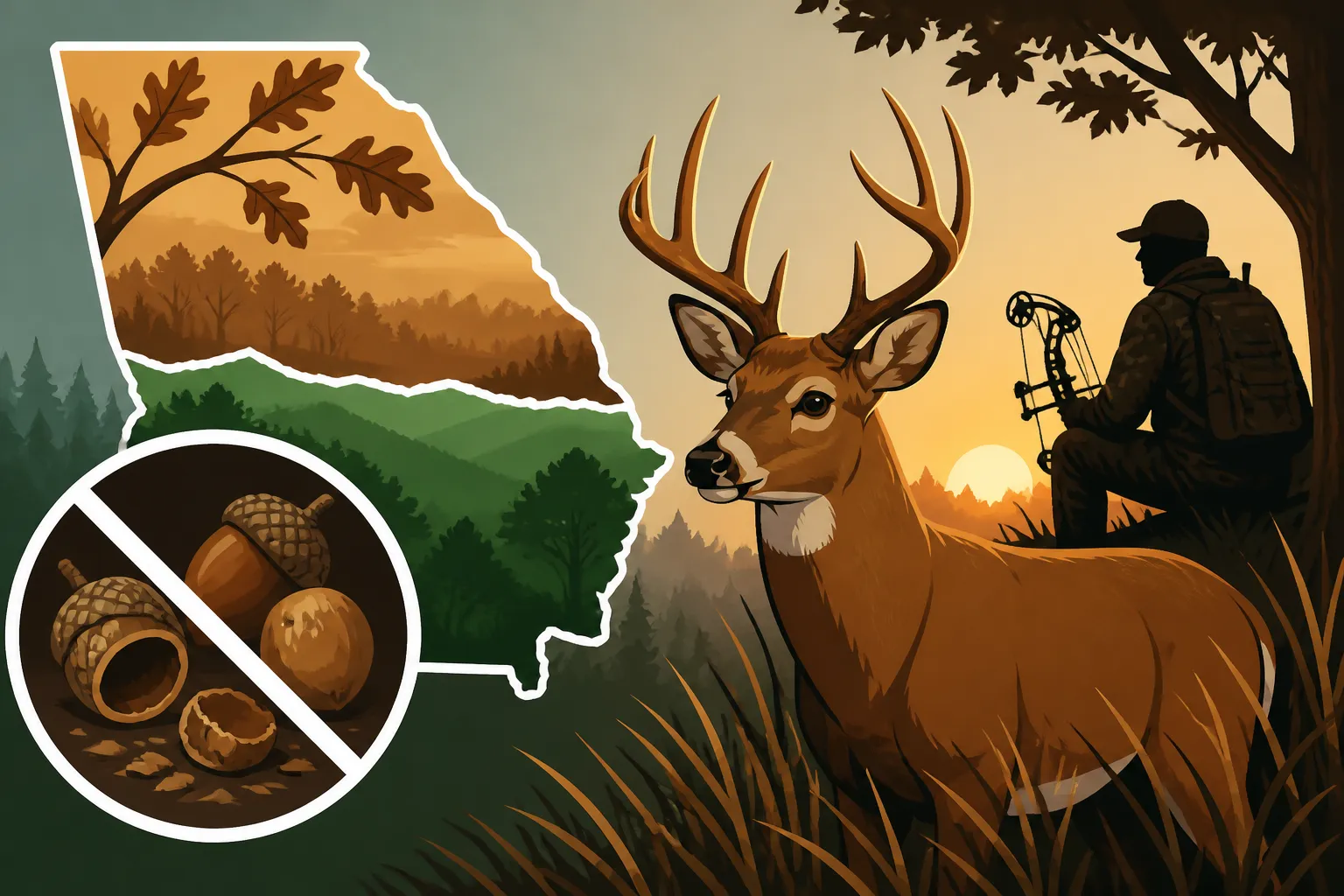
You’ve done all your pre-season scouting, spent countless hours on the stand, and come opening day, those usually bustling acorn flats are eerily quiet. It’s a frustrating scenario many Georgia hunters have faced: a poor acorn crop. When the deer's primary fall food source vanishes, their patterns disappear right along with it, leaving you scratching your head and wondering where all the whitetails went. This guide is here to walk you through exactly why a bad acorn year throws such a wrench into your hunting plans and, more importantly, how to adapt your strategies to still find success across the diverse landscapes of our great state.
The Unseen Impact of a Poor Acorn Year on Deer Behavior
When the oak trees decide to take a year off from dropping their bounty, it’s not just a minor inconvenience for deer; it’s a seismic shift in their world. Acorns, especially the sweeter white oak varieties, are like candy to whitetails. They're packed with carbohydrates and fats, providing essential energy for the upcoming breeding season and winter. When that buffet closes, deer have to adjust, and quickly. This means their usual predictable patterns near oak ridges and bottoms completely fall apart, forcing hunters to rethink everything.
Understanding Deer Dietary Shifts and Movement Patterns
Deer are creatures of habit when resources are plentiful, but incredibly adaptable when they aren't. In a banner acorn year, you’d often find deer consistently feeding under white oaks from late September through October, then shifting to red oaks as the season progressed. Their bedding areas would often be strategically close to these prime food sources. However, when acorns are scarce, these patterns are disrupted. Deer no longer concentrate in historical oak bottoms. Instead, they disperse, sometimes widely, in search of any available alternative food.
This dispersal means that a buck you patterned religiously in velvet, expecting him to stay put near his preferred white oaks, might be a mile or two away by archery season, browsing on honeysuckle or hitting an isolated persimmon tree. Their movement becomes less about a steady commute to a known food plot and more about a scavenger hunt across the landscape. They might move through thicker, less desirable cover for longer distances, making them harder to intercept. This shift in diet and increased travel can make locating deer feel like finding a needle in a haystack, especially if you're relying on old hunting intel from years with abundant acorns. You can’t just set up on a known oak flat and expect results; you have to consider what other options are available in the entire ecosystem.
How Acorn Scarcity Affects Hunting Pressure and Strategy
A poor acorn crop doesn't just change deer behavior; it also fundamentally alters human hunting behavior, often for the worse if hunters aren't adaptable. Many hunters, myself included, have grown up with the mantra of "find the acorns, find the deer." This is sound advice in most years, but it becomes a trap when the acorns aren't there. When everyone is still focusing on barren oak ridges, those areas become heavily pressured, yet devoid of deer. This can lead to frustration, crowded public land spots, and fewer deer sightings for everyone involved.
For the savvy hunter, this presents both a challenge and an opportunity. The challenge is obvious: you have to abandon traditional wisdom and explore new areas. The opportunity lies in the fact that many hunters won't adapt. They’ll either sit in unproductive oak stands or give up entirely. This means that areas with alternative food sources, which might normally see less pressure, could become hotspots. You might find yourself Finding Ground Others Walk Past simply because it doesn't fit the typical "acorn hunting" mold. Adapting your strategy means putting in extra work, going deeper into the woods, and being willing to explore terrain you might have overlooked in previous seasons. It also means relying more on general knowledge of deer biology and local habitat than on a specific, yearly food source.
Identifying Crucial Alternative Food Sources
When acorns fail, Georgia deer don't just starve; they shift their diet dramatically. Your success as a hunter in these lean years hinges entirely on your ability to find what they are eating and where. This often requires a deeper understanding of local botany and a willingness to explore areas you might typically bypass.
Pinpointing Mast Crop Alternatives
While oak acorns are king, they aren't the only mast in the Georgia woods. Other hard mast, like hickory nuts and pecans, can become significant, especially in river bottoms and older hardwood stands. While less preferred due to their harder shells, deer will absolutely work on these when acorns aren't an option. Look for fresh cuttings, sign, and even deer attempting to break them open.
Then there’s the soft mast. This category is often overlooked but can be a lifesaver in a poor acorn year. Wild persimmons, for instance, are a magnet for deer once they start to ripen and drop. A single persimmon tree, especially one producing sweet, soft fruit, can draw deer from a considerable distance. Scout for these solitary trees or small groves, often found on old field edges or within mixed pine-hardwood stands. Muscadines, those big wild grapes, are another soft mast treasure. They grow on vines that can climb high into trees, and when the clusters ripen and fall, they create a natural food source that deer relish. Check creek bottoms and sunny clearings for large muscadine vines. Deer will also browse on smaller, less obvious soft mast like wild plums, elderberries, and even pokeberries in a pinch. Identifying these specific trees and patches of vines is critical, and a tool like GoHunt can help you mark these locations for future reference during your scouting trips.
Agricultural Fields and Natural Browse
Beyond natural mast, agricultural fields become incredibly important in many parts of Georgia. In a year where natural food is scarce, deer will readily hit standing crops like corn, soybeans, and peanuts if they haven't been harvested yet. Even after harvest, the leftover gleanings can still provide a valuable food source. A freshly planted winter wheat or rye field can also be a huge draw, especially as the season progresses and temperatures drop. Farmers often plant these for their own livestock or as cover crops, and deer will take full advantage. Look for tracks entering and exiting fields, and pay close attention to the edges and corners where deer feel safest feeding.
Don't forget the power of natural browse, either. Deer are browsers by nature, meaning they eat leaves, twigs, and shoots of woody plants. While less calorie-dense than acorns or agricultural crops, browse makes up a significant portion of their diet year-round, and its importance skyrockets in a poor mast year. Think about thickets of honeysuckle, greenbrier, blackberry, and various forbs. These are often found in clear-cuts, young pine plantations, and creek bottoms. Deer will seek out the tender new growth. If you see heavily browsed areas, particularly with fresh sign, you’ve found a deer hotspot. Pay close attention to these areas, especially where they intersect with bedding cover or travel corridors. Sometimes, simply knowing Late-Season Food Sources for Georgia Whitetails like these can salvage an entire season.
Supplemental Food Plot Strategies
While natural food sources are paramount, supplemental food plots can play a significant role, particularly on private land where they are legal. In a poor acorn year, a well-maintained food plot can act as a major magnet, drawing deer from miles around. Options like clover, brassicas, oats, or winter wheat can provide essential nutrition when natural forage is limited. The key is planting varieties that are palatable and nutritious, and ensuring they are established early enough to provide food when needed.
For those hunting public lands or areas where food plots aren't an option, understanding that other hunters might be utilizing legal supplemental feeding on adjacent private lands can still inform your strategy. Deer traveling to and from these private food sources will often use specific travel corridors, which you might be able to intercept. Always be mindful of Georgia's regulations regarding baiting and feeding, as rules can vary by county and specific game species. The best strategy is always to focus on legal, natural food sources first, and use supplemental plots only where appropriate and permitted.
Adjusting Your Hunting Tactics and Scouting
When the acorns aren't dropping, your standard hunting playbook needs a serious overhaul. It's time to become a detective, not just a hunter, and understand that deer are going to be more spread out, more focused on survival, and less predictable.
Intensive Pre-Season Scouting and Observation
This is where the rubber meets the road. In a poor acorn year, pre-season scouting isn't just a good idea; it's absolutely essential. Forget driving by the usual oak bottoms and assuming the deer will be there. You need to put boots on the ground, long before the season even opens, and start looking for anything that deer might be eating. That means exploring every creek bottom for muscadine vines, checking old field edges for persimmon trees, and walking through clear-cuts to identify heavily browsed areas.
Look for fresh deer sign like tracks, droppings, and rub lines. Pay attention to what's growing in those areas. Are the persimmon trees loaded with fruit? Are there signs of heavy browsing on honeysuckle thickets? Use tools like the Georgia Outdoors app or GoHunt to mark potential food sources and track deer movement. Aerial photos can also be invaluable for identifying potential food sources like overgrown fields, power line cuts, or natural clearings that might be producing soft mast or lush browse. This kind of Scouting Georgia Public Land Before Season will reveal where deer are truly concentrating their efforts, and it's almost certainly not where you usually find them in a good acorn year.
Locating Key Travel Corridors and Bottlenecks
Even when food sources are scattered, deer still need to travel between bedding areas, water, and these new food hotspots. Your job is to identify these new travel corridors. Deer are creatures of efficiency and safety. They’ll use the path of least resistance, often through thick cover, along creek beds, or through natural funnels.
Think about areas where two types of cover meet, like a pine plantation transitioning into a hardwood bottom, or a swamp edge meeting a field. These transition zones often act as highways for deer. Look for pinch points – narrow strips of cover, fences, or natural features that force deer into a confined space. These bottlenecks are prime locations for ambushing a traveling deer. A creek bottom that winds through an area, offering water, cover, and a linear travel path, can be a major draw. A classic example is Hunting a Funnel Between Two Swamps, where deer are naturally pushed into a narrow strip of dry land. These areas become even more important in a poor acorn year as deer travel greater distances between scattered food sources.
Adapting Stand Locations and Hunting Methods
The days of simply hanging a stand over a white oak flat are gone for this season. Now, your stand placement needs to be near these alternative food sources or the travel corridors leading to them. This might mean setting up on a Setting Up on a Piedmont Field Edge where deer are hitting a winter wheat plot, or deep in a river bottom near a cluster of muscadine vines.
Consider using ground blinds in areas with limited suitable trees for treestands, especially near field edges or thickets. Using a Ground Blind on Georgia Public Land can provide excellent concealment and allow you to set up quickly in a new, promising spot. You might also need to adjust your hunting times. Deer might feed longer into the morning or start earlier in the afternoon if they're spending more time searching for food.
Also, don't underestimate the impact of wind and thermals, especially if deer are traveling through varied terrain. Understanding Wind and Thermals on a Mountain Ridge or even in flat bottomlands is crucial when deer movements are less predictable. A shifting wind can quickly blow your cover, especially if deer are approaching a scattered food source from an unexpected direction. Be prepared to move your stand or blind frequently as you gather new intel on deer movement in response to the limited food. This flexibility is key to success when the primary food source is gone.
Regional Considerations for Acorn Shortages
Georgia is a diverse state, and a poor acorn year impacts each region differently. The alternative food sources and terrain vary dramatically from the mountains to the coast, meaning your adaptive strategies need to be tailored to your specific hunting grounds.
North Georgia Mountains
In the rugged terrain of the North Georgia Mountains, a poor acorn crop can make hunting particularly challenging. Here, deer rely heavily on hard mast from oaks and hickories that dot the hillsides. When these are absent, deer will descend into creek bottoms and seek out any remaining green forage, such as honeysuckle, greenbrier, and laurel thickets. Wild grapes and persimmons, if present, become incredibly valuable.
Hunters in these areas should focus on lower elevations, creek drainages, and areas with dense undergrowth. Look for benches and saddles that still provide travel routes, but now connect to these alternative food sources rather than barren oak ridges. Understanding Reading a Ridge for North Georgia Deer still applies, but you're now looking for sign that points toward thicker, browsable areas rather than wide-open oak forests. Deer will often utilize dense rhododendron and mountain laurel patches for both cover and browse when other options are scarce. They might also venture into old apple orchards or patches of wild crabapples that can be found on old homestead sites within the national forest.
Piedmont Farmlands
The Piedmont region, with its mix of rolling hills, pine plantations, and scattered agricultural fields, offers a different set of challenges and opportunities. When acorns are scarce, deer here will heavily key in on agricultural crops like soybeans, corn, and winter wheat. Even small, isolated patches of green forage can become significant. Old fallow fields, regenerating clear-cuts, and pine plantations with good understory growth will hold deer.
Look for heavily browsed areas within pine plantations, where species like honeysuckle and young briars thrive. Field edges are always critical, but even more so in a poor acorn year. Deer will spend more time in fields, increasing your chances of an encounter. If you’re Hunting Piedmont Farmland Deer, focus on the transition zones between fields and thick cover, or creek bottoms that offer a natural travel corridor and pockets of green browse. Often, deer will stage in these thick edges before entering fields at dawn and dusk. Pay attention to smaller, less obvious food sources like wild plums or muscadine patches found along fence rows and property lines.
Coastal Plain and Swamp Country
South Georgia’s Coastal Plain and extensive swamp systems present yet another unique scenario. While live oaks and water oaks provide some mast, many areas rely on a broader range of food sources. In a poor acorn year, deer in these regions will heavily utilize palmetto thickets, gallberry, greenbrier, and various aquatic plants. Cypress swamps and river bottoms offer a wealth of vegetation that remains green longer into the fall.
When Hunting Georgia Swamp and River Bottom Deer, you'll want to concentrate your efforts along the edges of these water systems and within areas of slightly higher ground. Look for sign where deer are browsing on new growth within dense thickets, or where they are moving between these areas and any available soft mast. For instance, deer might congregate around isolated groups of persimmon trees on higher ground within a swamp system. Also, cultivated fields, especially peanuts and soybeans, are huge magnets in the Coastal Plain. Deer will regularly move out of the thick cover of the swamps and pine flats to feed in these fields. Scouting for tracks and fresh droppings along field edges and within transitional cover will be key. Knowing Where South Georgia Pine Flat Bucks Bed can help you pinpoint travel routes to these crucial food sources.
Deer Food Source Adaptations in a Poor Acorn Year
To better illustrate how deer shift their dietary focus when acorns are scarce, here's a quick overview of primary and alternative food sources you should be looking for in Georgia.
| Food Source Category | Good Acorn Year (Primary Focus) | Poor Acorn Year (Shifted Focus) | Key Characteristics |
|---|---|---|---|
| Hard Mast | White Oak Acorns, Red Oak Acorns | Hickory Nuts, Pecans | High in calories, fat. |
| Soft Mast | Minimal focus | Wild Persimmons, Muscadines, Wild Plums | Sweet, easily digestible. |
| Agricultural Crops | Occasional visits | Corn, Soybeans, Peanuts, Winter Wheat | High energy, often preferred. |
| Natural Browse | Consistent, but secondary | Honeysuckle, Greenbrier, Briars, Forbs | Year-round, crucial for survival. |
| Aquatic Vegetation | Minimal focus | Water plants (swamp areas) | Available in wet habitats. |
This table clearly shows the dramatic shift. While deer always consume some browse, its importance, alongside alternative mast and agricultural crops, skyrockets when the acorn supply runs dry. This makes scouting for these alternatives paramount for a successful season.
Disclaimer
Hunting involves inherent risks, including but not limited to those associated with firearms, archery equipment, wildlife, and natural terrain. Always prioritize safety, adhere to all local, state, and federal hunting regulations, and consider seeking professional guidance or additional training. The information provided in this guide is for informational purposes only and should not be considered a substitute for official safety courses, regulations, or expert advice.