Best Georgia Counties for Big Bucks
It’s a tale as old as time for Georgia hunters: you dream of that monster buck, the one with the heavy rack and the mature body, but finding him feels like searching for a needle in a haystack. While good deer can be found across our beautiful state, some counties consistently produce bigger, older bucks, and knowing where to focus your efforts can dramatically increase your odds. This guide will help you understand why certain areas excel and point you toward Georgia's top counties for big bucks, so you can spend less time guessing and more time hunting strategically.
The Secret Sauce: Why Some Counties Grow Bigger Bucks
You might wonder why deer in one county seem to have better antlers and larger bodies than those just a few miles down the road. It’s not just luck; it’s a delicate balance of factors that create the ideal environment for a buck to reach his full potential. Understanding these elements is key to targeting the right areas, even before you start thinking about your Treestand Setups in North Georgia Mountains or Still-Hunting South Georgia Pine Flats.
Nutrition and Habitat Quality
This is arguably the most critical factor. Bucks, like all living creatures, need quality nutrition to grow. A young buck growing his first antlers is essentially pouring all his excess energy into that bone growth. If he's got access to a consistent, high-protein diet throughout the year, he’s going to build a better rack than a buck constantly struggling to find enough to eat.
In Georgia, this often translates to agricultural areas. Counties with extensive peanut, soybean, corn, and winter wheat fields provide a buffet for deer. These crops offer rich protein and carbohydrates, essential for antler development and overall body mass. Think of a deer browsing on lush clover versus one picking through sparse, overbrowsed woods. The difference in their nutritional intake is profound. Beyond agriculture, a diverse natural habitat with plenty of browse, soft mast (persimmons, muscadines), and hard mast (acorns from various oak species) is crucial. Areas with a good mix of mature hardwoods, pine plantations managed with prescribed burns, and riparian zones along creeks and rivers create a diverse food supply that buffers against lean times. This diverse habitat also provides excellent cover for deer to feel secure, reducing stress and allowing them to feed more consistently.
Genetics and Age Structure
While often debated, genetics do play a role. A deer herd with a history of producing larger-bodied animals with good antler conformation can certainly influence what you see. However, superior genetics can only express themselves if a buck lives long enough and has access to ample nutrition. You can have a deer with championship genetics, but if he's harvested as a 1.5-year-old or constantly scrounging for food, he'll never be a trophy.
This brings us to age structure – allowing bucks to mature. Most deer won't show their full antler potential until they are 3.5, 4.5, or even 5.5 years old. In areas with high hunting pressure or a "if it's brown, it's down" mentality, bucks rarely get to see those older age classes. When a property or a county consistently practices quality deer management, perhaps through voluntary antler restrictions or a culture of passing on young bucks, the age structure improves, and you start seeing those truly impressive deer. It's a long-term investment, but one that pays off handsomely in trophy potential.
Hunter Pressure and Management Practices
This factor ties heavily into age structure. When hunting pressure is intense, particularly on public lands or smaller private tracts, bucks are often harvested before they can mature. They become more nocturnal, more wary, and harder to find during legal hunting hours.
In counties known for big bucks, you often find a significant amount of private land with dedicated hunters or clubs that implement strict management plans. This might include protein feeding, strategic food plot planting, controlling doe numbers to balance the herd, and setting minimum age or antler size limits for bucks. These practices lead to healthier deer, better buck-to-doe ratios, and a higher percentage of mature animals. Even on public land, less accessible areas or those with specific management designations can sometimes offer better opportunities simply because fewer hunters penetrate deep into them. Understanding the difference between Georgia Antlered Buck Limits and local management goals is important.
North and Central Georgia's Big Buck Producers
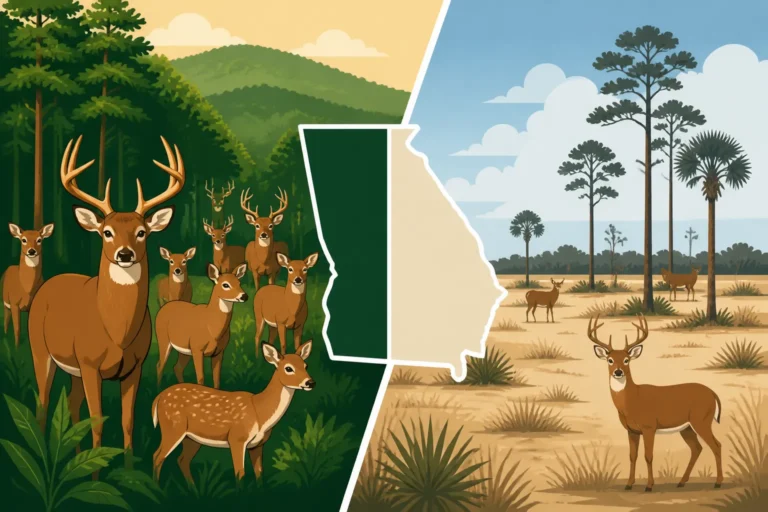
When you think of big bucks in Georgia, your mind might jump straight to the vast agricultural fields of the Coastal Plain. But don't sleep on North and Central Georgia! The Piedmont and even the fringes of the mountains offer some fantastic opportunities, especially for hunters willing to work a little harder. These areas have a unique blend of hardwoods, rolling terrain, and scattered agriculture that can grow impressive deer.
Piedmont Powerhouses: Oglethorpe, Wilkes, and Morgan Counties
These counties, and others like them in the Georgia Piedmont, often fly under the radar for trophy potential compared to their southern counterparts, but they consistently produce some magnificent bucks. The terrain here is characterized by rolling hills, a mix of mature pine and hardwood forests, and significant agricultural activity – often smaller, family-run farms rather than vast industrial operations.
What makes them so good? It's often the blend of diverse habitat and the presence of fertile soils. The red clay of the Piedmont, while challenging for some crops, supports lush natural browse and hardwoods that drop abundant acorns. Interspersed with these natural areas are fields of soybeans, corn, and winter wheat, providing excellent supplemental nutrition for deer. This region benefits from a good balance of natural food sources and agricultural crops. Hunters here often focus on river and creek bottomlands, which act as natural funnels and provide consistent food and cover. Areas around the Oconee River and its tributaries, for instance, are classic big buck territory. Scouting these areas thoroughly, perhaps by Reading Aerial Photos for Piedmont Deer, can reveal hidden gems. Many of these counties also have a strong tradition of private land ownership, with clubs and landowners who are passionate about quality deer management.
Mountain Fringe Giants: Fannin and Union Counties
While the truly mountainous regions of North Georgia can be tough hunting, the counties on the fringes, where the mountains start to give way to rolling foothills, can be surprisingly good for big bucks. Fannin and Union counties, for example, have areas that offer significant challenges but also significant rewards. The deer here might not always reach the sheer body weight of a South Georgia farm buck, but they often carry impressive antler mass and character, adapted to their rugged environment.
The key here is understanding the habitat. You'll find extensive tracts of Chattahoochee National Forest land, which can be challenging due to hunting pressure, but also smaller private parcels, timber company lands, and agricultural pockets in the valleys. Bucks in these areas utilize varied terrain, from steep hardwood ridges to bottomland creek drainages. They are masters of using elevation and thick cover to their advantage. The "secret" to hunting these areas often lies in identifying less-pressured pockets, focusing on natural food sources like acorns on oak ridges, and understanding how Wind and Thermals on a Mountain Ridge affect deer movement. This kind of hunting is less about sitting over a food plot and more about rigorous scouting and adapting to the deer's movements in their natural, wild environment.
| North/Central Georgia Big Buck Counties | Key Characteristics | Hunting Strategy Focus |
|---|---|---|
| Oglethorpe, Wilkes, Morgan | Rolling hills, mixed hardwoods/pines, scattered agriculture (corn, beans, wheat), fertile soils. | Creek bottom funnels, field edges, mast crop monitoring, private land access. |
| Fannin, Union | Mountain foothills, extensive timber (National Forest), steep ridges, valley agriculture, varied natural browse. | Remote public land, ridge-top saddles, acorn flats, understanding thermals. |
South Georgia's Big Buck Hotbeds
When most hunters think of "big bucks" in Georgia, their minds almost immediately drift south to the vast, fertile farmlands and dense river bottoms of the Coastal Plain. And for good reason! This region is a true powerhouse for growing trophy deer, consistently producing some of the state's largest and oldest bucks. The combination of abundant food, diverse habitat, and often excellent management practices makes these counties legendary.
The Agricultural Belt: Worth, Dougherty, and Lee Counties
Welcome to Georgia's agricultural heartland, where deer live a life of luxury. Counties like Worth, Dougherty, and Lee, along with neighboring Terrell, Crisp, and Tift, are synonymous with big deer. The landscape here is dominated by immense fields of peanuts, cotton, corn, and soybeans, often rotating crops, ensuring a year-round smorgasbord for the local deer herd.
The rich, deep soils of this region, combined with the intense agricultural production, provide an unparalleled nutritional base. Bucks don't have to travel far to find high-quality forage, which directly translates into rapid body growth and impressive antler development. This area often boasts very high deer densities, and while that can mean more deer overall, it's the sheer abundance of food that allows a significant percentage of bucks to reach maturity with astounding antler growth. Hunters often focus on transition areas between dense pine plantations or thickets and the vast open fields, or along the meandering creeks and small swamps that crisscross the agricultural landscape. Finding an "island" of cover within these fields, or a small block of hardwoods, can be a goldmine. This is where a tool like GoHunt, with its detailed satellite imagery and property line overlays, can be absolutely invaluable for identifying those overlooked pockets and planning your approach.
River Bottom Giants: Early, Miller, and Seminole Counties
While agriculture is a major driver, the mighty river systems of South Georgia also create prime habitat for trophy bucks, particularly in the southwest corner of the state. Counties such as Early, Miller, and Seminole, often bordering the Chattahoochee or Flint Rivers, offer a different, but equally potent, formula for big bucks.
These river bottoms are characterized by incredibly fertile alluvial soils, supporting dense stands of hardwoods like various oak species, cypress, and tupelo. These areas flood seasonally, creating incredibly rich ground that produces abundant natural mast crops. The river corridors themselves serve as natural travel routes and sanctuaries for deer, especially mature bucks seeking refuge from human activity. The sheer thickness of the cover in these swamps and river bottoms makes hunting challenging, but it also allows older bucks to escape detection and reach advanced age. The deer here are often accustomed to navigating water and dense vegetation. If you're looking for a genuine challenge and the chance at a true swamp monster, these are your counties. Hunting methods here might involve Hunting Georgia Swamp and River Bottom Deer, focusing on high ground within the lowlands, or finding travel corridors along the edges of the swamps. Remember, these bucks are often conditioned to human pressure along roadsides, so getting deep into the less accessible areas can be key. This is also the region where you find the Extended Southwest Georgia Season, giving hunters extra opportunities.
Beyond the County Line: Maximizing Your Chances
Knowing which counties have a reputation for big bucks is a great starting point, but it's far from the whole story. Even in the best counties, you still need solid strategies to actually put one of those giants on the ground. It's about combining location with smart hunting practices.
The Indispensable Value of Year-Round Scouting
You simply cannot overstate the importance of scouting. A county might be a big buck hotbed, but if you don't know where the deer are moving, feeding, and bedding on your particular tract of land, you're just guessing. Off-season scouting, long before opening day, is crucial. This means walking the property, looking for old rubs and scrapes from the previous season, identifying bedding areas, and understanding access points.
As the season approaches, and especially during it, focus on fresh sign. Look for heavily used trails, fresh droppings, and new rubs. Pay attention to food sources that are currently available – whether it's acorns dropping, a farmer's peanuts coming out of the ground, or a late-season green field still drawing deer. Using trail cameras year-round can give you invaluable intelligence on buck patterns, travel routes, and even specific individual bucks. Many hunters use apps like GoHunt to mark waypoints, plot travel routes, and analyze aerial and topographic maps. This technology has revolutionized scouting, allowing you to virtually "walk" the property and identify potential pinch points or cover before you even step foot in the woods. This is especially helpful if you're Scouting Georgia Public Land Before Season.
Prioritizing Age Structure and Herd Health
Even in a great county, responsible hunting plays a huge role in maintaining the quality of the deer herd. If every legal buck that walks by gets shot, it's hard for the average age of the herd to climb, which means fewer truly mature, trophy-class bucks. Many private land operations and serious hunters adhere to self-imposed antler restrictions or simply choose to pass on younger bucks, allowing them another year or two of growth.
Focusing on herd health also means being willing to harvest antlerless deer if necessary to keep the population balanced with the available habitat. An overpopulation of does can put undue stress on food resources, which can negatively impact antler development in bucks. By ensuring a healthy buck-to-doe ratio and allowing bucks to age, you are actively participating in growing bigger bucks, not just hoping to find one. This long-term mindset benefits everyone in the hunting community.
Strategic Hunting and Adaptability
Once you've identified a promising county and scouted your specific hunting area, your in-season tactics become paramount. Big bucks didn't get big by being easy to hunt. They are wary, often nocturnal, and incredibly sensitive to pressure.
This means paying meticulous attention to details:
- Wind and Scent Control: A mature buck will bust you every time if your scent is in his wind cone. Always hunt with the wind in your favor.
- Entry and Exit Routes: Plan your approach and departure so you don't spook deer, especially those in bedding areas.
- Cover: Use natural terrain and vegetation to break up your outline, whether you're in a stand or on the ground. Using a Ground Blind on Georgia Public Land can be a great option.
- Adaptability: Don't stick to a failing plan. If the deer aren't moving where you expected, move your stand, try a different food source, or adjust your timing. The rut, for example, can completely change deer movement patterns, making Hunting the Georgia Rut in Mid-October a unique challenge. Be ready to move, whether it's a short stalk or relocating your stand.
While big bucks can appear anywhere in Georgia, by focusing your efforts on these high-potential counties and combining that with diligent scouting and smart hunting strategies, you significantly tilt the odds in your favor. Good luck out there, and may your season be filled with heavy racks and lasting memories!
Disclaimer
This article is for general informational purposes only and does not constitute professional advice. Laws, prices and regulations vary by location and change over time. Consult a qualified professional for guidance on your specific situation.