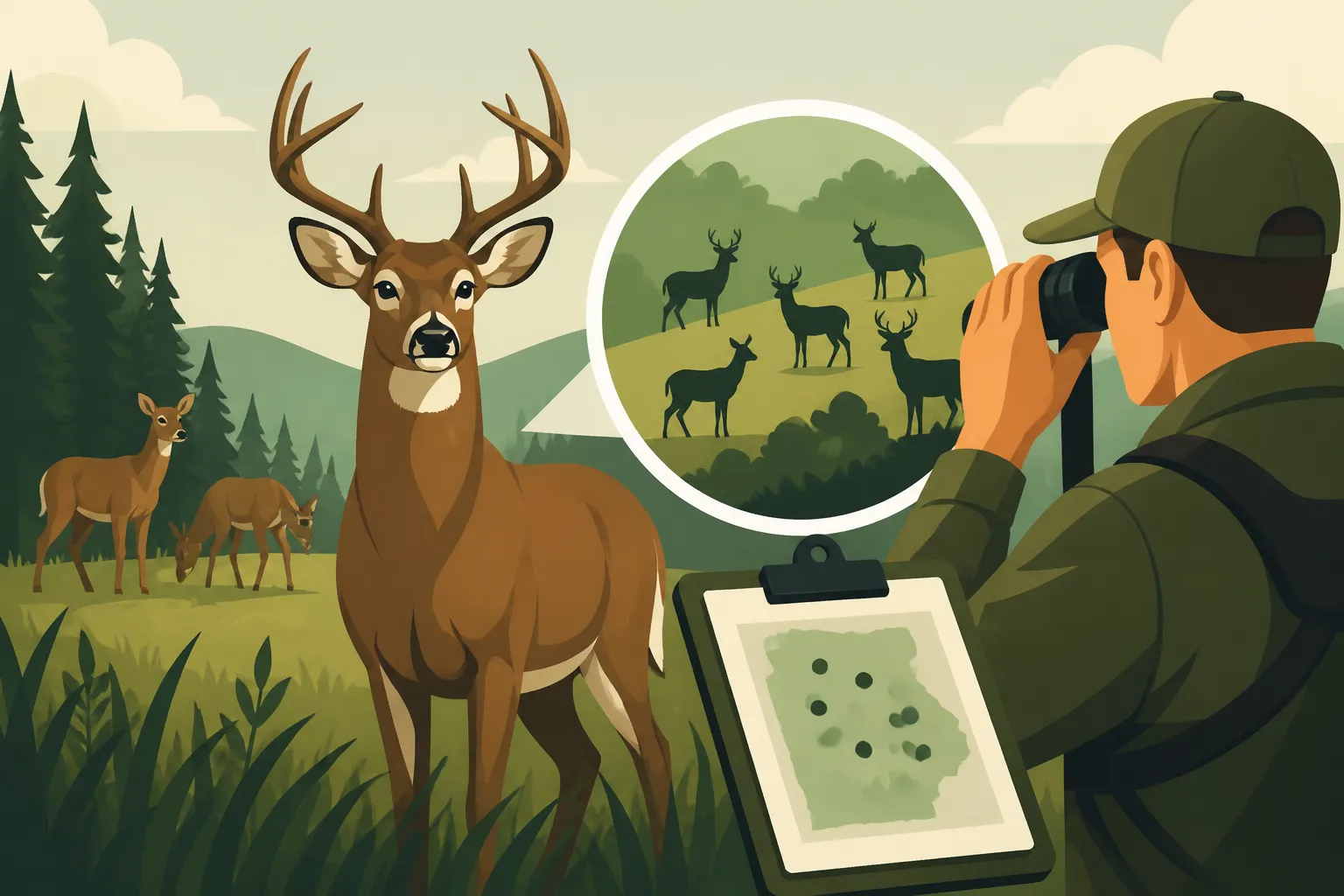
How Georgia DNR Counts the Deer Herd
It's a question every Georgia hunter has probably pondered while sitting in a treestand, watching a doe pass by: just how many deer are actually out there? And how on earth does the Georgia Department of Natural Resources (DNR) come up with those population estimates? It can feel like guesswork sometimes, but there's a serious science behind how our state's deer herd is counted and managed. This guide will pull back the curtain on the various methods Georgia DNR employs to understand our whitetail population, ensuring healthy herds for generations of hunters.
The Challenge of Counting Every Hoof
Let's be real, trying to get an exact headcount of every white-tailed deer in Georgia is about as feasible as counting every leaf in the Okefenokee Swamp. Deer are masters of camouflage, they move, they reproduce, and they inhabit incredibly diverse and often dense terrain, from the rugged mountains of North Georgia to the sprawling pine plantations of the Coastal Plain. The idea of a literal "count" is a misconception; what wildlife managers do is estimate populations using a variety of scientific methods that, when combined, provide a remarkably accurate picture of the herd's health and density. It's a complex puzzle, and each piece of data helps to build a more complete image.
Think about a small, private tract you hunt. Even with a handful of trail cameras and diligent scouting, getting a true number of deer on that 50-acre parcel is tough. Now expand that to over 37 million acres across an entire state, with varied habitats, different levels of hunting pressure, and a constantly changing landscape. It quickly becomes clear why direct counting simply isn't an option. The DNR's job is to apply techniques that give them reliable estimates of population trends, density, and health indicators, which are far more useful for long-term management than a single, impossible-to-get number.
Historically, wildlife agencies might have relied more heavily on general observations or very localized studies. While these had their place, they lacked the precision and broad scope needed for modern, data-driven management. Today, with advancements in technology and statistical modeling, the methods are far more robust, allowing for more informed decisions about bag limits, season lengths, and special hunts.
Modern Approaches to Deer Herd Estimation
The Georgia DNR employs a combination of direct and indirect methods to estimate and monitor the white-tailed deer population. It's not just one magical formula; it’s a mosaic of data points that, when stitched together, reveal crucial insights into the herd's dynamics. These methods help them understand population density, health, reproductive success, and the overall age and sex structure of the deer.
Spotlight Surveys and Thermal Imaging
One of the more direct methods, though still an estimation, involves spotlight surveys. These are typically conducted at night along predetermined routes, often on Wildlife Management Areas (WMAs) or other accessible properties. Wildlife biologists drive slowly, shining powerful spotlights into fields, clear-cuts, and open timber, counting every deer they see and often categorizing them by age class and sex. While you don't count every deer this way, consistent routes over multiple years provide invaluable trend data. If the number of deer spotted on a particular route goes up or down consistently, it indicates a change in the local population.
Newer technologies, such as thermal imaging, are also being explored and adopted. Thermal drones and handheld units can detect the heat signatures of deer, even in dense cover or after dark, offering a more efficient and less invasive way to survey. Imagine a biologist walking a specific transect, but instead of just seeing what the human eye can catch, they're seeing the invisible heat signatures. This allows for more accurate counts in challenging environments and reduces the chances of deer being missed due to their natural camouflage. These tools are particularly useful in areas where traditional spotlighting is difficult due to terrain or vegetation.
Trail Camera Surveys
With the explosion of affordable and effective trail cameras, hunters aren't the only ones using them. Wildlife agencies now leverage large-scale trail camera surveys, particularly on public lands or cooperating private properties. These surveys involve setting up a grid of cameras, often baited or placed on high-traffic areas, to capture images of deer over a set period. Software can then be used to identify individual deer (if they have unique markings or antler configurations) or simply count the number of deer observed. This provides data on buck-to-doe ratios, fawn recruitment rates, and even population density through various mark-recapture statistical models.
Many hunters use apps like GoHunt to analyze their own trail camera data, and the principles are similar. By consistently collecting data from numerous cameras spread across different regions, the DNR can get a robust sample size. For instance, knowing the Georgia Buck Age Structure and how many fawns are observed per doe can indicate the reproductive health and sustainability of a local herd. These surveys are typically done during late summer or early fall when fawns are visible and before hunting pressure drastically alters deer movement patterns.
The Critical Role of Hunter Harvest Data
While spotlight and camera surveys provide estimates of populations before hunting season, the data collected from hunters after a successful harvest is absolutely indispensable to Georgia DNR's management strategy. Every deer checked, every jawbone submitted, every report filed provides a piece of the puzzle that helps paint a comprehensive picture of the state's deer herd.
Georgia Game Check and Harvest Reporting
Perhaps the most direct and ongoing source of population data comes from hunters themselves, through the mandatory Georgia Game Check system. When you successfully harvest a deer, you're required to report it to the DNR, whether through the Go Outdoors Georgia app, online, or by phone. This isn't just a formality; it's a vital data collection point. Each reported deer contributes to the overall Georgia Deer Harvest Records, allowing the DNR to track year-to-year trends in harvest numbers, harvest locations, and even the sex and approximate age class of taken deer.
If the harvest numbers for a particular county consistently increase, it might suggest a healthy or growing population. Conversely, declining harvest numbers could signal a need for more conservative regulations. This system also helps the DNR monitor the impact of specific regulations, such as the statewide Georgia's Twelve-Deer Bag Limit or region-specific antler restrictions. The volume of data collected through Game Check is immense and forms the backbone of adaptive management strategies.
Age and Condition Analysis
Beyond simply reporting a harvest, some hunters participate in voluntary programs, or mandatory ones in areas like Georgia's Chronic Wasting Disease Management Area, where biologists collect additional data directly from harvested deer. This often involves examining jawbones to determine the deer's age through tooth wear and replacement. Knowing the age structure of harvested bucks and does is crucial. If most harvested bucks are 1.5 years old, it indicates high hunting pressure on young deer. If more older bucks are being harvested, it suggests a more mature herd structure, potentially due to regulations like quality deer management initiatives.
Biologists also assess the physical condition of harvested deer, looking at factors like body weight, antler size (for bucks), and fat reserves. A deer that is thin or has poor antler development in an area suggests that the population might be exceeding the carrying capacity of the habitat, leading to nutritional stress. This kind of data provides direct evidence of habitat quality and deer health. For example, understanding Piedmont Versus Coastal Plain Deer growth rates and average weights can inform regional management goals, as habitat and food availability vary significantly across the state.
| Data Source | What It Measures | How It Informs Management |
|---|---|---|
| Spotlight/Thermal Surveys | Deer density, relative abundance, buck-to-doe ratios | Identifies population trends (increasing/decreasing), helps set initial harvest quotas. |
| Trail Camera Surveys | Population density, fawn recruitment, age structure | Gauges reproductive success, confirms population health, informs Georgia Antlered Buck Limits strategies. |
| Hunter Harvest Data | Total harvest, location, sex/age of harvested deer | Directly measures hunting pressure, validates population trends, helps adjust bag limits and season lengths. |
| Jawbone/Condition Analysis | Age structure, physical health, antler quality | Reveals herd maturity, identifies nutritional stress, guides habitat improvement projects and targeted harvest. |
| Disease Monitoring | Presence and spread of diseases (e.g., CWD, EHD) | Crucial for public health and herd health, informs carcass movement restrictions and special testing areas. |
Using Data to Shape Hunting Regulations
All this meticulous data collection isn't just for curiosity's sake; it directly translates into the hunting regulations that impact us every season. The Georgia DNR uses this comprehensive understanding of the deer herd to make informed decisions that aim to balance hunter opportunity with long-term herd health and sustainability. It's a continuous cycle of data collection, analysis, and adjustment.
Setting Season Lengths and Bag Limits
One of the most visible ways this data influences us is in the setting of season lengths and bag limits. If data from surveys and harvest reports indicates a robust and growing deer population in a certain region, the DNR might decide to maintain generous bag limits, such as the ability to harvest multiple antlerless deer, or even extend season dates to allow for more harvest pressure. Conversely, if surveys show a decline in deer numbers or poor fawn recruitment, the agency might shorten seasons or reduce bag limits to protect the herd and allow for recovery.
For example, understanding Deer Density by Georgia Region helps the DNR tailor regulations to specific areas. The goals for deer management in the heavily forested, lower-density mountain regions are often different from those in the high-density agricultural areas of the Coastal Plain. This data-driven approach ensures that regulations are not one-size-fits-all but are instead scientifically justified for each unique ecological zone within Georgia.
Managing for Herd Health and Quality
Beyond sheer numbers, the DNR also manages for herd health and quality. This involves using data to promote a balanced age structure among bucks and to ensure that the doe population is healthy and reproductive. Regulations, such as antler restrictions or specific youth hunting weekends like Hunting the Georgia Youth Deer Weekend, are often put in place to achieve these goals. By limiting the harvest of young bucks, for instance, the DNR aims to allow more bucks to reach older age classes, potentially leading to larger antlers and a more natural social structure within the herd.
When we talk about managing for quality, it's not just about trophy antlers, though that's a nice byproduct. It’s about creating a sustainable and resilient deer population that is less susceptible to disease and more adaptable to environmental changes. The ongoing monitoring of disease, such as in Georgia's Chronic Wasting Disease Management Area, also influences management decisions, leading to mandatory testing or carcass movement restrictions to protect the wider herd. This proactive approach helps ensure that the future of Georgia hunting remains bright and healthy.
Disclaimer
This article is for general informational purposes only and does not constitute professional advice. Laws, prices and regulations vary by location and change over time. Consult a qualified professional for guidance on your specific situation.