Entry Routes Through a Standing Peanut Field
Hunting standing peanut fields in Georgia presents a unique and often frustrating challenge for deer hunters. You know the drill: you’ve scouted, you’ve seen the deer sign, but getting into position without blowing out every whitetail in a quarter-mile radius feels like an impossible feat. The deer are thick in there, munching away, but their senses are on high alert, and the wide-open nature of a field offers little forgiveness. This guide is all about cracking that code – helping you find those stealthy entry routes that put you in the game, not chasing deer out of it.
Understanding Deer Behavior in Peanut Fields
Peanut fields are veritable deer magnets, especially during the early archery and primitive weapons seasons in Georgia. They represent an irresistible combination of high-energy food and dense cover, a sanctuary many deer are reluctant to leave. But to hunt them effectively, you first have to understand why deer are drawn to them and how they use them.
Why Deer Love Peanuts
Imagine a deer looking for an easy meal and a safe place to hide. Peanut fields offer both in abundance. The peanuts themselves are incredibly rich in protein and fat, providing a crucial energy boost as deer prepare for the colder months and the rigors of the rut. It’s like a five-star buffet for them, available right at ground level. Unlike acorns or browse that can be scattered or require more effort to find, peanuts are a consistent, plentiful food source laid out just for them.
Beyond the caloric bounty, a standing peanut field provides exceptional security cover. The dense, leafy canopy of the peanut plants, often waist-high or taller, offers a visual barrier that makes deer feel secure. They can bed down right in the middle of the field, undetectable from human eyes, and simply stand up to feed. This combination of food and cover means deer spend a significant amount of time within the field, making any approach from the outside incredibly difficult without alerting them. They’re not just passing through; they’re living there.
Common Entry and Exit Patterns
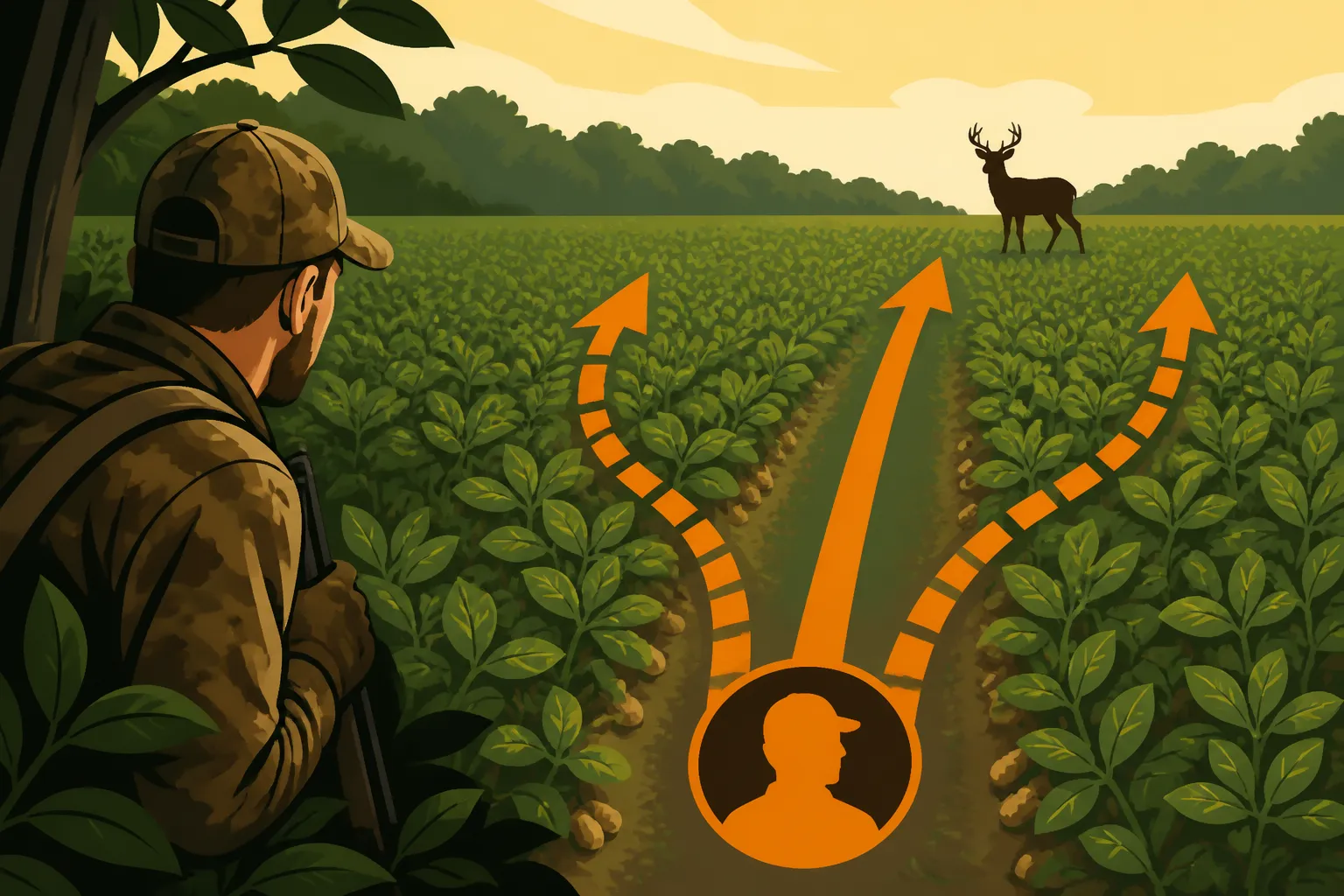
Deer aren't just randomly wandering into and out of peanut fields. Their movements are often predictable, especially once you've spent some time observing or scouting. Typically, deer will stage in thicker cover adjacent to the field during daylight hours, often in a nearby woodlot, pine thicket, or even a creek bottom. As dusk approaches, they'll filter out of this cover and into the peanuts to feed, sometimes not moving far from the edge, other times venturing deep into the heart of the field.
Conversely, as dawn breaks, they'll often move from the peanut field back to their bedding areas in the heavier cover. You'll often find distinct trails leading from the woods straight into the field, particularly in corners or along natural funnels where two types of cover meet. Learning to identify these main thoroughfares is critical. They might use a specific fence line crossing, a dip in the terrain, or even a narrow strip of uncut weeds. The key is that these patterns are usually consistent, offering you potential ambush points if you can get there undetected.
Scouting Strategies for Discreet Entry
Discreet entry into a peanut field setup starts long before you ever carry a weapon into the woods. It begins with meticulous scouting, both from afar and on the ground, but always with the paramount goal of minimizing your disturbance. You're essentially playing a game of chess, planning your moves without tipping off your opponent.
Pre-Season Aerial Reconnaissance
Before you ever set foot near the field, pull out your mapping apps. Tools like GoHunt are invaluable for this stage. Start by identifying the peanut fields themselves and then zoom out to see the surrounding landscape. Look for natural features that can serve as cover or funnels: creek beds, drainage ditches, logging roads, hedgerows, or thick timber lines. These are your potential travel corridors. Pay close attention to corners of the field where timber or dense brush might create a natural pinch point, forcing deer traffic into a smaller area.
Consider access roads, driveways, or even neighboring property lines. Where can you park that's out of sight and won't spook deer approaching the field? Where can you walk from your vehicle to your chosen entry point without crossing open ground or exposing yourself? Look for those subtle changes in elevation, even a slight rise or dip, that can offer precious moments of concealment as you approach. Plot out several potential entry and exit routes on your map. It's much easier to do this from the comfort of your home than trying to figure it out in the dark before a hunt.
On-the-Ground Sign Reading
Once you have a few potential areas marked on your map, it's time for some on-the-ground investigation. However, this must be done with extreme caution. The last thing you want to do is march through the peanut field during midday, leaving your scent and spooking deer that might be bedded within it. Focus your efforts on the edges of the field, especially where it meets thicker cover. Look for fresh tracks, heavily used trails, droppings, and even rubs or scrapes along the timber line. These are all indicators of deer activity and preferred travel routes.
Walk parallel to the field edges, staying just inside the timber or brush line, observing where trails enter the field. Are there specific points where deer cross a fence or push through a particular section of thicker vegetation? Note these down. You might also find game trails that run just inside the timber, parallel to the field. These can be excellent, low-impact routes for you to use. Remember, this scouting is about confirming your aerial observations and identifying the most active entry/exit points without disturbing the field itself. If you must enter the field, do so quickly, staying close to the edge, and only at times when deer are least likely to be present, like midday. For more on how to identify these natural choke points, check out our guide on Hunting a Funnel Between Two Swamps.
Developing Effective Entry Routes
With your scouting complete, it’s time to formalize your entry routes. This involves combining your knowledge of deer movement with a keen understanding of the terrain, wind, and your own stealth. A good entry route isn't just a path; it's a meticulously planned approach that gives you the advantage.
Utilizing Natural and Man-Made Cover
The key to a successful entry is to stay hidden. Look for anything that can break up your silhouette and conceal your movement. Ditch lines and creek beds, even if dry, offer fantastic low-profile approaches. These depressions in the landscape allow you to move below the natural sightline of deer. Just be mindful of the wind in these areas, as thermals can act differently in a ditch. Fence rows, especially those with overgrown brush or small trees, can provide a linear screen to walk behind.
Timber edges are your best friend. Always try to approach with timber or dense brush between you and the open field. Walk just inside the timber line, using the trees and undergrowth for concealment. If the peanut crop itself is tall and dense enough, and the wind is absolutely perfect, you might be able to use the crop as cover for a very short distance, but this is incredibly risky due to scent and noise. Your best bet is to find those hidden lanes outside the main field or use the natural breaks in the land. Think about how deer use these features to move undetected, and then mirror their strategy.
Wind Direction and Scent Control
This cannot be stressed enough: wind direction is paramount, especially when hunting a food source like a peanut field where deer are often relaxed and feeding. Your entry route must take the wind into account. You never want your scent blowing into the field or across a known deer trail that leads to the field. Ideally, you want to approach with the wind in your face or quartering to you, carrying your scent away from where you expect deer to be.
Before every hunt, check the wind forecast. Have multiple entry routes planned, so you can choose the one that offers the best wind advantage for that specific day. Beyond wind direction, meticulous scent control is essential. Shower with scent-eliminating soap, wear clean hunting clothes, and use scent sprays. Carry your gear in a scent-proof bag until you're at your stand location. Even a slight whiff of human odor can send an entire field of deer scurrying, especially if they’ve been pressured before. Combine perfect wind with diligent scent control, and you dramatically increase your chances of a successful, undetected approach. For more tips on managing your scent in the field, read up on Wind and Thermals on a Mountain Ridge, as many of the principles apply universally.
Timing Your Approach
The timing of your approach is almost as critical as the route itself. For a morning hunt, you need to be in your stand or blind well before first light, giving the woods time to settle after your disturbance. This means walking in pitch black, often relying on a headlamp for the initial trek (which you should turn off long before you reach your final setup). The goal is to be in position, quiet and still, as the deer are making their way out of the field back to bed.
For an evening hunt, you want to arrive in the mid-afternoon, giving you ample time to get set up and for any residual scent or noise to dissipate before deer start filtering into the field. This means avoiding the last-minute rush as deer are already starting to move. Pay attention to the moon phase and weather patterns too. A bright moon can encourage deer to feed longer into the morning or start earlier in the evening, making your approach even trickier. A sudden cold front might also shift their feeding times. Always aim to be early, quiet, and camouflaged by the low light of dawn or dusk.
Tactics for In-Field Stands and Blinds
Once you've mastered the art of discreet entry, the next challenge is selecting and setting up your position within or immediately adjacent to the peanut field. This decision hinges on the available cover, the prevailing wind, and your chosen hunting method.
Elevated Stands on Field Edges
Setting up an elevated stand, whether it's a hang-on or a climbing stand, along the edge of a peanut field is a classic tactic for a reason. The primary advantage is height. Getting 15-20 feet up helps your scent dissipate above the deer's nose and offers you a much better vantage point over the often-dense peanut plants. You can see deer entering the field, moving along its edges, and even spot the tops of their backs if they're feeding deeper within. For more specifics on setting up a stand in similar terrain, our article on Setting Up on a Piedmont Field Edge offers great insights.
When selecting a tree, look for one that offers some natural cover both in front of and behind you. A cluster of pines or a thick hardwood can break up your outline, especially in the silhouette of a clear sky. Position your stand so that you have shooting lanes into common entry points and along the field edge. Always place your stand with the prevailing wind in mind for the time of day you intend to hunt. For instance, if you're hunting an evening sit, and the wind typically blows from the west, you want your stand on the east side of the field so your scent is carried away from the deer's approach. This will also help conceal any movement as you get into position.
Ground Blinds Within or Adjacent to Fields
Ground blinds can be incredibly effective when hunting peanut fields, especially if you lack suitable trees for an elevated stand or if you want to hunt deeper within the field. The key to success with a ground blind is concealment and early setup. If you plan to place a blind within the field, it absolutely needs to be brushed in heavily and set up well in advance of your hunt—ideally weeks ahead of time. This allows deer to become accustomed to its presence, viewing it as just another part of the landscape. For detailed strategies on this, check out our guide on Brushing In a Blind on a Field Edge.
When choosing a spot for a ground blind, look for natural irregularities in the field: a slight rise, a patch of taller weeds, or even an old stump. These can help break up the blind's outline. If setting up adjacent to the field, position the blind just inside the timber line or a thick hedgerow, again focusing on covering your entry/exit and making the blind blend seamlessly with the environment. Make sure your shooting lanes are clear and that you have a good view of the areas where deer are most likely to feed or travel. Remember, even with a blind, scent control is crucial. Deer will still be able to smell you if the wind is wrong, so treat your blind setup with the same scent-conscious approach as an elevated stand.
Entry Route Considerations Table
Here's a quick reference table to help you weigh different factors when planning your entry:
| Factor | Best Approach | Considerations | Risky Approach |
|---|---|---|---|
| Wind Direction | Always with wind in your face or quartering to you. | Prevailing wind, thermals, sudden shifts. Plan multiple routes. | Wind at your back, blowing towards the field. |
| Cover Type | Timber lines, creek beds, dense hedgerows, ditches. | Natural breaks, height of vegetation, minimal noise. | Open ground, short crops, exposed areas. |
| Time of Day | Well before dawn (morning), mid-afternoon (evening). | Light levels, deer movement patterns, settling time after disturbance. | Last-minute rush at prime deer movement times. |
| Noise Level | Silent steps, quiet gear, soft clothing. | Rustling leaves, snapping twigs, loose equipment. | Crashing through brush, loud walking. |
| Scent Control | Full regimen: shower, clean clothes, sprays. | Human odor, lingering vehicle scent, food smells. | Neglecting scent control, strong odors. |
| Approach Angle | Parallel to cover, concealed from common deer paths. | Direct line of sight to deer, crossing active feeding areas. | Direct walk across open field. |
| Scouting | Pre-season aerial and edge scouting. | Minimizing disturbance, identifying consistent patterns. | Walking directly into the field during prime hours. |
Navigating the Challenges of Standing Crops
Hunting standing crops, especially something as dense and expansive as a peanut field, comes with its own set of challenges that can make or break your hunt. It's not just about getting in; it's about staying hidden, making the shot count, and knowing when to call it a day.
Overcoming Limited Visibility
One of the biggest frustrations when hunting a standing peanut field is the limited visibility. The very cover that makes deer feel safe also makes it incredibly difficult for you to see them. Often, you might only catch glimpses of an ear flick, the top of a back, or movement in the dense foliage. This means you need to be constantly vigilant and incredibly patient. Use your binoculars to scan every patch of movement, every subtle change in the landscape. Sometimes, those slight depressions in the field or a patch of shorter plants can offer a brief window of visibility.
Because you might not have much time to react once a deer presents itself, especially if it's moving through the thick peanuts, your shot placement becomes even more critical. Practice shooting from your stand or blind, making sure you’re comfortable with potential awkward angles or quick shots. You might also want to consider a slightly higher scope magnification if you're rifle hunting, or a clear, illuminated reticle for bowhunting to pick out targets in low light conditions within the dense cover.
Dealing with High Pressure and Deer Alertness
Peanut fields, precisely because they are such attractive food sources, often draw significant hunting pressure. If multiple hunters are targeting the same or nearby fields, deer quickly become educated and even warier than usual. They'll adjust their patterns, moving primarily at night, or bedding deeper within the field, only emerging after dark. Recognizing this heightened alertness is key to adapting your strategy.
If you suspect high pressure, consider adjusting your hunting times, focusing on midday movements if deer are bumped from bedding areas, or positioning yourself further back in the timber along a travel corridor rather than right on the field edge. This might mean you don't see as many deer, but the ones you do see are more likely to be relaxed and offering better opportunities. Another tactic is to hunt after a rain, as the soft ground can muffle your steps and wash away some scent, making a stealthy approach more feasible. Ultimately, a low-pressure approach is critical; if you consistently blow deer out of a field, they'll learn to avoid it during daylight hours.
Ethical Retrieval in Dense Cover
Let's talk about the tough part: tracking and retrieving a deer shot in a dense peanut field. Even with a perfect shot, a deer can disappear into the thick vegetation within seconds, making a blood trail incredibly difficult to follow. This is where patience becomes a virtue, and proper shot placement is absolutely non-negotiable. Aim for the vitals, and only take shots you are 100% confident in.
After the shot, resist the urge to immediately go after the deer. Give it time – at least 30 minutes for a good shot, and several hours (or even overnight) for a marginal hit, especially if the weather is cool. When you do begin tracking, move slowly and methodically. Look for disturbed plants, overturned leaves, and any drops of blood, no matter how small. Mark your last known blood sign with flagging tape or a bright marker, so you can always return to it. Having a good tracking light or even a thermal imager (legal for recovery, but check local laws) can be invaluable. If you struggle, don't hesitate to call on experienced friends or a tracking dog to help. Losing a deer is a terrible feeling, so do everything in your power to make a clean kill and a diligent recovery. Remember, it's about respecting the animal and the hunt. Our article on Blood Trailing After Dark in Georgia has more useful advice for tough recovery situations.
Disclaimer
Please note: Hunting regulations and seasons can change. Always consult the latest Georgia Department of Natural Resources (DNR), Wildlife Resources Division rules and regulations before planning any hunting trip. This content is for informational purposes only and does not constitute legal advice or endorsement of any specific hunting practice.