Georgia’s Twelve-Deer Bag Limit
It can feel overwhelming to navigate Georgia's deer hunting regulations, especially when you hear about the generous limits. Many hunters wonder if they can realistically take a dozen deer in a season and if it's even good for the herd. This comprehensive guide will break down Georgia's twelve-deer bag limit, helping you understand the rules, strategize your hunts, and contribute to healthy deer populations across the state.
Understanding Georgia's Generous Deer Bag Limit
Georgia stands out among many states for its robust deer population and the corresponding hunting opportunities it provides. That twelve-deer bag limit isn't just a number; it's a reflection of the state's healthy deer herd and a crucial tool in managing it.
The "Why" Behind Twelve Deer
When you first hear "twelve deer," it can sound like a lot, especially if you're used to more restrictive states. But in Georgia, this generous limit is deeply rooted in sound wildlife management principles. The Georgia Department of Natural Resources (DNR) strives to balance a thriving deer population with the ecological carrying capacity of the land and the interests of both hunters and landowners. Our deer herds here are incredibly robust, and without adequate harvest, particularly of antlerless deer, populations can quickly outgrow their food sources, leading to unhealthy animals, increased disease transmission, and significant agricultural damage. Farmers across the state, especially in the fertile South Georgia regions, often experience substantial crop losses due to deer. The high bag limit encourages hunters to act as effective managers, helping to keep deer numbers in check, minimize negative impacts, and ensure the long-term health and sustainability of our whitetail resource. It’s a win-win, offering ample opportunity for hunters while maintaining ecological balance.
Breaking Down the Antlered and Antlerless Tags
The "twelve-deer bag limit" isn't a free-for-all on trophy bucks; it's specifically structured to encourage a balanced harvest. The total limit consists of two antlered bucks and ten antlerless deer. This distinction is absolutely critical. The two-buck limit is designed to allow more bucks to reach older age classes, contributing to better antler development and more mature animals in the herd. It encourages hunters to be selective, perhaps passing on younger bucks early in the season to hold out for a truly mature animal later. The real work of population management, however, falls on the ten antlerless tags. Harvesting does is the most effective way to control overall deer numbers and ensure the herd doesn't overpopulate its habitat. If you're hunting in the Extended Southwest Georgia Season, you'll find even more opportunities to fill those antlerless tags, as the season extends well past the statewide firearms closing date in certain counties, often running deep into January when deer are more concentrated on food sources.
Navigating License Requirements and Tagging
Before you even step foot in the Georgia woods, understanding the license requirements and the state's digital tagging system is paramount. Get this wrong, and your successful hunt could turn into a legal headache.
Essential Licenses for Georgia Deer Hunters
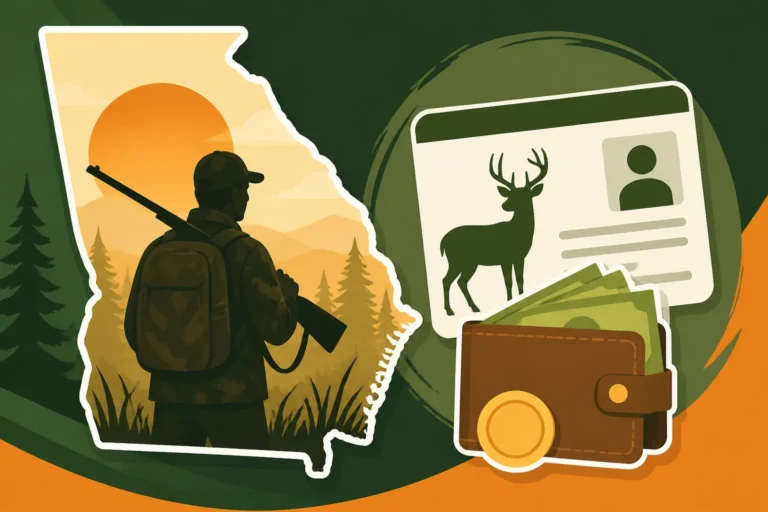
To legally hunt deer in Georgia, you'll need more than just a good camouflage pattern. All deer hunters, whether resident or nonresident, are required to have a basic hunting license and a Big Game License. For Georgia residents, there are a few pathways. The most common is the Annual Hunting License, paired with a Big Game License. However, if you plan on hunting multiple species or across various seasons, getting the Georgia Resident Sportsman License Bundle is often the most cost-effective and convenient option. This comprehensive package usually includes your hunting, fishing, and big game licenses, along with various stamps you might need for specific activities like waterfowl or WMA access. Nonresidents, on the other hand, have similar requirements but typically face higher fees. They can opt for an Annual Hunting and Big Game License or shorter-term options if they're only visiting for a brief hunt. Always ensure your licenses are current and cover the species you intend to pursue. You can easily purchase these licenses through the Georgia Wildlife Resources Division (WRD) website, at authorized license vendors, or through the "Go Outdoors Georgia" app, which is a fantastic resource for hunters on the go.
The Digital Tagging System and Game Check
Georgia has embraced a digital approach to deer harvest reporting, which streamlines the process but requires hunters to be diligent. When you purchase your licenses, your Big Game License acts as your "tags." There aren't physical paper tags you attach to the deer anymore, which can be a relief when you're fumbling around in the dark. Instead, once you harvest a deer, you are legally required to report it via Georgia Game Check within 72 hours of the kill, and prior to processing the carcass beyond the hunting site or crossing state lines. This reporting can be done online through the "Go Outdoors Georgia" website, via the mobile app, or by calling a toll-free number. You'll need information like the county of harvest, the date, and whether it was antlered or antlerless. Once reported, you'll receive a confirmation number. This confirmation number effectively serves as your legal tag for that animal. While you don't physically tag the deer, you must be able to produce your valid license and the harvest confirmation number upon request by law enforcement. Many hunters find it easiest to simply have their license proof right on their phone; remember, you can easily access your valid licenses and harvest history, including the confirmation number, through the "Go Outdoors Georgia" app. The law states you can carry Carrying Proof of License on Your Phone, so it's a great way to stay compliant.
Maximizing Your Antlerless Harvest
With ten antlerless tags available, Georgia actively encourages hunters to prioritize harvesting does. This isn't just about filling your freezer (though that's a fantastic bonus!); it's a cornerstone of responsible deer management that benefits the entire herd.
Strategic Approaches to Doe Hunting
Successfully filling those ten antlerless tags requires a different mindset than chasing trophy bucks. For starters, focusing on doe harvest is crucial for herd health. When deer populations become too dense, does often have fewer fawns, and those fawns tend to be smaller and less healthy. By reducing the doe population, you're improving the overall health, nutrition, and ultimately, the reproductive success of the remaining deer. So, how do you go about it? Early archery season is an excellent time for doe hunting, as they're often still in predictable summer patterns, hitting food plots or agricultural fields. As the season progresses, hunting food sources becomes even more critical. Think about where does will congregate: green fields, acorn flats, or cutover areas with abundant browse. Setting up on a travel corridor leading to these spots, especially in the late afternoons, can be highly effective. In the Piedmont region, for example, Setting Up on a Piedmont Field Edge where deer transition from thick cover to feeding areas is a classic tactic for intercepting does. Look for fresh tracks, droppings, and browse lines that indicate heavy doe activity. Don't be afraid to take the first legal doe that offers a clean shot, especially if your goal is to manage the herd and fill the freezer.
Utilizing Special Seasons and Opportunities
Georgia’s extended seasons and diverse methods provide ample opportunities to fulfill your antlerless quota. The general Georgia's Long Firearms Deer Season runs for months, offering a significant window to pursue deer. However, don't overlook the early archery season, which opens in early September. This is often an unpressured time when does are still in family groups and relatively predictable. They haven't been pushed around by gun hunters yet, making them easier to pattern. For those who embrace traditional methods, the Primitive Weapons Hunting in Georgia season also offers a unique chance to harvest does, often overlapping with peak rut activity when deer movement is high. The state also has a dedicated Georgia Youth Deer Weekend which is an incredible initiative to get younger hunters involved. Not only does it provide a special opportunity for them to experience deer hunting, but it also strongly encourages the harvest of antlerless deer. By focusing youth hunts on does, it instills good management principles from a young age and helps contribute to the overall antlerless harvest goals. When planning your season, consider spreading out your doe harvest. Taking a few early in the season, a few during the rut, and a few in the late season can help maintain consistent pressure on the herd and provide fresh venison throughout the year.
Managing Your Buck Harvest Wisely
While those ten antlerless tags are all about population control, the two-buck limit encourages a more selective approach, allowing hunters to target mature animals while still contributing to herd health.
Understanding the Two-Buck Limit
The two-buck limit in Georgia is a strategic management tool designed to enhance the quality of the state's deer herd, specifically by allowing more bucks to mature. When hunters are limited to two antlered bucks per season, it inherently encourages them to be more selective, passing on younger, smaller-racked bucks in favor of older, more developed animals. This practice, often called "quality deer management" (QDM), allows bucks to survive multiple hunting seasons, giving them time to reach their genetic potential in terms of body size and antler growth. It's a shift from simply shooting the first legal buck you see to making a more informed decision about which buck to harvest. For many hunters, this means assessing antler development, body size, and overall maturity. Some might fill one buck tag early in the season with a solid, mature animal, then hold out for an exceptional buck during the peak of the Hunting the Rut in Mid-October. Others might hunt the entire season with the goal of taking two truly mature animals. This limit creates a challenging yet rewarding pursuit, fostering a deeper understanding of deer behavior and population dynamics.
Strategies for Targeting Mature Bucks
Successfully targeting mature bucks requires a combination of diligent scouting, understanding deer behavior, and patient hunting strategies. It's not just about luck; it's about putting in the work. Start long before the season by scouting. Using tools like aerial photos or a hunting app like GoHunt can reveal subtle terrain features that act as deer funnels or bedding areas. Identifying these key locations is crucial. For example, Reading Aerial Photos for Piedmont Deer can highlight creek bottoms, timber stand changes, or pinch points between fields that bucks will use. In the vast pine flats of South Georgia, understanding Where South Georgia Pine Flat Bucks Bed – often in thick, inaccessible palmetto thickets or dense regrowth – is essential.
During the season, focus your efforts on periods of high deer activity, such as the rut. Employing calling strategies like rattling and grunting can be highly effective during this time. Rattling Volume in Thick Pine Cover should be adjusted to the terrain; a softer rattle might be more appropriate in dense woods than a full-on clash. Look for signs of older buck activity, like large rubs or deep scrapes along logging roads or field edges. Patience is perhaps the most important virtue. Mature bucks are incredibly wary and often move during low-light hours. Being in your stand or blind before dawn and staying until well after dusk, especially near bedding areas or prime food sources, increases your odds. Remember, these older animals didn't get big by being careless, so minimizing your scent, noise, and movement is critical.
Special Considerations: CWD and Public Lands
Hunting in Georgia comes with a responsibility to understand specific regional challenges, like Chronic Wasting Disease (CWD), and how to navigate opportunities on public lands.
Hunting in Georgia's Chronic Wasting Disease Management Area
The emergence of Chronic Wasting Disease (CWD) in Georgia has added another layer of responsibility for hunters, particularly for those pursuing deer within the designated CWD Management Area (CMA). This region, primarily centered around parts of southwest Georgia, is crucial for monitoring and preventing the spread of this fatal neurological disease. If you plan to hunt within the Georgia's Chronic Wasting Disease Management Area, you need to be aware of the specific regulations. Mandatory CWD testing for all harvested deer is typically required in these counties. This means hunters must submit a sample from their deer at designated sampling stations, usually within 24-48 hours of harvest. The Georgia WRD provides clear guidelines on where these stations are located and how to submit samples, often found on their GoHunt app or website. Furthermore, there are strict rules regarding Moving a Deer Carcass Out of the CMA. Whole carcasses or certain high-risk parts (like brain, spinal cord) are generally prohibited from leaving the management area to prevent inadvertent spread. Hunters must often bone out their deer or ensure only permitted parts, such as deboned meat, clean antlers, or hides, cross the boundaries. Staying informed about the latest CWD regulations is not just about compliance; it's about protecting Georgia's deer herd for future generations.
Public Land Opportunities for All Twelve Deer
While private land offers a lot of advantages, Georgia boasts a significant amount of Public Hunting Land in Georgia, including Wildlife Management Areas (WMAs) and portions of the Chattahoochee-Oconee National Forest, where you can pursue your twelve-deer limit. Hunting public land presents unique challenges, primarily increased pressure from other hunters, but also incredible rewards. Success often comes down to scouting effectively and getting away from easy access points. Using mapping tools like the Georgia Outdoors App or others such as GoHunt is invaluable for identifying remote areas, topo features like ridges and drainages, and potential bottlenecks that concentrate deer movement. Scouting Georgia Public Land Before Season is absolutely essential to find fresh sign, identify bedding areas, and locate potential stand sites without disturbing deer during the hunt. Many WMAs have specific rules regarding hunter access, camping, and the use of stands or ground blinds, so always check the specific WMA regulations before heading out. Remember that most WMAs also require a Georgia WMA Access Stamp Requirement in addition to your regular hunting license and big game license, so factor that into your planning and budget. While filling all twelve tags on public land is a serious challenge, it's certainly possible with dedication and smart hunting tactics.
Ethical Hunting and Best Practices
Responsible hunting extends beyond just adhering to bag limits and seasons; it encompasses ethical considerations for the animals we pursue and the land we utilize.
Responsible Harvesting and Meat Care
Ethical hunting begins with making a clean, humane shot. Practice with your chosen weapon throughout the off-season to ensure accuracy and confidence in your shot placement. Once a deer is hit, the responsibility shifts to a diligent recovery. Even if you think the shot was marginal, always assume the deer is wounded and give it time before tracking, especially if it's late in the evening. Learning to Blood Trailing After Dark in Georgia can be a crucial skill, as many deer are shot right before dark. After a successful recovery, proper field dressing and meat care are paramount, particularly in Georgia's often warm climate. Field Dressing a Deer in Warm Weather quickly removes internal organs, allowing the carcass to cool down faster, which prevents spoilage and improves meat quality. Get the deer cooled as soon as possible, whether by quartering it and placing it in coolers with ice or hanging it in a walk-in cooler. Don't let good meat go to waste! If you find yourself with more venison than your freezer can hold, consider donating it to a local food bank or charity through programs like Donating Venison in Georgia, which ensures the meat goes to those in need.
Respecting Landowners and Regulations
A significant portion of Georgia's hunting opportunities exists on private land, making good relationships with landowners invaluable. Always seek Getting Private Land Permission in Georgia well in advance, and don't assume implied consent. A simple knock on the door or a phone call can go a long way. Respect their property as if it were your own, leave gates as you found them, and remove all your trash. Understanding Georgia Trespass and Permission Law is also critical, whether you're on private land or need to retrieve a wounded animal that crosses a property line. Always know whose land you're on, and if a deer runs onto posted property, contact the landowner immediately to request permission for retrieval. Even on public lands, adhering to all regulations, from blaze orange requirements to reporting deadlines, reflects positively on the entire hunting community. The act of hunting is a privilege, and respecting the land, the wildlife, and our fellow citizens ensures that privilege continues for future generations.
Planning for Success: Seasons and Gear
To maximize your chances of filling your Georgia deer tags, a solid understanding of the various hunting seasons and appropriate gear for each condition is essential.
Key Season Dates and Overlaps
Georgia offers a remarkably long and diverse deer season, catering to different hunting styles and preferences. The season typically kicks off with When Georgia's Archery Season Opens in early to mid-September, providing bowhunters with an unpressured opportunity. This is often followed by the Primitive Weapons Hunting in Georgia season in October, allowing muzzleloader and crossbow hunters a chance before the main event. The highly anticipated Georgia Statewide Firearms Season Dates usually opens around mid-October, drawing the largest crowds but offering the longest window of opportunity. These seasons often overlap, meaning a hunter could potentially hunt with a bow, then a muzzleloader, and then a rifle within the same month, depending on the specific dates. Don't forget that Georgia Deer Season Overlap With Small Game also occurs, meaning you might encounter squirrel or rabbit hunters, particularly on public land. Always check the official Georgia WRD hunting regulations guide each year for precise dates, as they can shift slightly. Planning your hunts around peak rut activity, which often occurs in mid-October in many parts of the state, or during periods of increased cold fronts, can dramatically improve your success odds.
Essential Gear for a Full Season
Given Georgia's varied terrain and often unpredictable weather, having the right gear is crucial for comfort, safety, and success throughout the season. For early archery season, when temperatures can still be quite warm, lightweight, breathable camo and effective bug repellent are non-negotiable. You’ll want your Bow and Crossbow Setups for Georgia to be meticulously tuned, and broadheads sharp. As the season progresses into firearms season, your Rifle Setups for Georgia Deer Hunting will become your primary tool. This means selecting an appropriate caliber for whitetails (many opt for .270, .308, or 6.5 Creedmoor), ensuring your rifle is sighted in, and having reliable ammunition.
Regardless of your weapon choice, quality optics are vital. Optics for Georgia Mountains and Swamp require different considerations; in the mountains, you might value higher magnification for longer glassing, while in the dense swamps, light-gathering capability for low-light situations is paramount. Binoculars are essential for scanning for deer movement, and a rangefinder ensures accurate shot placement. For treestand hunters, a reliable stand and a full-body harness are non-negotiable safety items. And don't forget good quality, waterproof boots – whether you're trudging through muddy creek bottoms or navigating dew-soaked fields, dry feet make for a much more enjoyable hunt. Lastly, given Georgia's often mild climate, Warm-Weather Clothing for Georgia Hunters is important even into November, so layering is key for adapting to temperature swings.
| Deer Type | Bag Limit Per Season | Notes |
|---|---|---|
| Antlered Bucks | 2 (Two) | Must be antlered; specific antler point restrictions may apply in some WMAs. |
| Antlerless Deer | 10 (Ten) | No antlers visible above the hairline. Crucial for population management. |
| Total Deer | 12 (Twelve) | Combination of antlered and antlerless deer, adhering to individual limits. |
Disclaimer
Hunting regulations can change frequently. Always consult the most current Georgia Department of Natural Resources (DNR) hunting regulations guide before heading afield. This content is for informational purposes only and does not constitute legal advice.