Hunting the Rut in Mid-October
That feeling when the leaves are just starting to turn, the air has that crisp edge to it, and you know something big is about to happen in the deer woods? That’s mid-October in Georgia, and for many hunters, it’s a confusing, yet thrilling, time. The deer aren't quite in full-blown chase mode, but things are definitely heating up. This guide is all about helping you decode the whitetail behavior of this crucial period and put you in the best position to tag a mature buck.
Understanding Georgia's Mid-October Rutting Activity
Mid-October is a fascinating time in the Georgia deer woods because it’s not quite the full-on, frantic chase of the peak rut, but it's certainly not the early season pattern either. It's that sweet spot where bucks are beginning to lose their minds, but does aren't quite ready, leading to some very predictable, and exploitable, behavior.
The Build-Up: From Pre-Rut to Peak Activity
Think of mid-October as the "pre-rut crescendo." Bucks that were once fairly laid-back, sticking to their bachelor groups or solitary routines, are now feeling the undeniable pull of reproduction. Their testosterone levels are surging, causing them to become more aggressive, more territorial, and more inclined to seek out does. You'll notice a significant increase in rub and scrape activity during this period. Bucks are rubbing their antlers on saplings and small trees, not just to remove velvet anymore, but to mark their territory and condition their necks for fighting. They're also frantically pawing out scrapes, urinating into them, and leaving their scent from glands on their heads and hooves. These are essentially calling cards for does and warnings for other bucks.
While does might not be in estrus yet, they are starting to emit subtle pheromones that bucks can detect. This gets the bucks cruising, checking known doe bedding and feeding areas more frequently. They're trying to figure out which does are nearing estrus, testing the waters, so to speak. This means you might see bucks on their feet more during daylight hours than you would earlier in the season, especially younger bucks who are eager to get in on the action. The older, wiser bucks, however, are often still more nocturnal, only making brief forays into daylight to check scrapes or cruise corridors. This is a critical time for patterning these bucks, as their movements become slightly more predictable, revolving around doe patterns and territorial marking.
Unpacking Regional Rutting Peculiarities
It’s easy to think of "the rut" as one singular event across the entire state, but Georgia is a big place with diverse habitats and deer populations, and the timing of peak breeding can vary considerably. While mid-October often falls squarely in the pre-rut for much of the state, especially the Piedmont and Coastal Plain regions, there are some localized variations worth noting.
In North Georgia's mountains, the rut can sometimes kick off a little earlier, with peak breeding potentially hitting in late October or early November. This is often attributed to historical stocking programs and slightly different genetic lineages of deer. Conversely, in some of the deep South Georgia counties, particularly those bordering Florida, the rut can be significantly later, stretching well into November and even December. This means that while you might be seeing bucks actively making scrapes and chasing in the state's central regions in mid-October, you could be a bit early or just hitting the very beginning of it in others. Always keep your specific county in mind. Tools like the GoHunt app, or the Georgia DNR's regional reports, can offer localized insights into deer activity and population trends. This isn't just about general geographical differences; even within a few counties, things can be a little different. Hunters in the Lower Coastal Plain might still be focusing on food sources in mid-October, while those in the Piedmont are seeing significant cruising activity. Understanding these regional nuances is key to timing your hunts effectively.
Locating and Intercepting Rutting Bucks
Knowing when the rut activity is happening is only half the battle; knowing where to find those bucks is the real challenge. During mid-October, bucks aren't just randomly wandering. Their movements are purposeful, driven by their heightened hormones and the search for does.
Deciphering Fresh Sign: Scrapes, Rubs, and Tracks
Reading the signs deer leave behind becomes absolutely paramount in mid-October. This isn't just about finding old sign from weeks ago; it's about finding fresh sign that indicates recent buck activity.
- Scrapes: A fresh scrape will be pawed clean, exposing dark, moist earth. The overhead branch, often called the "licking branch," will be torn and frayed, smelling strongly of deer scent. Bucks will visit these scrapes repeatedly, especially at night, but during mid-October, they start making more daylight visits. Focus on finding scrape lines—series of scrapes often running parallel to a field edge, a logging road, or a natural travel corridor. These indicate a buck's regular patrol route. The bigger the scrape, and the more scrapes in a line, the more intense the activity. If you find a series of active scrapes along a logging road, for instance, you've likely found a buck's communication hub. You can learn a lot about what a buck is up to by observing Scrape Lines Along a Logging Road.
- Rubs: Rubs, especially fresh ones with sap still oozing from the tree, tell you a buck is in the area and asserting dominance. Look for clusters of rubs on small trees, particularly those about wrist-thick, as these are often preferred by mature bucks. Multiple rubs on larger trees indicate a buck has been working them aggressively. A heavy rub line leading from a bedding area towards a feeding area or a known doe hangout is gold. These are like a breadcrumb trail showing you a buck's preferred travel route during the pre-rut.
- Tracks: While tracks are always important, during the pre-rut, look for larger, deeper tracks, especially those that appear alone or not directly associated with a larger group of deer. A big, lone track often indicates a cruising buck. Pay attention to track direction, especially in soft ground near water sources or creek bottoms. A distinct, large track consistently heading in a certain direction might just be your target buck’s daily patrol. These tracks often point towards where a buck is coming from or going to, perhaps from a secluded bedding area to a prime feeding spot, or to check on the does.
Strategic Stand Placement: Funnels, Edges, and Bedding Areas
Once you understand the sign, it's time to set up your ambush. Mid-October isn't usually the time for "blind luck" hunting; it requires calculated stand placement based on deer movement patterns.
- Funnels: These are natural constrictions in the landscape that force deer to travel through a smaller area. Think about saddles between ridges, narrow strips of timber between two swamps, or even a tight bottleneck where a fence line meets thick cover. During the pre-rut, bucks will use these funnels as efficient travel routes to check for does without expending too much energy. A well-placed stand in a funnel can be incredibly productive, especially if it connects a known bedding area to a feeding area or a prime doe sanctuary. For those hunting in swampy regions, Hunting a Funnel Between Two Swamps can be particularly effective.
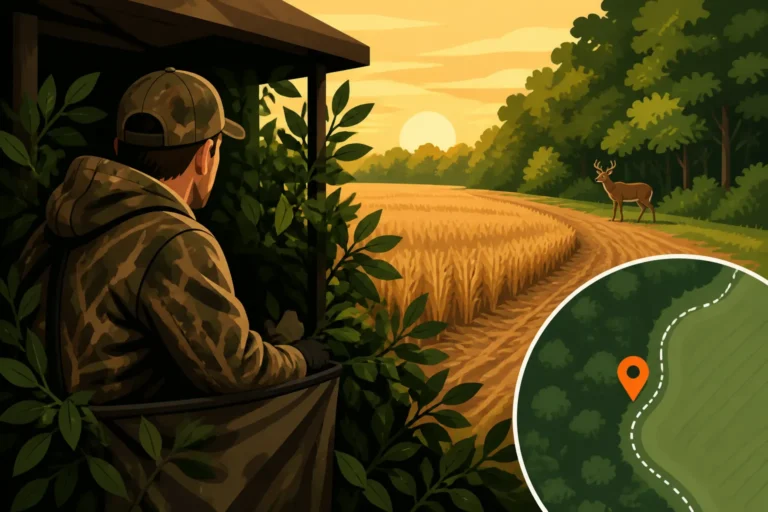
- Edges: Deer love edges—the transition zones between two different habitat types. This could be where a dense pine thicket meets an open hardwood forest, where a field edge abuts a dense bedding area, or where a clear-cut transitions into mature timber. Bucks will often cruise these edges, scent-checking for does without exposing themselves too much in the open. Setting up on a field edge, especially one with a good wind, can allow you to intercept bucks checking for does without directly entering the field. Consider the techniques for Setting Up on a Piedmont Field Edge if you hunt agricultural areas.
- Bedding Areas: While you generally want to avoid busting deer in their bedding areas, understanding where bucks are bedding down is crucial. During mid-October, bucks will often bed on the downwind side of known doe bedding areas, or slightly off to the side of travel corridors that lead to them. They'll use their sense of smell to monitor activity. Identifying these secluded bedding spots, perhaps by scouting with an app like GoHunt that shows aerial photos and topo maps, and then setting up an access route that doesn't alert deer, can be very effective. Your goal isn't to hunt in the bedding area, but on the approach or exit routes, especially during the middle of the day when bucks might shift or make a short cruise. Consider how you might be Reading a Ridge for North Georgia Deer to identify these areas.
| Rut Indicator | Mid-October Behavior | Recommended Tactic | Optimal Wind Direction |
|---|---|---|---|
| Scrapes | Increase in fresh, active scrapes along travel routes and field edges; bucks revisiting them more frequently in daylight. | Set up within bow range of active scrape lines, especially those with good licking branches. Hunt mornings and late afternoons. | Wind blowing from known bedding/travel towards your position. |
| Rubs | Fresh rubs appearing, often in lines connecting bedding to feeding or doe areas. Bucks sparring more. | Identify rub lines as travel corridors. Set stands along these paths, particularly where the line funnels through thicker cover or changes direction. | Crosswind or quartering wind relative to the rub line. |
| Cruising Bucks | Bucks moving more deliberately, scent-checking areas. Younger bucks chasing does, older bucks more methodical. | Focus on natural funnels, pinch points, and transition zones between different habitat types. Hunt mid-day as bucks might cruise for does. | Wind blowing from the direction you expect bucks to approach. |
| Doe Activity | Does beginning to be harassed by younger bucks; subtle signs of approaching estrus. | Locate primary doe feeding and bedding areas. Set up on the downwind side of these areas, or on routes bucks would take to check them. | Wind blowing from doe areas towards you, or crosswind. |
| Vocalizations | Grunts, soft bleats, and occasional rattling. Bucks asserting dominance. | Use light grunting and occasional rattling sequences to draw curious bucks. Avoid overcalling. Combine with a decoy for visual appeal. | Wind carrying your calls towards likely buck travel routes. |
Effective Calling and Decoying for Mid-October Success
While observation and stand placement are paramount, don't underestimate the power of strategic calling and decoying during mid-October. Bucks are increasingly responsive, but it's not a free-for-all; subtlety and realism are key.
Mastering Vocalizations: Grunts, Bleats, and Rattles
During this pre-rut phase, bucks are getting a bit feisty and inquisitive, making them more susceptible to certain calls.
- Grunts: A soft, guttural grunt can be incredibly effective. It mimics a buck cruising, or a buck tending a doe, which can pique the interest of another buck looking for a receptive female or a challenge. Don't go overboard; a few soft grunts every 20-30 minutes are often enough to draw in a curious buck. If you see a buck at a distance, a slightly more aggressive "chase grunt" can sometimes get him to commit. Remember, in Georgia's thick cover, it's about drawing them in, not screaming at them from a mile away. Pay attention to your Grunt Calls in Mature Georgia Hardwoods.
- Bleats: A doe bleat, particularly a "contact bleat" or "estrus bleat," can also be quite effective. Bucks are actively looking for does, and an estrus bleat sounds like a doe ready to breed. Again, subtlety is key. Use it sparingly, perhaps after a grunt sequence or if you haven't seen any activity for a while. A fawn bleat can also sometimes draw in a doe, which in turn might bring a buck.
- Rattles: This is where things get exciting in mid-October. Bucks are starting to spar, test each other's dominance, and establish pecking order. Light rattling, mimicking two smaller bucks gently sparring, can often draw in a curious buck looking for a fight or to assert his own dominance. If you're in an area with a good buck-to-doe ratio and older deer, you can get more aggressive with your rattling. However, in heavily pressured areas, stick to shorter, softer sequences. If you're hunting thick pine cover, adjusting your Rattling Volume in Thick Pine Cover can make all the difference. Always be ready, because a buck might charge in quickly.
Remember to vary your calling. Sometimes a simple grunt is enough; other times, a grunt followed by a soft bleat, then a short rattling sequence, might be the ticket. Always watch the deer's body language for their reaction.
The Art of Decoying and Scent Management
Decoying in mid-October can be a game-changer, especially when combined with calling, but it requires careful execution.
- Decoy Placement: A buck decoy or a doe decoy can work well. A buck decoy, especially a smaller, younger buck, can draw in an aggressive older buck looking to push him off a potential doe. Place the decoy facing away from your stand, mimicking a buck that's "walking away" or tending a doe, which encourages an approaching buck to circle downwind to get a better look, often bringing him broadside to your position. If using a doe decoy, ensure it looks receptive. Position your decoy so that the wind carries your scent away from the decoy and towards where you expect the buck to come from, forcing him to approach the decoy first.
- Scent Control: This is always important, but even more so when bucks are actively scent-checking everything. Employ a rigorous scent control regimen: shower with scent-free soap, use scent-free laundry detergent for your hunting clothes, and store them in airtight bags. Use scent eliminator sprays on your clothes, boots, and gear. Pay particular attention to your boots, as you walk through the woods.
- Attractant and Cover Scents: While not a magic bullet, strategic use of attractant scents (like estrus doe urine) and cover scents (like pine or earth) can either draw deer in or mask your presence. Place estrus doe urine on wicks or scent bombs downwind of your stand or near your decoy. Use cover scents sparingly to break up your human odor. Always be mindful of the wind direction; even the best scents are useless if the wind carries your human odor directly to the deer. Brands like Wildlife Research Center offer a wide range of effective scent products. The key is to make your setup as believable and scent-free as possible.
Navigating Environmental Challenges and Hunter Pressure
Hunting in Georgia, especially in mid-October, means dealing with specific environmental factors and, often, considerable hunter pressure. Adapting to these challenges is critical for success.
Adapting to Georgia's Variable Fall Weather
Georgia's fall weather can be a real rollercoaster. One day you're sweating in 80-degree heat, the next a cold front sweeps through, dropping temperatures dramatically. These shifts have a huge impact on deer movement.
- Impact of Warm Weather on Deer Movement: Mid-October can still see unseasonably warm days, especially in South Georgia. When temperatures climb, deer, particularly mature bucks, become largely nocturnal. They conserve energy, moving primarily under the cover of darkness. During warm spells, focus your hunting efforts on early mornings and late evenings, right at dawn and dusk. Hunt near water sources, or in shaded, cool creek bottoms and thick, dense cover where deer might bed down to escape the heat. Look for slight temperature drops or cloudy, drizzly days, as these will often spur deer movement during daylight.
- Cold Fronts and Post-Front Activity: Conversely, a strong cold front sweeping through Georgia can be a hunter's best friend. The drop in temperature, especially after a period of warmth, invigorates deer. They know winter is coming and will often increase their feeding activity to put on fat, but also their rut-related movements. After a cold front, bucks will often be on their feet more during daylight hours, actively checking scrapes and cruising for does. This is an ideal time to be in the stand, especially for a few days after the front passes. Don't underestimate the power of a good cold snap; it can dramatically increase your chances of seeing a mature buck on his feet. Pay close attention to the insights from Hunting Deer After a Georgia Cold Front.
- Wind and Rain: While light rain can sometimes improve deer movement by washing away human scent and dampening noise, heavy rain often puts deer down. Strong winds, however, are a different story. Deer use their hearing as a primary defense, and strong winds make it harder for them to hear approaching danger. This can make them nervous and less likely to move, or conversely, cause them to move into thicker cover where the wind isn't as disruptive. Learn to use the wind to your advantage for scent control, but also consider how it might affect deer comfort and movement patterns.
Overcoming Public Land Crowds and Private Land Hurdles
Georgia has a fantastic amount of public hunting land, from national forests to WMAs, but with great access comes great responsibility… and often, a crowd.
- Hunting Smart Around Public Land Crowds: During mid-October, especially on weekends, public lands can see significant pressure. This means deer are more likely to be pushed into thicker, harder-to-reach areas, and become more nocturnal. To beat the crowds, you have two main options: go deep or go during the week. "Going deep" means walking further than most hunters are willing to go, often into overlooked pockets of dense cover or remote ridges. Using a mapping app like GoHunt can help you identify these hidden gems. Alternatively, hunting mid-week, when most folks are at work, can dramatically reduce pressure and increase your chances of encountering unpressured deer. Understanding Hunting Pressure on Georgia Public Land is key to success.
- Finding and Maximizing Small Private Tracts: If public land isn't your preference, seeking access to private land can be incredibly rewarding. Farmers dealing with crop damage are often receptive to ethical hunters. Sometimes, a smaller, overlooked woodlot near suburban areas can hold surprisingly large bucks, especially if it provides good cover and access to food. The key here is respect, good communication, and offering to help out around the property in exchange for hunting privileges. Even a few acres of private ground can offer incredible hunting opportunities if the deer feel safe. Remember that sometimes the best spots are those others overlook, or those that require a bit more legwork to gain access to.
- Understanding Deer Drives on Public Land: While not always the primary tactic for mid-October, some hunters on public land might organize deer drives. If you encounter this, be aware of your surroundings, wear plenty of blaze orange, and be mindful of safety. While deer drives can move deer, they also significantly disrupt natural movement patterns for days afterward. Consider the logistics of Deer Drives With Three or Four Hunters if you ever plan to participate.
Ultimately, hunting mid-October in Georgia is about being adaptable. Be ready for diverse weather, understand the nuanced stage of the rut, and plan your hunts to avoid or capitalize on hunter pressure.
Disclaimer
Always consult the Georgia Department of Natural Resources (DNR) official regulations before heading afield, as rules and seasons can change.