Rattling Volume in Thick Pine Cover
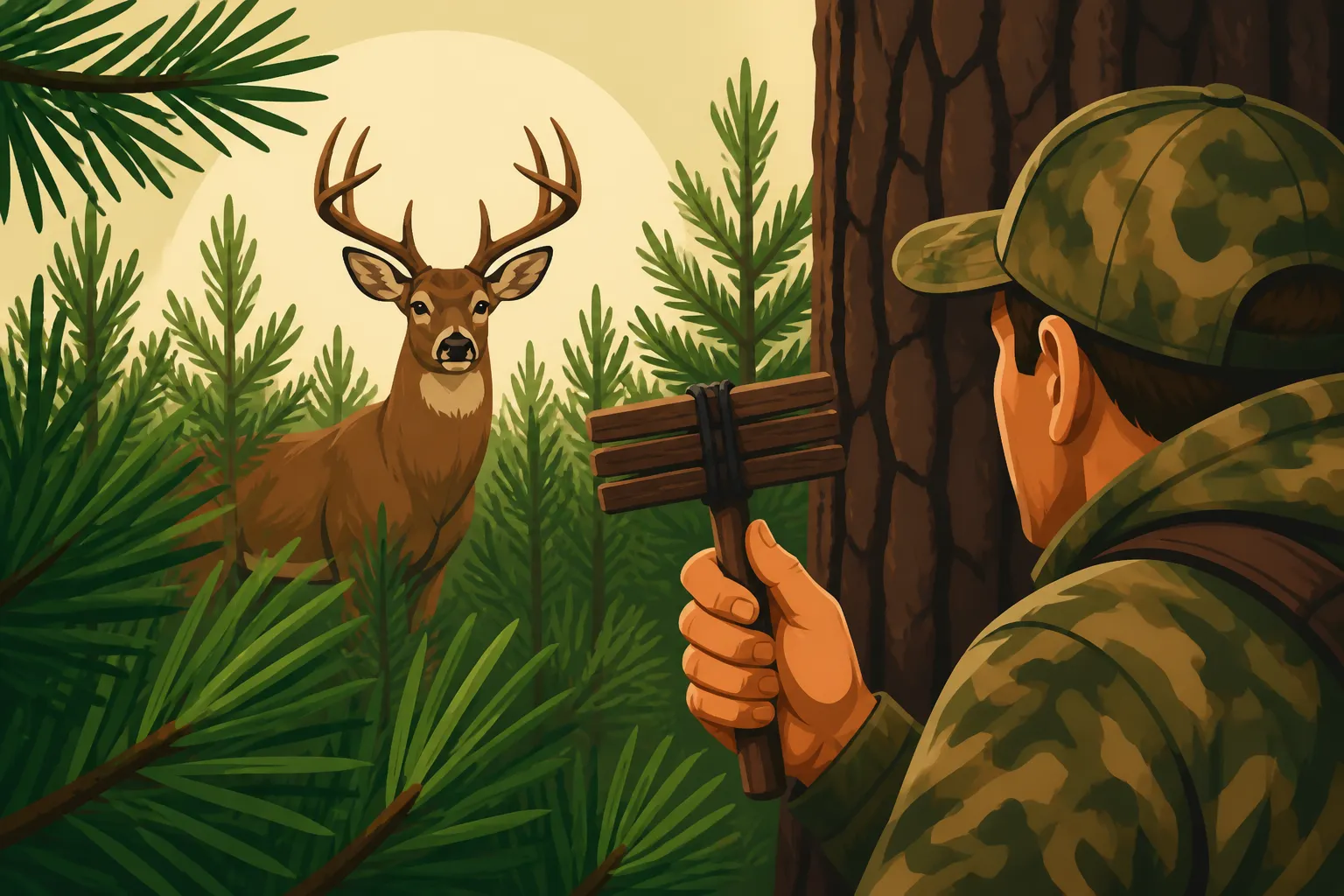
We all know the frustration: you’ve spent hours scouting the thick Georgia pine plantations, found some promising buck sign, and you’re ready to try some rattling to bring in that wary whitetail. But the moment you clash those antlers, you wonder, "Is this even carrying? Am I too loud? Too soft?" The dense undergrowth and sound-dampening pines can make effective rattling a real challenge, leaving you guessing if your efforts are even reaching a deer’s ears. This guide will walk you through mastering rattling volume and technique specifically for the unique acoustic environment of thick pine cover, helping you draw in those elusive bucks.
Understanding the Challenges of Thick Pine Cover
Rattling for deer in Georgia's sprawling pine forests, whether it's vast timber company land or smaller private tracts, presents a unique set of challenges that are often overlooked. Unlike the open hardwoods where sound can travel quite a distance, thick pines create a completely different acoustic landscape. It's not just about making noise; it's about making the right noise, at the right volume, to cut through the dense environment.
The Acoustic Obstacles of Dense Pines
Imagine shouting across a crowded room versus whispering in an empty one. Thick pine cover, with its tightly packed trunks, dense needle beds, and often a thick understory of palmetto, gallberry, or young saplings, acts like an acoustic sponge. The sheer volume of organic matter absorbs sound waves, drastically reducing how far your rattling sequences will carry. You might feel like you're really laying into those antlers, putting on a show, but a buck just 75 yards away might only hear a faint rustle, or nothing at all, especially if the wind is swirling or there’s ambient forest noise. This means that rattling with the same intensity you might use in open hardwood bottoms or along a wide creek in the Piedmont is often a wasted effort, or worse, it might sound completely unnatural. Understanding this sound absorption is critical to adjusting your approach.
Visual Limitations and Deer Movement
Another significant hurdle in thick pine stands is the severely limited visibility. You can hardly see 50 yards, sometimes even less, depending on the planting density and undergrowth. This impacts rattling in two key ways: first, deer often don’t have to travel far to investigate a sound before they can visually confirm what’s happening. They might only take a few steps, peek through a screen of pines, and if they don't see what they expect (two bucks fighting), they'll often melt away silently. Second, your ability to spot an approaching deer is also greatly diminished. A buck might slip in downwind, just out of sight, catch your scent, and be gone before you even know he was there. This demands an even more cautious and strategic approach to rattling, focusing on drawing deer to specific openings or closer to your position without spooking them. This is where tools like GoHunt can really shine, allowing you to pre-scout potential stand locations and identify natural breaks in the thick cover before you ever step foot in the woods. When you are looking for those crucial travel corridors, a tool like GoHunt can help identify potential funnels between two swamps.
How Pine Flats Differ from Hardwoods
The contrast between pine flats and hardwood forests couldn't be starker, especially when it comes to rattling strategy. In sprawling hardwood tracts, particularly in the North Georgia Mountains or along river bottoms, deer often have more open lanes of travel and better visibility under the canopy. Loud, aggressive rattling can sometimes pull deer from significant distances, as the sound travels well and they have space to approach. However, in a Georgia pine flat, especially those planted in dense rows or where undergrowth is rampant, deer are accustomed to much tighter quarters. A full-blown, cacophonous rattling sequence might sound out of place and alarming to a buck that rarely sees open, drawn-out fights. Deer in these environments are often more cautious, moving through the thicket with stealth. Therefore, the goal isn't necessarily to mimic a full-on brawl, but rather subtle sparring or the sounds of bucks interacting in a way that’s common to their dense habitat. Think less "barroom brawl" and more "shoving match in a thicket."
Mastering Rattling Volume and Intensity
Getting the volume and intensity right when rattling in thick pine cover is less about brute force and more about finessing the sounds to match the environment. It requires a nuanced understanding of how deer perceive sounds in their dense habitat and how to overcome the acoustic dampening without overdoing it.
The "Soft Rattle" Approach for Close Quarters
When you’re deep in the pines, especially where visibility is less than 60 yards, starting with a "soft rattle" can be incredibly effective. This isn't about weak, timid clanks, but rather a sequence that mimics two bucks lightly sparring, rubbing antlers, or simply moving through dense cover. Begin with subtle tickles, soft rubs, and gentle clacks of the antlers. Avoid full-on crashes initially. Think about the sound of antlers brushing against saplings or light sparring matches that don't involve a full commitment to a fight. This approach is less likely to alarm a nearby deer and more likely to pique its curiosity, drawing it in for a closer look without putting it on high alert. Many times, a buck bedded nearby in the pines, like those described in articles on Where South Georgia Pine Flat Bucks Bed, might just lift its head, listen, and slowly work its way toward the subtle disturbance. This soft technique works best when you suspect deer are already in your immediate vicinity or when you’re hunting tight, restricted areas.
Incremental Volume Increases and Pauses
The beauty of rattling in thick cover lies in the ability to vary your intensity. Instead of going from zero to sixty in one blast, consider a gradual build-up, especially during the peak of Hunting the Georgia Rut in Mid-October. Start with those soft, subtle noises. Listen for a response – a grunt, a stomp, or even just the sound of leaves crunching as a deer adjusts its position. If you get no immediate reaction after a minute or two, you can incrementally increase the volume and aggression of your rattling. Add a few more deliberate antler clashes, some pushes, and maybe a short grind. Think of it as telling a story: a quiet interaction that escalates slightly, then pauses.
These pauses are absolutely crucial. A common mistake is rattling continuously, which sounds unnatural. Bucks don't fight non-stop. They clash, push, disengage, reassess, and then re-engage. Mimic this natural rhythm. During these pauses, listen intently. This is when an inquisitive buck is most likely to move in, trying to get a better read on the situation without fear of being caught in the middle of a full-blown fight. Sometimes, the softest, most natural sounds, followed by a long silence, are what ultimately seals the deal, drawing a hesitant buck right into your shooting lane.
Mimicking a Realistic Pine Forest Fight
To truly sell your rattling sequence in dense pine cover, it’s not just about the antler sounds; it’s about mimicking the entire scene. When two bucks fight or spar in a thicket, there's more than just antler-on-antler noise. There are branches snapping, leaves rustling, and sometimes even grunts or snorts. Integrate these elements into your routine. Scrape the antlers against nearby saplings or the ground to simulate brush being torn up. Kick the pine straw or leaves around with your feet subtly.
Consider the duration of your sequences. Short, intense bursts, followed by longer periods of silence, are often more effective than prolonged, drawn-out rattling sessions in thick cover. A 30-45 second sequence of soft to medium rattling, incorporating branch snaps and leaf rustles, followed by a 5-10 minute pause, can be very compelling. During the pauses, keep your eyes peeled and your senses heightened. This is when deer, especially older, wary bucks, are most likely to investigate. Remember, your goal isn't just to make noise; it's to create the illusion of a realistic, localized interaction that a nearby deer will want to check out.
Strategic Positioning and Wind Consideration
Even the most perfect rattling sequence can fall flat if you're not positioned correctly or if the wind isn't cooperating. In the unforgiving environment of thick Georgia pines, these elements become even more critical, often dictating whether a buck commits to your calls or vanishes silently.
Optimizing Your Setup in Thick Cover
Finding the right spot to rattle in dense pine cover is paramount. You need to balance concealment with visibility, limited though it may be. Look for natural openings, logging roads, fire breaks, or even subtle clearings that offer a 30-50 yard shooting lane. Position yourself so that you have a good view downwind, if possible, anticipating that a smart buck will try to circle to catch your scent. Using a quality mapping app, like GoHunt, during your Scouting Georgia Public Land Before Season can help you pinpoint these micro-terrain features that create ideal ambushes.
When setting up your treestand or ground blind, ensure you have plenty of natural cover around you. Don't silhouette yourself against an open background. For ground blinds, consider brushing in a blind on a field edge or in a thicket. In pines, this means utilizing the dense saplings and brush to your advantage. A compact saddle or climber stand can also be highly effective for silent, quick setups, allowing you to choose the best tree in a dense cluster. Always try to set up with some form of natural barrier behind you, like a thick stand of pines or a creek bank, to prevent deer from circling directly behind you undetected.
Playing the Wind and Thermals in Pines
The wind is always your number one adversary or ally, and in thick pine cover, its behavior can be notoriously shifty. Unlike open country where wind patterns are more predictable, dense pines can create swirling currents and micro-thermals, especially around low-lying areas or slight elevation changes. Always try to position yourself downwind of where you expect deer to approach, but this is easier said than done.
Pay close attention to "wind tunneling" effects. The rows of pine trees, or natural breaks in the canopy, can funnel wind currents in unexpected directions. Use a wind checker frequently. If the wind is swirling, particularly in the morning or evening as temperatures change, consider moving to a more stable location or holding off on aggressive rattling. A deer will almost always try to get downwind to scent-check the source of the sound. By understanding how the wind affects sound travel and deer approach in the pines, you can maximize your chances. For more on wind dynamics, check out topics like Wind and Thermals on a Mountain Ridge, which, while focused on mountains, provides principles applicable to understanding air currents in any varied terrain.
Combining Rattling with Other Calls
Rattling doesn't have to be a solo act. In thick pine cover, combining your antler clashing with other deer vocalizations can make your setup even more convincing and draw in bucks that might be hesitant to respond to rattling alone.
Grunt Calls: A well-timed grunt call can be deadly. After a rattling sequence, particularly during a pause, a soft grunt can simulate a buck standing his ground or challenging another. This often provides the extra nudge a curious buck needs to commit. During the peak rut, more aggressive tending grunts can signify a hot doe, drawing in bucks even if they’re not interested in a fight. It's often discussed in detail in guides like Rattling and Grunting in Georgia.
Doe Bleats: While rattling is primarily a buck-focused tactic, a soft doe bleat, especially a "come-hither" estrous bleat during the rut, can sometimes draw in a buck that's cruising for does, even if he's not looking for a fight. The combination of fighting bucks and a hot doe can be irresistible.
Snort-Wheezes: This is an aggressive challenge, typically reserved for when you see a buck but he's not responding, or when you want to really push an aggressive buck over the edge. In thick cover, use this sparingly and only if you’re sure a buck is within earshot and you’re prepared for a potentially quick, close encounter.
By layering these sounds, you paint a more complete picture of deer activity, making your setup more realistic and appealing to a wider range of buck behaviors, whether they're looking to fight, breed, or simply investigate a disturbance.
Advanced Tactics and Common Pitfalls
Moving beyond the basics of volume and placement, there are nuances and potential missteps that can make or break your rattling success in Georgia's thick pine stands. Understanding these advanced tactics and learning from common pitfalls will significantly elevate your game.
Decoy Use and Visual Triggers
In environments with limited visibility like thick pines, decoys can be a double-edged sword. On one hand, a visual cue can be incredibly powerful in drawing a buck the final few yards to your setup. If a deer hears rattling but can't see the source, it might hang up just out of range. A well-placed decoy, especially a small buck or even a doe decoy during the rut, can provide that visual confirmation.
However, the challenge in dense pines is visibility. If a buck can only see parts of the decoy, it might look unnatural and spook him. Set your decoy up so that it's visible from anticipated approach lanes, but also so it looks natural within the setting. Often, placing it quartering away from your position, facing the direction you expect deer to come from, can encourage a buck to circle for a better look, bringing him closer to your stand. Remember, deer in these thickets are often wary, so a hyper-realistic, scent-free decoy, like those from Montana Decoy or Avian-X, can make a huge difference. Ensure the decoy is easily set up and taken down, as you might need to move spots, especially if you’re employing Run-and-Gun Turkey Tactics on Public Land, though for deer, it’s more about calculated movement.
When to Avoid Rattling Altogether
Not every situation in thick pines calls for rattling. There are times when it can do more harm than good.
- High Pressure Areas: On heavily hunted public lands, or small private tracts that see a lot of activity, deer become incredibly call-shy. Loud, aggressive rattling in these areas might just send deer running for thicker cover. Sometimes, a more subtle approach, like still-hunting, can be more effective.
- Early Season/Late Season: While bucks do spar outside the rut, intense rattling is generally less effective outside the pre-rut and rut phases. In the early archery season, or during the late-season January lull, deer are more focused on food sources. Aggressive rattling might just spook them. If you’re hunting early in the season, you might be better off focusing on travel routes to Late-Season Food Sources for Georgia Whitetails rather than trying to call them in aggressively.
- Windy Conditions: If the wind is howling or swirling unpredictably, your rattling sounds will be erratic and carry poorly. It's difficult for a deer to pinpoint the source, and it creates an unnatural auditory experience. Save your rattling for calmer days.
- No Sign: If you haven't seen any recent buck sign – rubs, scrapes, or fresh tracks – in the area, the chances of a mature buck being present and responsive to rattling are low. Don't waste your efforts in barren areas; focus on locating active sign first. Tools like GoHunt can help you overlay historical data and sign to better predict deer activity.
Learning from Your Experiences in Georgia Pines
Every hunt in Georgia's thick pine cover is a learning experience. Keep a hunting journal, noting the conditions, your rattling sequence, and any deer reactions (or lack thereof). Did the buck come in downwind? Did he hang up at 80 yards? Did he bolt? This data is invaluable.
Pay attention to the specific type of pine cover you're in. Are they young, dense saplings that block sound and sight completely? Or are they mature pines with a relatively open understory? Adjust your volume and strategy accordingly. A field guide or online resources can help you identify local flora, even something as simple as recognizing the difference between a Loblolly pine and a Longleaf pine, which might indicate differences in undergrowth density.
Experiment with different rattling antlers or calls. Some hunters prefer natural antlers for their realistic sound, while others opt for synthetic rattling bags or compact antlers for ease of use in dense cover, such as the RattleBag or Rattling Forks. Find what works best for you and your hunting style. Remember, becoming proficient in rattling in thick Georgia pines isn't just about technique; it's about observation, adaptation, and a deep understanding of deer behavior in their complex habitat.
| Rattling Strategy for Thick Pine Cover | Soft Rattle (Sparring/Grinding) | Aggressive Rattle (Clashing/Pushing) |
|---|---|---|
| Primary Goal | Curiosity, close investigation | Challenge, assert dominance |
| Volume | Low to Medium | Medium to High |
| Duration | Short bursts (15-30 sec) | Moderate bursts (30-60 sec) |
| Frequency | Every 10-15 minutes | Every 20-30 minutes |
| Integration with other calls | Soft grunts, occasional bleats | Aggressive grunts, snort-wheezes |
| Ideal Conditions | Calm, deer known to be close | Light breeze, pre-rut/rut peak |
| Pros | Less likely to spook wary bucks, draws deer closer to investigate, sounds natural in thick cover | Can pull bucks from further distances, challenges dominant bucks |
| Cons | May not reach distant deer, less effective for uninterested bucks | Can spook wary or subordinate bucks, sounds unnatural if overdone in very thick cover |
Disclaimer
Hunting is an inherently dangerous activity. Always prioritize safety, understand and follow all Georgia Department of Natural Resources regulations, and obtain proper licenses and permits before heading into the field. The information provided here is for educational purposes and personal enjoyment. Always hunt ethically and responsibly.