Georgia Coyote Attacks on Livestock
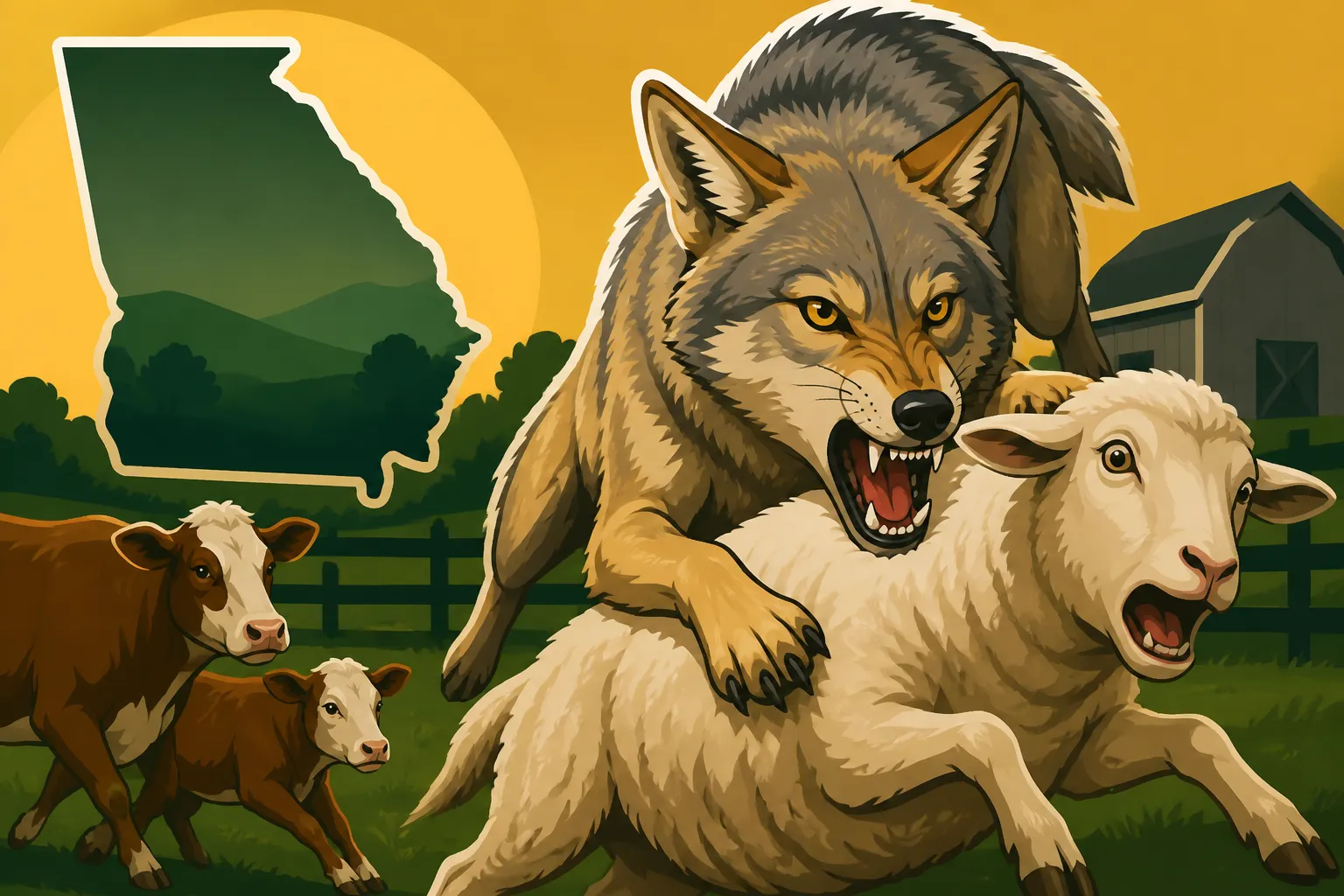
For anyone raising livestock in Georgia, whether it’s a small flock of backyard chickens or a growing herd of goats or even calves, the threat of coyotes is a very real and often heartbreaking concern. Losing an animal, especially one you've cared for, to a predator attack is incredibly frustrating and financially damaging. This guide will walk you through understanding why coyotes target your animals, how to identify an attack, and most importantly, practical strategies you can implement to protect your livelihood and peace of mind.
Understanding the Coyote Threat to Georgia Livestock
Coyotes, once primarily associated with the American West, have made themselves very much at home across the entire state of Georgia. They are incredibly adaptable and opportunistic creatures, thriving in a variety of habitats from dense forests to suburban fringes and, of course, agricultural lands. Their presence means livestock owners constantly face a challenge.
Why Coyotes Target Livestock
It's not usually out of malice, but pure survival. Coyotes are carnivores, and while their diet often consists of small mammals like rabbits, rodents, and deer fawns, they are always looking for the easiest meal. Unfortunately, domestic livestock, especially young or vulnerable animals, can present just that.
As Georgia's coyote population has grown and spread, so has the incidence of livestock predation. They often target animals that appear weak, isolated, or are simply confined in an easily accessible area. A lone goat, a flock of chickens in a flimsy coop, or a newborn calf separated from its mother can all become targets. During times when natural prey populations are low, or when pups are being raised, the pressure on livestock can increase dramatically. Your homestead, with its easily accessible food sources, can inadvertently become a coyote magnet. You might not even realize Georgia Coyote Range and Density has expanded to your area until it's too late.
Identifying a Coyote Attack
When you find a deceased or injured animal, your mind immediately jumps to "what happened?" Pinpointing a coyote attack specifically can be tricky, as other predators like feral dogs, bobcats, or even black bears (especially with larger livestock like calves) can also be responsible. However, coyotes leave distinct clues.
Look for bite marks on the throat or neck of the animal, often deep and puncturing. Coyotes typically try to suffocate their prey. For smaller animals like chickens or lambs, you might find signs of struggle, disarray, and partial consumption, or even the animal dragged away from the initial attack site. They often go for the flank and hindquarters once the animal is down. You might also find tracks, which are more oval than a domestic dog's and typically show a straighter gait. Scat (feces) containing fur or bone fragments can also be a tell-tale sign nearby. It's crucial to document these findings, both for your own understanding and if you need to report the incident to wildlife authorities.
| Characteristic | Coyote Attack Signs | Domestic Dog Attack Signs | Other Predator (e.g., Bobcat, Bear) |
|---|---|---|---|
| Kill Site | Often near capture point; signs of struggle, possible drag marks. | Wide area of scattered fur/feathers; chasing behavior evident. | Bobcat: Precise neck/skull bites on small prey; Bear: Crushing bites, often extensive consumption. |
| Bite Marks | Puncture wounds on throat/neck; smaller, triangular teeth marks. | Ragged wounds, often on flanks or hindquarters; wider teeth marks. | Bobcat: Small, sharp canine punctures; Bear: Large, deep punctures, crushing. |
| Consumption | Partial consumption, often starting at flanks/hindquarters; internal organs may be removed. | Often dismemberment, scattered parts; little consumption initially, more "play." | Bobcat: Clean kills, may cache prey; Bear: Extensive consumption, often evisceration. |
| Tracks | More oval, usually direct line of travel; definite claw marks. | Rounder, splayed toes; often meandering, random pattern. | Bobcat: Round, no claw marks showing; Bear: Very large, five toes, often flat-footed. |
| Scat | Rope-like, often contains fur, bone fragments, berries, seeds. | Variable, often softer, may contain human food waste or pet food. | Bobcat: Segmented, often fur/bone; Bear: Large, soft, varies with diet (berries, grass, meat). |
Common Livestock Vulnerabilities
It's a tough lesson to learn, but coyotes exploit any weakness in your defenses. Small livestock like chickens, ducks, turkeys, and even young goats or sheep are particularly vulnerable due to their size and often inadequate protection. A chicken coop with thin wire, a door that doesn't latch securely, or even gaps under the walls are an open invitation.
Even larger animals like calves and adult sheep or goats can be at risk, especially if they are newborns, sick, or isolated from the main herd. When The Georgia Youth Deer Weekend is in effect, young deer are out, and coyotes are already keyed in on easy prey. Open pastures with no shelter or easy escape routes, poor lighting at night, and a lack of human presence further amplify the risk. Many attacks happen at dawn or dusk, or even in the middle of the night when activity is minimal. A false sense of security, assuming your current setup is enough, is often the first vulnerability a savvy coyote will exploit.
Proactive Measures to Protect Your Animals
Dealing with coyote predation requires a multi-faceted approach. There's no single silver bullet, but by combining several strategies, you can significantly reduce the risk to your livestock. Think like a coyote, and then outsmart them.
Fortifying Fencing and Enclosures
This is often the first line of defense, and it needs to be robust. For smaller livestock, standard chicken wire just isn't going to cut it. Woven wire, often called "field fence" or "no-climb" fence, with openings too small for a coyote to squeeze through, is a much better choice. The fence should be at least 5-6 feet high, as coyotes can jump or climb.
But here’s the kicker: coyotes are excellent diggers. You absolutely need to extend your fence underground. Burying a section of the fence (at least 12-18 inches deep) or, better yet, creating a "skirt" of wire laid flat on the ground and extending outwards from the base of the fence, will deter digging. Electric fencing can be incredibly effective, either as a standalone barrier or as an addition to an existing woven wire fence. A hot wire placed low to the ground on the outside of your main fence can give a coyote a shock when they try to dig or push through. Another hot wire at the top can deter climbers. For chickens, ducks, and other small birds, a fully enclosed, secure coop for night-time roosting is non-negotiable. Don't underestimate a coyote's intelligence or persistence; they will test every weakness.
Employing Livestock Guardian Animals
This is one of the most effective and time-tested methods for deterring predators, particularly for free-ranging livestock. Breeds like Great Pyrenees, Anatolian Shepherds, Akbash, and Komondor have been selectively bred for centuries to protect herds. These dogs are naturally protective, brave, and bond deeply with the animals they are raised with.
It's not about training them to bark at coyotes; it's about their inherent instinct. They need to be raised with the livestock from a young age to form that strong bond, often as pups. They patrol the perimeter, bark to warn off intruders, and will actively confront and fight predators if necessary. Before investing in a guardian animal, research breeds thoroughly, understand their specific needs, and be prepared for a long-term commitment. A well-integrated livestock guardian dog becomes part of your protection team, a living deterrent that works 24/7. When you're out hunting on your property, a well-trained dog can provide an added layer of security, allowing you to focus on Coyote Calling in Georgia Farm Country without worrying about your flock.
Managing Habitat and Attractants
Coyotes are attracted to easy food sources and secure hiding spots. By removing these, you make your property less inviting. Start by clearing dense brush piles, tall weeds, and overgrown areas around your pastures and enclosures. These provide excellent cover for coyotes to approach unseen.
Secure all feed, pet food, and garbage. Don't leave pet food outside overnight, as it can attract coyotes (and other nuisance animals). Properly dispose of any animal carcasses immediately. A dead chicken left in a field is a siren song for a hungry coyote. Composting carcasses in a predator-proof bin or burying them deep are good practices. Control rodent populations around barns and feed storage areas, as rodents are a primary food source for coyotes, and their presence can draw predators closer to your livestock. Thinking about the overall ecology of your property, much like you would when Scouting Georgia Public Land Before Season for deer, can help you identify and mitigate these risks.
Deterrence and Control Strategies
Even with the best preventative measures, coyotes can still be a problem. This is where active deterrence and, if necessary, control methods come into play.
Harassment and Hazing Techniques
Sometimes, simply making your presence known and making your property uncomfortable for coyotes can be enough. Techniques like "hazing" involve actively scaring coyotes away with noise, bright lights, or even projectiles like rubber bullets or paintballs (non-lethal, of course, and where legal).
Motion-activated lights or alarms can be effective at startling coyotes that approach at night. Flags, reflective streamers, or even scarecrows can provide visual deterrents, but coyotes are smart; they will quickly habituate to static deterrents. The key is variety and inconsistency. Move your scarecrows, change up your noises, and make your property unpredictable. Don't let them get comfortable. This is a tactic many hunters employ when trying to keep deer out of specific areas, using temporary visual or auditory deterrents.
Trapping and Hunting Coyotes
For persistent problems, or when preventative measures aren't enough, active removal of problem coyotes may be necessary. In Georgia, coyotes are considered a nuisance species and can be hunted year-round, with no bag limit, and often without a hunting license for landowners on their own land. However, specific regulations regarding night hunting and methods always apply, so it's vital to check the Georgia Department of Natural Resources (DNR) guidelines. You'll want to be familiar with Night Hunting Rules for Georgia Coyotes.
Trapping is another effective method, but it requires skill, knowledge of coyote behavior, and adherence to regulations regarding trap types and placement. Snaring and foothold traps are common, but always prioritize ethical and humane trapping practices. If you're new to trapping, consider seeking guidance from experienced trappers or local extension agents. Hunting, whether through calling, baiting (where legal for coyotes), or still-hunting, can reduce coyote numbers in an area. Just like using GoHunt to locate prime hunting areas for deer, you can also use mapping tools to understand the terrain and potential travel corridors coyotes might be using to access your property, helping you strategically place traps or plan hunting stands. When you're considering Running a Trapline in Rural Georgia, understanding these patterns is key. For those interested in more active pursuit, exploring Coyote Calling in Georgia Farm Country can be a rewarding, albeit challenging, endeavor.
Community and Cooperative Efforts
Coyotes don't respect property lines. A coyote causing problems for you today might have come from your neighbor's property yesterday. This is why a community-wide approach can be incredibly powerful. Talk to your neighbors, especially other livestock owners. Share information about sightings, recent attacks, and successful deterrents.
Forming a local cooperative, even an informal one, can lead to shared resources, coordinated predator control efforts, and a unified front against the problem. Sometimes, local wildlife agencies or university extension programs offer workshops or resources on predator management. Engaging with these entities can provide valuable insights and support. A collective effort not only spreads the workload but also creates a larger zone of protection around your community.
Legal Considerations and Reporting
Understanding the legal landscape around predator control in Georgia is paramount. You want to protect your livestock, but you also need to stay within the bounds of the law.
Georgia Laws Regarding Predator Control
The good news for Georgia landowners is that coyotes are not a protected species, which means you have significant leeway in controlling them on your own property. You can hunt coyotes year-round, day or night. However, there are still rules to follow. For instance, while night hunting coyotes is legal, you need to be aware of regulations regarding the use of artificial lights, thermal imaging, and suppressors. You can learn more about specific equipment in articles like Thermal Hunting Georgia Hogs at Night or Suppressors for Georgia Predator Hunting. Always check the current Georgia DNR hunting regulations for any updates, as laws can change.
Remember, if you're hunting or trapping on land other than your own, you must have permission from the landowner. Do You Need Written Permission in Georgia? It's also crucial to be mindful of local ordinances, especially if your property is near suburban areas or has specific firearm discharge restrictions. Safety should always be your top priority, both for yourself and for any neighbors or passersby.
When and How to Report Incidents
While you might be focused on immediate action, reporting coyote attacks to the appropriate authorities is an important step. It helps wildlife agencies track coyote populations, identify problem areas, and understand the scope of livestock depredation across the state. This data can inform future management strategies and resource allocation.
You can typically report incidents to the Georgia Department of Natural Resources (DNR) or your local county extension office. They may be able to offer specific advice, connect you with resources, or even provide assistance. Documenting the attack with photos, specific dates, and details of the damage can be very helpful when reporting. Even if they can't send someone out immediately, your report contributes to a larger understanding of the issue, similar to how the DNR uses public input to better understand Georgia Deer Population Estimate or track Georgia Wildlife Disease Monitoring. Don't feel like you're bothering them; this information is vital for wildlife management.
Disclaimer
This article is for general informational purposes only and does not constitute professional advice. Laws, prices and regulations vary by location and change over time. Consult a qualified professional for guidance on your specific situation.