Georgia Coyote Range and Density
There's a quiet shift happening in Georgia's wild places, one that many hunters and landowners have felt keenly: the rising presence of the coyote. It's a real frustration to put in all the time scouting and preparing for deer or turkey season, only to feel like an unseen predator is constantly working against your efforts. This guide aims to shed light on exactly where these adaptable canines are making their homes across our beautiful state, how dense their populations are, and what that means for us in the field.
The Uninvited Guest: How Coyotes Became a Fixture in Georgia
For many veteran Georgia hunters, the sight and sound of a coyote are a relatively new phenomenon, at least in the widespread numbers we see today. It's easy to feel a sense of loss for a time when deer and turkey populations weren't under this kind of consistent predatory pressure. Understanding their history here helps to grasp just how deeply entrenched they've become.
A Relatively Recent Arrival
Coyotes weren't always a dominant predator in Georgia. Historically, their range was much further west, primarily confined to the prairies and deserts. However, as human settlement expanded and altered landscapes, and as larger predators like wolves and cougars were extirpated from much of the eastern United States, coyotes began a remarkable expansion. It's a testament to their incredible adaptability that they managed to push eastward, filling ecological niches that had been vacated. Many hunters, especially those who grew up hunting in the 60s, 70s, and even early 80s, can distinctly remember when a coyote sighting was a rare event, almost unheard of. Now, it's almost expected.
This eastward migration wasn't a sudden flood; it was a gradual, persistent creep. They followed river systems, traveled through agricultural lands, and even skirted urban areas, always seeking out new territories and food sources. Their ability to survive and thrive in a vast array of environments made them perfectly suited for this expansion. They're true generalists, capable of exploiting whatever resources are available, which made Georgia a welcoming new home.
Factors Contributing to Their Proliferation
Once coyotes established a foothold in Georgia, several key factors contributed to their explosive population growth and widespread distribution. The ecological landscape here, particularly after the removal of apex predators, was ripe for their success. It's a classic example of a species filling an empty niche, much to the chagrin of hunters focused on deer and turkey.
One of the most significant factors was the absence of their traditional natural predators. With the gray wolf long gone from Georgia and the Florida panther (a subspecies of cougar) confined to a tiny range far to our south, coyotes found themselves at the top of the food chain in many areas. This lack of natural checks allowed them to reproduce without significant mortality pressure from other large carnivores. Additionally, the abundant deer population in Georgia, which itself rebounded strongly over the last half-century, provided a consistent and plentiful food source, especially vulnerable fawns during the spring and summer months. This reliable food base fueled their expansion and reproduction.
Furthermore, the mosaic of habitats across Georgia, from dense forests to agricultural fields and even suburban fringes, proved ideal for coyotes. They are masters of the "edge" habitat – the transition zones between different cover types. Human development, with its patchwork of forests, fields, and even backyard green spaces, inadvertently created an enormous amount of this preferred edge habitat. They are incredibly opportunistic, learning to forage on everything from small rodents and insects to discarded food scraps, carrion, and even garden produce. This dietary flexibility means they can survive even when their primary prey, like deer fawns or turkey poults, might be less available seasonally.
Mapping the Ghost: Coyote Range Across Georgia
It's common to hear hunters from different parts of Georgia describe their coyote encounters, and while the specifics might vary, one thing remains constant: these animals are everywhere. There's hardly a corner of the state where a coyote hasn't established a presence, making them a true statewide challenge for game management and hunting.
Statewide Presence, Varied Impact
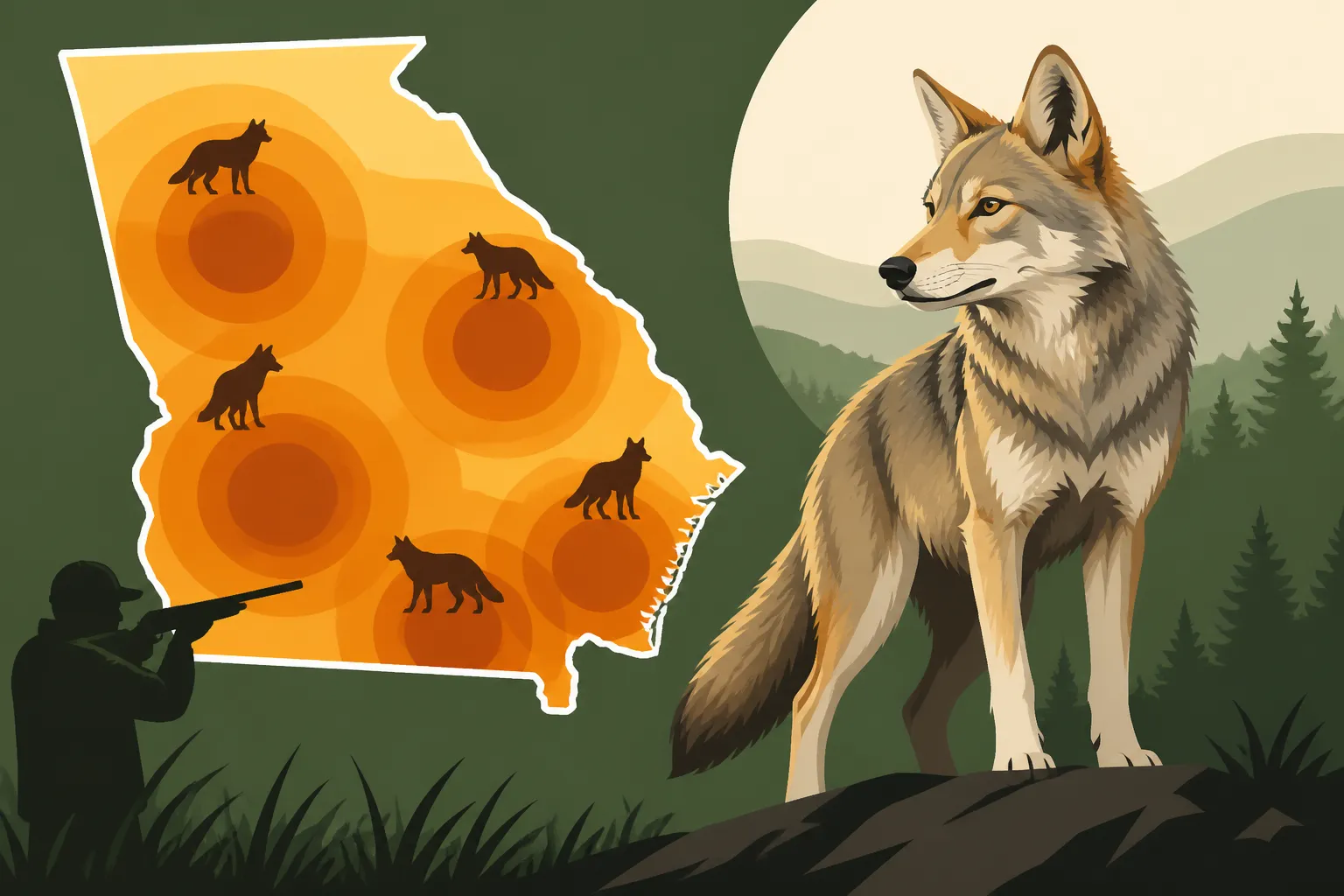
From the rugged ridges of the Chattahoochee-Oconee National Forest Hunting in North Georgia to the sprawling Hunting South Georgia Plantation Country down near the Florida line, coyotes have made themselves at home. It’s no longer a question of if coyotes are in a particular county or habitat type, but rather how many and what impact they're having on local game populations. This ubiquitous presence is what makes them such a persistent concern for anyone invested in Georgia's wildlife.
However, while their range is statewide, the perceived presence and impact can feel different depending on where you hunt. In some areas, particularly vast tracts of public land or densely timbered private ground, you might hear them howling at night and occasionally catch a glimpse, but they feel more like a background presence. In other regions, especially those with high deer or turkey densities, or areas undergoing habitat changes, their impact can feel much more direct and frustrating. Hunters often report seeing fewer fawns or poults, and the immediate thought often turns to coyotes. This anecdotal evidence, while not scientific, reflects the very real observations of those who spend the most time in the woods.
Urban and Suburban Adaptability
One of the most surprising and, for many residents, unsettling aspects of coyote proliferation is their incredible adaptability to human-dominated landscapes. It's a common frustration for people to see coyotes near their homes, sometimes even within city limits of places like Macon, Augusta, or even the sprawling suburbs surrounding Atlanta. They are no longer strictly creatures of the deep wilderness; they've become adept at navigating our neighborhoods.
These urban and suburban coyotes utilize green spaces, drainage ditches, powerline cuts, and even small, fragmented woodlots as travel corridors and hunting grounds. They learn to avoid direct human contact but can still capitalize on available food sources, which might include pet food left outside, unsecured garbage, and small wild prey like rabbits, squirrels, and rodents that thrive in these environments. This close proximity to human dwellings means that while they might maintain a lower profile, their presence is very real, and they can certainly put pressure on any deer or turkey populations that also utilize these fringe areas. It changes the dynamic of what "wildlife management" means when the wild is literally in your backyard.
Concentrated Hotbeds
While coyotes are found everywhere, there are certainly areas where their populations feel particularly dense, almost like localized hotbeds of activity. These concentrations usually correlate with areas offering a perfect storm of abundant prey, excellent cover, and often, less direct human disturbance or control efforts. For hunters, identifying these high-density zones can be key to understanding local game dynamics.
Think about the rich agricultural lands of Georgia's Piedmont region, where vast fields of corn, soybeans, and peanuts meet creek bottoms and dense stands of hardwoods. These areas provide an endless buffet of small game, deer fawns, and turkey poults, along with ample cover for denning and travel. Similarly, the extensive swamp and river bottom ecosystems of South Georgia, which are also fantastic places for Hunting Georgia Swamp and River Bottom Deer, offer dense, impenetrable cover that makes it difficult for humans to access, allowing coyotes to operate with relative impunity. Large tracts of managed pine timber, with their thick understory and clear-cut edges, also provide ideal ambush cover for these opportunistic predators. In such places, you might hear multiple packs howling at night, a clear indication of a thriving, dense population.
Unpacking the Numbers: Understanding Coyote Density
Trying to get a precise count of coyotes in Georgia is like trying to nail jelly to a wall – it's incredibly difficult. Unlike deer, which can be somewhat estimated through spotlight counts or harvest data, coyotes are masters of stealth and evasion. This makes it challenging for wildlife agencies and researchers to give exact figures, leading to a lot of speculation and frustration among hunters.
Why Pinpointing Numbers is Tricky
Coyotes are, by nature, elusive animals. They are primarily nocturnal, particularly in areas with human activity, and have an uncanny ability to blend into their surroundings. They're not like a deer standing in a field at dawn or a turkey gobbling on a ridge; they move silently through cover, often unseen. This makes direct observation and counting nearly impossible on a broad scale, leading to a reliance on indirect methods that provide estimates rather than definitive numbers.
Wildlife agencies and researchers often rely on a combination of indirect techniques to gauge coyote populations. These might include track counts along logging roads or sandy riverbanks, remote camera trap surveys which capture images of passing coyotes, analysis of hunter harvest data (though not mandatory to report, unlike deer), and even call-in surveys where people report sightings. Each method has its limitations and biases, meaning that while we can get a general sense of their prevalence, arriving at an exact number for statewide or even county-level density remains a significant challenge. The sheer difficulty in getting a handle on their numbers adds to the feeling of an unstoppable, ever-present threat for hunters.
Factors Influencing Local Density
Even within a seemingly uniform landscape, coyote density can vary dramatically from one parcel of land to the next. It’s not a consistent blanket coverage; rather, it’s a dynamic tapestry influenced by several key ecological factors. Understanding these local influences can help hunters and landowners predict where coyote activity might be highest and why.
The primary driver of local coyote density is undoubtedly prey availability. Areas with high populations of white-tailed deer, particularly during fawning season, often support a greater number of coyotes. Similarly, robust populations of small mammals like rabbits, rodents, and even a strong Georgia Turkey Population Trends can provide the necessary food base to sustain a higher density of predators. Habitat quality also plays a crucial role; areas with ample cover for denning, raising pups, and ambushing prey – such as thickets, dense pine plantations, and expansive bottomland hardwoods – will naturally harbor more coyotes than open, sparse landscapes. Human pressure, including consistent hunting, trapping, and predator control efforts, can also locally suppress populations, though coyotes are incredibly resilient and can quickly rebound. For example, a large, well-managed hunting club might have lower coyote density due to active control, while an adjacent, unmanaged tract could be teeming with them.
| Characteristic | Description | Impact on Game (Deer/Turkey) |
|---|---|---|
| Range | Statewide, from mountains to coast, including rural, suburban, and sometimes urban areas. | Increased pressure on fawns and poults across all habitats. |
| Density | Varies by habitat and prey availability; generally higher in areas with ample deer, small game, and cover. | Localized impact can be significant, especially on vulnerable young game. |
| Behavior | Highly adaptable, opportunistic, primarily nocturnal, elusive, intelligent. | Difficult to manage and predict. Constant low-level predation pressure. |
| Diet | Omnivorous; consumes fawns, turkey poults, small mammals, insects, fruits, carrion, and sometimes domestic animals. | Direct predation on young game, competition for food with other predators. |
| Reproduction | High reproductive rate, often producing larger litters when populations are suppressed. | Quick recovery from localized control efforts. |
The Hunter's Perspective: Dealing with Coyotes
For Georgia hunters, coyotes are more than just another species; they represent a tangible challenge to game populations that many cherish. The frustration of seeing fewer deer fawns or turkey poults, or finding predator sign instead of game sign, is a very real part of hunting life in Georgia today. Many hunters feel a direct responsibility to manage these predators.
Managing Their Impact on Game
There's a deep-seated frustration among hunters who put in countless hours scouting, hanging stands, and planting food plots, only to feel like coyotes are undermining their efforts. It’s a valid concern when you see fewer fawns trailing does in the summer or notice a distinct drop in the number of Georgia Turkey Brood Survey Results in the spring. While coyotes aren't the sole factor in game population fluctuations – habitat, weather, and other predators also play roles – their widespread presence means they are a constant source of predation, especially on vulnerable young animals.
This leads many hunters and landowners to engage in predator control efforts. The goal isn't typically to eradicate coyotes, which is an unrealistic endeavor, but rather to locally reduce their numbers and alleviate pressure on deer and turkey populations, especially during critical fawning and nesting periods. These efforts can range from active hunting to trapping, often implemented strategically to target specific areas and times when game animals are most vulnerable. While large-scale, long-term effectiveness of predator control can be debated, many individuals find that localized efforts make a noticeable difference on their property.
Coyote Hunting and Trapping as a Tool
Given the continuous pressure coyotes exert on game, many hunters see pursuing coyotes themselves as a form of game management. It's a way to contribute directly to the health of the local deer and turkey populations. What's more, Georgia's regulations make it quite accessible: coyotes have no closed season, meaning you can hunt them year-round, day or night (with specific lighting restrictions). This year-round opportunity means predator hunting can fill gaps in the calendar or even be integrated into other hunting seasons.
Various methods can be employed for effective coyote hunting. Calling, using electronic or mouth calls to mimic distress sounds or coyote vocalizations, is a popular and often thrilling tactic. You might even find success with Coyote Calling in Georgia Farm Country where these predators are used to specific prey. Hunters also use thermal and night vision optics, often under the same regulations that permit Thermal Hunting Georgia Hogs at Night, to target coyotes after dark, especially in agricultural areas. For those looking for a more consistent, albeit time-intensive, approach, Running a Trapline in Rural Georgia can be highly effective at reducing local populations. Remember to always consult the current regulations for Night Hunting Rules for Georgia Coyotes to ensure legal compliance.
Future Outlook and Adaptations
Coyotes are a permanent fixture in Georgia’s ecosystems now, a fact that can be hard to swallow for hunters who remember a time without them. Accepting their presence means adapting our strategies, not just for hunting them, but for managing our game species in a landscape where they are a constant factor.
Living with a Persistent Predator
The reality is that coyotes are here to stay. They've proven their incredible resilience and adaptability, successfully colonizing every corner of Georgia. Eradication is not a feasible goal, nor is it necessarily ecologically desirable, as they do play a role in the ecosystem. Therefore, the future of hunting and wildlife management in Georgia will involve learning to live with these persistent predators. It means shifting our focus from outright elimination to strategic management and adaptation.
This adaptation often involves a greater emphasis on habitat management that benefits target game species, making them more resilient to predation. Healthy, diverse habitat provides better cover for fawns and poults, allowing them a higher chance of survival. Increasing the overall health and numbers of a Georgia Deer Population Estimate or bolstering the Georgia Turkey Population Estimate through food plots and timber stand improvements can help ensure that despite coyote predation, the populations remain robust. It's a long-term strategy that acknowledges the coyote as an integral, albeit challenging, component of the Georgia landscape.
The Role of Technology in Monitoring
In this new era of living with coyotes, technology has become an invaluable tool for hunters and land managers. While directly counting coyotes is tough, modern tech allows us to gain unprecedented insights into their movements, habits, and density on specific properties or public lands. This information can then be used to inform more effective hunting and management strategies.
Trail cameras, for instance, are now ubiquitous and can be strategically placed to monitor coyote activity. By observing travel patterns, identifying denning areas, or simply counting individual coyote appearances, hunters can develop a clearer picture of their local population. Apps like GoHunt, or similar mapping tools, allow hunters to mark sightings, tracks, and howling locations, helping to build a comprehensive map of coyote presence over time. When combined with other scouting efforts, such as using Scouting With the Georgia Outdoors App or understanding Where to Hang a Camera on a Logging Road, this technology empowers hunters to make more informed decisions. It helps target areas for predator control, understand pressure points on game, and ultimately, adapt to the permanent presence of the Georgia coyote.
Disclaimer
This article is for general informational purposes only and does not constitute professional advice. Laws, prices and regulations vary by location and change over time. Consult a qualified professional for guidance on your specific situation.