Georgia Buck Age Structure
Hunters in Georgia often fixate on antler size, but truly understanding the health and potential of the deer herd you're pursuing requires looking deeper. The "buck age structure" – the proportion of bucks in different age classes – is a vital metric that tells a story about the habitat, hunting pressure, and management strategies in a given area. This guide will explore what buck age structure really means for Georgia hunters, why it's so important, and how you can use this knowledge to enhance your hunting experience.
Understanding What Buck Age Structure Tells Us
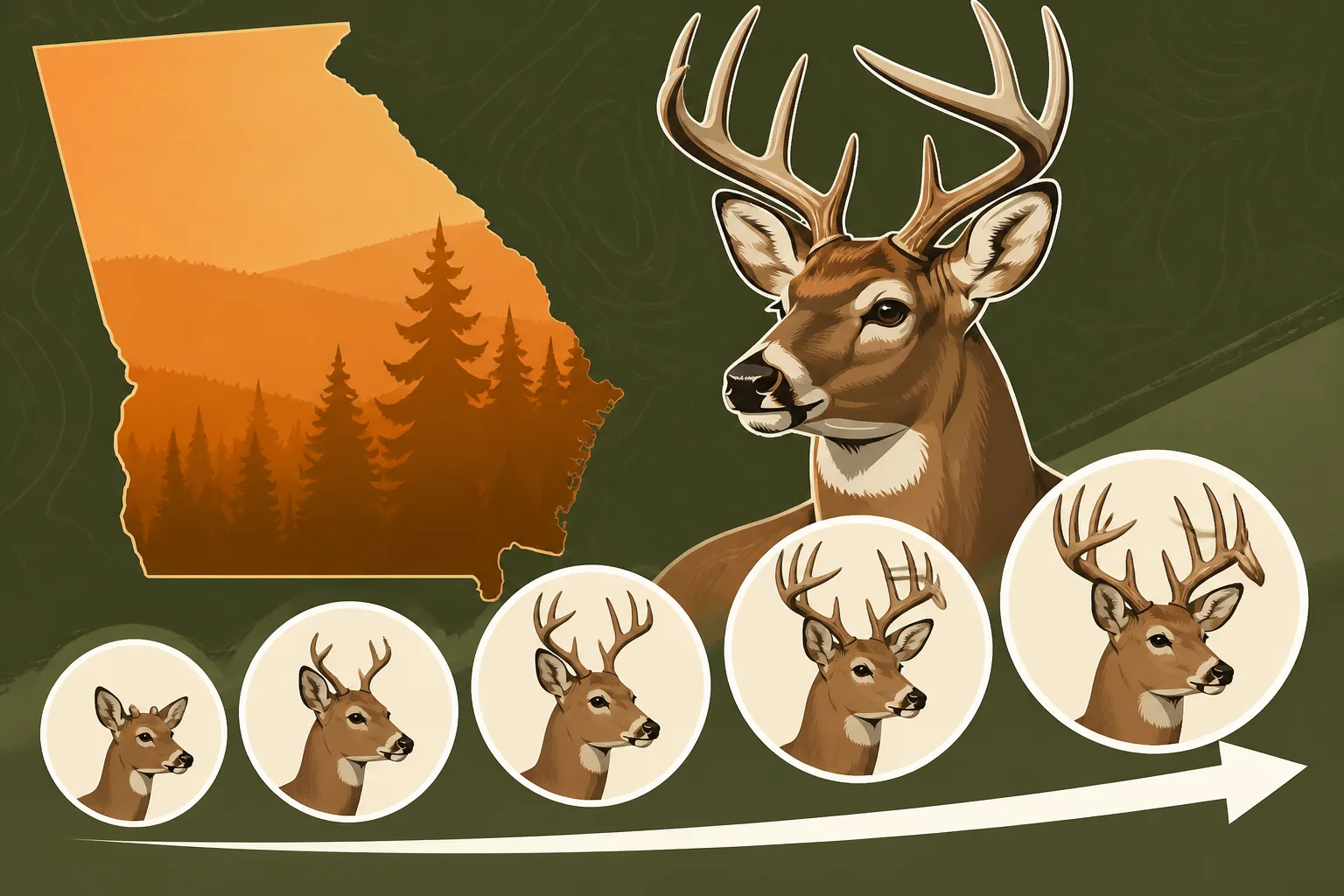
When we talk about buck age structure, we're referring to the distribution of male deer across various age groups within a specific population. Instead of just seeing a "deer," we begin to see 1.5-year-old yearlings, 3.5-year-old mature bucks, or even a wise old 5.5-year-old. This breakdown isn't just a biological curiosity; it’s a direct reflection of how healthy the herd is and what kind of hunting opportunities exist.
Why Age Classes are So Important
A balanced buck age structure is typically defined as a population with a healthy representation of bucks in the middle and older age classes, not just an abundance of young, immature deer. Think about it: if every buck is harvested as a yearling, you'll never see those impressive, older animals that many hunters dream of. A strong age structure indicates that enough bucks are surviving past their first few years to reach physical maturity. This doesn't just mean bigger antlers; it means a healthier, more robust population overall. These older bucks are critical for a strong rut, helping ensure successful breeding and genetic diversity. When the age structure is skewed heavily towards young bucks, it often points to high hunting pressure or other factors that prevent bucks from maturing, which can impact herd dynamics and even fawn recruitment down the line.
Regional Differences Across Georgia
Georgia is a diverse state, from the Appalachian Mountains in the north to the sprawling agricultural lands of the Coastal Plain. It makes sense that the buck age structure can vary significantly depending on where you're hunting. In some areas, particularly on heavily hunted public lands or smaller private parcels with little management, you might find a younger age structure where 1.5 and 2.5-year-old bucks dominate the harvest. These are the "forked horn" and "spike" bucks often encountered, full of youthful energy but still growing. However, in regions with vast, nutrient-rich habitats, like parts of the South Georgia Plantation Country or agricultural areas in the southwest, bucks might have excellent nutrition and less pressure, allowing more of them to reach older age classes. DNR's data often reveals fascinating insights into Georgia Deer Population Estimate and Georgia Buck Age Structure trends across different ecological zones, showing how environmental factors and human activity shape the local deer populations.
Key Factors Shaping Georgia's Buck Age Structure
The buck age structure in any given area isn't static; it's a dynamic reflection of several interconnected factors. Understanding these can help you better interpret what you're seeing in the field and adapt your hunting strategies accordingly.
Habitat Quality and Nutrition
The foundation of a robust buck age structure begins with the land itself. High-quality habitat provides abundant and nutritious food sources, which are essential for deer to grow quickly and reach their full genetic potential. In areas rich with diverse browse, mast crops like acorns, and agricultural fields (corn, soybeans, peanuts), bucks can invest more energy into body growth and antler development from an early age. This means they might grow larger antlers sooner, but more importantly, they are healthier and more resilient, increasing their chances of surviving to an older age.
Consider the stark contrast between a mature hardwood bottomland in the Piedmont region, bursting with acorns in the fall, and a dense, clear-cut replanted pine block offering limited forage. Deer in the former will generally be healthier, with higher body weights and potentially larger antlers at younger ages, increasing their likelihood of survival. Conversely, deer in poorer habitats might mature slower, be more susceptible to disease, and have a lower average lifespan. If you're using a mapping tool like GoHunt, looking at satellite imagery for diverse food sources and cover can give you a clue about the potential for mature bucks in a given area.
Hunting Pressure and Hunter Behavior
This is perhaps one of the most significant factors directly impacting buck age structure. Areas with high hunting pressure, especially where hunters are quick to harvest the first legal buck they see, tend to have a younger age structure. If a 1.5-year-old buck, full of youthful exuberance and curiosity, is easily taken, he never gets the chance to become a 3.5 or 4.5-year-old. This is particularly common on many Public Hunting Land in Georgia, where hunter numbers can be high, and the emphasis is often on filling a tag rather than specific age management.
Conversely, private lands or hunting clubs practicing Quality Deer Management (QDM) principles often exhibit a much older buck age structure. These hunters typically choose to pass on younger bucks, allowing them to mature, and focus instead on harvesting antlerless deer to manage the overall herd size and ensure plenty of resources for the remaining bucks. This strategy, over time, can lead to a higher percentage of older, more dominant bucks in the population. It's a long-term commitment that requires discipline, but the payoff can be incredible.
Regulations and Bag Limits
Georgia's hunting regulations are designed to manage the deer herd across the state, and these rules have a direct bearing on buck age structure. For example, Georgia has a statewide limit of two antlered bucks per season, one of which must have at least four points one inch or longer on one side, or a 15-inch outside spread. This regulation, detailed in Georgia Antlered Buck Limits, encourages hunters to be a bit more selective, potentially leading to more bucks surviving their yearling year. However, it doesn't prevent hunters from taking two 2.5-year-old bucks if they meet the criteria.
The overall Georgia's Twelve-Deer Bag Limit, which includes up to 10 antlerless deer, plays a crucial role too. Encouraging antlerless harvest helps keep the overall deer population in check, which can lead to healthier remaining bucks that have better access to nutrition. This indirectly supports bucks reaching older age classes. If there's an overabundance of does, it can put a strain on the food supply, negatively impacting the health and growth of all deer, including bucks.
Predation and Disease
While hunting pressure and habitat are often the most talked-about factors, natural elements like predation and disease also play a role in shaping buck age structure. The presence of predators, particularly coyotes (see Georgia Coyote Range and Density), can significantly impact fawn survival rates. A lower fawn recruitment means fewer young bucks entering the population in subsequent years, which can eventually lead to a shift in the age structure. If fewer fawns survive, there are fewer deer to grow into the younger buck age classes, let alone the older ones.
Diseases, such as EHD (Epizootic Hemorrhagic Disease) or the ever-present threat of Chronic Wasting Disease Risk in Georgia, can also cause significant mortality across age classes, including mature bucks. While EHD outbreaks are often localized and cyclical, CWD has the potential for long-term, widespread impacts on deer populations, potentially altering age structures dramatically if it were to become prevalent. DNR closely monitors these threats to understand their impact on herd health and management strategies.
How to Estimate Buck Age, In the Field and In Hand
Being able to estimate a buck's age, whether you're watching him through binoculars or standing over him after a successful hunt, is an invaluable skill that deepens your understanding of deer and helps inform your hunting decisions.
Estimating Age in the Field
This takes practice, but it's incredibly rewarding. You're looking beyond the antlers and focusing on the whole animal.
- Yearlings (1.5 years old): These bucks often look like they're "all legs." They have a very distinct, lanky, almost gangly appearance. Their neck is usually thin and clearly defined from their shoulders. They often have a tight waistline and little to no sag in their belly. Antlers, if present, are typically small, often spikes or basket racks with thin bases. They are often less cautious and may follow does around.
- Young Adults (2.5 years old): At this age, a buck starts to fill out. The lankiness begins to disappear. His neck will start to thicken, but still look somewhat separate from his shoulders. His body will appear more muscular, but he won't have the fully developed "barrel chest" of an older deer. Antlers will show more mass and spread than a yearling, but bases might still appear thin.
- Mature Bucks (3.5 years old): This is where they really start to look like solid, powerful animals. Their neck will be thick and blend smoothly into their shoulders, giving them a "bull-necked" appearance, especially during the rut. Their chest will be deep and their belly might begin to show a slight sag. Their legs will appear shorter in proportion to their body. Antlers will generally have good mass and spread.
- Older Mature Bucks (4.5+ years old): These are the true heavyweights. Their body will appear extremely stout, often with a noticeable sag in the belly and a pronounced sway in the back. Their neck will be massive, and their head might seem small in comparison to their body. Antlers will typically display maximum mass, heavy bases, and long tines, though antler quality can decline slightly after 6.5-7.5 years depending on health and nutrition. They are often solitary and incredibly wary.
Remember, antlers alone are not a reliable indicator of age. A 2.5-year-old buck in excellent habitat might grow an impressive rack, while a 4.5-year-old in poor habitat might have a smaller, less impressive rack. Always look at the entire body profile.
Estimating Age After Harvest
Once a buck is on the ground, the most accurate way to determine its age is by examining its teeth, specifically the lower jawbone. This method, often employed by wildlife biologists, looks at the eruption patterns and wear of molars.
- Tooth Eruption: In younger deer, you can tell their age by which teeth have emerged. For example, a 1.5-year-old buck will still have some "milk teeth" (deciduous premolars) that haven't been replaced by permanent ones.
- Tooth Wear: As deer age, their molars grind down from chewing forage. Biologists compare the wear on these molars to known age patterns. For instance, a 4.5-year-old buck will show significantly more wear on its molars than a 2.5-year-old. While it takes some training, many hunters learn to do this themselves.
For hunters who want to contribute to local deer management efforts or simply keep track of their own harvest data, submitting jawbones to DNR collection sites or participating in local biologist-led aging clinics can be a fantastic way to improve your skills and gather valuable information. The Georgia Deer Harvest Reporting Rules emphasize the importance of accurate data, and knowing the age of your harvested deer contributes directly to that.
Using Technology to Track Age
In today's hunting world, technology can be a huge asset in understanding buck age structure on your hunting property. Trail cameras allow you to capture multiple images of the same buck over time, year after year. By consistently tracking individual bucks, you can observe their physical development, antler growth, and behavioral changes as they age. This creates a personalized "buck age structure" database for your specific hunting area.
Tools like GoHunt, with their advanced mapping and data logging features, can help you organize and analyze this trail camera data more effectively. You can mark specific bucks on your maps, log their estimated age each season, and track their movements. Over several seasons, this kind of consistent data collection provides invaluable insight into which bucks are surviving, which are being harvested, and how the age structure is evolving on your ground. It takes the guesswork out of field aging and gives you a much clearer picture of the herd.
Adapting Your Hunting Strategy to Buck Age Structure
Once you understand the concept of buck age structure and how to estimate it, you can begin to use this knowledge to become a more effective and ethical hunter. It's about aligning your expectations and tactics with the reality of the deer you're pursuing.
Understanding Your Specific Hunting Ground
The first step is to assess the likely buck age structure of the area you hunt. Is it primarily public land with high pressure, suggesting a younger age structure? Or is it a privately managed parcel where bucks have a better chance to mature? If you hunt public land, you might expect to see a lot of 1.5- and 2.5-year-old bucks. In this scenario, you might adjust your expectations for trophy-sized antlers and instead focus on the challenge of outsmarting any legal deer, or you might commit to passing younger bucks in hopes of improving the local herd over time.
For those with access to private land, or on a less-pressured Georgia Wildlife Management Areas with good habitat, you might find a more balanced age structure. Here, your strategy can shift towards identifying and specifically targeting mature bucks. This involves detailed scouting, understanding their bedding areas, and knowing their travel routes. Looking at public land hunting data on platforms like GoHunt can also provide general insights into regional age structures and harvest trends, helping you decide where to focus your efforts.
Setting Realistic Expectations
An honest assessment of the age structure in your hunting area helps you set realistic goals for the season. If the data suggests a younger age structure, it's probably not the year to hold out for a Boone and Crockett whitetail. Instead, celebrate the opportunity to spend time outdoors, hone your skills, and potentially fill your freezer. Every hunt is a victory, regardless of the size of the antlers.
Conversely, if you know your area holds older bucks, you can be more selective, patiently waiting for that mature animal to step out. This might mean passing on younger, legal bucks, which can be tough, but it's part of the commitment to managing for an older age class. This disciplined approach often leads to higher satisfaction when that truly mature buck finally presents an opportunity.
Tactics for Targeting Mature Bucks
Mature bucks are masters of survival; they didn't get old by being careless. If you're hunting in an area with a good age structure, focusing on these older deer requires specific tactics.
- Intensive Scouting: Forget the quick drive-by; mature bucks demand meticulous scouting. Look for larger track sizes, heavier rubs, and larger, more defined scrapes, especially along well-used logging roads or creek bottoms. Understanding Scrape Lines Along a Logging Road can reveal prime mature buck activity. Using the mapping features of GoHunt can help you mark these signs and identify potential travel corridors between bedding and feeding areas.
- Patience and Persistence: Older bucks are often primarily nocturnal outside of the rut. You might need to sit longer, in less obvious spots, and be prepared for fewer encounters. Hunting during the peak of the Hunting the Rut in Mid-October can be highly effective, as mature bucks become more active during daylight hours searching for does.
- Playing the Wind and Thermals: Mature bucks are incredibly sensitive to scent. Always hunt with the wind in your favor, and understand how thermals work, especially in varied terrain like Wind and Thermals on a Mountain Ridge. A mature buck will often circle downwind of a suspected threat before committing.
- Entry and Exit Routes: Minimize disturbance. Plan your routes to and from your stand or blind so you don't cross bedding areas or spook deer unnecessarily. Consider Entry Routes Through a Standing Peanut Field or using natural cover for concealment.
The Role of Antlerless Harvest
Managing the doe population is a cornerstone of improving buck age structure and overall herd health. By taking antlerless deer, especially in areas with a high doe-to-buck ratio, you reduce competition for resources. This means the remaining deer, including young bucks, have access to better nutrition, leading to healthier animals that are more likely to survive and express their full genetic potential.
Georgia's generous antlerless tag options, allowing hunters to fill Filling Ten Antlerless Tags in a Season in some areas, provide a fantastic opportunity for this type of management. While it might not be as exciting as chasing a big buck, harvesting does is an incredibly important contribution to the long-term health and quality of the deer herd on your hunting grounds. It's a key piece of the puzzle for achieving a more balanced buck age structure.
Disclaimer
This article is for general informational purposes only and does not constitute professional advice. Laws, prices and regulations vary by location and change over time. Consult a qualified professional for guidance on your specific situation.