Scrape Lines Along a Logging Road
One of the most frustrating things as a deer hunter in Georgia is walking through seemingly prime timber, only to find sparse sign, or worse, old sign that leaves you scratching your head. But what if some of the best, most consistent deer activity is right under your nose, often on paths you might overlook? This guide is all about finding, interpreting, and effectively hunting the crucial scrape lines along Georgia's logging roads, transforming these everyday routes into deer magnets.
The Allure of Logging Road Scrape Lines
Logging roads, whether active or overgrown, are far more than just paths for timber trucks; they are vital arteries in the whitetail world of Georgia. Often, hunters focus on food plots, creek bottoms, or thick bedding areas, and while those are certainly important, overlooking the strategic value of logging roads can mean missing out on significant opportunities. Deer, especially mature bucks, use these linear features as travel corridors, boundaries, and, crucially, as prime locations for communication.
Why Logging Roads Attract Deer Activity
Logging roads, by their very nature, create edges. They break up continuous timber, offering a natural transition zone that deer love to navigate. Imagine a dense pine plantation suddenly meeting an open, gravel road, or a mature hardwood stand giving way to a grassy path. These "edges" are natural funnels where deer feel comfortable moving. During the pre-rut and rut, these roads become highways for cruising bucks. They offer an easier walking path than slogging through thick underbrush, allowing bucks to cover ground efficiently while scent-checking for does.
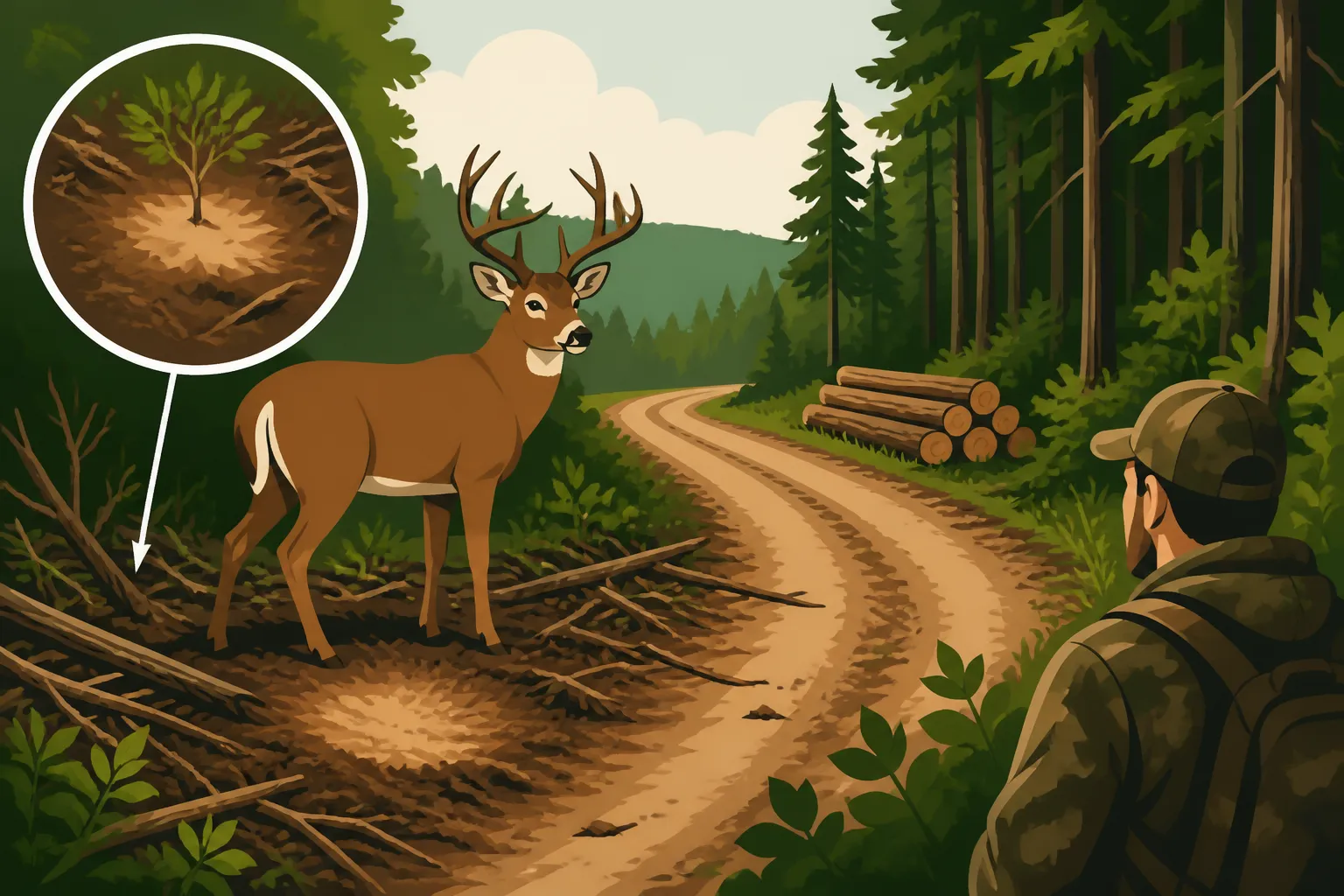
Furthermore, these roads often feature soft, bare earth or exposed mineral soil, which makes them ideal canvases for deer to create scrapes. A buck doesn't want to dig a scrape in leaf litter or thick grass if he can help it; he wants to expose bare dirt where his scent can really permeate and last. The firm, often slightly elevated ground of a logging road provides just that. You'll often find these scrapes just off the main road, perhaps under a low-hanging branch that serves as a licking branch, but sometimes even right in the middle of a less-used track. They're visual and olfactory billboards, broadcasting a buck's presence and readiness to breed. It's not uncommon to find multiple scrapes forming a distinct line over several hundred yards, indicating a consistent travel and communication route. This is particularly true in areas where there's less pressure, or where the roads offer good cover nearby.
Identifying Active Scrapes Versus Old Ones
One of the biggest pitfalls in hunting scrape lines is misinterpreting their freshness. Finding a scrape is exciting, but a week-old, inactive scrape is just a hole in the ground. You need to differentiate the hot spots from the cold trails.
An active scrape will typically show fresh sign. Look for disturbed, moist earth where the buck has pawed away the leaves and debris. The dirt might even look darker, suggesting recent activity. The most telling sign is the licking branch directly above the scrape. This branch, usually hanging low enough for a deer to reach with its mouth or antlers, will often be chewed, broken, or have a dark, greasy sheen from glandular secretions. You might even see rub marks from antlers. Crucially, active scrapes will often have a strong musky odor, especially during the rut, emanating from the urine and glandular secretions left by the deer. If you're out scouting, you might even find fresh tracks in or around the scrape, or nearby droppings.
On the flip side, an old scrape will look weathered. The disturbed earth might be dry, covered in new leaves, or even growing small weeds. The licking branch might be intact but show no recent signs of interaction, or it could be completely gone. The strong scent will have dissipated, and you'll find no fresh tracks or droppings. It's a sign that deer were there, but aren't currently using that specific communication hub. Don't dismiss old scrapes entirely; they show historical use and might be reactivated year after year, especially if the licking branch is still present and the location is strategic. However, for immediate hunting success, focus on the fresh ones.
Here's a quick comparison:
| Feature | Active Scrape | Old Scrape |
|---|---|---|
| Earth | Freshly disturbed, moist, bare dirt | Dry, covered in leaves/debris, possibly weed-grown |
| Licking Branch | Chewed, broken, greasy, rub marks from antlers | Intact, no recent interaction, or missing |
| Scent | Strong, musky odor | Faint or no discernible odor |
| Tracks/Droppings | Fresh tracks nearby, possible fresh droppings | Weathered tracks or no tracks, old droppings |
| Visual Appeal | Looks "used" and fresh | Looks abandoned and weathered |
Strategic Scouting for Productive Scrape Lines
Finding scrape lines along logging roads isn't just about stumbling upon them; it's about strategic scouting, knowing when and where to look, and leveraging modern tools. This proactive approach significantly increases your odds of success. When you know how to effectively scout Scouting Georgia Public Land Before Season, you can pinpoint these high-traffic areas even before the season really heats up.
Best Times to Scout for Scrapes
Timing is everything when it comes to scouting for scrapes. While deer will make mock scrapes or rub trees throughout the year, the real scrape activity that signals prime hunting opportunities typically kicks off in the pre-rut and peaks during the rut.
- Late Summer/Early Fall (Pre-season): This is your initial reconnaissance phase. While true breeding scrapes might not be prevalent yet, you can identify potential hotspots. Look for logging roads that connect bedding areas to feeding areas, or those that form natural funnels between different timber types. Even without fresh scrapes, look for old ones, rub lines, and heavy deer trails crossing or running along the road. These are the locations that are likely to become active once the hormones start flowing. Focus on areas where mature oaks drop their acorns or where agricultural fields meet dense timber. This is also a great time to be out there using tools like Reading Aerial Photos for Piedmont Deer to identify potential travel corridors.
- Early to Mid-October (Pre-Rut): This is when things really start to heat up in many parts of Georgia. Bucks will begin to lay down more serious sign, including primary scrapes. These will be more than just casual pawings; they'll be distinct, often under a good licking branch, and you might start to pick up that musky odor. This is the crucial window for confirming which logging roads are truly active. Pay close attention to consecutive scrapes forming a "line" rather than isolated ones; these indicate a consistent travel route.
- Mid-October through November (Rut Peak): This is prime time. Bucks are actively cruising, scent-checking, and refreshing scrapes daily. If you find fresh scrapes during this period, you're in the right spot. The challenge here is that bucks can be unpredictable, sometimes hitting scrapes once and then moving on. Consistency is key. A scrape that's being hit every day or two is a goldmine. This is when understanding Hunting the Georgia Rut in Mid-October becomes paramount, as scrape activity is a direct indicator of buck movement associated with breeding.
Using Technology to Pinpoint Key Locations
Gone are the days when scouting was purely boots-on-the-ground. Modern technology, especially mapping apps, has become an indispensable tool for identifying and monitoring scrape lines along logging roads.
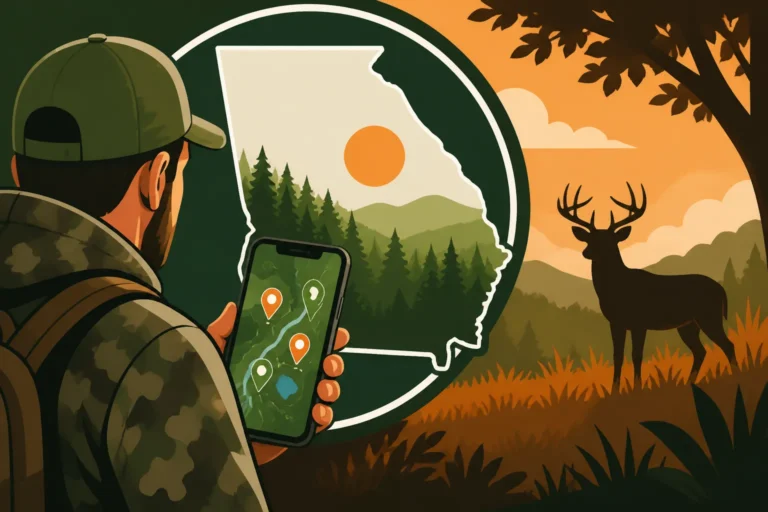
Start with high-quality aerial and topographic maps. Platforms like GoHunt offer incredible detail, allowing you to trace logging roads, identify changes in timber density, pinpoint saddles or pinch points that funnel deer movement, and mark potential scrape locations even before you step foot in the woods. Look for areas where a logging road might cross a creek, skirt the edge of a thick bedding area, or connect two distinct habitat types. These are all prime candidates for deer activity and, consequently, scrape lines. You can digitally "walk" these roads from the comfort of your home, identifying promising stretches that you can then prioritize for physical scouting.
Once you're in the field, continue to use your mapping app to mark every scrape, rub, or significant deer trail you find. This creates a detailed digital breadcrumb trail of deer activity. When you find an active scrape line, mark each individual scrape and, importantly, the associated licking branches. Note the exact GPS coordinates. This data allows you to analyze patterns, determine the direction of deer travel, and identify key areas for stand placement. Trail cameras are another technological marvel that pairs perfectly with scrape lines. Place a camera on a strategically chosen scrape along a logging road. This will tell you when deer are hitting the scrape, which deer (bucks, does, young, mature), and even how frequently. It's like having eyes in the woods 24/7. Just be mindful of local regulations regarding Trail Camera Rules on Georgia Public Land if you're on a WMA or national forest land. This combination of mapping and trail cameras gives you a comprehensive understanding of how deer are using those logging roads, helping you confirm if a particular scrape line is a consistent hotspot or just a random occurrence.
Hunting Tactics for Logging Road Scrapes
Once you've done your homework and identified an active scrape line along a Georgia logging road, the real fun begins: developing a hunting strategy. This isn't just about setting up a stand; it's about understanding deer behavior around these specific features and leveraging it to your advantage.
Optimal Stand or Blind Placement
Location, location, location! Where you set up in relation to the scrape line is absolutely critical. You want to be close enough for a shot but far enough not to spook deer, and most importantly, positioned for the most likely approach.
First, consider the terrain immediately surrounding the logging road. Are there dense thickets, creek bottoms, or elevation changes that deer might use for cover as they approach the road and the scrape line? Bucks, especially mature ones, rarely step out onto an open logging road without first checking their surroundings. Your stand or blind should be positioned to intercept them before they get directly to the scrape, or as they move along the road toward it. Look for a large, mature tree roughly 20-30 yards downwind or crosswind from the most active scrape in the line. This gives you a good shooting lane to the scrape itself, as well as potential approach routes.
If the logging road parallels a thick bedding area, try to set up between the bedding area and the scrape line, especially if you anticipate deer moving from bed to feed or simply cruising for does. In areas with limited thick cover along the road, a ground blind can be incredibly effective, especially if brushed in well. Brushing In a Blind on a Field Edge offers great tips for concealment, which can be adapted for a logging road. Just remember that deer using logging roads are often traveling, so they might not linger long. Being ready for a quick shot is essential. Also, consider any elevation changes. If the road runs along a ridge, bucks might travel below the crest for concealment before popping up to check the scrapes. A stand higher up the ridge could offer a great vantage point.
Playing the Wind and Entry/Exit Routes
No matter how perfect your stand placement is, if your wind is wrong, you might as well stay home. Deer hunting, especially around scent-heavy areas like scrape lines, is fundamentally a chess match with the wind.
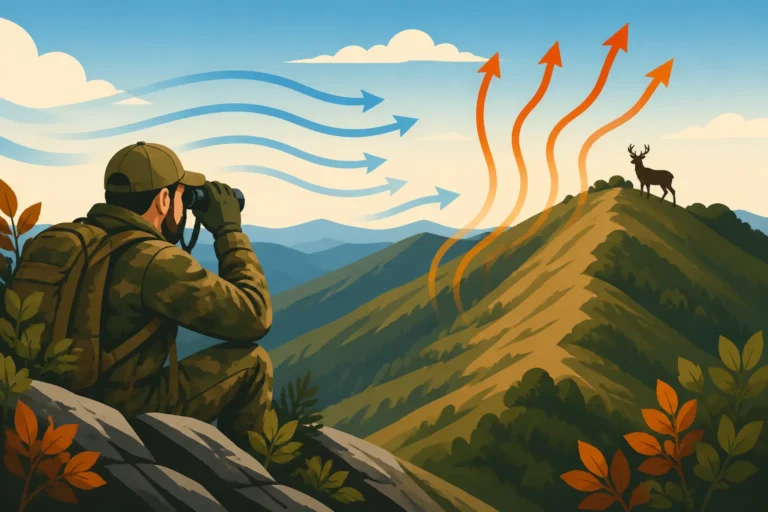
Always, and I mean always, hunt logging road scrapes with a favorable wind. This usually means positioning yourself downwind or crosswind of the scrape itself and any likely deer approach routes. The wind needs to carry your scent away from where the deer will be. This can be challenging in Georgia's typically warm and humid early and mid-season, where thermals can swirl and shift throughout the day. In the mornings, air tends to flow downhill, and in the evenings, it rises. Factor this into your setup, especially if your logging road is in hilly or mountainous terrain. Understanding Wind and Thermals on a Mountain Ridge is key, even if you're not in the highest elevations, as micro-thermals can exist in creek bottoms and draws.
Your entry and exit routes are just as important as your stand location and wind direction. Nothing spooks deer faster than you walking past their bedding area or directly through a feeding area on your way to or from your stand. Plan your route to be as stealthy and scent-free as possible. Utilize natural features like creek beds, ditches, or dense tree lines to conceal your movement. If possible, use an entry route that keeps the wind in your face on your way in, pushing your scent away from where deer might be. Avoid walking directly down the logging road itself, especially if it's open and heavily used by deer. Instead, try to parallel it from within the timber, approaching your stand from the side. When leaving, use a route that doesn't push deer towards their bedding areas, especially after dark. Sometimes, a longer, roundabout route is the most effective. This attention to detail with wind and routes minimizes disturbance and maximizes your chances of encountering an unsuspecting buck.
Common Mistakes and How to Avoid Them
Hunting scrape lines along logging roads can be incredibly productive, but it's not without its pitfalls. Avoiding common mistakes is just as important as implementing good strategies. Many hunters get excited, make a few missteps, and then wonder why the deer activity suddenly vanished.
Overhunting and Scent Control
One of the biggest mistakes hunters make with a hot scrape line is overhunting it. If you discover a fresh, active scrape line, it's tempting to want to hunt it every single day. However, constant pressure will quickly educate even the most rut-crazed buck. Deer, especially mature ones, are incredibly sensitive to human presence. If they detect you day after day, they'll either go nocturnal or completely abandon that particular stretch of logging road. Think of it as a quality over quantity approach. Instead of hunting it daily, consider hunting a hot scrape line every 2-3 days, or only during optimal conditions (e.g., perfect wind, cooler temperatures, just before a cold front).
Scent control is absolutely paramount when hunting scrape lines. These are literally communication hubs where deer are actively smelling. Any lingering human scent can shut down activity immediately. This means more than just spraying down with scent eliminator. It starts with your clothing: wash it in scent-free detergent, store it in airtight containers, and only put it on just before you head into the woods. Avoid strong-smelling foods, soaps, or deodorants before your hunt. Wear rubber boots to minimize scent transfer on the ground, especially on your entry and exit routes. Consider using a quality scent-control system like those from Ozonics or ScentLok, though even with these, meticulous attention to detail is essential. Remember, deer rely heavily on their nose, and a single whiff of human odor can unravel hours of careful scouting and planning. This meticulous approach to eliminating your scent is critical, especially when deer are highly focused on the scent left at scrapes.
Adapting to Changing Conditions
Deer hunting is rarely static, and a productive scrape line on a logging road today might be quiet tomorrow. Successful hunters are those who adapt to changing conditions rather than sticking rigidly to a plan that's no longer working.
Weather is a huge factor. A sudden cold front can ignite deer movement, sending bucks cruising scrape lines more aggressively. Conversely, a warm spell, common in Georgia during the early archery season, can slow things down considerably, making deer more nocturnal or causing them to only visit scrapes during the coolest parts of the day. Pay attention to temperature shifts, barometric pressure, and precipitation. A light rain can actually be a great time to hunt a scrape line, as it washes away old scent and dampens sound, making your approach quieter. Heavy rain, however, usually means deer are hunkered down. If the weather is changing, consider how deer behavior might shift and adjust your hunting times or locations accordingly.
Hunting pressure also changes conditions. If you're on public land, or a private tract where multiple people hunt, awareness of other hunters is key. If a logging road scrape line you've been watching suddenly goes cold, it might not be the deer; it could be another hunter. If you suspect pressure, it might be time to back off for a few days or shift your focus to deeper, less accessible parts of the logging road system. This is where having a tool like GoHunt to help you understand land boundaries and potential pressure points really shines. Deer are incredibly adaptable, and they'll quickly adjust their patterns if they feel threatened. Be flexible. If the scrapes along one logging road go quiet, perhaps a less obvious, parallel deer trail in the timber nearby has become their new preferred route. Keep scouting, keep learning, and be ready to move with the deer. Sometimes, even Late-Season Food Sources for Georgia Whitetails can shift deer patterns away from earlier rutting sign, requiring you to pivot your strategy.
Disclaimer
Hunting involves inherent risks, including but not limited to injury or death. Always prioritize safety, follow all local, state, and federal hunting regulations, and ensure you have the necessary licenses and permits. The information provided in this guide is for informational purposes only and should not be considered a substitute for professional instruction or personal experience in the field.