Georgia Mourning Dove Population Trends
Many Georgia hunters feel a mix of excitement and concern when it comes to mourning doves. We love the tradition of the opening day dove shoot, the camaraderie, and the fast-paced action, but sometimes it feels like the birds just aren't as plentiful as they used to be. This comprehensive guide will dive deep into the fascinating world of Georgia's mourning dove population, exploring historical trends, the myriad factors that influence their numbers, what conservation efforts are doing to ensure healthy populations, and how hunters play a vital role in their future.
Understanding Mourning Doves in Georgia
Mourning doves are one of the most widespread and abundant game birds in North America, and Georgia is certainly no exception. These slender, fast-flying birds are a staple of early fall hunting seasons across the state, drawing passionate sportsmen and women to fields and clearings. But to truly appreciate the dynamic nature of their populations, we first need to understand the birds themselves—their biology, their preferences, and their movements.
Biology and Habitat Preferences
Mourning doves are distinct with their soft cooing call, which often lends them their name, and their characteristic swift, erratic flight. They typically weigh around 4-6 ounces and have a relatively short lifespan, often just one to two years in the wild. This rapid turnover is critical to understanding their population dynamics; they compensate for high mortality rates with equally high reproductive potential. Unlike many other game birds, doves can nest multiple times a year, often raising 3-5 broods of two young (squabs) from spring through late summer. This continuous breeding cycle means that population numbers can respond fairly quickly to favorable or unfavorable conditions.
When it comes to habitat, mourning doves are truly adaptable. They thrive in open woodlands, agricultural fields, suburban areas, and even urban parks. What they need most are three things: open ground for feeding on seeds, accessible water sources for drinking, and suitable trees or shrubs for nesting and roosting. In Georgia, this means you'll find them gravitating towards freshly cut cornfields, peanut fields, dove fields planted specifically for hunting, and even residential areas where bird feeders provide a consistent food source. They're primarily ground feeders, favoring small seeds from grasses, weeds, and cultivated crops. Their ability to utilize a wide variety of landscapes means they can often persist even in areas undergoing significant development, as long as those core needs are met.
Migration Patterns and Local Populations
While many mourning doves are migratory, especially those breeding in the northern parts of their range, Georgia's dove population is a mix of resident birds and migrants that pass through or winter here. We sit squarely within the Atlantic Flyway, making us a key stopover and wintering ground for birds traveling from states further north. This blend means that the birds you see on opening day might be local birds that hatched just a few months prior, or they could be early migrants pushing south.
The timing and strength of these migrations can significantly impact hunting success and local population counts. A strong cold front pushing south in late September or October can bring in a new wave of birds, while a mild winter might mean more birds stay north longer, altering the numbers seen in Georgia. This complex interplay between resident and migratory segments makes monitoring Georgia's mourning dove population trends a nuanced task. It’s not just about how many birds are born here, but also about the health of populations hundreds of miles away. Hunters often notice this, reporting banner years when northern birds pour in, or leaner seasons if migration patterns shift. Understanding Georgia Mourning Dove Migration Timing is crucial for anticipating good hunting days.
Historical Trends in Georgia's Dove Population
To truly grasp where we are today with mourning doves, we need to look back at their journey through the decades. Like many wildlife species, their populations have seen their share of ups and downs, influenced by everything from widespread land-use changes to specific conservation efforts.
Early 20th Century Declines
At the turn of the 20th century, before robust wildlife management practices were in place, many game species, including mourning doves, faced significant pressures. Market hunting, unregulated harvest, and dramatic habitat alteration as agriculture expanded unchecked across the landscape all took a toll. While doves were perhaps more resilient than some species due to their prolific breeding, their numbers were not immune. The widespread conversion of forests to farms initially provided new habitat, but as farming practices intensified and vast areas were cleared, some localized populations experienced declines. Without formal monitoring, exact numbers from this era are hard to pinpoint, but anecdotal evidence from hunters and naturalists suggests a period of concern for many wildlife populations, including doves. This era highlighted the critical need for scientific management and regulated hunting.
Post-War Recovery and Stability
The mid-20th century marked a turning point for wildlife conservation in America. The establishment of state wildlife agencies, the implementation of federal aid programs like the Pittman-Robertson Act, and the growing understanding of wildlife biology led to more effective management. For mourning doves, this meant the establishment of hunting seasons and bag limits based on scientific data, rather than guesswork. Habitat management also became a focus, with practices that inadvertently benefited doves, such as diverse agricultural mosaics and managed timber lands.
During this period, mourning dove populations generally stabilized and even thrived across much of their range, including Georgia. The patchwork of small farms, open woodlands, and developing suburbs provided an ideal environment. Surveys like the federal Migratory Bird Harvest Information Program (HIP) began to provide more accurate data, allowing wildlife managers to track trends and adjust regulations accordingly. This era demonstrated that regulated hunting, coupled with sound conservation, could coexist with healthy game populations. In Georgia, this was a golden age for dove hunting, with many classic stories emerging from the extensive farmlands. If you're wondering about the overall structure of hunting seasons that emerged from this period, you might find our article on Georgia Deer Season Structure Explained interesting, as it touches on the evolution of state wildlife management.
Recent Fluctuations
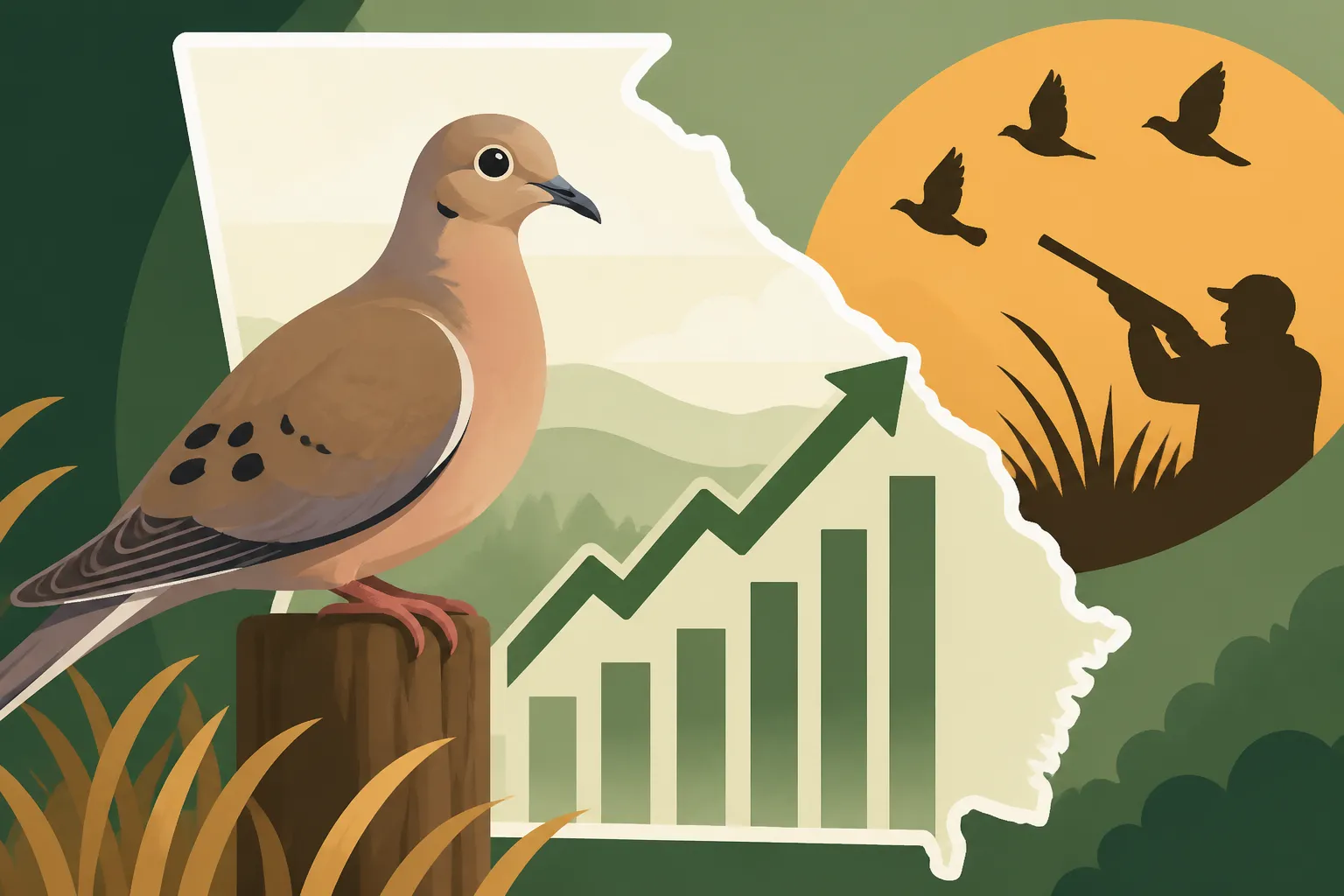
In recent decades, particularly over the last 20-30 years, mourning dove populations have experienced more localized and regional fluctuations. While the overall continental population remains robust, some areas have seen declines. In Georgia, monitoring programs, like the U.S. Fish and Wildlife Service's call-count survey and banding data, track these trends closely. These surveys indicate that Georgia's population, while generally stable, can see year-to-year variations.
Several factors contribute to these more recent shifts, which we'll explore in detail. Changes in agricultural practices, particularly the consolidation of smaller farms and the shift to larger monoculture operations, can reduce habitat diversity. Suburban sprawl, while sometimes providing food sources, also reduces large tracts of quality habitat. Weather events, disease outbreaks, and predator populations can also play a role. These fluctuations underscore the ongoing need for vigilant monitoring and adaptive management. Tools like GoHunt can help hunters keep an eye on anecdotal reports of bird numbers in specific areas, though official data from wildlife agencies is always the most reliable source for broad population trends.
Factors Influencing Dove Numbers
Mourning dove populations are incredibly dynamic, constantly responding to a complex web of environmental pressures. It’s never just one thing that causes a population to rise or fall; it’s usually a combination of factors working in concert. Understanding these influences is key to effective conservation and management.
Habitat Loss and Fragmentation
One of the most significant long-term threats to wildlife populations, including mourning doves, is habitat loss and fragmentation. As Georgia's human population grows, forests are cleared for development, agricultural lands are converted to housing or commercial properties, and the natural landscape becomes increasingly broken up. While doves are adaptable, they still require specific elements: open feeding areas, water, and secure nesting/roosting cover.
When large, contiguous blocks of suitable habitat are broken into smaller, isolated patches, it can reduce the overall carrying capacity for doves. For instance, a vast area of diverse farmland interspersed with woodlots might support more doves than the same acreage divided into housing developments, even if those developments have some green spaces. The edges created by fragmentation can also increase predation pressure. While doves have shown remarkable resilience to these changes in many areas, sustained, large-scale habitat loss can definitely lead to localized declines. This is why preserving and enhancing diverse habitats, even in smaller tracts, is so important for these birds.
Agricultural Practices and Food Availability
Mourning doves are primarily seed-eaters, and their populations are intrinsically linked to food availability, which is heavily influenced by agricultural practices. Traditionally, the mosaic of small farms, diverse crops, and "weedy" edges provided an abundant smorgasbord of seeds throughout the year. Fields of corn, wheat, sunflowers, and milo, especially when harvested or allowed to "go to seed," are prime feeding grounds.
However, modern agriculture has seen shifts toward larger monoculture operations, more efficient harvesting techniques that leave less waste grain, and increased use of herbicides that reduce "weedy" areas that provide natural food. These changes can reduce the overall abundance and diversity of food sources available to doves. Conversely, the deliberate planting of dove fields with species like sunflowers, millet, or wheat can create exceptional, concentrated food sources. These managed fields are crucial for providing reliable feeding opportunities, especially during the hunting season. For hunters interested in creating their own hotspots, learning about Setting Up a Dove Field Before Opening Day can make a huge difference. GoHunt and other mapping tools can help identify areas with diverse agricultural landscapes that might naturally attract doves.
Predation and Disease
Nature is a tough place, and mourning doves face a host of natural challenges, including predation and disease. Their nests, often somewhat flimsy, are vulnerable to predators like snakes, raccoons, opossums, and crows. Adult doves can fall prey to raptors such as peregrine falcons, Cooper's hawks, and various owls, as well as terrestrial predators like bobcats and coyotes. Given their short lifespan, a significant portion of the dove population is naturally replaced each year due to these factors, even without hunting pressure.
Diseases can also play a role in local population fluctuations. Trichomoniasis, often called "canker," is a parasitic disease common in doves and pigeons that can cause mortality, especially around bird feeders or communal water sources where transmission is easier. West Nile Virus has also been documented in mourning doves. While these diseases rarely cause widespread, catastrophic declines across the entire continental population, localized outbreaks can certainly impact numbers in specific areas for a time. Wildlife agencies monitor disease prevalence to understand its potential impact on populations.
Weather Patterns and Breeding Success
Weather is another powerful, unpredictable force that profoundly impacts mourning dove populations, particularly their breeding success. Warm, dry springs and summers generally lead to more successful nesting attempts and higher chick survival rates, boosting overall numbers. Conversely, prolonged periods of cold, wet weather during the nesting season can devastate broods. Heavy rains can wash out nests, chill young birds, or reduce the availability of food if insects are suppressed.
Extreme weather events, such as severe droughts or prolonged freezes, can also impact adult survival and breeding condition. While Georgia generally has a mild climate, unseasonable cold snaps or extended periods of adverse weather can certainly put a dent in local dove production. Because doves can raise multiple broods, they often have the capacity to rebound quickly after a single bad weather event, but a string of unfavorable seasons can lead to more noticeable declines. This variability means that even with all other factors being equal, annual dove numbers can fluctuate significantly based purely on the whims of Mother Nature.
Conservation Efforts and Management Strategies
The healthy mourning dove populations we enjoy today are no accident. They are the direct result of ongoing, coordinated conservation efforts and science-based management strategies implemented by state and federal wildlife agencies, often supported by hunters themselves.
State and Federal Monitoring Programs
The backbone of dove conservation lies in robust monitoring programs. The U.S. Fish and Wildlife Service, in partnership with state agencies like Georgia's Department of Natural Resources (DNR), conducts annual surveys to assess mourning dove populations. The most prominent of these is the Mourning Dove Call-Count Survey. During this survey, trained observers drive predetermined routes across the country, stopping at regular intervals to count doves heard cooing and seen flying. This long-term dataset provides critical information on population trends, breeding densities, and reproductive success.
Another vital tool is dove banding. Wildlife biologists capture and band thousands of doves each year across North America. When a banded dove is harvested by a hunter and the band reported, it provides invaluable data on survival rates, harvest rates, and migration patterns. This information is crucial for setting sustainable hunting seasons and bag limits. Hunters who find a band play a direct role in conservation by reporting it. Understanding Georgia Deer Harvest Reporting Rules is similar in principle to reporting a dove band, ensuring data is collected to manage the species. These data-driven approaches allow managers to detect declines early and implement corrective measures before populations are severely impacted. GoHunt often features articles summarizing these reports or providing insights into the latest population data, making it easier for hunters to stay informed.
Habitat Improvement Initiatives
While large-scale habitat loss is a challenge, targeted habitat improvement initiatives can significantly benefit mourning doves. These efforts often focus on creating or enhancing the specific elements doves need: food, water, and cover.
- Agricultural Best Management Practices: Encouraging farmers to leave stubble fields, plant cover crops, or maintain weedy field borders can provide crucial food sources throughout the year.
- Managed Dove Fields: State wildlife agencies and private landowners actively manage dove fields, often planting specific grains like sunflowers, millet, and wheat, which are then prepared (mowed, disked, or burned) to make seeds accessible to doves. These fields are magnets for birds and provide prime hunting opportunities.
- Riparian Zone Restoration: Protecting and restoring vegetation along streams and rivers provides critical water access and roosting cover.
- Public Land Management: On Georgia's Wildlife Management Areas (WMAs), land managers actively create and maintain diverse habitats that benefit doves, often through timber management, prescribed burning, and planting food plots. If you're interested in what goes into managing these areas, our guide on How Georgia WMAs Are Managed can offer more insight.
These initiatives are often a collaborative effort between government agencies, conservation organizations, and private landowners, all working towards the common goal of ensuring abundant wildlife.
Regulations and Bag Limits
One of the most direct and effective management tools is the regulation of hunting seasons and bag limits. Based on the extensive population data collected through surveys and banding, wildlife managers set limits designed to ensure that hunting remains sustainable and does not negatively impact overall dove populations. Mourning doves are managed as a migratory game bird under federal guidelines, but individual states set their specific season dates and bag limits within those frameworks.
In Georgia, hunters must possess a valid hunting license and a Georgia Migratory Bird Stamp, which also includes a Harvest Information Program (HIP) certification. This HIP certification is critical because it allows the U.S. Fish and Wildlife Service to survey a sample of migratory bird hunters, gathering data on their harvest to further refine population estimates. Currently, Georgia generally has a split dove season to provide opportunities throughout the fall, and specific bag limits are set each year. These limits are periodically reviewed and adjusted if population trends warrant. For example, understanding Georgia Dove Season Bag Limit and Georgia Dove Field Baiting Rules are crucial for legal and ethical hunting, and these regulations are directly informed by conservation science.
The Hunter's Role and Future Outlook
Hunters have historically been, and continue to be, some of the most dedicated conservationists. For mourning doves in Georgia, this involvement is critical not only for supporting conservation efforts but also for ensuring the future of this cherished hunting tradition.
Ethical Hunting Practices
Responsible and ethical hunting is paramount for maintaining public support for hunting and contributing positively to wildlife management. For dove hunters, this means adhering strictly to all regulations, including bag limits, season dates, and methods of take. It also involves practicing good sportsmanship and ensuring a clean harvest.
- Adherence to Regulations: Always check the most current Georgia Hunting Regulations before heading afield. These rules, covering everything from legal firearms to shell limits in shotguns, are designed to ensure fair chase and sustainable harvest. Websites like Go Outdoors Georgia or the Georgia DNR provide up-to-date information.
- Shot Placement and Retrieval: Doves are fast, small targets. Practicing your shotgunning skills before the season helps ensure clean kills and minimizes crippling losses. Making every effort to retrieve downed birds is not only ethical but also maximizes the use of harvested game.
- Respect for Landowners and Public Land: Whether hunting private land with permission or on a WMA, showing respect for the land, other users, and property boundaries is essential. This helps maintain access for future generations.
Ethical hunting ensures that the harvest remains sustainable and that the hunting community continues to be seen as a responsible partner in conservation.
Contributing to Data Collection
Hunters are uniquely positioned to contribute valuable data that directly aids mourning dove management. Their participation in specific programs provides wildlife managers with critical information that cannot be gathered otherwise.
- HIP Certification: As mentioned earlier, obtaining your Georgia HIP Certification for Bird Hunters is not just a requirement; it's a vital contribution. This certification allows wildlife agencies to conduct surveys that estimate harvest levels, which is crucial for setting future season structures. It helps ensure that hunting pressure is within sustainable limits.
- Reporting Banded Birds: If you're lucky enough to harvest a banded mourning dove, reporting that band to the U.S. Geological Survey (USGS) Bird Banding Lab is incredibly important. The information you provide—the band number, date, and location of recovery—directly contributes to understanding dove migration, survival rates, and harvest mortality. This data is invaluable for scientific management. It's an exciting moment to find a band, and reporting it makes you an active participant in conservation.
- Observational Data: While not formal surveys, hunters often spend more time in dove habitat than anyone else. Paying attention to local conditions, flock sizes, and nesting success (if observed pre-season) and sharing this information with local wildlife biologists (if applicable) can provide valuable anecdotal insights, especially for localized trends.
By engaging in these simple acts, hunters become active participants in the scientific process of wildlife management, providing the boots-on-the-ground data that drives effective conservation decisions.
Advocating for Habitat
Ultimately, the future of Georgia's mourning dove population, like most wildlife, hinges on habitat. Hunters have a powerful voice and a vested interest in advocating for policies and practices that protect and enhance dove habitat.
- Support Conservation Organizations: Many non-profit organizations work tirelessly to conserve wildlife habitat. Groups like Ducks Unlimited, National Wild Turkey Federation, and local conservation trusts often engage in projects that benefit doves, even if doves aren't their primary focus. Their work on wetlands, upland forests, and agricultural lands creates a ripple effect that helps a multitude of species.
- Landowner Incentive Programs: Supporting programs that incentivize private landowners to manage their property for wildlife, such as leaving unharvested grain, planting food plots, or restoring native grasslands, is crucial. Given that a vast majority of Georgia is privately owned, engaging private landowners is key.
- Awareness and Education: Educating non-hunters about the role of hunting in conservation and the importance of habitat for all wildlife helps build broader support for these efforts. Often, people don't realize that their hunting license fees and excise taxes on gear directly fund the very programs that benefit species like mourning doves.
By actively participating in conservation, contributing data, and advocating for habitat, Georgia's hunters ensure that the skies will continue to be filled with the fast-flapping wings of mourning doves for generations of hunters and wildlife enthusiasts to come. Whether you're hunting during the Georgia Dove Season Opening Weekend or later in the season, your involvement truly matters.
Summary of Georgia Mourning Dove Population Factors
To help synthesize the many factors we've discussed, here's a concise overview of key elements impacting Georgia's mourning dove populations:
| Factor | Impact on Population | Management Relevance | Hunter's Role |
|---|---|---|---|
| Habitat Loss/Fragmentation | Negative, reduces overall carrying capacity | Land-use planning, habitat preservation, WMA management | Advocate for green spaces, support conservation groups |
| Agricultural Practices | Significant, affects food availability | Managed dove fields, farmer incentives, herbicide use control | Plant food plots, support ethical farming, manage property |
| Predation | Natural mortality, generally stable | Habitat improvements for cover, general predator management | Understand natural cycles, provide good habitat |
| Disease (e.g., Trichomoniasis) | Localized impacts, potential for feeders | Monitoring, promoting feeder hygiene | Clean feeders, report sick birds (if observed) |
| Weather Patterns | Highly influential, especially breeding success | Not directly manageable, but data informs season setting | Adapt hunting plans, understand yearly variability |
| Hunting Pressure | Managed to be sustainable | Season dates, bag limits, HIP certification, banding | Follow regulations, report bands, get HIP certified |
| Conservation Funding | Critical for all management & monitoring | License sales, Pittman-Robertson Act | Buy licenses, hunting gear, support conservation |
Disclaimer
This article is for general informational purposes only and does not constitute professional advice. Laws, prices and regulations vary by location and change over time. Consult a qualified professional for guidance on your specific situation.