Working Pointing Dogs on Wild Georgia Quail
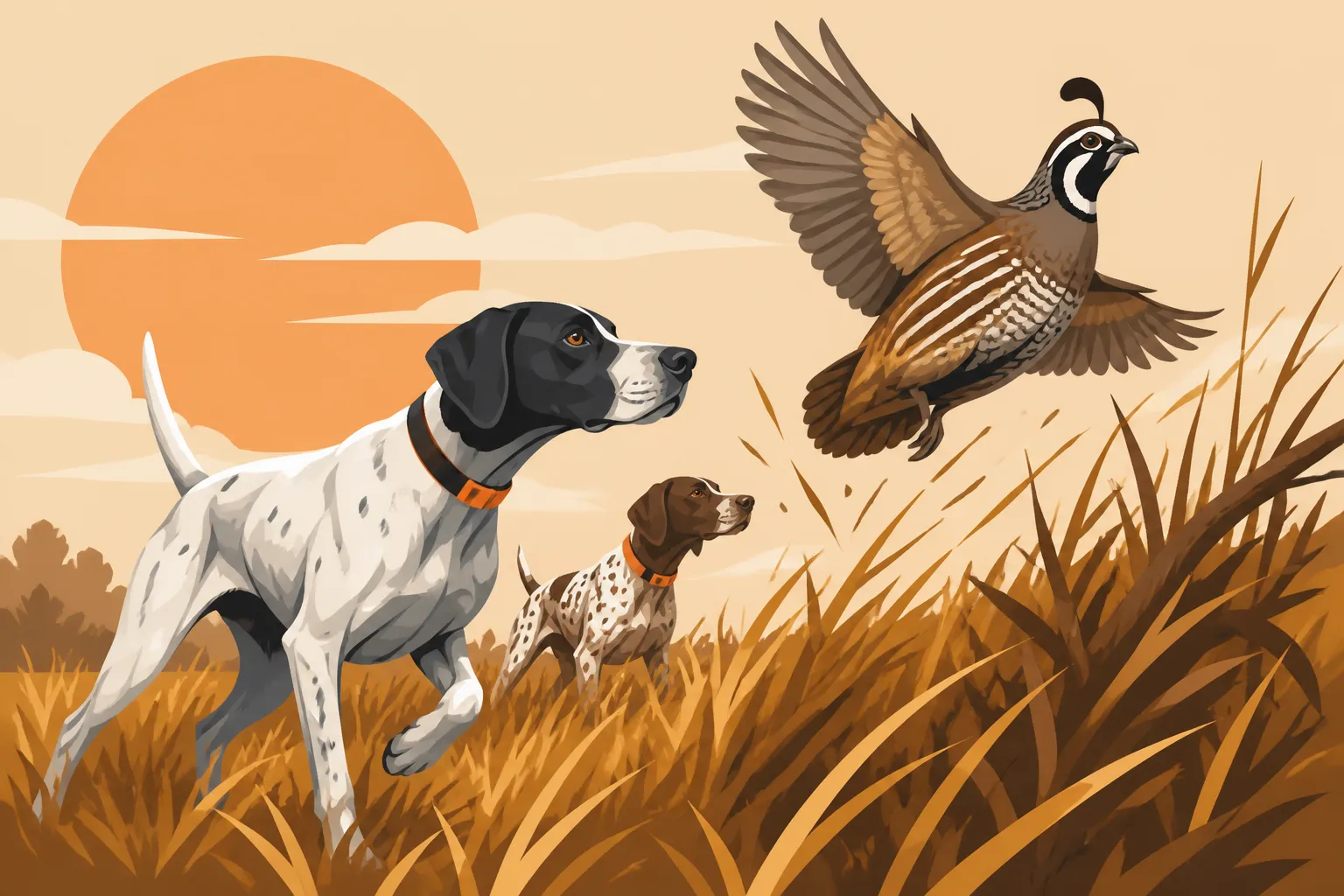
There's nothing quite like the sight of a well-trained pointing dog locked up solid on a covey of wild bobwhite quail in the vast, open spaces of South Georgia. For many, it's the pinnacle of upland hunting, a tradition steeped in history and an intense partnership between human and canine. But let's be honest, successfully working pointing dogs on wild quail is far from a walk in the park; these birds are wily, the terrain can be challenging, and it demands dedication, patience, and a deep understanding of both your dog and the quarry. This guide aims to pull back the curtain on the art and science of working pointing dogs on wild Georgia quail, offering practical advice to help you connect with those elusive coveys and create unforgettable memories afield.
The Elusive Charm of Wild Georgia Quail
Hunting wild bobwhites in Georgia is a different beast entirely from shooting pen-raised birds on a managed preserve. Wild quail are survivors, constantly on the move, and their existence is intrinsically tied to the health of their habitat. Understanding their natural behaviors and preferred environments is the first step toward a successful hunt.
Understanding Covey Dynamics and Habits
Wild quail are truly social creatures, living in family groups known as coveys. These coveys are typically 8-15 birds strong, but can sometimes be larger or smaller depending on habitat quality and population density. They spend their days scratching for food, dusting, and loafing in protective cover, often making short flights between feeding areas and escape cover. When a covey is disturbed, they usually flush explosively in all directions, creating that heart-pounding moment every quail hunter lives for. After the initial covey rise, individual birds will typically scatter and sit tight, offering opportunities for single-bird points.
However, wild quail aren't predictable. They learn quickly from pressure. A covey that's been hunted before might run before the dogs can pin them, or flush wild long before you're in range. Their movements are often dictated by weather, food availability, and predatory pressure. You might find them in thickets early in the morning, moving to more open areas to feed as the day progresses, then retreating to dense cover for roosting at dusk. The long-term trend for wild quail populations in the state has been a concern, with a significant Georgia Wild Quail Decline Since the 1960s. This makes every wild covey rise feel even more special and highlights the importance of ethical hunting and conservation efforts.
Preferred Habitats and Food Sources
In Georgia, wild bobwhites thrive in specific types of habitat. Think open pine woodlands, especially those dominated by longleaf pine with a healthy understory of native grasses and forbs, well-maintained field edges, and brushy fence rows that offer both food and escape cover. They need a mosaic of cover types: tall grasses for nesting and roosting, low-growing plants for seeds and insects, and dense shrubs for protection from predators and inclement weather. The sound of a prescribed burn crackling through the woods is music to a quail hunter's ears, as it rejuvenates these vital habitats.
Overgrown fields, thick clear-cuts, and dense monoculture forests offer little to a wild quail. They need sunlight hitting the forest floor to stimulate the growth of their preferred food plants like partridge pea, ragweed, and various native legumes. Insects, especially grasshoppers and beetles, are also a crucial part of their diet, particularly for chicks. Areas where land managers actively practice prescribed burning and timber thinning, often referred to as "managed pine," are key to their survival and recovery. There's a strong correlation between these practices and Managed Pine and Georgia Quail Recovery, making it crucial for hunters to support such efforts. Understanding these habitat needs can help you scout effectively, even when using modern tools like the GoHunt app to analyze satellite imagery for prime looking areas.
Selecting and Preparing Your Pointing Partner
Your pointing dog is more than just a tool; they are your partner in the field. The success of your hunt, and indeed the enjoyment of the entire experience, hinges on their breeding, training, and care.
Choosing the Right Breed and Bloodline
When it comes to pointing dogs for wild quail, several breeds stand out, each with its own characteristics. English Pointers are renowned for their incredible speed, range, and intense, stylish points. English Setters are known for their elegant gait, keen noses, and often a slightly closer working range, making them excellent choices for tighter cover. German Shorthaired Pointers and Brittanys offer a versatile package, often excelling at both pointing and retrieving, with a strong desire to please.
The "right" breed often comes down to personal preference, the type of terrain you hunt most frequently, and your hunting style. For wide-open pine savannas where birds might be scattered, a wider-ranging pointer could be ideal. For dense, briar-choked cover or smaller tracts, a closer-working Setter or Brittany might be more suitable. Regardless of breed, a strong bloodline with proven bird-finding ability and a calm temperament is paramount. Look for pups from parents that are not only excellent hunters but also well-behaved and manageable. Talk to breeders, watch their dogs work, and understand the history of the lines.
Here's a quick comparison of some popular pointing breeds for quail hunting in Georgia:
| Breed | Key Traits | Ideal Georgia Habitat |
|---|---|---|
| English Pointer | High energy, wide-ranging, intense point, fast | Open longleaf pine, large fields |
| English Setter | Graceful, good nose, stylish, often closer working | Mixed cover, smaller woodlands |
| German Shorthaired Pointer | Versatile, strong retrieve, biddable, energetic | Varied terrain, field edges |
| Brittany | Compact, enthusiastic, good nose, excellent retriever | Dense cover, smaller fields |
Foundational Training for the Field
Before you even think about putting your dog on wild birds, they need a solid foundation of obedience. This includes commands like "sit," "stay," "here" (recall), and "heel." These aren't just for manners; they are critical safety commands that can prevent dangerous situations in the field. Beyond basic obedience, specific bird dog training begins.
Introduction to birds is usually done with pen-raised quail or pigeons in a controlled environment, often on a check cord. This allows the dog to develop a strong "prey drive" and understand what they're supposed to do. The "whoa" command is perhaps the most crucial for a pointing dog. This command teaches the dog to freeze in place, often when they scent birds. It ensures they hold their point steadfastly, allowing the hunter to walk in, flush the birds, and get into shooting position. This training takes time, repetition, and consistency, often involving a good professional trainer or experienced mentor.
Advanced Field Training and Steadiness
Once the basics are solid, training progresses to more advanced field work. This includes steadiness to wing and shot, meaning the dog holds its point even as the birds flush and the gun fires. This is crucial for safety and for allowing you to focus on the shot without worrying about your dog breaking point and chasing. A dog that is steady will remain frozen until released by the handler, preventing dangerous situations and allowing for a calm retrieve.
Retrieving is another vital component, especially when hunting wild birds in dense Georgia cover. A bird that falls in thick briars or deep grass can be nearly impossible for a hunter to find without a dog's keen nose. Training for a soft mouth, ensuring the dog doesn't damage the bird, is also essential. This advanced training often involves more realistic field scenarios, sometimes using a remote bird launcher to simulate wild flushes. Investing in quality Bird Dog Gear for Georgia Plantation Country can significantly aid in this process, providing the right tools for effective training and hunting.
Essential Gear for a Successful Quail Hunt
Hunting wild quail with dogs isn't just about the dog; it's about having the right equipment for both you and your canine companion to ensure safety, efficiency, and success.
Dog Tracking and Safety Equipment
In the sprawling pine forests and expansive fields of Georgia, a dog can quickly disappear from sight. This makes reliable tracking and safety equipment non-negotiable. A high-quality GPS tracking collar system, like those offered by Garmin or SportDOG, is essential. These systems not only show you your dog's location in real-time but can also tell you if they're on point, running, or standing still. Being able to see your dog's position on a mapping app like GoHunt can be a game-changer, especially on unfamiliar land.
Alongside GPS, an e-collar (electronic collar) is an invaluable training and communication tool. When used correctly and humanely, it allows you to reinforce commands and correct unwanted behaviors even when your dog is far out in front. It's not a punishment tool but an extension of your voice, especially useful for enforcing "whoa" or recall. Understanding E-Collar Use on Georgia Public Land is crucial for both effectiveness and ethical application. Many hunters also equip their dogs with a bell, which provides an audible cue to their location, especially when working through thicker cover where visual contact is limited. Reflective vests or collars are also a good idea, particularly if you're hunting near roads or at dusk.
Hunter's Kit: Shotguns, Ammo, and Apparel
For the hunter, the right gear enhances comfort and performance. A lightweight, fast-swinging shotgun is preferred for quail. Many hunters favor 20-gauge or 28-gauge shotguns, as they are lighter to carry through long days afield and offer sufficient knockdown power for quail at typical ranges. Over-and-under or side-by-side configurations are popular for their balance and quick follow-up shots. Choke selection is usually open, like skeet or improved cylinder, to allow for quick, close-range shots on flushing birds.
A good upland vest is indispensable, offering ample storage for shells, water, a first-aid kit, and most importantly, a large game bag for carrying harvested birds. Water is crucial for both you and your dog, so carrying enough hydration is paramount, especially in Georgia's often warm weather. Comfortable, durable brush pants are a must-have for protection against briars and thorns, which are abundant in quail cover. And don't forget snake boots. Georgia is home to several venomous snake species, and walking through tall grass and thickets puts you at risk. Investing in a quality pair of Snake Boots for Coastal Plain Walking can offer peace of mind and protection. For more specific recommendations, explore resources on Upland Guns for Quail Plantation Walks.
Reading the Language of the Hunt
The magic of hunting quail with a pointing dog lies in the unspoken communication between handler and dog. Learning to read your dog's body language is key to anticipating the flush and making successful shots.
Interpreting Your Dog's Point and Body Language
A dog on point is a sight to behold. Their body will typically be rigid, head held high (or low, depending on how they're catching the scent), tail stiff, often quivering. They are locked onto the scent, indicating birds are directly in front of them or very close by. However, not all points are created equal. A "soft" point might indicate a bird running ahead, while an "intense" point suggests the bird is locked down tight.
Pay attention to subtle cues: a slight shift in weight, the way their nose works the air, or if their tail begins to flag slightly. Sometimes a dog might "creep" on point, slowly advancing as the birds move, or give a "false point" if they've caught the lingering scent of a bird that has already left. With experience, you'll learn your dog's individual tells. If you're hunting with multiple dogs, the concept of "backing" is critical: one dog points, and the other dogs honor that point by freezing in place behind the pointing dog. This demonstrates excellent discipline and teamwork. When you see that unwavering point, it's time to prepare for the covey rise.
Working the Flush and Making the Shot
Once your dog is on point, the hunter's job begins. Approach the dog calmly and steadily, moving around the dog to get into the best position to shoot, usually on the side where the birds are expected to flush. Scan the cover ahead, mentally preparing for the explosion of wings. When you're in position, often near the front of the point, give the command to "flush" or simply walk past the dog to disturb the birds.
When the covey bursts into the air, resist the urge to rush. Pick a single bird, swing through it, and make a clean shot. Remember, Working a South Georgia Quail Covey Rise is all about controlled chaos. The initial flush can be disorienting, but taking a second to focus on a single target significantly increases your chances of a clean kill. After the shot, mark the fall of the bird carefully, noting any landmarks. If multiple birds are shot, prioritize marking the first bird down before attempting a second shot. This meticulous attention to detail prevents lost birds.
The Importance of a Clean Retrieve
A clean, prompt retrieve is not just courteous to the bird; it's essential for ethical hunting and for maximizing your bag limit within the Georgia Quail Season Bag Limit. Once a bird is down, send your dog to retrieve it. A well-trained retrieving dog will go directly to the fallen bird, pick it up gently (a "soft mouth"), and return it to hand.
If your dog struggles to find a bird, guide them with hand signals or verbal commands, but try to let their nose do the work. Avoid walking directly to the fallen bird yourself if your dog is working, as this can confuse them and teach them to rely on you rather than their own abilities. A lost bird is a wasted bird, so emphasize this aspect of training just as much as the point itself.
Navigating Common Challenges in Georgia's Wild Quail Fields
Wild quail hunting in Georgia presents unique challenges that can test the patience of both hunter and dog. Being prepared for these can turn potential frustrations into learning opportunities.
Dealing with Running Birds and Hard Flushes
One of the most frustrating aspects of wild quail hunting is encountering running birds. Instead of holding tight for the dog's point, these coveys will run ahead, making it difficult for the dog to pin them down. Your dog might show a "creeping" point or keep pushing forward. In these situations, speed and strategy are key. Try to move quickly to get ahead of the running covey, or move aggressively into the area where the dog indicates the birds are moving to try and force a flush. Sometimes, changing your approach angle can also help.
Hard flushes occur when birds explode from cover far out of gun range. This can be due to excessive hunting pressure, dense cover that allows them to hear or see you coming, or simply a particularly wary covey. If this happens repeatedly in an area, it might be worth moving to less pressured ground. Reinforcing steadiness during training is crucial here. Even if birds flush wild, your dog should ideally remain on point until released, preventing them from chasing and potentially bumping more birds or getting lost.
Mitigating Heat and Fatigue in the Field
Georgia's hunting seasons, particularly the early parts, can be surprisingly warm. Heat and humidity are major concerns for both hunters and, especially, dogs. Dogs can overheat quickly, leading to serious health issues. Always carry plenty of water and offer it to your dog frequently. Watch for signs of overheating: excessive panting, drooling, lethargy, or stumbling. If you see these, stop, find shade, and cool your dog down immediately.
Plan your hunts around the coolest parts of the day, often early morning. Take frequent breaks, especially if you're working your dog hard. Don't push your dog beyond their limits. A well-conditioned dog will handle the exertion better, so regular exercise outside of hunting season is important. If hunting extends into later parts of the Georgia Wild Quail Season Opening Day, colder weather will present different challenges, but early season heat is often the most dangerous. Utilize the GoHunt app to check weather forecasts for your hunting areas to plan accordingly.
Respect, Responsibility, and the Future of Quail Hunting
Wild quail hunting is a privilege, and it comes with a deep responsibility to the birds, the land, and the future of the sport.
Ethical Considerations and Conservation
Ethical hunting goes beyond legal compliance. It means making clean, quick kills to minimize suffering, avoiding sky-busting or taking unsafe shots, and making every effort to retrieve every downed bird. Know your gun and your limitations. Respect private property, even if you don't need written permission, always ask for it.
More importantly, being an ethical hunter means being a conservationist. The decline of wild quail populations is a serious issue. Supporting habitat restoration efforts, advocating for sound wildlife management practices, and participating in conservation organizations like Quail Forever or the Georgia Wildlife Federation are vital. Responsible hunting helps secure the future of this iconic bird and the tradition of hunting them with pointing dogs.
Staying Informed with Regulations and Resources
Hunting regulations are in place for a reason: to manage wildlife populations responsibly and ensure safety. Always check the current Georgia Department of Natural Resources (DNR) regulations before heading afield. This includes licensing requirements, season dates, bag limits, and specific rules for Wildlife Management Areas (WMAs) if you're hunting public land. Ignorance of the law is never an excuse.
Numerous resources are available to help you. The Georgia DNR website is an excellent starting point for regulations, public land maps, and habitat information. Local sporting goods stores and gun clubs can also be great places to connect with experienced hunters and find mentors. Online platforms, including apps like GoHunt, can assist with scouting, finding property boundaries, and checking local weather, helping you stay informed and prepared for your next quail adventure. Learning from experienced hunters who have spent years Hunting a Managed Quail Plantation or exploring public lands can also provide invaluable insights into bird behavior and dog handling in diverse Georgia landscapes.
Disclaimer
Hunting is an inherently risky activity. Always prioritize safety, understand and follow all local, state, and federal regulations, and obtain proper licensing. The information provided in this guide is for informational purposes only and should not replace professional training, expert advice, or official safety courses. Always be aware of your surroundings and exercise extreme caution when handling firearms or hunting with dogs.