E-Collar Use on Georgia Public Land
Stepping onto Georgia's public lands with a hunting dog is an incredible experience, but it also comes with a unique set of questions, especially when considering tools like e-collars. Many hunters feel a little lost navigating the regulations and social etiquette surrounding electronic collars, worried about doing something wrong or being misunderstood. This guide is here to cut through that confusion, giving you the real talk on using e-collars responsibly and effectively on Georgia's shared hunting grounds.
Understanding Georgia's Regulations on E-Collars for Hunting Dogs
It’s easy to get tangled up in what’s allowed and what’s not when it comes to technology and hunting. E-collars often stir up strong opinions, but from a regulatory standpoint here in Georgia, the situation is actually quite clear, though it demands responsible usage.
The Legal Framework for Electronic Collars
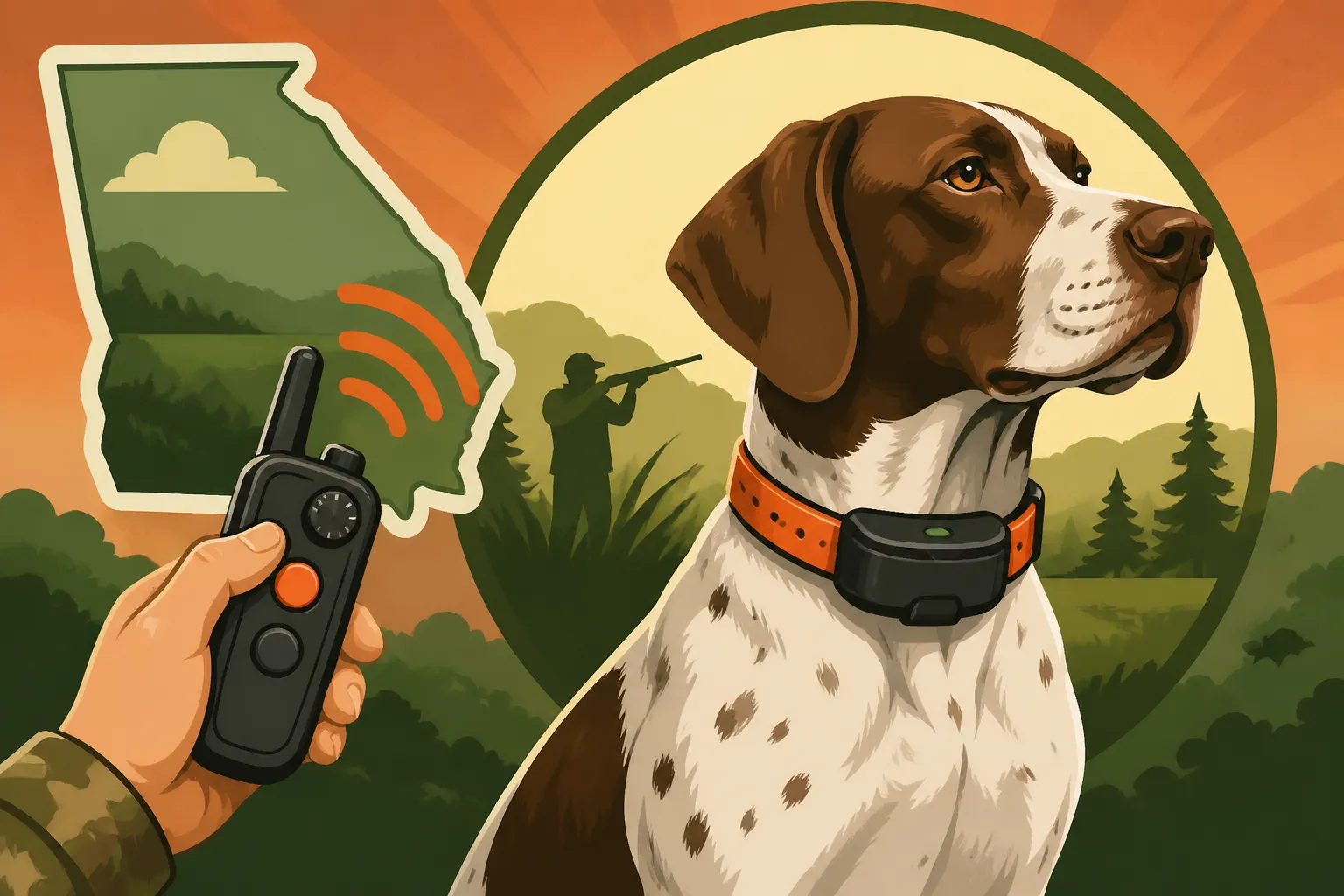
Let's get this straight from the start: e-collars themselves are generally legal for training and hunting purposes across Georgia. There isn't a statewide ban on the use of electronic collars for dog control, whether you're on your own land or public hunting areas like Wildlife Management Areas (WMAs) or the national forests. The key isn't the device itself, but how it's used and the behavior it enables or corrects. Georgia's laws are primarily concerned with animal cruelty and the harassment of wildlife, neither of which is inherent to an e-collar.
What this means for us hunters is that an e-collar is viewed as a tool, much like a leash or a whistle. It's designed to enhance communication and control, allowing you to manage your dog's actions in a wider range of situations and at greater distances. The legal focus shifts to whether your dog is controlled, not how you control it. If your dog is under control and adhering to all hunting regulations – not chasing non-game animals, not trespassing, not creating a nuisance – then the e-collar is simply a means to that end.
General Rules for Hunting with Dogs on Public Land
While e-collars aren't explicitly regulated as hunting gear, their use directly impacts your ability to comply with the general rules for hunting with dogs on public land. These rules exist to ensure safety, fair chase, and a positive experience for everyone sharing these spaces. For instance, most public lands will have regulations about keeping your dog on a leash in certain areas or ensuring your dog doesn't harass wildlife not being hunted. An e-collar becomes an invaluable tool for enforcing these behaviors, especially when your dog is off-leash in areas where it's permitted.
Think about WMAs, for example. You'll often find specific rules about when and where you can hunt with dogs, particularly for deer, hogs, or small game. Using an e-collar effectively allows you to quickly correct your dog if it starts to range too wide, pursues an unintended animal, or gets too close to another hunter's setup. It's all about responsible stewardship of both your dog and the land. Companies like GoHunt offer robust GPS tracking solutions often integrated with e-collars, which is a fantastic way to ensure you always know your dog's location and can recall them effectively, especially in vast public areas. Understanding Georgia WMA Access Stamp Requirement is also part of being a responsible public land hunter.
Best Practices for Ethical and Effective E-Collar Use on Public Land
Using an e-collar isn't just about slipping it on your dog and pushing a button. To be truly effective and ethical, especially on Georgia's diverse public lands, it requires thoughtful preparation and a deep understanding of your dog and the tool itself.
Prioritizing Training and Familiarity
This is perhaps the most crucial aspect: an e-collar is a training aid, not a substitute for training. You wouldn't hand a novice hunter a high-powered rifle and expect them to be an expert marksman; the same principle applies here. Before you ever hit the woods with an e-collar on public land, your dog needs to be thoroughly conditioned to it in low-distraction environments. This means introducing the collar gradually, allowing your dog to associate the stimulation (which should be a low, non-aversive "tap" or vibration, not a painful "shock") with a command it already knows, like "come" or "leave it."
Finding your dog's "working level" is paramount. This is the lowest level of stimulation that your dog consistently acknowledges, perhaps with a slight ear twitch or head turn, without showing fear or pain. It's about clear communication, not punishment. If you try to use an e-collar as a magic bullet in a high-pressure public land scenario without this foundational training, you're setting yourself and your dog up for failure and frustration. Proper preparation ensures that when your dog is out Running Beagles on Georgia Cottontails or Working Pointing Dogs on Wild Georgia Quail, the e-collar is a seamless extension of your commands, not a surprise. I can't stress enough the importance of Dog Training on Georgia Public Land as a prerequisite.
Respecting Other Users and Wildlife
Georgia's public lands are shared resources, which means you'll encounter all sorts of people: hikers, birdwatchers, mountain bikers, and other hunters pursuing different game. Your dog's behavior directly impacts their experience, and an e-collar can be a powerful tool for ensuring your dog is a good citizen. A well-controlled dog, even when off-leash, is less likely to accidentally flush game for another hunter, disturb a family on a nature walk, or get into a scuffle with another dog.
Consider a scenario where you're working a field edge and your dog suddenly catches scent of something off-limits, like a deer during small game season. A quick, consistent correction via the e-collar can prevent your dog from taking off on an unwanted chase, thereby respecting both other hunters (who might be deer hunting nearby) and non-game wildlife. This isn't just about legality; it's about being a considerate member of the outdoor community. Products that offer integrated GPS and e-collar functions, like some from GoHunt, can provide peace of mind, allowing you to instantly locate and recall your dog before it becomes a nuisance or gets lost in the dense cover you might find while Hunting Pressure on Georgia Public Land is high.
Situational Awareness and Specific Hunting Scenarios
The effectiveness of your e-collar use will also depend heavily on your situational awareness and the specific type of hunting you're doing. A retriever working a flooded timber impoundment needs different commands and control than a bird dog quartering a pine plantation or a hog dog tracking in a swamp.
For pointing dogs working vast fields, the e-collar's range and consistency allow you to give subtle directional corrections or "whoa" commands from a distance, maintaining the dog's focus without yelling and disturbing the tranquility. When Working a South Georgia Quail Covey Rise, a quick "hup" or "leave it" via the collar can keep a dog from breaking point prematurely. For dogs pursuing game like hogs, where they might be out of sight for extended periods in thick brush, the e-collar with a tracking component (like those offered by GoHunt) is vital for safety and control, letting you call them back from dangerous situations or areas you don't want them to enter. The ability to use vibrate or tone functions, rather than just stimulation, provides less intrusive communication options, especially important in quiet settings or when working close to game.
Common Misconceptions and Troubleshooting E-Collar Challenges
Despite their widespread use and advancements, e-collars still carry some baggage from older, less sophisticated designs. Understanding these misconceptions and knowing how to troubleshoot common issues will make your experience much smoother.
Addressing Misconceptions About E-Collars
One of the biggest hurdles e-collar users face is the lingering "shock collar" stigma. This term conjures images of harsh, painful corrections, which is a far cry from how modern, properly used e-collars function. Today's e-collars deliver a highly adjustable, momentary static stimulation (often described as a muscle twitch or a "tap"), vibration, or tone. The goal is to get your dog's attention and communicate a command, not to punish or inflict pain. When used correctly, at the lowest effective level, an e-collar is a powerful communication tool that can actually enhance your dog's confidence by clarifying expectations.
Another misconception is that e-collars make dogs afraid or inhibit their natural drive. In reality, a dog that understands the e-collar as a clear signal, not an unpredictable punishment, becomes more confident in its job because it knows exactly what you want. It reduces frustration for both dog and handler, allowing the dog to range further and work more independently with the security of knowing it can always be recalled or directed. This leads to a more enjoyable hunting experience for both of you, whether you're Hunting Hogs Alongside Any Other Georgia Season or tracking a wounded deer.
Troubleshooting Issues in the Field
Even with the best training, things can go sideways in the field. Understanding common e-collar issues can save you a headache.
- Battery Life: Always check and charge your collar and remote before heading out. A dead battery means a lost communication tool, potentially leading to a lost dog or an uncontrolled situation. Carry spares or a portable charger for longer trips.
- Signal Range: While modern e-collars boast impressive ranges, dense Georgia cover, extreme terrain, or electromagnetic interference can reduce effective range. If your dog is deep in a creek bottom while you're on a ridge, your signal might not reach. Pay attention to the terrain and keep your dog within reasonable communication distance.
- Collar Fit: An e-collar needs to be snug enough for the contact points to make consistent skin contact, but not so tight it's uncomfortable. Too loose, and the stimulation will be inconsistent or nonexistent, confusing your dog.
- Environmental Factors: Water is a common culprit. While many e-collars are waterproof, prolonged submersion or heavy rain can sometimes impact performance. Always verify your collar's waterproof rating. Similarly, very cold weather can affect battery performance.
- Dog's Response: If your dog suddenly starts ignoring commands, seems anxious, or overreacts to stimulation, it's time to re-evaluate. Is the level too high? Is the dog associating the stimulation with something other than your command (e.g., another dog, a loud noise)? Sometimes, stepping back to basics in a controlled environment is necessary. This is where a reliable unit, perhaps like one integrated with the GoHunt platform, can provide diagnostic feedback or at least peace of mind about the gear itself, allowing you to focus on your dog's behavior.
Legal Consequences of Misuse
While e-collars are legal, misusing them or allowing your dog to run amok because you have an e-collar can absolutely lead to legal trouble. Allowing your dog to chase or harass non-game animals, trespass onto private property, or become a public nuisance on shared lands can result in fines, revocation of hunting privileges, or even more severe penalties depending on the specific violation.
The e-collar is a tool to ensure your dog operates within the legal and ethical boundaries, not outside them. Game wardens and other law enforcement officers are primarily concerned with responsible hunting and animal welfare. If your dog is out of control, an e-collar won't be a defense; in fact, its presence might suggest you should have had better control. Responsible use means being proactive, preventing problems before they start, and always having your dog under reliable command.
Choosing the Right E-Collar for Georgia Hunting Conditions
Selecting an e-collar isn't a one-size-fits-all decision, especially when you consider the varied terrain and demands of hunting across Georgia. From humid swamps to dense mountain hardwoods, your gear needs to be up to the task.
Features to Look For in an E-Collar
When you're looking for an e-collar that can stand up to the rigors of Georgia hunting, here are some key features to prioritize:
- Waterproofing: This is non-negotiable in Georgia. Whether it's a sudden downpour, splashing through a creek, or a retriever making repeated water entries, your collar must be fully waterproof, not just water-resistant. Look for ratings that indicate it can be fully submerged.
- Range: Consider the typical distances you'll be working your dog. If you're Hunting a Funnel Between Two Swamps or letting a pointing dog cover vast tracts of Managed Pine and Georgia Quail Recovery, you'll need a collar with a long, reliable range. If you're mostly still-hunting with a close-working dog, a shorter range might suffice. Signal strength in dense cover can vary, so a bit of overkill on range is usually a good thing.
- Adjustable Stimulation Levels: Different dogs have different temperaments, and even the same dog might respond differently depending on the situation. Look for collars with a wide range of adjustable stimulation levels (from very low "nick" to higher, constant stimulation) to fine-tune your communication. Many modern collars also offer momentary and continuous stimulation options.
- Tone and Vibrate Features: These non-stimulus options are incredibly valuable. A tone can be used as a warning or a "recall" signal, while a vibrate function can be a gentle attention-getter. They offer versatility and can often resolve situations without needing static stimulation.
- GPS Tracking Integration: This is a game-changer for public land hunting. Losing a dog in vast, unfamiliar territory is every hunter's nightmare. Collars with integrated GPS, often linked to a handheld remote or a smartphone app, allow you to see your dog's location in real-time, track their movements, and even set geofences. This is especially useful for Running Dogs on Georgia Feral Hogs where dogs might cover many miles. Many hunters rely on platforms like GoHunt that provide this type of mapping and tracking capability, ensuring their dog's safety and allowing for more efficient hunting.
Brands and Models Suited for Georgia's Environment
While I can't name specific models or their exact features, many reputable brands offer e-collars designed for demanding field use. When researching, focus on brands known for durability, reliability, and excellent customer service. Look for collars that feature:
- Robust Construction: Your e-collar needs to withstand brush, briars, mud, and whatever else Georgia throws at it. Look for tough, impact-resistant casings.
- Long Battery Life: You don't want your collar dying mid-hunt. Many brands offer extended battery life, and some allow for user-replaceable batteries or quick charging.
- Ergonomic Remotes: Can you operate the remote easily with gloves on? Is it intuitive to use under pressure? These small details make a big difference when you need to act fast.
- Interchangeable Contact Points: Some dogs have thicker coats, requiring longer contact points for consistent skin contact. Look for options to customize this.
When exploring your options, consider how well the device integrates with mapping and tracking tools, such as those provided by GoHunt, which can be immensely helpful for navigating Chattahoochee-Oconee National Forest Hunting or other expansive public lands. Investing in quality gear & optics for your dog, including a reliable e-collar, is just as important as your own equipment.
| Feature | Importance for Georgia Swamps/Wetlands | Importance for Georgia Pine Flats/Fields | Importance for Georgia Mountainous Terrain |
|---|---|---|---|
| Waterproofing | Absolutely Critical (Submersible) | Very Important (Heavy Rain, Puddles) | Important (Rain, Creek Crossings) |
| Long Range | Very Important (Dense Cover, Line of Sight) | Important (Open Fields, Dog Ranging) | Critical (Valleys, Ridges, Signal Obstruction) |
| Adjustable Stim. | Very Important (Varied Situations) | Very Important (Varied Situations) | Very Important (Varied Situations) |
| Tone/Vibrate | Highly Useful (Quiet Communication) | Highly Useful (Quiet Communication) | Highly Useful (Quiet Communication, Distance) |
| GPS Tracking | Critical (Disorientation, Thick Cover) | Very Important (Long Range, Fast Dogs) | Critical (Lost Dogs, Dangerous Drops) |
| Battery Life | Critical (Extended Hunts, Remote Areas) | Very Important (Full Day Hunts) | Critical (Long Walks, Remote Camping) |
Disclaimer
This article is for general informational purposes only and does not constitute professional advice. Laws, prices and regulations vary by location and change over time. Consult a qualified professional for guidance on your specific situation.