Rifle Scope Magnification for Georgia Deer
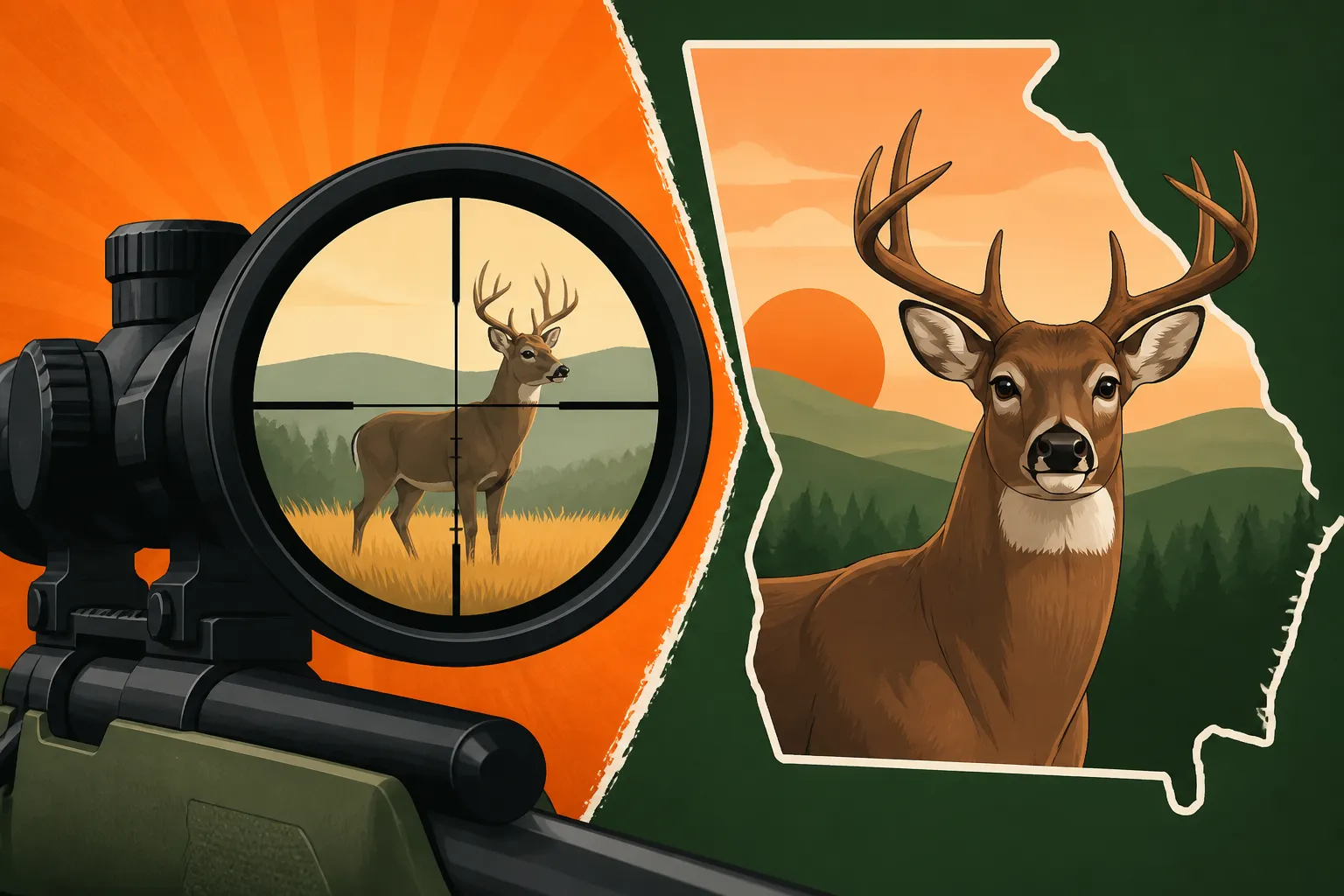
Choosing the right rifle scope magnification for deer hunting in Georgia can feel like a real head-scratcher. One minute you're thinking about a tight shot in thick woods, and the next you're imagining a long reach across a sprawling powerline cut. This guide is here to untangle the confusion and help you match your scope’s magnification to Georgia's incredibly diverse and often challenging hunting scenarios, ensuring you're ready for whatever the woods throw at you.
Understanding Georgia's Diverse Hunting Environments and Their Impact on Scope Choice
Georgia is a state of incredible contrasts when it comes to deer habitat. What works perfectly in the North Georgia mountains might be a hindrance in the sprawling pine plantations of the Coastal Plain. Understanding these differences is the first step in picking a scope that genuinely serves you in the field.
The Thick Cover of the Piedmont and Coastal Plain
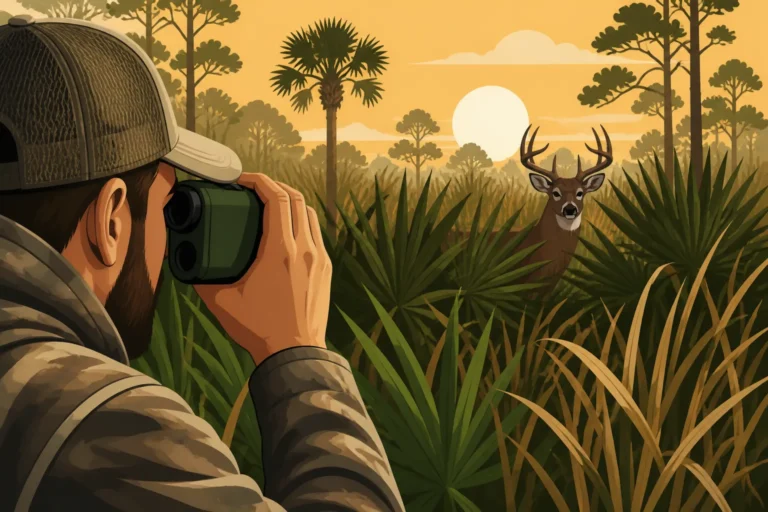
When you’re hunting the rolling hills of the Piedmont or the dense pine forests and hardwood bottoms of the Coastal Plain, your shots are often up close and personal. Think about those moments when a deer materializes out of the palmettos or through a screen of privet at 30 yards. In these situations, quick target acquisition is paramount. You don't have time to be fiddling with a high-power scope, trying to find a deer that's practically in your lap.
The reality of hunting in these areas means most shots are well within 100 yards, and many are much closer. A high magnification scope here can feel like looking through a straw. It narrows your field of view dramatically, making it tough to even locate a moving deer, let alone track it for a clean shot. You might see a flash of brown, but by the time you've adjusted and tried to center the crosshairs, the deer has already vanished back into the shadows. For more insights on deer in these regions, check out Piedmont Versus Coastal Plain Deer.
Openings and Long Shots in Agricultural Areas
Now, let's pivot to a different landscape: the vast agricultural fields, sprawling clear-cuts, and lengthy powerline corridors found throughout much of Georgia. Here, deer often feed in the open, especially during the early mornings and late evenings. A mature buck might step out into a soybean field at 200 yards, or you might spot a doe group crossing a clear-cut at 150. These are the moments when a bit more magnification can be your best friend.
In these more open environments, precision becomes the name of the game. You're not just trying to hit the deer; you're aiming for a specific spot within the vitals to ensure a quick, ethical harvest. A scope with higher magnification allows you to identify antler points, confirm shot placement, and make those longer shots with confidence. Imagine setting up on a Piedmont field edge as dusk settles in – that extra zoom can make all the difference in seeing your target clearly. You can even use scouting apps like GoHunt to identify these open areas and plan your stand locations accordingly.
Mountain Terrain and Varying Distances
The North Georgia mountains present their own unique set of challenges. Here, shots can vary wildly within a matter of minutes. You might be still-hunting through thick rhododendron, expecting a 40-yard shot, and then suddenly find yourself looking across a hollow at a deer 175 yards away, moving through open timber. The terrain itself adds complexity, with steep angles and limited lines of sight.
Hunting these mountain ridges often requires a versatile approach. Deer might appear above or below you, and the shot might be through a tight window in the trees or over a distant saddle. A scope that can quickly adapt from a wide field of view at low power to a more precise, higher magnification for that unexpected longer shot is invaluable. It’s a dynamic environment where flexibility in your optics can truly pay off. For more details on hunting in these challenging areas, read Treestand Setups in North Georgia Mountains.
Deciphering Scope Magnification Numbers
Looking at a rifle scope, you'll see a series of numbers like "3-9×40" or "4-12×50." These numbers aren't just random; they tell you a lot about the scope's capabilities, especially concerning magnification and light gathering. Understanding them is key to making an informed choice.
Fixed Versus Variable Power Scopes
When it comes to scope magnification, you essentially have two main categories: fixed power and variable power. Both have their place, but one is overwhelmingly more popular for general deer hunting in Georgia.
-
Fixed Power Scopes: These scopes offer only one magnification setting, such as a 4x or 6x. Their main advantages are simplicity, ruggedness, and often a brighter image because they have fewer internal lenses to dim the light. In the dense cover of Georgia's pine thickets or hardwood bottoms, a fixed 4x or 6x scope can be perfectly adequate. It allows for quick target acquisition without the temptation to dial up the magnification too high, which can hinder your ability to find a deer in close quarters. For hunters who prioritize durability and straightforward use, especially in areas where shots are consistently short, a fixed power scope can be a great, reliable choice. There's less to go wrong, and you're always ready for that sudden, close encounter.
-
Variable Power Scopes: These are by far the most common type of hunting scope, and for good reason. A variable power scope, like a 3-9x or a 4-12x, allows you to change the magnification within a specific range. This versatility is a huge advantage in Georgia's varied landscapes. You can dial it down to 3x or 4x for a wide field of view in thick woods, making it easier to track a deer or find it quickly. Then, if that buck steps out into a field at 150 yards, you can crank it up to 9x or 12x for a more precise shot. This adaptability makes variable scopes the "Swiss Army knife" of optics for most Georgia deer hunters. They allow you to tailor your view to the exact situation, whether you're Hunting Piedmont Farmland Deer or navigating dense river bottoms.
What the Numbers Mean (e.g., 3-9×40, 4-12×50)
Let's break down those numbers you see on a scope. Take "3-9×40" as an example:
- 3-9x: This denotes the magnification range. The "3" means the minimum magnification is 3 power (objects appear 3 times closer than they do with the naked eye), and the "9" means the maximum magnification is 9 power (objects appear 9 times closer). If it were a fixed power scope, it would just be "4x" or "6x".
- 40: This number refers to the diameter of the objective lens (the front lens of the scope) in millimeters. In this case, it's 40mm. The objective lens size is crucial because it dictates how much light the scope can gather. A larger objective lens generally means a brighter image, especially in low-light conditions like dawn and dusk. However, larger objective lenses also mean a heavier scope and often require higher scope rings, which can affect your cheek weld and rifle balance. This is a crucial consideration, especially when thinking about Rifle Scopes for Low-Light Swamp Edges.
So, a 4-12×50 scope would offer a magnification range from 4 to 12 power and have a 50mm objective lens. The larger objective means it will gather more light than a 40mm scope, making your target clearer in dim light, but it will also be larger and heavier.
Practical Magnification Ranges for Typical Georgia Shots
Given Georgia's diverse environments, certain magnification ranges tend to be more practical than others.
- 1-4x or 2-7x: These lower power variable scopes are fantastic for tight, dense cover where shots are almost always under 100 yards. Think thick pine stands, swamp edges, or extremely brushy hardwoods. The wide field of view at 1x or 2x is invaluable for finding deer quickly and taking fast, close-range shots. They are also typically lighter and more compact. If your hunting is strictly in deep woods, a 1-4x or 2-7x might be all you ever need.
- 3-9×40: This is arguably the most classic and versatile hunting scope magnification for Georgia. At 3x, you have enough field of view for most close-range woods encounters, and 9x is plenty for precise shots out to 200-250 yards, which covers the vast majority of deer hunting scenarios in the state. The 40mm objective provides a good balance of light gathering without adding excessive bulk or weight. It’s a true all-around performer that won’t let you down whether you're in the rolling Piedmont or the open clear-cuts. Many hunters find this setup perfectly adequate for Zeroing at 100 Yards for Field Edge Hunting and beyond.
- 4-12×40/50 or 4-16×40/50: When you anticipate more frequent longer shots, perhaps on private land with large fields or power line cuts, these scopes offer that extra reach. The 12x or 16x top end provides excellent detail for identifying deer and aiming precisely at those extended distances. The larger objective options (50mm) will enhance low-light performance, which can be critical during prime hunting hours at dawn and dusk. Be mindful, however, that at max magnification, the field of view shrinks considerably, which can be a disadvantage if a deer suddenly appears much closer than anticipated. It’s a trade-off, but for hunters focused on open country, the extra magnification is a clear benefit.
Key Factors Beyond Magnification
While magnification is what people often focus on first, a scope is much more than just how close it brings the target. Several other factors play a critical role in how well your scope performs in the varied conditions of Georgia.
Objective Lens Size and Low-Light Performance
The objective lens, that big glass at the front of your scope, is the gatekeeper for light. Its diameter (e.g., 40mm, 50mm) directly impacts how much light enters the scope. In Georgia, where prime deer movement often occurs during the dim hours of dawn and dusk, the ability of your scope to gather light and present a bright, clear image is incredibly important.
A larger objective lens (like a 50mm or 56mm) will, in theory, let in more light than a smaller one (like a 32mm or 40mm). This can give you those precious extra minutes of usable shooting light at the very beginning and end of the day. Those marginal moments when a big buck might finally step out of the shadows are exactly when a brighter scope pays dividends. However, a larger objective lens also means a larger, heavier, and often more expensive scope. It can also require higher scope rings, which might change your rifle's ergonomics and necessitate a higher cheek weld. For more on this, see Low-Light Performance in a Scope. It's a balance between optimal low-light performance and practical handling in the field. Sometimes, a well-made scope with a 40mm objective can outperform a lesser-quality scope with a 50mm objective, so don't just chase the biggest number.
Field of View and Target Acquisition
The "field of view" (FOV) refers to the width of the area you can see through your scope at a given distance, usually expressed in feet at 100 yards. This factor is directly related to magnification: the lower the magnification, the wider your field of view; the higher the magnification, the narrower your field of view.
In Georgia’s dense timber, a wide field of view is a huge asset. Imagine a deer slipping through thick pines, and you're trying to pick it out. If your scope is cranked up to 9x, your field of view is so narrow that the deer might just be a blur, or you might not even see it at all as it crosses your sight picture. Dialing down to 3x or 4x opens up that view dramatically, making it much easier to locate, track, and get on target quickly. This is especially crucial if you're still-hunting or expecting a fast shot. You need to be able to acquire the target almost instantly, and a generous field of view at lower power facilitates this. When comparing scopes, remember to look not just at the magnification numbers, but also at the specified field of view at the lowest power setting. This will be a major differentiator in your ability to find your target in close quarters.
Reticle Type and Second Focal Plane (SFP) vs. First Focal Plane (FFP)
The reticle is your aiming point inside the scope – the crosshairs, dot, or more complex pattern. The type of reticle and its placement (First Focal Plane or Second Focal Plane) can significantly impact your shooting experience.
-
Reticle Type: For most deer hunting in Georgia, a simple duplex reticle (thicker posts on the outside, thinner crosshairs in the center) is very popular. It’s clean, easy to see in various light conditions, and doesn’t obscure your target. Some hunters prefer a reticle with a small aiming dot or hash marks for holdover at longer distances, which can be useful when you’re hunting over expansive fields or power line cuts. Illuminated reticles are also a fantastic feature for low-light conditions, providing a bright, distinct aiming point against a dark background, which is a common scenario during prime hunting times.
-
Second Focal Plane (SFP) vs. First Focal Plane (FFP): This refers to where the reticle is placed within the scope.
- Second Focal Plane (SFP): Most traditional hunting scopes in the US are SFP. With an SFP reticle, the reticle stays the same size in your view regardless of the magnification setting. This means that any holdover points or hash marks on the reticle are only accurate at one specific magnification (usually the highest, or a marked power). For typical deer hunting where you might shoot at various ranges but primarily use the center crosshair, SFP works perfectly and is often more affordable.
- First Focal Plane (FFP): With an FFP reticle, the reticle physically grows and shrinks as you adjust the magnification. This means that any holdover points or hash marks remain accurate at all magnification settings. FFP scopes are generally more expensive and are favored by precision shooters and long-range hunters. For the average Georgia deer hunter who might be taking shots from 50 to 200 yards, an SFP scope is usually more than sufficient and easier to use without overthinking the reticle subtensions.
Making Your Choice: Matching Magnification to Your Hunting Style and Location
Ultimately, the best rifle scope for you comes down to a personal balance of factors, dictated by where and how you primarily hunt in Georgia. There's no one-size-fits-all answer, but we can certainly narrow down the options.
The "One Scope Does It All" Myth and Reality
Every hunter dreams of that perfect, do-it-all scope that excels in every scenario. The truth is, that scope probably doesn't exist. There are always trade-offs. A scope optimized for ultra-long-range precision shots in open country will likely be cumbersome and have a narrow field of view in thick timber. Conversely, a fantastic quick-acquisition scope for deep woods might leave you wishing for more clarity on a distant buck.
However, many scopes come impressively close to being highly versatile for Georgia. A good quality 3-9×40 or 2.5-10×42 scope can handle a huge percentage of what Georgia hunting throws at you. It offers enough low power for close shots and adequate high power for most reasonable hunting distances. The key is to be realistic about your most common hunting situations rather than trying to cover every extreme. Don't let the marketing hype push you into a scope that's overkill for your primary hunting grounds. A tool like GoHunt can help you scout your typical hunting areas and visualize the average shot distances you're likely to encounter.
Specific Recommendations for Different Georgia Regions
Let's break down some practical recommendations based on Georgia's diverse hunting landscapes:
- North Georgia Mountains: Here, versatility is king. You'll encounter dense undergrowth and steep terrain, but also occasional longer shots across clearings or down valleys. A variable scope in the 3-9x or 2.5-10x range with a 40-44mm objective lens would be an excellent choice. The lower end provides a wide field of view for quick shots, while the higher end gives you the precision for those longer, unexpected opportunities. Durability and lightweight construction are also critical when you're hiking these hills. Consider scopes with good light transmission for those early morning and late evening sits, as deer move heavily in low light. When you're Reading a Ridge for North Georgia Deer, you need a scope that can adapt quickly.
- Piedmont Region: This region often features a mix of hardwoods, pine timber, and agricultural fields. Shots can range from 30 yards in thick creek bottoms to 200+ yards across corn or peanut fields. A slightly more powerful variable scope like a 3.5-10x, 4-12x, or even a 4.5-14x with a 40-50mm objective would serve you well. This gives you ample magnification for those field edge shots while still allowing you to dial down for wooded areas. The slightly larger objective on the higher-end scopes will aid in target identification during those critical low-light periods common when Hunting Piedmont Creek Bottom Funnels.
- Coastal Plain and Swamp Country: If you primarily hunt the flatlands, dense pine plantations, and expansive swamps of South Georgia, your typical shot distances will often be shorter. Thick cover means close encounters are the norm. A 1-4x, 2-7x, or a simple 3-9x scope with a 32-40mm objective lens will be perfectly adequate. Prioritize a wide field of view and excellent low-light performance (not necessarily from a massive objective, but from quality glass) to pick out deer in the shadows. You'll want something rugged and fog-proof to handle the high humidity and damp conditions. When you're Hunting Georgia Swamp and River Bottom Deer, reliability in tough conditions is key.
Testing Your Setup Before the Season
No matter what scope you choose, the absolute most important step is to spend time with it before hunting season opens. Zero your rifle at an appropriate distance for your primary hunting scenarios, whether that's 100 yards for mixed terrain or perhaps 50 yards if you're strictly in deep woods.
- Practice at Varying Magnifications: Don't just shoot at your highest power. Practice shooting at the lowest power to get comfortable with quick target acquisition. Then, practice dialing up and down to simulate different scenarios. Can you quickly find a target at 3x, then dial to 7x and make a precise shot? This builds muscle memory and confidence.
- Simulate Field Conditions: If possible, practice from various shooting positions – off-hand, kneeling, or from a simulated treestand. Getting comfortable with your scope’s eye relief and exit pupil at different magnifications under less-than-ideal conditions will pay off when a buck shows up in the actual woods.
- Check Low-Light Performance: Take your rifle and scope out during dawn and dusk. How clear is the image? Can you distinguish your target in deep shadows? This is where the quality of your scope's glass truly shines, regardless of magnification.
By putting in the time at the range and truly understanding your scope's capabilities, you'll be far better prepared for any deer hunting opportunity Georgia presents. And always remember to carry your proof of license, which you can easily manage through the Go Outdoors Georgia platform.
| Magnification Range | Best Use Cases in Georgia | Key Advantages | Potential Disadvantages |
|---|---|---|---|
| 1-4x or 2-7x | Dense woods, thick swamps, short-range encounters | Very wide field of view, fast target acquisition, lightweight | Limited long-range precision |
| 3-9×40 | Most common all-around choice: mixed woods & fields | Excellent versatility, good balance of FOV & magnification | May lack extreme long-range detail |
| 3.5-10×44/50 | Piedmont farmland, open clear-cuts, longer field shots | Good mid-range magnification, decent low-light via larger objective | Slightly heavier than 3-9x |
| 4-12×40/50 | Open country, powerlines, areas with frequent longer shots | More precise at extended ranges, suitable for large openings | Narrower field of view at high power, can be bulky |
| 4-16x+ | Dedicated long-range setups, very open terrain (less common for typical GA deer) | Maximum precision for distant targets | Very narrow FOV, heavy, less ideal for close shots |
Choosing the right rifle scope magnification is a personal journey, but by considering Georgia’s varied habitats and understanding the technical aspects of scope design, you can make a choice that will truly enhance your deer hunting experience. Remember, confidence in your gear comes from understanding its capabilities and practicing with it diligently. Rifle Setups for Georgia Deer Hunting and 8×42 Versus 10×42 in the Woods will offer more insights on related gear choices.
Disclaimer
This article is for general informational purposes only and does not constitute professional advice. Laws, prices and regulations vary by location and change over time. Consult a qualified professional for guidance on your specific situation.