Turkey Decoys That Work on Pressured Birds
There's nothing quite as frustrating in the spring woods as a gobbler that sounds off like a freight train, gets your heart absolutely pounding, only to hang up tantalizingly out of range, peering suspiciously at your perfectly placed decoy spread. You've done all the scouting, made all the right calls, and yet, that wily old tom refuses to commit. It feels like he’s seen it all before, and honestly, for many pressured Georgia turkeys, he probably has. This guide is dedicated to turning those frustrating "hang-ups" into successful harvests by exploring advanced decoy strategies designed specifically for those wary, experienced birds that have been educated by previous hunting encounters.
Why Traditional Decoy Setups Often Fail on Pressured Birds
Many of us start our turkey hunting journey by learning the basic decoy spread: a jake and a hen, or maybe two hens. And for unpressured, early-season birds, this can be incredibly effective. But as the season wears on, and especially on public lands or heavily hunted private tracts, those same setups become less of an invitation and more of a warning flag. Wary gobblers quickly learn to differentiate between a real bird and a plastic one, or worse, they associate that plastic bird with danger.
Over-reliance on Static Spreads
The biggest culprit in failing to attract pressured turkeys is often the static nature of most decoy setups. You stake out a few plastic birds, walk away, and expect them to work their magic. But real turkeys are rarely completely motionless. They feed, they preen, they stretch, they shift their weight, and they interact with their environment. A gobbler that has been exposed to hunting pressure will approach a scene with extreme caution, often circling and observing from a distance. If your decoys stand perfectly still, stiff as boards, in the middle of a field, that highly vigilant tom's alarm bells are going to start ringing. He might gobble, he might even strut, but he'll likely stay just out of shotgun range, waiting for a sign of life that never comes. He's looking for those subtle, natural movements that signal security, and a motionless decoy spread simply doesn't provide it.
Ignoring Hunter Movement and Exposure
A decoy is only as good as the concealment of the hunter behind it. This might sound obvious, but it’s a mistake made constantly, especially when dealing with pressured birds. A wary gobbler will use his keen eyesight to scan the entire area around your decoy setup, not just the decoys themselves. If he picks up the slightest glint from your shotgun barrel, a shift in your position in a flimsy blind, or even an uncamouflaged face, the hunt is over. Pressured birds are constantly on high alert for anything out of place in their environment. The most lifelike, expensive decoy on the market cannot overcome a hunter who hasn't meticulously camouflaged themselves and their setup. Think about the sun's angle, your silhouette against the skyline, and any reflective surfaces. Even a single, subtle movement or flash can send a wary tom hightailing it in the opposite direction, leaving you wondering what went wrong.
Misinterpreting Gobbler Body Language
It's easy to get excited when a gobbler lights up the woods with his calls, struts, and drums in response to your setup. However, mistaking these displays for a guaranteed commitment is a common pitfall with pressured birds. A tom might be strutting, but is he strutting towards you, or just showing off from a safe distance? Is he approaching tentatively, constantly craning his neck and looking around, or is he confidently closing the distance? Often, a pressured gobbler will hang up at the edge of his comfort zone, putting on a show but never fully committing. He’s challenging the decoys from a safe distance, waiting for them to come to him, or for a perceived threat to reveal itself. If you're not reading his cues correctly, you might be calling aggressively when he needs reassurance, or not calling enough when a little more coaxing could seal the deal. Understanding that these birds are often displaying caution, not just bravado, is crucial.
Understanding the Psychology of Pressured Gobblers
To consistently fool wary turkeys, you need to step into their spurs for a moment and understand why they behave the way they do. It’s not just about them being "smart"; it’s about their survival instincts kicking into overdrive after negative experiences.
The Impact of Prior Encounters
Imagine being shot at, chased, or called into an ambush multiple times. That’s essentially what happens to many gobblers in heavily hunted areas throughout Georgia. Each negative encounter teaches them a valuable, often traumatic, lesson. They develop what many hunters call "call shyness" or "decoy shyness." They remember the sequence of events: the enticing calls, the appearance of seemingly real hens, and then the sudden loud bang or the appearance of a human predator. This makes them incredibly wary of anything that resembles those past dangerous situations. A gobbler that was almost killed approaching a jake decoy isn't likely to charge into another one. These birds become masters of observation, constantly looking for anomalies, for anything that suggests a trap rather than a genuine breeding opportunity. They prioritize safety above all else, and any whiff of danger will send them packing.
Heightened Vigilance and Distance
Pressured turkeys rarely commit quickly or carelessly. Instead, they become incredibly vigilant. They'll often approach a setup from a considerable distance, using terrain and cover to their advantage, all while meticulously observing the scene. They’re looking for movement, for signs of life, and critically, for any hint of danger. It’s not uncommon for these birds to circle an entire field or patch of woods, trying to get different angles of observation on your decoys and your position. They might spend minutes, even half an hour, examining everything before taking another step closer. This means your decoy setup has to be convincing from all angles, and your calling needs to be subtle and patient, mirroring a relaxed, unalarmed turkey. The old adage "patience is a virtue" applies tenfold when dealing with these extra-wary birds. Hunting Pressure on Georgia Public Land often creates these kinds of highly vigilant birds.
The Role of Subtlety
When a gobbler has been pressured, loud, aggressive calling and a massive spread of decoys can often do more harm than good. These bold tactics, which might work on opening day with naive birds, can scream "ambush!" to a seasoned tom. For these wary birds, subtlety becomes your greatest asset. Think about presenting a scene that feels natural, non-threatening, and easy. A single, content hen feeding quietly, or a small group of birds behaving nonchalantly, is far less alarming than a big strutting tom challenging every bird in the county. Your calls should be soft, infrequent, and reassuring, mimicking a real hen going about her business. This understated approach aims to disarm the gobbler's suspicion, making him feel that the coast is clear and that there's a genuine opportunity for breeding, not a fight or a trap.
Advanced Decoy Strategies for Wary Georgia Toms
Now that we understand why pressured birds are so difficult, let's look at some tactics that can help you overcome their wariness and bring them into range. It's about thinking outside the traditional box and adapting to the bird's mindset.
Single Hen Decoys and Motion
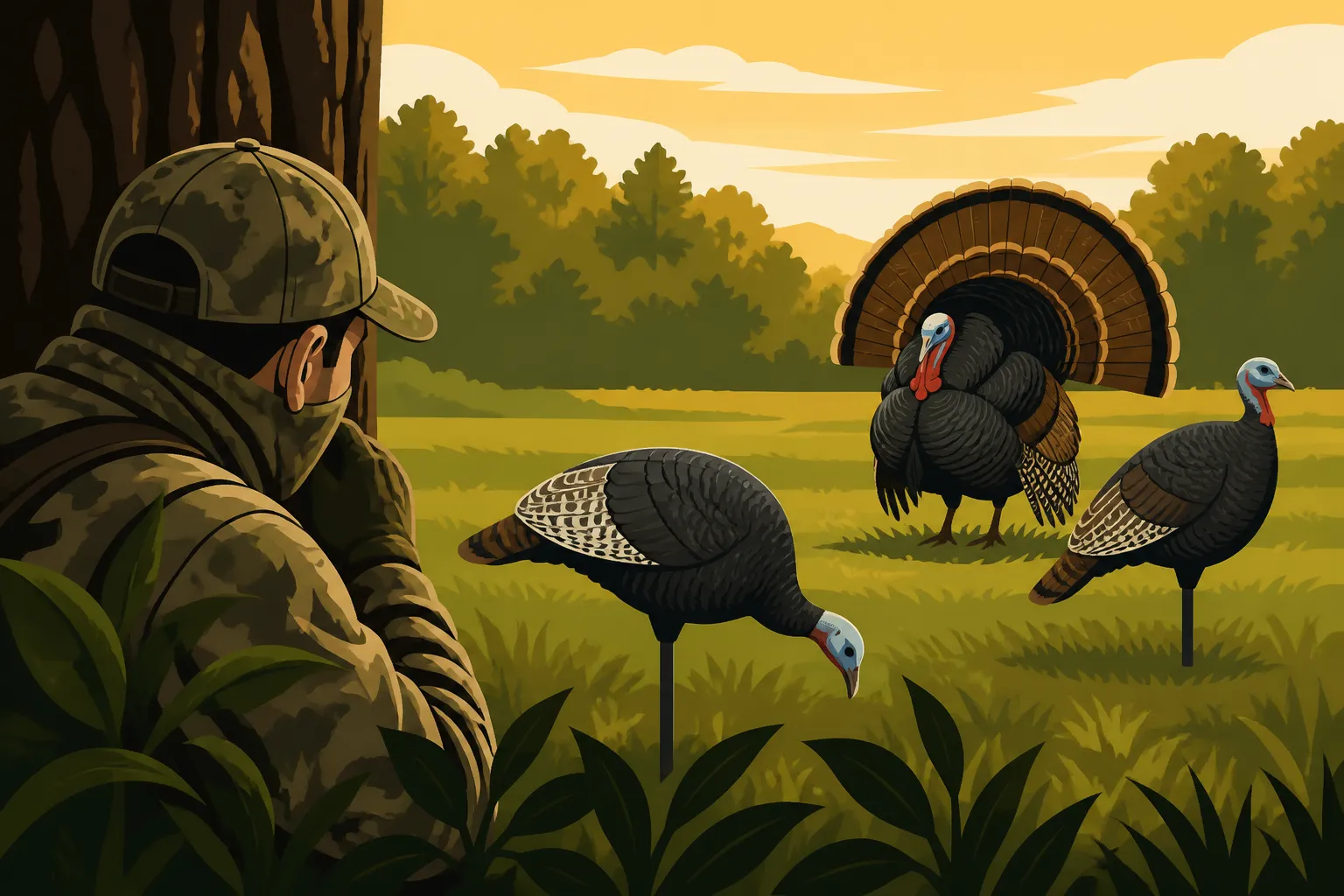
One of the most effective strategies for pressured birds is to scale back your spread dramatically. Forget the three hens and a jake. Often, a single, submissive hen decoy is all you need. Consider using a lay-down hen, a feeding hen, or even a breeding hen posture. These poses signal receptiveness and security, suggesting a content bird that’s ready to mate or simply relaxed in its environment. Such a non-threatening image can often coax a wary gobbler that would otherwise shy away from a more aggressive setup.
The real game-changer here is adding motion. A static piece of plastic is just that – plastic. But a subtle fan or wing flap, a gentle tail feather quiver, or even a slow turning motion can bring that decoy to life. There are various commercial motion stakes and remote-controlled decoys available, but you can even create simple DIY setups with string and a stick to impart subtle movement from your blind. This movement mimics a live bird preening, feeding, or just shifting its weight, which drastically eases a tom's suspicions. Hunters on the GoHunt forums often share how incorporating even the slightest bit of motion made the difference on a particularly tough bird. This realism is key for birds that have seen every trick in the book.
Aggressive Jakes and Reapers
Sometimes, subtlety isn't enough, and a gobbler needs a reason to get angry. If you've got a truly dominant, pressured tom that's hanging up and challenging from afar, an aggressive jake decoy can be the trigger. Place a jake decoy in an upright, strutting, or even fighting pose within your effective shooting range, facing away from your position. The gobbler will often approach the jake head-on, seeking to assert his dominance, which can provide you with a perfect frontal or broadside shot as he steps in to confront the perceived intruder.
Another advanced, and much more aggressive, tactic is "reaper hunting." This involves using a full fan or even a full strutting decoy shield to mimic a strutting tom, and then slowly crawling towards a bird that is holding its ground. This method requires extreme caution, as you are essentially becoming the decoy. It's highly effective for drawing in territorial birds that refuse to move, but it should only be attempted on private land where you are absolutely certain there are no other hunters, and everyone in your party is aware of your strategy. Safety is paramount when employing such a direct and visually compelling tactic. Make sure you understand Why Georgia's Gun Opener Draws the Biggest Crowds and the associated increase in hunter density before considering aggressive tactics.
Using Decoys as Distractions
Don't limit your thinking to just having decoys draw a bird directly to them. Sometimes, their most valuable role is as a distraction, allowing you to gain an advantage. For example, if a gobbler is approaching from your left, but your blind or shooting lane is set up for a shot to the right, strategically place a decoy further left. This will draw his eyes and attention to that spot, giving you those precious seconds to adjust your gun, shift your body, or simply hold still while he focuses on the plastic bird.
Decoys can also be used to pull a bird out from behind an obstruction, such as a thick brush line or a rise in the terrain. By placing a decoy just visible from his hidden position, you can entice him to step into the open for a better look, exposing him for a shot. It's about controlling the bird's line of sight and manipulating his approach to create the best possible shooting opportunity for you. Thinking of decoys as tools for misdirection, rather than just magnets, opens up a whole new world of tactical possibilities.
Situational Decoy Use: Adapting to Different Scenarios
The varied terrain and hunting conditions across Georgia demand that your decoy strategy isn't one-size-fits-all. What works in a wide-open field won't necessarily work in a thick swamp or a dense pine plantation.
Open Field Tactics
Hunting gobblers in large, open fields presents a unique set of challenges and opportunities. Visibility is extensive, meaning a bird can spot your decoys from a long distance, but also that they can see you or your blind if you’re not perfectly camouflaged. In these settings, realism from afar is absolutely critical for pressured birds. A spread of one or two feeding hens, perhaps with a quietly strutting jake positioned slightly behind them, can be very effective. This setup portrays a relaxed, natural scene that doesn't scream "ambush."
Consider placing your decoys closer to the edge of the field, near natural cover like a treeline or a brush row. This gives the gobbler a more secure path to approach without feeling overly exposed in the middle of a wide-open space. Often, the best time for open field success is early morning, when birds are just coming off the roost and are still somewhat predictable in their movements to find food or hens. Always double-check your blind's camouflage to ensure it blends seamlessly with the field edges, especially against any bright background light. Setting Up on a Piedmont Field Edge details how to pick these key spots effectively.
Thick Cover Ambushes
Unlike open fields, deep woods, dense pine plantations, or thick creek bottoms limit long-range visibility significantly. Here, turkeys won't spot your decoys from hundreds of yards away, which changes your placement strategy entirely. Your decoys need to be positioned where they can be seen from known travel corridors, strutting zones, or small clearings. A single hen, or perhaps a jake and hen combo, placed just inside the edge of a logging road, a small food plot, or a natural break in the timber can be devastating.
Since the shots in thick cover will likely be much closer, the detail and realism of your decoy become even more important. A tom might not see it until he’s already quite close, so it needs to look completely authentic. In these environments, calling is often more about getting the bird to pinpoint the general area, and the decoy serves as the final visual confirmation that pulls him into range. Be prepared for a quick shot, as opportunities can arise suddenly. While Rattling Volume in Thick Pine Cover addresses sound, the principle of limited visibility applies equally to visual cues like decoys in these dense environments.
Public Land Considerations
Hunting public land in Georgia means you are almost guaranteed to encounter turkeys that have been pressured, sometimes heavily, by many other hunters. These birds are notoriously wary, jumpy, and often exhibit extreme caution. For these situations, subtlety and mobility are frequently the keys to success. A lightweight, collapsible decoy, or even just a realistic fan, can be a better choice than a bulky, multi-decoy spread. The ability to move quietly and quickly to intercept a bird is often more important than setting up an elaborate spread.
When using a decoy on public land, minimize its presence. A single, content hen placed close to your well-hidden position, creating a very small, natural scene, can sometimes convince a wary public land tom that the situation is safe. Over-calling or using flashy decoys can often scare these birds away. Scout extensively beforehand to find less pressured areas, known roost sites, or overlooked pockets where birds might be more receptive. Sometimes, on heavily pressured public ground, not using a decoy at all and relying purely on expert calling and meticulous concealment is the most effective strategy. Always be aware of other hunters and exercise extreme caution. Run-and-Gun on Georgia Public Land offers excellent advice for navigating these challenging environments.
Decoy Comparison for Pressured Birds
When hunting pressured birds, every detail counts. Here’s a quick comparison of decoy types and their typical effectiveness in challenging scenarios:
| Decoy Type | Ideal Pressure Level | Scenario | Pros | Cons |
|---|---|---|---|---|
| Single Feeding Hen | High | Open fields, wood edges | Subtle, non-threatening, natural, disarms suspicion | Might not provoke aggressive birds, lower visibility from afar |
| Single Laydown/Breeding Hen | High | Clearings, field edges | Signals receptiveness, strong attractant for breeding Toms | Can appear vulnerable to predators, best used with careful setup |
| Strutting Jake | Medium to High | Openings, travel routes | Challenges dominant Toms, provokes aggressive approach | Can intimidate subordinate gobblers, might look "fake" if static |
| Motion Decoy (Hen or Jake) | Medium to High | All scenarios | Adds immense realism, catches attention from wary birds | Requires careful setup, often battery-operated, can be bulky |
| Fan Decoy (Reaper Style) | High | Thick cover, stalking | Highly realistic, mobile, aggressive lure for territorial birds | High risk, requires extreme caution and awareness of surroundings |
Finding the right balance between realism, subtlety, and the specific psychology of the birds you are hunting is crucial. Whether you're relying on a quiet hen or an aggressive jake, understanding how your decoy choice influences a wary tom's decision to commit will undoubtedly lead to more successful hunts. From Calling a Georgia Gobbler Off the Roost to Making the Most of a One-Bird Daily Limit, every tactic plays a part in outsmarting these incredibly adaptable game birds.
Disclaimer
This article is for general informational purposes only and does not constitute professional advice. Laws, prices and regulations vary by location and change over time. Consult a qualified professional for guidance on your specific situation.