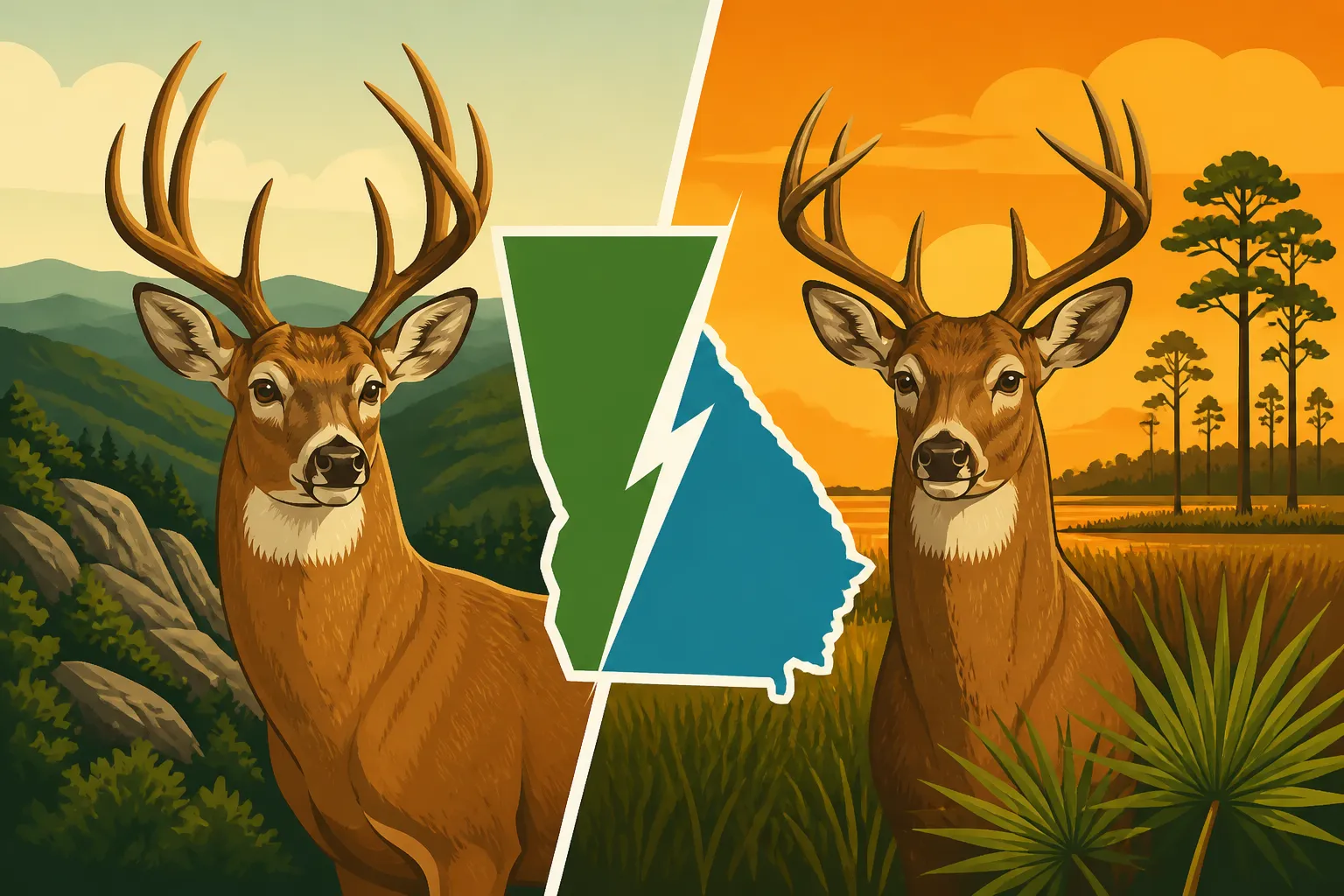
Piedmont Versus Coastal Plain Deer
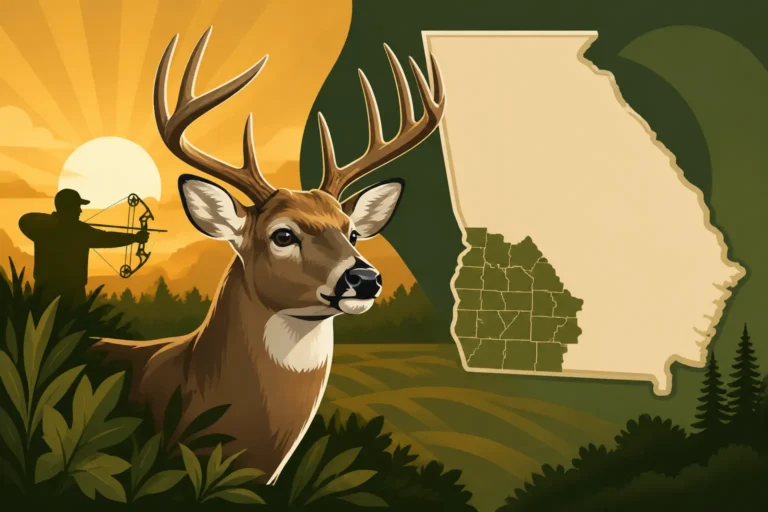
If you've spent any time hunting deer in Georgia, you know that the experience can feel completely different depending on where you are in the state. Many hunters, especially those new to exploring beyond their home county, get frustrated trying to apply the same tactics from their local woods to a new region, only to find the deer just don't behave the same way. This guide is all about dissecting those fundamental differences, helping you understand why deer populations, habits, and hunting opportunities vary so much between Georgia's rolling Piedmont and its sprawling Coastal Plain.
Understanding Georgia's Distinct Geographic Regions
Georgia is a remarkably diverse state, and its geography plays a huge role in shaping its deer populations and the hunting challenges and rewards each area offers. From the cool mountain foothills down to the humid coastal marshes, the landscape changes dramatically, and with it, the entire ecosystem that supports our whitetails. Understanding these broad strokes is the first step to becoming a more adaptable and successful hunter, no matter where you find yourself in the woods.
The Piedmont's Rolling Hills and Farmland
The Piedmont region, literally meaning "foot of the mountain," is characterized by its gently rolling hills, hardwood forests, and a significant amount of agricultural land. This area stretches from the fall line, which separates it from the Coastal Plain, northward towards the foothills of the Appalachian Mountains. Think of counties around cities like Macon, Athens, and even parts of metro Atlanta; you're looking at classic Piedmont terrain. Historically, this land was heavily farmed for cotton, leading to significant erosion, but much of it has since reforested or is actively managed for timber and crops.
The habitat here is a mosaic of mature timber stands, dense regenerating clear-cuts, creek bottoms, and open fields. Deer in the Piedmont often have access to a varied diet, including acorns from oak forests, browse from younger growth, and agricultural crops like corn, soybeans, and peanuts. This mix creates dynamic patterns for deer movement and provides diverse cover, making it a challenging but rewarding area to hunt. The topography means you'll encounter more elevation changes than further south, but nothing as dramatic as the true mountains.
The Coastal Plain's Flatlands and Swamps
South of the fall line, Georgia flattens out into the vast expanse of the Coastal Plain. This region covers roughly 60% of the state and is dramatically different from the Piedmont. Here, you'll find extensive pine forests—both natural longleaf pine savannas and managed timber plantations—mixed with sprawling cypress swamps, river bottoms, and immense agricultural operations. Counties like those around Valdosta, Albany, and Brunswick are prime examples of the Coastal Plain.
The defining features are the flat terrain, sandy soils, and abundant water. Rivers like the Altamaha, Ocmulgee, and Satilla carve wide, often swampy, corridors through the landscape. Deer here rely heavily on pine regeneration, palmetto thickets, and the rich vegetation found in the floodplains. Agricultural fields are also a major draw, especially peanuts, pecans, and cotton. The challenges in the Coastal Plain often revolve around navigation in dense cover, understanding water levels, and dealing with significant insect pressure, especially during early season. The sheer scale of some of these landscapes means deer can feel incredibly spread out, demanding different scouting and hunting approaches.
Habitat Differences and Their Impact on Deer
The contrasting environments of the Piedmont and Coastal Plain fundamentally shape the lives of the deer that call them home. It's not just about what the landscape looks like; it's about what resources are available, how easily deer can move, and what kind of pressure they face. These factors directly influence everything from a buck's antler growth to the overall health and density of the local herd, and thus, your hunting experience.
Food Sources and Nutritional Variation
In the Piedmont, deer often benefit from a diverse and generally richer diet. The abundance of mature hardwood forests means a reliable supply of acorns, particularly from various oak species, which are a critical seasonal food source. Beyond acorns, deer feast on forbs and tender shoots in timber clearings and browse on honeysuckle and other vines in creek bottoms. Crucially, the Piedmont is also dotted with agricultural fields, providing deer with high-protein and high-carbohydrate options like corn, soybeans, wheat, and peanuts for a significant portion of the year. This nutritional buffet supports good body condition and contributes to antler development. Hunters in the Piedmont often focus on areas where these different food sources converge, like a hardwood ridge bordering a soybean field, knowing deer will be utilizing both.
Conversely, the Coastal Plain, while also offering diverse food, presents a different nutritional profile. Pine plantations, especially those in early stages of regeneration, provide abundant browse, but it can be less nutritionally dense than mature hardwood browse. Acorns are still present, particularly from water oaks and other bottomland species in river swamps, but they might be less widespread than in the Piedmont. The real game-changer in the Coastal Plain is often agriculture, particularly peanuts and pecans in the fertile soils of Southwest Georgia. These crops provide an incredible energy boost for deer, and it's not uncommon to see deer literally embedded in a peanut field, feeding day and night. However, these specific high-value agricultural zones might be more localized, meaning deer in areas without such fields might rely more heavily on natural browse from pine savannas and swamp edges, which can be tougher on body and antler growth in less fertile areas.
Cover, Bedding, and Travel Corridors
The nature of cover and how deer utilize it also varies significantly. In the Piedmont, dense thickets in abandoned fields, regenerating timber cuts, and the deep folds of creek bottoms provide excellent bedding cover. Travel corridors often follow these creek drainages, connect different woodlots, or skirt the edges of agricultural fields. Deer learn to navigate the rolling topography, often bedding on ridges to catch thermals and moving down into bottoms to feed and water. Understanding these elevation changes and how wind interacts with them is crucial for hunting success. Hunters frequently find success by learning to "read a ridge for North Georgia deer" or by hunting a funnel between two swamps.
The Coastal Plain offers different challenges for cover and movement. Vast pine plantations, especially those in their early growth stages (think chest-high pines with dense undergrowth), create seemingly impenetrable bedding areas. Swamp edges and palmetto thickets also provide ideal thermal and security cover. Deer movements here are often less dictated by topography and more by the boundaries of these dense cover areas, water features, and the proximity to food sources. Travel corridors might be subtle trails through thick palmettos or along the drier edges of a cypress swamp. For hunters, learning "where South Georgia pine flat bucks bed" is key, as these areas can be expansive and challenging to penetrate. The flat terrain can make visibility limited, emphasizing the need for meticulous scouting and careful entry and exit routes.
Deer Characteristics and Population Dynamics
Beyond habitat, the deer themselves exhibit distinct characteristics and population trends in Georgia's Piedmont and Coastal Plain. These differences aren't just anecdotal; they're the result of generations of deer adapting to their specific environments, influenced by available nutrition, genetics, and hunting pressure.
Antler Quality and Body Size Differences
When we talk about antler quality and body size, there's a common perception that the Coastal Plain, particularly the fertile agricultural lands of Southwest Georgia, often produces larger-bodied deer with more impressive antlers. This is largely due to the consistently high-quality nutrition available from crops like peanuts and soybeans, coupled with specific management strategies that allow bucks to reach older age classes. Many hunters seeking trophy-class whitetails often focus their efforts in this region, where the rich diet helps deer express their full genetic potential. For example, hunters consistently find success in areas where there's great nutrition. It's why parts of Southwest Georgia are renowned for growing big bucks.
In the Piedmont, deer still grow respectable antlers, and many impressive bucks are harvested annually. However, the average body size and antler mass might be slightly less than their Coastal Plain counterparts, especially in areas with less intensive agricultural influence or higher deer densities. This isn't to say you won't find giants in the Piedmont – far from it! But on average, the protein and mineral content in the Coastal Plain's agricultural regions can give deer an edge in reaching heavier body weights and larger rack dimensions. Hunters looking to understand regional trends often consult resources like the "Georgia Deer Harvest Records" to see where the biggest deer are consistently being taken.
Population Density and Herd Health
Population density and overall herd health also show regional variations. The Piedmont often experiences higher deer densities, especially in areas bordering suburban development or where hunting pressure is more fragmented. This can lead to increased competition for food resources, which, if not managed, can impact the health of the herd, potentially leading to smaller body sizes and less consistent antler growth. Georgia's extensive bag limit of twelve deer, with a maximum of two antlered bucks, is designed to help manage these populations and maintain herd health, especially allowing hunters to "fill ten antlerless tags in a season" in areas with high doe numbers.
The Coastal Plain can have more localized variations in population density. While some areas, particularly near prime agricultural lands, might have very high deer numbers, other vast stretches of pine forest or swamp might support lower densities but perhaps larger individual deer due to less competition. The sheer size of some Coastal Plain habitats means deer might not feel the same concentrated pressure as in smaller, more fragmented Piedmont woodlots. However, managing herd health is a constant effort across both regions, with the Georgia Department of Natural Resources (DNR) constantly monitoring factors like fawn survival rates and buck-to-doe ratios. Understanding "Georgia deer population estimate" can give you a baseline for what to expect in different parts of the state.
Hunting Strategies Tailored to Each Region
Trying to hunt a Coastal Plain swamp like a Piedmont hardwood ridge is a recipe for frustration. Each region demands its own set of tactics, scouting priorities, and even gear choices. Being adaptable and understanding these nuances is what separates consistent hunters from those who just get lucky.
Piedmont Tactics: Field Edges and Hardwood Stands
Hunting in the Georgia Piedmont often involves a mix of agricultural field edges, mature hardwood forests, and creek bottoms. Deer here are often patterned around food sources, whether it's acorns dropping in an oak stand or a fresh planting of winter wheat. Treestand setups on field edges are classic, especially in the late afternoon, as deer emerge from cover to feed. It's often effective to focus on "setting up on a Piedmont field edge" where a mature timber line meets a crop field. Early morning hunts might target bedding areas adjacent to these fields or travel routes deer use to return to cover.
Still-hunting through oak flats or along creek corridors can also be highly productive, especially during the rut when bucks are actively seeking does. Understanding how deer use the subtle elevation changes to their advantage, such as bedding on a thermal-catching rise or using a low saddle to cross a ridge, is crucial. Scouting for fresh sign like rubs and scrapes along logging roads or in natural funnels between woodlots is paramount. The deer in the Piedmont can be incredibly wary, especially on public lands or smaller private tracts, so minimizing your intrusion and having a solid entry and exit plan, perhaps utilizing a mapping app like GoHunt, is essential. When it comes to "hunting the Georgia rut in mid-October", understanding these localized movements becomes even more critical.
Coastal Plain Tactics: Pine Flats and River Bottoms
Hunting the Coastal Plain requires a different mindset. The vastness of the pine forests and swamps often means covering more ground or focusing on pinch points that funnel deer. In pine plantations, identifying travel corridors through the dense, early-stage growth or finding older, more open sections where deer feel secure are key. For instance, successfully "still-hunting South Georgia pine flats" means being exceptionally slow and methodical, constantly glassing for movement in the thick cover. River bottoms and cypress swamps are high-value areas, providing water, diverse browse, and excellent cover. Deer will often relate to the subtle high ground within these wet areas, using islands or slightly elevated ridges as bedding sites.
During periods of high water, these higher spots become even more critical, concentrating deer movement. Stand placement in river bottoms often means finding trees along the edge of thick bedding cover or overlooking natural openings and trails. Access can be a major challenge in these areas, sometimes requiring long walks, or even a boat, to reach untouched areas. Thermal and insect management are also major considerations, especially during the warm early seasons. Having a mapping tool like GoHunt can be invaluable for navigating these sprawling landscapes, helping you locate remote food sources or hidden pockets of cover far from roads, especially when trying to pinpoint prime spots for "hunting Georgia swamp and river bottom deer". Deer in the Coastal Plain can feel less pressured in these remote spots, but their movements can be harder to predict without extensive scouting.
Gear Considerations for Regional Hunting
Just as tactics shift between the Piedmont and Coastal Plain, so too should your gear. What works perfectly for a quick sit on a Piedmont field edge might be completely inadequate for a several-mile trek into a Coastal Plain swamp. Investing in the right gear, and understanding its limitations, will make your hunt safer, more comfortable, and ultimately more successful.
Footwear and Clothing for Varied Terrain
In the Piedmont, where you might encounter rolling terrain, rocky creek beds, and more varied ground, sturdy, waterproof hiking boots are often a solid choice. You'll need good ankle support and traction for navigating slopes and potentially wet leaves. Clothing should focus on layering, as morning temperatures can be quite cool, but afternoons, especially during the early and mid-season, can warm up considerably. Lightweight, breathable materials that wick moisture are crucial. Don't forget your "blaze orange requirements" for firearms season; a good quality vest or hat is essential for safety.
For the Coastal Plain, footwear takes on a whole new level of importance. Waterproof rubber boots or snake boots are almost mandatory, whether you're dealing with morning dew, muddy trails, or outright standing water in a swamp. The threat of snakes is also higher in many Coastal Plain habitats, making snake boots a wise investment. When it comes to clothing, the emphasis is heavily on breathability and moisture management, often with an added focus on insect protection. Early season hunts can be brutally hot and humid, so lightweight base layers and outer garments that dry quickly are key. Consider bug repellent that truly holds up in the Georgia humidity, as mosquitoes and gnats can be relentless. Even in colder weather, the ground can remain damp, making waterproof outerwear a priority.
Optics and Weapons for Specific Scenarios
Your choice of optics and weapons should also reflect the typical hunting scenarios in each region. In the Piedmont, with its mix of open fields and timber, a rifle zeroed for mixed distances might be ideal. Many hunters opt for popular calibers like a .270, .308, or 6.5 Creedmoor, capable of precise shots across open fields but still effective in denser timber. Rifle scopes with variable magnification (e.g., 3-9x or 4-12x) offer versatility, allowing for wider fields of view in thick cover and sufficient magnification for longer shots across clearings. Binoculars (8×42 or 10×42) and a rangefinder are indispensable for identifying deer and confirming distances, particularly on those expansive field edges. Archery hunters might choose a vertical bow or a crossbow, especially given Georgia's "crossbow rules during archery season", to adapt to varying shot ranges.
In the Coastal Plain, where shots are often shorter and visibility can be limited by dense cover, different considerations come into play. While rifles are certainly used, many hunters prefer shotguns with slugs, muzzleloaders, or even handguns, especially in extremely thick cover where a long-range shot is highly improbable. If using a rifle, a robust scope with good low-light performance is beneficial for peering into shadowed palmetto thickets or swamp edges. For bowhunters, fixed blade broadheads are often favored for their reliability in hitting bone in the dense swamp timber. Optics might be used more for identifying movement within close-range cover rather than spotting deer at a distance. A reliable GPS unit or a mapping app like GoHunt is essential for navigation, as it's easy to get disoriented in the vast, monotonous pine thickets or winding swamp trails.
Navigating Public and Private Land in Each Zone
Access is often the biggest hurdle for hunters in Georgia, and the types of land available, and the challenges they present, differ significantly between the Piedmont and Coastal Plain. Whether you're chasing deer on a Wildlife Management Area (WMA) or trying to secure a private land lease, understanding these regional dynamics is paramount.
Public Land Opportunities and Challenges
Georgia offers a good amount of public hunting land, including Wildlife Management Areas (WMAs) and portions of the Chattahoochee-Oconee National Forest. In the Piedmont, many WMAs are smaller and more fragmented, often surrounded by private land. These areas can experience significant hunting pressure, especially on opening weekends. However, smart scouting and a willingness to walk further than most can often lead you to less-pressured pockets of deer. The terrain on these Piedmont WMAs can be steep in places, making for challenging but rewarding hunts. Using tools like GoHunt can help you identify land boundaries and access points, and scouting "Georgia public land before season" is absolutely critical to find those hidden gems. You'll need to be mindful of WMA-specific rules, which might differ from statewide regulations.
The Coastal Plain offers vast tracts of public land, particularly within state forests and larger WMAs like the Altamaha River WMA or areas near the Okefenokee Swamp. These areas, while often remote and challenging to access, can hold excellent deer populations due to less concentrated pressure over wider areas. However, the sheer scale of these landscapes means deer can be more spread out, and successful hunting often requires extensive scouting, understanding water levels, and being prepared for tough physical conditions. Many of these public lands are timbered for pine, leading to a patchwork of clear-cuts and replanted areas that change year to year, requiring diligent re-scouting. Learning to navigate "Georgia's Chronic Wasting Disease Management Area" rules on public lands is also crucial, especially in the southwestern part of the state.
Private Land Access and Management Styles
Private land forms the backbone of deer hunting in Georgia, and securing access is often a different game in each region. In the Piedmont, where land parcels tend to be smaller and more intensely managed or developed, gaining permission often comes down to knocking on doors, developing relationships with landowners, or joining a hunting club. Leases can be competitive, and clubs often focus on managing for quality deer through specific antler restrictions or supplemental feeding. Landowners in the Piedmont are often dealing with higher deer densities and are sometimes more receptive to hunters who can help manage the population. If you're struggling to find a spot, consider "knocking on doors in South Georgia farm country", a strategy that sometimes works in the Piedmont too.
In the Coastal Plain, private land ownership can be dominated by large timber companies, agricultural operations, or expansive hunting plantations. Leases here can be for very large tracts, sometimes encompassing thousands of acres. These properties are often intensely managed for timber or specific wildlife goals, including quality deer. Many legendary hunting clubs in Georgia reside in the Coastal Plain, benefiting from the consistent nutrition provided by agriculture and careful herd management. While access can be expensive through leases or guided hunts, the potential for truly exceptional deer is often higher. For the everyday hunter, finding smaller private tracts might involve similar door-knocking efforts as in the Piedmont, but often with the added challenge of competing with larger lease operations.
Here's a quick comparison of the two regions for deer hunting:
| Feature | Piedmont Region | Coastal Plain Region |
|---|---|---|
| Topography | Rolling hills, creek bottoms, moderate elevation | Flat plains, extensive swamps, subtle rises |
| Primary Habitat | Mixed hardwoods, agricultural fields, pine stands | Pine plantations, cypress swamps, vast agriculture |
| Key Food Sources | Acorns, diverse browse, corn, soybeans, wheat | Pine browse, palmetto, peanuts, pecans, swamp flora |
| Deer Body Size/Antlers | Good, but can be smaller on average due to density | Often larger, especially near prime agriculture |
| Deer Density | Can be higher, especially near development | Variable, lower in vast wild areas, higher near crops |
| Hunting Pressure | Often higher, especially on public land | Varies; can be high on leases, low in remote swamps |
| Typical Shot Distances | Mixed; from short timber shots to open field shots | Shorter, denser cover, but can have long field shots |
| Footwear Needed | Sturdy hiking boots | Waterproof rubber/snake boots |
| Navigation Aids | Good maps (GoHunt), compass, GPS | GPS (GoHunt), understanding water features, compass |
Disclaimer
Hunting is an inherently dangerous activity. Always prioritize safety, adhere to all Georgia Department of Natural Resources (DNR) regulations, and follow ethical hunting practices. This information is for general guidance only and should not replace official state regulations or professional safety instruction. Be aware of private property boundaries, obtain proper licenses, and always inform someone of your hunting location and expected return time. Conditions in the field can change rapidly, so always be prepared for the unexpected.