Bone Saws Versus the Gutless Method
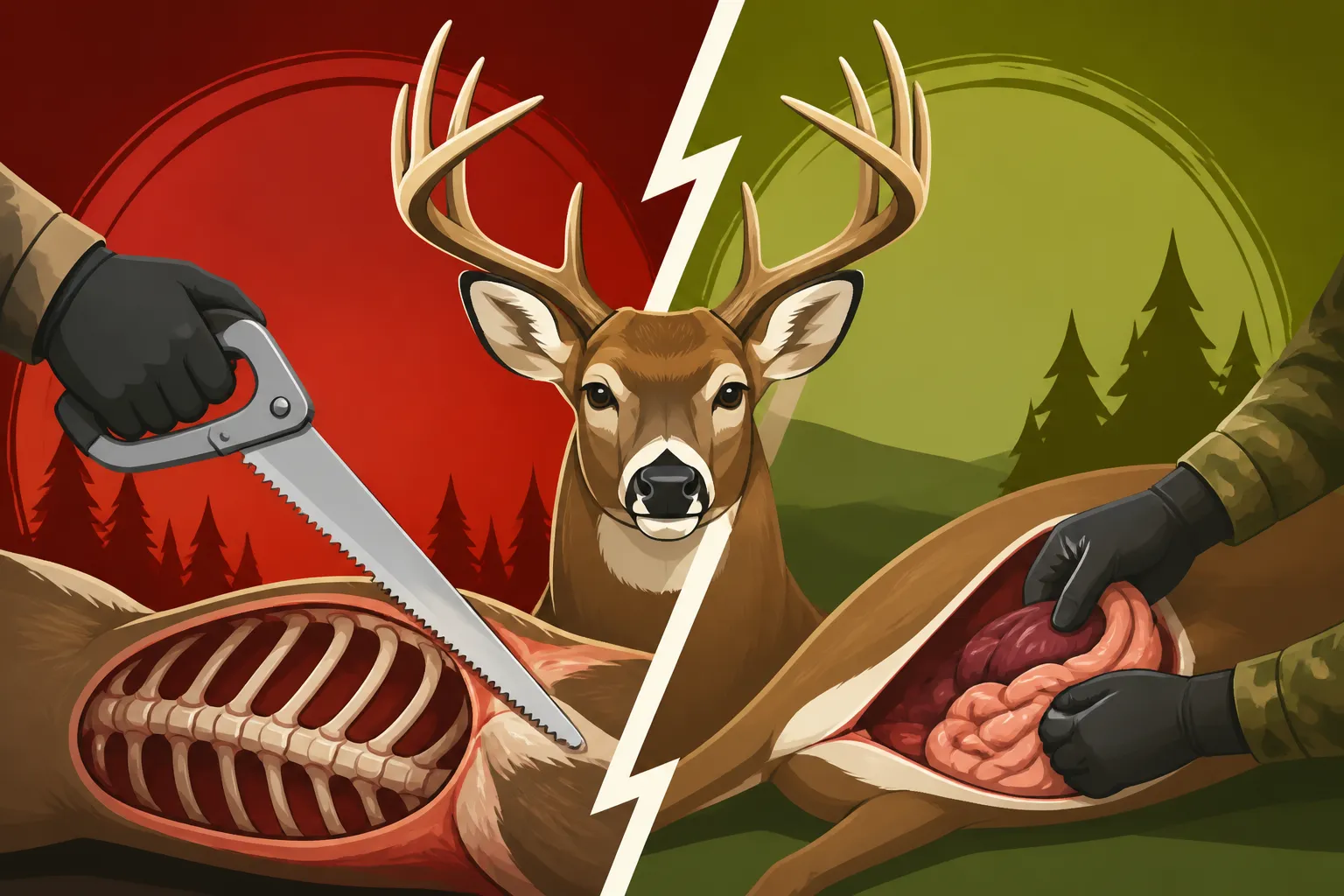
Every Georgia hunter eventually faces that moment of truth after a successful harvest: how do you get that deer from the woods to the cooler? For years, the trusty bone saw was the go-to for breaking down game, but a more modern, less messy technique has gained serious traction – the gutless method. Deciding which approach is best for you, especially in Georgia's often warm and rugged terrain, can make or break your venison and your back. This guide will meticulously break down both options, helping you determine which strategy fits your hunting style and the unique challenges of the Peach State.
The Traditional Approach: Bone Saws and Their Place in Georgia Hunting
For generations, the bone saw has been an indispensable tool for hunters looking to process their game. It's a method that offers familiar advantages, particularly if you're accustomed to traditional butchering techniques or have specific plans for your meat cuts. However, like any tool, its effectiveness can be heavily influenced by the environment you're operating in.
When a Bone Saw Shines: Heavy-Duty Field Dressing Needs
A good bone saw excels when you need precision and clean cuts through bone. If you're planning on taking your deer to a processor who prefers whole or halved carcasses, or if you intend to do extensive home butchering for bone-in roasts and chops, a saw is often the easiest way to achieve those results. It allows you to split the pelvis or sternum cleanly, facilitating the evisceration process. In a hunting camp setting, especially if you have a designated skinning rack or table, a bone saw makes quick work of breaking down a large animal into manageable quarters, ready for the cooler or immediate processing. Many hunters, particularly those with a strong tradition of Georgia Deer Camp Traditions, find the bone saw a comforting, reliable tool for these specific tasks.
Imagine you've harvested a nice buck deep in the Piedmont region, near a logging road, and you're planning to take it straight to your deer camp for quartering. A bone saw would be invaluable for splitting the brisket to remove the organs cleanly or for halving the carcass down the spine for easier transport in a truck bed. It provides that mechanical advantage against tough bone and cartilage that a knife simply can't match, ensuring you don't struggle or make jagged, inefficient cuts. This is especially true for larger, mature animals where the bone structure is denser and harder to manipulate without the right tool.
Challenges of Using a Bone Saw in Georgia's Field Conditions
While effective, carrying and using a bone saw in the field, particularly in Georgia, comes with its own set of challenges. First, there's the added weight and bulk to your pack. After a long hike into a Hunting a Funnel Between Two Swamps, the last thing you want is extra gear weighing you down. Then there's the hygiene aspect: saws can get incredibly messy. Cleaning blood, bone fragments, and tissue from a saw's teeth in the field can be difficult, especially if you're trying to minimize contamination in warm Georgia temperatures. You're trying to keep things as clean as possible to prevent spoilage, and a saw can introduce more potential vectors for bacteria if not meticulously cleaned.
Furthermore, traditional field dressing with a saw often means dealing with the entire gut pile on site. This can be unpleasant, particularly on a warm October day during Hunting the Georgia Rut in Mid-October, when flies and other insects are abundant. Dragging a gutted animal out, even with internal organs removed, is still a heavy proposition. If you're miles back on public land, facing a difficult drag over uneven terrain, the sheer physical exertion required can be immense. The potential for the carcass to pick up debris, dirt, and unwanted attention from scavengers during a long drag is also a concern.
Embracing the Gutless Method for Georgia's Unique Environment
The gutless method, while perhaps sounding unconventional to some traditionalists, has revolutionized how many hunters approach field dressing, especially when facing tough conditions or long pack-outs. It's a strategic approach that prioritizes efficiency, cleanliness, and ease of transport.
How the Gutless Method Works: Step-by-Step Breakdown
The core principle of the gutless method is exactly what it sounds like: removing the valuable meat from the animal without ever opening the body cavity to expose the entrails. Instead, you skin one side of the animal, typically starting from the back, and then quarter the deer. This means removing the front and hind legs (shoulders and hams), often by cutting around the joints rather than through bone. You then strip off the backstraps and tenderloins (accessible from the outside by reaching inside the cavity through the pelvic or rib area) and any other salvageable meat like neck roasts or rib meat. Once one side is completely deboned, you flip the animal over and repeat the process on the other side. The entrails remain largely undisturbed within the carcass, which is left behind. This method is surprisingly straightforward once you get the hang of it, effectively turning the animal into a series of boneless or bone-in cuts ready for your Game Bags for Warm October Days.
For instance, after a successful hunt in the hot pine flats of South Georgia, a hunter might roll the deer onto its side. They'd meticulously skin one side, exposing the muscle groups. Then, with a sharp knife, they would separate the front shoulder from the rib cage and the hind quarter from the pelvis, often working around the ball and socket joints. Next, the coveted backstraps would be removed, running along the spine. Finally, by reaching into the cavity from the pelvic opening or the diaphragm area, the tenderloins are carefully extracted. All this happens without ever having to cut open the belly and deal with the stomach and intestines.
Advantages of Going Gutless in the Georgia Outdoors
The gutless method offers significant advantages, especially when considering Georgia's hunting environment. First and foremost, it drastically reduces the weight you need to transport. By deboning the animal on site, you leave behind all the heavy bones, hide, and entrails, often cutting the pack-out weight by more than half. This is a game-changer when you're facing a long, arduous hike out of a deep swamp or up a steep ridge in the Chattahoochee-Oconee National Forest Hunting. Minimizing the weight means less strain, faster travel, and a much more pleasant experience overall.
Secondly, it's a much cleaner process. Without opening the gut cavity, you significantly reduce the risk of contaminating your meat with stomach contents, fecal matter, or other fluids. This is crucial for meat quality, particularly during warmer periods, which are common through much of Georgia's deer season. A cleaner process means less time spent washing and trimming meat later, and a higher quality product for the table. It also reduces the mess left on the ground, which can be a consideration on heavily hunted public lands or when you want to minimize disturbance. Many hunters find that Field Dressing a Deer in Warm Weather is made considerably easier and safer for the meat when using the gutless method.
Finally, the gutless method is often much quieter and less conspicuous. You're not making loud sawing noises, and the process generally takes less time than a meticulous traditional field dress if you're practiced. On public land, where Hunting Pressure on Georgia Public Land can be high, being able to quickly and cleanly process your animal and get it out of the woods without drawing undue attention can be a real benefit.
Situations Where the Gutless Method May Be Less Ideal
While the gutless method boasts many benefits, it isn't always the perfect solution for every hunter or every scenario. For hunters of smaller game, like feral hogs or even smaller deer, the weight savings might not be as significant, and traditional field dressing might still be faster or simply preferred. If you've shot a smaller animal and have easy access to a vehicle or processing facility, the time saved by going gutless might not outweigh the perceived effort of learning a new technique.
Another consideration is trophy presentation. If you're harvesting a buck that you plan to get shoulder-mounted, the gutless method requires careful attention to the caping process to ensure enough hide and neck meat are preserved for the taxidermist. While certainly doable, it requires specific knowledge and care to avoid damaging the cape. Some hunters, particularly those focused on antler-scoring or full body mounts, prefer the complete carcass for their taxidermist to work with. Additionally, some simply prefer the familiar routine of traditional field dressing, even if it's more work. There's a learning curve to the gutless method, and practice is key to becoming efficient. Without a sharp set of Field Dressing Knives Worth Carrying and a good understanding of deer anatomy, it can initially feel awkward or more time-consuming.
Choosing Your Method: Factors for Georgia Hunters
Deciding between a bone saw and the gutless method isn't about one being inherently "better" than the other; it's about choosing the right tool and technique for the specific situation you find yourself in. Georgia's diverse habitats and often challenging weather conditions play a huge role in this decision.
Considering Temperature and Distance to the Cooler
The single biggest factor dictating your field dressing choice in Georgia is often the temperature and how quickly you can get your meat cooled down. Georgia's hunting seasons often feature warm weather, particularly during the early archery season and even into October. In these conditions, minimizing the time between the kill and getting the meat on ice is paramount to prevent spoilage. The gutless method, by allowing you to quickly break the animal down into smaller, deboned cuts that can be immediately placed into game bags and onto ice, offers a significant advantage. It speeds up the cooling process dramatically compared to attempting to cool a whole or halved carcass.
Imagine harvesting a deer on a 70-degree day. Every minute counts. If you're miles from your truck and an even longer drive from a cooler, breaking the deer down quickly with the gutless method, getting the individual muscle groups into breathable game bags, and then packing them out to a waiting ice chest filled with ice is going to yield much better quality meat. A whole carcass, even if gutted, retains heat for a very long time, especially in warm weather, creating a breeding ground for bacteria. This is why many experienced Georgia hunters swear by the gutless method for almost all their warm-weather kills.
Public Land Considerations and Logistics
Hunting on Georgia's extensive public lands, whether it's a Wildlife Management Area (WMA) or sections of the Chattahoochee-Oconee National Forest, often means long hikes and strict regulations. Many WMAs might have rules about how far you can drive, requiring you to pack out your harvest by foot. In these scenarios, the gutless method becomes incredibly attractive. The reduced weight of deboned meat makes a several-mile pack-out infinitely more manageable than dragging a heavy carcass, even a gutted one. Think about Dragging a Deer Out of a Swamp – leaving bones and hide behind means less struggle through thick mud and tangled briars.
When planning for public land hunts, especially those requiring a Georgia WMA Access Stamp Requirement, consider the terrain, distance, and your own physical capabilities. If you anticipate a challenging extraction, learning and practicing the gutless method can save you a lot of grief. It also leaves less visible evidence of a kill site, which can be a consideration for minimizing disturbance on public ground. Knowing your options, whether it's a full-on bone-out or a strategic quartering, allows you to adapt to whatever the Georgia woods throw at you.
Your Personal Skills and Equipment
Ultimately, your choice also comes down to your comfort level, experience, and the tools you have on hand. If you've been using a bone saw for decades and feel confident and efficient with it, and your hunting style accommodates its use, there's no inherent need to switch. However, if you're a newer hunter, or you're looking to make your field processing more efficient, cleaner, and less physically demanding, investing time in learning the gutless method is highly recommended. There are countless online resources and videos demonstrating the technique, and practicing on a harvested deer will quickly build your confidence.
Regardless of the method, a crucial piece of equipment is a high-quality, sharp knife. For the gutless method, a sharp, sturdy knife with a comfortable grip is your primary tool. For bone saw users, having both a reliable saw and a good knife for the finer work is essential. Don't forget other crucial items like nitrile gloves, a rope for dragging (if applicable), and sturdy game bags. Brands like GoHunt often feature reviews and articles on various field dressing tools, from specialized knives to durable game bags, which can be a great resource when researching your gear options. Being prepared with the right gear and knowledge is key to a successful and ethical harvest.
Tools of the Trade: Beyond the Saw and Knife
No matter which field dressing method you ultimately choose, having the right ancillary tools can significantly streamline the process and ensure the best possible care for your hard-earned venison. It's not just about the primary cutting instrument; it's about the whole system.
Essential Field Dressing Kits for Either Method
Every hunter should carry a basic field dressing kit, regardless of their preferred method. This kit should minimally include a sharp, dependable knife – actually, a couple of them. A good fixed-blade knife for heavy work and a smaller, sharper blade for intricate cuts or skinning can be a lifesaver. Speaking of which, a sharpener or replaceable blades are a must. There's nothing worse than trying to process an animal with a dull knife. You'll also want several pairs of nitrile gloves. These are invaluable for maintaining hygiene and keeping your hands clean, especially when you're deep in the woods. Breathable game bags are also critical. They protect your meat from dirt, flies, and debris while allowing it to cool properly. They're a non-negotiable item, particularly for the gutless method where you'll be packing out individual cuts.
Consider a headlamp for those unexpected late-evening harvests, and a small first-aid kit for any accidental nicks or cuts. For those utilizing the gutless method, a compact roll of orange flagging tape can be useful for marking the site where you leave the carcass, or for marking your path back to your vehicle after a long pack-out. Many hunters find that resources like GoHunt offer comprehensive lists and user reviews of these essential items, helping them to build a robust and reliable kit that stands up to the demands of the Georgia wilderness.
Specialized Gear for Efficient Processing
Beyond the basics, there's specialized gear that can further enhance your efficiency. For the gutless method, some hunters opt for boning knives with flexible blades that make separating meat from bone easier. A sturdy, lightweight pack frame or a deer cart can also be a game-changer if you anticipate long pack-outs, even with deboned meat. While the gutless method significantly reduces weight, carrying large quantities of meat comfortably still requires good gear. Packs for a Day on Public Land or a more robust frame pack become essential.
For those sticking with the bone saw, consider a compact, folding saw designed specifically for game processing. These are often lighter and easier to carry than a traditional carpentry saw. Some even come with cases that can be easily cleaned. If you're processing at home or camp, a larger butchering saw might be more appropriate. Ultimately, the goal is to have tools that are sharp, clean, and fit the task at hand. The upfront investment in quality gear will pay dividends in efficiency, meat quality, and your overall hunting experience. When you're Butchering a Deer at Camp, having the right setup makes all the difference in turning a harvest into delicious table fare.
Comparison of Field Dressing Methods
| Feature | Bone Saw / Traditional Method | Gutless Method |
|---|---|---|
| Primary Tool | Knife, Bone Saw | Sharp Knife(s) |
| Carcass Integrity | Preserves carcass (whole or halved) for processor/taxidermy | Breaks down into deboned cuts, leaves carcass behind |
| Weight for Transport | High (carcass, hide, bones) | Low (meat only, deboned) |
| Hygiene/Cleanliness | Higher risk of contamination from gut pile; messier | Lower risk of contamination; cleaner process |
| Cooling Speed | Slower (whole carcass retains heat) | Faster (individual cuts cool quickly) |
| Time Investment | Can be fast for gutting, but slower for halving/quartering | Can be faster for meat removal with practice |
| Physical Effort (Pack-out) | High (dragging heavy carcass) | Lower (carrying lighter meat in bags) |
| Best for | Short drags, easy access, taxidermy mounts, traditional processing | Long pack-outs, warm weather, public land, maximizing meat quality |
| Learning Curve | Generally low (familiar process) | Moderate (requires practice and anatomical understanding) |
Conclusion
Choosing between a bone saw and the gutless method for field dressing your Georgia deer isn't just about tradition versus innovation; it's about making a practical decision based on your specific hunting conditions, the distance to your cooler, and your personal preferences. While the bone saw remains a reliable tool for specific butchering tasks and is favored by those with easy access to vehicles or processors, the gutless method offers undeniable advantages for hunters operating in Georgia's often warm weather and challenging public land environments. By drastically reducing pack-out weight and minimizing contamination risks, it helps preserve the quality of your venison, ensuring that your hard work in the field translates into delicious meals at home. Whichever method you choose, equipping yourself with sharp knives, breathable game bags, and practicing your technique will lead to more efficient, ethical, and ultimately more enjoyable hunting experiences in the Peach State.
Disclaimer
This article is for general informational purposes only and does not constitute professional advice. Laws, prices and regulations vary by location and change over time. Consult a qualified professional for guidance on your specific situation.