Low-Light Performance in a Scope
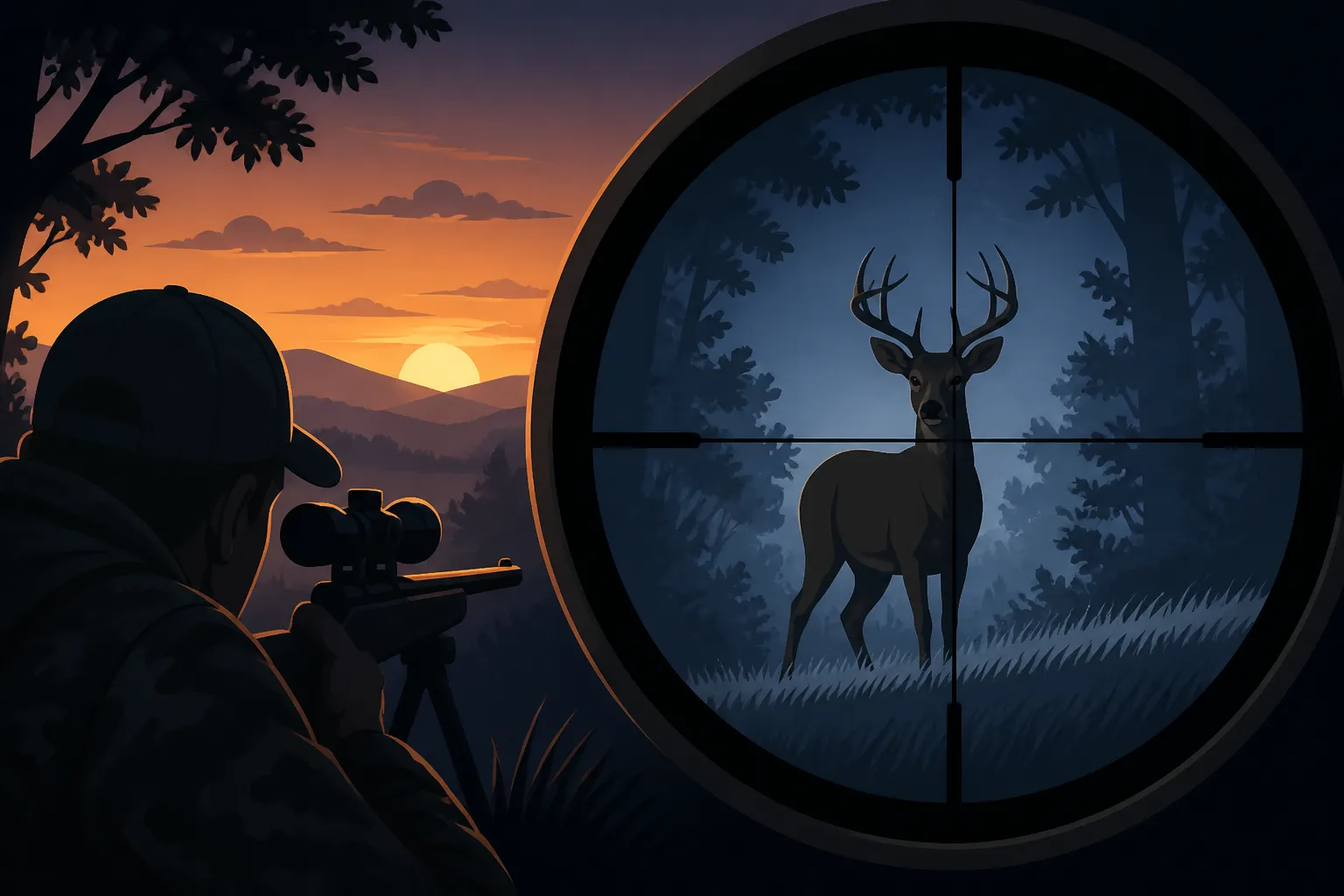
There are few things more frustrating for a Georgia hunter than having a prime opportunity vanish into the gloom as the last rays of light fade, all because your scope just couldn't pull in enough illumination. We've all been there—that trophy buck steps out right at legal shooting light's edge, or a wary gobbler hangs up in the shadows, and suddenly your crisp daytime optic turns into a blurry, dark tunnel. This guide is all about demystifying what makes a rifle scope perform well in those critical low-light conditions, ensuring you can make an ethical, confident shot when it matters most in Georgia's diverse woods and swamps.
Understanding What "Low-Light Performance" Really Means
When we talk about a scope's low-light performance, it's not some mystical quality. It's a combination of optical engineering, material science, and design choices that allow an optic to gather and transmit as much available light as possible to your eye, helping you resolve an image even when ambient light is scarce. For us here in Georgia, with our dense pine stands, shadowed creek bottoms, and often cloudy, humid mornings, maximizing every photon of light can be the difference between a successful hunt and a missed chance.
The Science Behind Light Gathering
At its core, a scope's ability to perform in low light boils down to how effectively it can collect light, focus it, and then deliver a clear, bright image to your eye. Think of it like a funnel. The larger the mouth of the funnel, the more water it can catch. In optics, that "mouth" is primarily the objective lens—the big lens at the front of your scope.
But it's not just about size. Once light enters the objective lens, it has to pass through a series of other lenses before it reaches your eye. Every time light passes through a glass-to-air surface, a small amount of light is lost due to reflection. This is where lens coatings become absolutely crucial. High-quality multi-coatings on every lens surface dramatically reduce light reflection, allowing more light to be transmitted through the scope. A scope with fully multi-coated lenses can transmit upwards of 90-95% of the available light, compared to an uncoated lens which might only transmit 60-70%. That difference is massive when you're trying to see a deer in the last ten minutes of legal shooting light.
Finally, there's the exit pupil, which is the diameter of the light beam that exits the eyepiece and enters your eye. You can see it as the bright circle when you hold a scope away from your eye. The larger the exit pupil, the more light reaches your eye. This is a critical factor because in low light, your eye's pupil dilates to let in more light. If your scope's exit pupil is smaller than your dilated eye pupil, you're not utilizing all the light your eye could potentially gather. A common rule of thumb is that human pupils can dilate to about 5-7mm in low light, so a scope with an exit pupil in that range will offer good low-light performance. This is why scopes with lower magnification settings often perform better in dim light; as you decrease magnification, the exit pupil typically increases.
When Low Light Matters Most in Georgia
Georgia's hunting conditions frequently push the limits of an optic's low-light capabilities. It's not just about dawn and dusk, although those are certainly prime times. Consider these scenarios:
- Dawn and Dusk: This is obvious, but it's where most legal hunting opportunities occur. Whether it's the first hint of gray light filtering through the pines or the final moments before darkness consumes the landscape, deer, turkeys, and even hogs are often most active. A superior low-light scope allows you to identify your target, ensure it's legal, and place your shot accurately during these crucial windows.
- Deep Woods and Swamp Bottoms: Many of Georgia's prime hunting spots, especially for deer and bears, are in thick, dense cover—think mature hardwood stands in the Chattahoochee-Oconee National Forest Hunting or the shadowed depths of a cypress swamp. Even in the middle of a sunny day, these areas can feel like perpetual twilight. A good low-light scope cuts through that gloom, making targets visible where they'd otherwise blend into the shadows.
- Overcast and Rainy Days: We get our fair share of dreary, overcast days, especially during late deer season or early spring turkey hunts. Rain, heavy cloud cover, or even dense fog can significantly reduce ambient light. Your scope needs to perform reliably even when the sun isn't shining.
- Target Identification: Beyond just seeing something, low-light performance is vital for ethical target identification. Is that a doe or a legal buck? Can you clearly see if it's got enough points to meet antler restrictions? Or is it a branch swaying in the wind? In fading light, distinguishing antlers, assessing shot placement, and ensuring a clear background are all heavily reliant on your scope's ability to render a bright, high-contrast image. This is particularly relevant when you're trying to fill a Georgia's Twelve-Deer Bag Limit and need to make precise decisions.
Key Features to Look for in a Low-Light Scope
Choosing a scope for low-light hunting in Georgia means prioritizing certain features over others. While high magnification and sleek designs are appealing, true performance in dim conditions comes down to the fundamentals.
Objective Lens Size and Its Impact
The objective lens, as we discussed, is the primary "light collector." Generally, the larger the objective lens diameter, the more light it can potentially gather. Common sizes for hunting scopes range from 32mm to 56mm, with 40mm, 44mm, and 50mm being popular choices for deer hunting.
- Pros of Larger Objective Lenses: More light gathering capacity, which often translates to a brighter image in low light. This is why scopes marketed for dusk/dawn hunting often feature 50mm or 56mm objectives.
- Cons of Larger Objective Lenses: They are heavier and bulkier. A large objective scope mounted on a rifle can raise the scope significantly above the bore, sometimes requiring higher rings and an adjustment to your cheek weld for consistent accuracy. In thick Georgia woods, a bulky scope can also snag on branches, and added weight is noticeable on long treks, especially if you're navigating challenging terrain in the Hunting North Georgia Mountain Country. Furthermore, a very large objective lens might make it difficult to comfortably carry your rifle close to your body.
For many Georgia hunters, a balanced approach is often best. A 40mm or 44mm objective provides a good compromise between light-gathering ability and practical considerations like weight and mounting height. However, if your hunting primarily involves stationary stands in low-light conditions, like a Sitting a Field Edge in Late Season or a swamp edge, and you don't mind a bit of extra bulk, a 50mm objective could be a worthy investment.
Glass Quality and Coatings
This is arguably the most crucial factor, even more so than objective lens size. You can have a massive objective lens, but if the glass itself is poor quality or the coatings are inadequate, the image will still be dim and blurry.
- Glass Quality: High-quality optical glass is purer, has fewer imperfections, and allows light to pass through more efficiently with less distortion. Brands often use terms like "HD" or "ED" (Extra-low Dispersion) glass to indicate superior quality. This type of glass significantly reduces chromatic aberration (color fringing), which can become very noticeable in low-light conditions, making it harder to discern details.
- Lens Coatings: As mentioned before, coatings are applied to the lens surfaces to minimize light reflection and maximize light transmission. Look for scopes that are "fully multi-coated." This means all air-to-glass surfaces have multiple layers of anti-reflective coatings. These coatings also often provide scratch resistance and help repel water, which is a huge benefit in Georgia's humid and sometimes rainy environment. A scope with excellent glass and superior coatings can often outperform a scope with a larger objective but lesser quality components.
When researching scopes, don't just look at the brand name. Delve into reviews that specifically address low-light performance and try to test scopes side-by-side if possible. Sometimes, an illuminated reticle can make up for some shortcomings here, but it's not a substitute for fundamental optical quality.
Reticle Illumination and Its Utility
An illuminated reticle is a feature where the crosshairs or a central dot within the reticle glows, typically in red or green. While it doesn't gather more light, it dramatically enhances your ability to see your aiming point against a dark background or a dark animal in low light.
- Why it's a Game-Changer: Imagine looking at a dark hog or a black bear against a shadowed backdrop just before legal shooting time ends. A standard black reticle can completely disappear, making an accurate shot impossible. An illuminated reticle provides a clear, visible aiming point, allowing you to quickly acquire your target and place your shot confidently. This is especially helpful during Hunting Georgia Black Bear Without Bait where the dark coat of the bear can quickly absorb the remaining light.
- Adjustable Brightness: Good illuminated reticles offer multiple brightness settings. You want settings that are dim enough for truly dark conditions without creating a distracting glare or "halo" effect around the reticle, which can impair your natural night vision. Some scopes even have ambient light sensors that automatically adjust brightness.
- Battery Life: Be mindful of battery life and always carry spares. While modern LED reticles are quite efficient, forgetting to turn it off can leave you in the dark when you need it most.
- Considerations: While invaluable in low light, an illuminated reticle does add complexity, a battery, and typically cost to a scope. It's a fantastic feature, but it's not a replacement for good glass and coatings. It's an enhancement to an already capable low-light optic.
Practical Considerations for Georgia Hunters
Beyond the technical specs, how a scope integrates into your actual hunting style and the unique challenges of Georgia's environment is paramount.
Balancing Size and Weight
This is a constant trade-off in hunting gear, and scopes are no exception. As previously mentioned, larger objective lenses generally mean more weight and bulk.
- Heavy Timber vs. Open Fields: If you primarily hunt dense pine plantations, thick river bottoms, or mountainous terrain where shots are typically close and maneuvering through brush is common, a smaller, lighter scope (e.g., 3-9x40mm) might be more practical. You'll appreciate the reduced weight on a long walk-in, and the smaller profile will be less prone to snagging. For hunters focused on Treestand Setups in North Georgia Mountains, every ounce counts during the climb.
- Field Edges and Power Lines: If you often hunt from a stand overlooking a large field, power line, or food plot where longer shots are possible, the added light-gathering of a 50mm objective might be worth the trade-off in weight. Just be sure your rifle still balances well and that your cheek weld remains consistent.
- Mounting Height: A larger objective lens often necessitates higher scope rings to clear the barrel, which can raise the scope uncomfortably high above the bore. This changes your natural aiming point and can make consistent accuracy more difficult without an adjustable cheek rest. Always test the scope on your rifle to ensure a comfortable and repeatable sight picture.
Durability and Fog Proofing
Georgia's climate is notoriously humid, and sudden temperature changes are not uncommon. This puts optics to the test.
- Fogging: Internal fogging occurs when moisture trapped inside the scope condenses on the lens surfaces. A truly fog-proof scope will be purged with an inert gas like nitrogen or argon, and then sealed with O-rings. This prevents internal moisture. External fogging can still occur, but that's a matter of the environment, not a defect in the scope. Many quality scopes incorporate hydrophobic (water-repelling) external lens coatings to help shed rain and prevent moisture from clinging, giving you precious extra seconds of clarity when a target appears. When hunting Georgia Waterfowl Hunting on Coast and Swamp, fogging is a constant battle.
- Waterproof and Shockproof: Your scope will get wet. It will get bumped. Look for scopes explicitly rated as waterproof and shockproof. Waterproofing ensures that rain, dew, or even an accidental dip won't compromise the internal components. Shockproofing means the internal lens elements are robustly seated and can withstand the recoil of your rifle and the inevitable knocks and drops that happen in the field. Hunting during Georgia's Long Firearms Deer Season means dealing with all kinds of weather, so reliability is paramount.
- Construction Materials: A robust, one-piece main tube, typically aircraft-grade aluminum, provides better structural integrity than scopes made of multiple pieces. Pay attention to the adjustment turrets as well; they should feel solid and provide positive clicks for reliable zeroing and adjustments.
Magnification Ranges for Low-Light Situations
It might seem counterintuitive, but higher magnification isn't always better in low light. In fact, it can often be detrimental.
- Exit Pupil Relationship: As you increase magnification on a variable power scope, the exit pupil typically decreases. A smaller exit pupil means less light is reaching your eye. So, while 10x magnification might give you a bigger image, it will be dimmer than an image at 4x magnification through the same scope in low light.
- Field of View: Lower magnifications also provide a wider field of view. In dense cover, or when trying to pick up a moving target, a wider field of view makes it much easier to locate and track your game. If you're Still-Hunting South Georgia Pine Flats, a wide field of view is a massive advantage.
- Practical Use: For most deer hunting in Georgia, shots are rarely beyond 200 yards, and often much closer. A 3-9x or 2-10x scope is highly versatile. In true low-light conditions, you'll likely dial that scope down to its lowest magnification setting (e.g., 3x or 4x) to maximize the exit pupil and brightness, making an ethical shot within typical Georgia ranges very achievable. Even a 4-12x or 4.5-14x scope is fine, but remember to dial it down when the light gets low.
- Fixed Power: Some hunters prefer fixed power scopes (e.g., 6x or 8x) for their simplicity, durability, and often superior light transmission compared to variable power scopes of similar quality. This is because they have fewer internal lenses and moving parts. However, they lack the versatility of variable power optics.
Tips for Maximizing Your Scope's Low-Light Potential Afield
Having a great low-light scope is only half the battle. Knowing how to use it effectively in the field can make all the difference.
Proper Mounting and Eye Relief
A properly mounted scope is essential for quick target acquisition and consistent accuracy, especially when time is of the essence in low light.
- Eye Relief: This is the distance your eye needs to be from the eyepiece to see a full, clear image. It's crucial for comfort and safety (avoiding "scope bite"). Mount your scope so that when you bring the rifle to your shoulder, your eye naturally falls into the sweet spot of the eye relief. In low light, a generous and forgiving eye box (the area where you can still see a full image) is highly beneficial, as it allows for slightly less precise head placement.
- Ring Height: Ensure your rings are the correct height for your rifle and scope. The objective bell should clear the barrel, but the scope should sit as low as possible without touching. This allows for a comfortable cheek weld, which is vital for consistency.
- Level Reticle: Use a leveling kit or a plumb bob to ensure your reticle is perfectly level. An unlevel reticle can cause horizontal point of impact shifts, especially at longer ranges, which is the last thing you need when trying to make a precise shot in fading light.
Keeping Lenses Clean
This might sound simple, but dirty lenses are the enemy of low-light performance. Fingerprints, dust, pollen, and smudges scatter light, reducing clarity and brightness.
- Lens Pen or Brush: Carry a lens pen with a retractable brush and a cleaning pad, or a small microfiber cloth. Use the brush to gently remove loose debris first, then use the cleaning pad or cloth to wipe away smudges.
- Avoid Harsh Wipes: Don't use your shirt or harsh chemicals. They can scratch coatings or leave residue.
- Protection: Use scope caps when not actively hunting to protect your lenses from dust, rain, and accidental scratches.
Imagine you're checking your Georgia Deer Harvest Records and remembering that late afternoon shot. A clean lens could have been the edge you needed. When you're using digital scouting tools like the GoHunt app to plan your next move, remember that the best optics won't perform if they're covered in grime.
Strategic Setup and Shot Placement
Your hunting tactics can also play a huge role in maximizing your scope's performance in low light.
- Positioning: When setting up your stand or blind, try to position yourself so that any potential shooting lanes, especially those where you expect activity in low light, are oriented to catch as much available light as possible. This might mean facing east for morning hunts or west for evening hunts, if terrain allows. Avoid situations where you're looking directly into the setting sun, which can cause glare.
- Backdrop Awareness: Always be mindful of the backdrop behind your target. In low light, it's even more critical to ensure you have a safe and clear background. What looks like an open field in daylight can quickly become a tangled mass of shadows where another animal or obstacle could be obscured.
- Patience and Confidence: Even with the best low-light scope, there will be times when the light simply isn't enough for a safe, ethical shot. Don't push it. Knowing your scope's limitations, and your own, is part of being a responsible hunter. Use tools like GoHunt for pre-scouting and identifying optimal stand locations that could give you better light exposure.
When assessing a scope's low-light capabilities, it's helpful to consider how different factors contribute. This table summarizes some of the key elements:
| Feature | Impact on Low-Light Performance | Importance in Georgia Hunting | Considerations |
|---|---|---|---|
| Objective Lens Size | Larger diameters (e.g., 50mm, 56mm) gather more light, potentially brighter image. | Medium-High | Adds weight/bulk; may require higher rings; good for stationary hunts. |
| Glass Quality (ED/HD) | Purer glass reduces distortion & chromatic aberration, creating clearer, sharper images. | High | Crucial for detail resolution in dim light; less susceptible to blur. |
| Lens Coatings (FMC) | Fully multi-coated lenses maximize light transmission (90%+), minimizing reflection loss. | Very High | The single most important factor for brightness after glass quality; also adds durability. |
| Exit Pupil | Diameter of light beam entering eye; larger (5-7mm+) matches dilated pupil for max light. | High | Varies with magnification; lower mag generally means larger exit pupil, thus brighter image. |
| Illuminated Reticle | Does not gather light, but makes aiming point highly visible against dark backgrounds. | High (Situational) | Invaluable for dark animals (hogs, bears) or dense shadows; ensure adjustable brightness and spare battery. |
| Magnification Range | Lower settings (3-5x) yield larger exit pupils and wider fields of view for better light. | Medium-High | Resist the urge to "dial up" in low light; use minimum power for maximum brightness. |
| Fog/Waterproofing | Nitrogen/argon purged and O-ring sealed prevents internal fogging and water ingress. | Very High | Essential for Georgia's humidity, rain, and temperature swings. |
Ultimately, choosing the right scope for low-light performance is a personal decision based on your budget, hunting style, and the specific environments you hunt in Georgia. Prioritizing excellent glass, robust coatings, and understanding the role of objective lens size and exit pupil will put you on the right track. Don't forget that practical aspects like durability and an illuminated reticle can enhance your confidence and success when those fleeting moments of low light present themselves. Whether you're hunting during Georgia's Early Archery Season or braving the late season chill, having an optic you can trust when the sun barely peeks over the horizon is invaluable.
Disclaimer
This article is for general informational purposes only and does not constitute professional advice. Laws, prices and regulations vary by location and change over time. Consult a qualified professional for guidance on your specific situation.