Where to Hang a Camera on a Logging Road
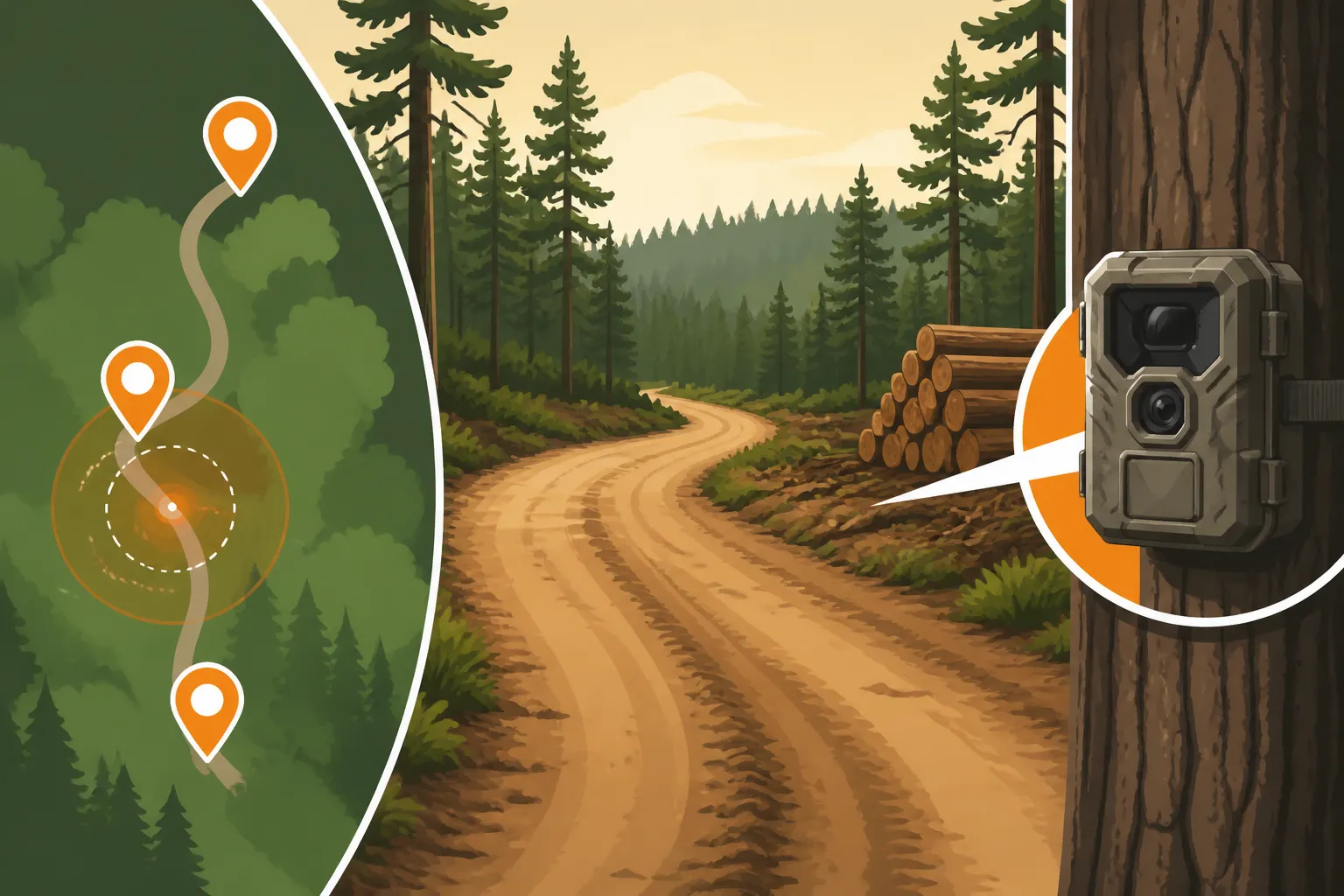
You’ve scouted, you’ve put in the miles, and you’ve found that perfect logging road slicing through the Georgia pines or hardwoods. Now comes the critical part: figuring out exactly where to hang your trail camera to truly unlock the secrets of what’s moving through. It’s easy to just slap a camera on the first tree you see, but maximizing your chances means understanding how deer, hogs, and even bears utilize these man-made arteries, and this guide will walk you through the precise strategies for pinpointing those prime camera spots.
The Irresistible Pull of Logging Roads for Wildlife and Hunters
Logging roads, whether active or overgrown, are far more than just paths for machinery; they’re vital corridors in Georgia's diverse landscapes for all kinds of wildlife. For hunters, they offer accessible routes into areas that might otherwise be impenetrable, but for animals, they represent efficiency and, sometimes, security. Understanding this dynamic is key to successful trail camera placement.
Natural Travel Corridors and Funnels
Imagine pushing through dense thickets of briars and tangled vines – it's tough going, right? Animals feel the same way. Logging roads, even if a little overgrown, provide an easier path of travel, reducing the energy expenditure required to move from one area to another. Deer, in particular, are creatures of efficiency. They'll almost always take the path of least resistance if it gets them where they want to go. This makes a logging road a natural expressway for deer moving between bedding areas and feeding grounds.
Think about a classic setup: a dense stand of pines where deer love to bed, bordered by an old clear-cut that's grown into prime browse, or a field planted with winter wheat. A logging road running between these two habitat types becomes an absolute magnet. Deer will use it to commute, often just inside the tree line, but occasionally right down the middle, especially under the cover of darkness. Pigs, being opportunistic, will also frequent these roads, rooting along the edges for grubs and tubers. Even bears, especially in the North Georgia Mountains, will follow these paths of least resistance as they move across their home ranges looking for acorns or other seasonal forage. Knowing how to effectively use tools like Scouting Georgia Public Land Before Season can help you identify these critical habitat transitions even before you step foot in the woods.
Rubs, Scrapes, and Signposts
Logging roads also serve a crucial role in the social lives of whitetails, especially during the rut. As bucks mature, they become more territorial and communicative, and logging roads provide perfect canvases for their "signposts." A lone pine or a sturdy oak along the edge of a well-used logging road often becomes a rub line, where bucks strip bark from trees to deposit scent and demonstrate their dominance. These aren't just random acts; they're deliberate messages to other deer in the area.
More importantly, scrapes are often found along these roads. Bucks will paw away the leaves and dirt, creating a patch of bare earth where they urinate and deposit scent from their interdigital glands. Above the scrape, they'll work an overhanging branch (the "licking branch") with their preorbital glands, adding another layer of scent communication. Why logging roads? Because they represent high-traffic areas, making them ideal for broadcasting these messages to the widest possible audience of other deer. Finding a freshly worked scrape line along a logging road is like hitting the jackpot for camera placement. It tells you a buck is actively using that area and is highly likely to return. If you're looking for more details on this, check out our guide on Scrape Lines Along a Logging Road.
Strategic Camera Placement Along Georgia Logging Roads
Now that we understand why logging roads are so effective, let's talk about the where — the specific micro-locations that turn a good spot into a great one. It's not enough to just pick any tree; you need to think like a deer.
Identifying Key Intersections and Bends
Animals, much like people, tend to slow down or pause at intersections and sharp turns. These are natural decision points. When a logging road intersects with another smaller game trail, a creek crossing, or even a subtle saddle in the terrain, that's a prime spot. Deer will often pause, check the wind, and assess their surroundings before committing to a direction. This brief hesitation gives your trail camera a perfect opportunity to snap a picture.
Consider a sharp bend in a logging road. Animals often cut the corner, creating a faint, unofficial trail. Placing a camera looking down this cut-corner path, rather than just straight down the road, can yield fantastic results. Or, if the road crosses a small creek, animals will naturally funnel through the easiest crossing point. A camera positioned to cover that specific crossing point will catch almost every animal moving through. When you're using digital mapping tools, like those provided by GoHunt, you can often identify these topographical features and intersecting trails before you even step foot on the property, saving you valuable scouting time. This kind of advanced planning is vital, especially when dealing with Hunting Pressure on Georgia Public Land.
Pinch Points and Bottlenecks
These are arguably the most effective spots for a trail camera on any logging road. A pinch point is any natural or man-made feature that funnels animal movement into a narrow, predictable path. On a logging road, this could be:
- Thick Brush: Sections where the logging road is flanked by extremely dense, impassable brush, forcing animals to walk right down the center of the road.
- Steep Banks or Cliffs: If one side of the road drops off steeply, or rises into an impassable bank, animals will be confined to the road itself or a very narrow strip beside it.
- Water Features: A swampy area or a wide creek that's difficult to cross, except at one specific, drier point along the logging road.
- Downed Trees: A large blowdown across the road that forces animals to navigate around it in a specific manner.
These bottlenecks are gold mines because they reduce the variables. Instead of guessing where an animal might cross a wide-open area, you know they have to pass through this constricted zone. Place your camera looking directly into this pinch point, ensuring the entire bottleneck is within its detection and photo zone. This is where you'll consistently capture high-quality images of deer, hogs, and other creatures of the Georgia woods. When studying maps, look for areas where contour lines get tight, indicating changes in elevation that might create these natural funnels, or where water features force travel in specific directions. Our detailed article on Hunting a Funnel Between Two Swamps offers great insights into identifying these critical areas.
Overlooking Food Sources and Bedding Areas
Logging roads often provide crucial access to, or directly border, prime food sources and bedding areas. By understanding where these resources are located, you can strategically place your camera to capture animals as they transition between them.
For instance, if a logging road runs adjacent to a recently cut-over area that's now a dense thicket of young pines and hardwoods, that clear-cut is likely a major bedding area. Deer will often stage along the edge of the road, just inside the cover, before slipping out to feed at dusk. A camera placed to cover this edge, looking into the clear-cut, can reveal deer movement patterns as they emerge. Similarly, if the logging road leads to or borders an agricultural field (like corn, soybeans, or peanuts), or a natural food source like an oak flat dropping acorns, animals will use the road to get there.
Consider the "staging areas" – spots just off the main food source where deer often gather before committing to entering an open area. A logging road might offer the perfect vantage point for a buck to survey a field before stepping out. Placing your camera here, angled to catch both the road itself and the edge of the feeding area, can provide incredible intelligence. Remember to think about wind direction and how deer approach these spots; they'll almost always approach a food source with the wind in their face, scenting danger ahead. Check out our piece on Entry Routes Through a Standing Peanut Field for more ideas on targeting these agricultural transitions.
Maximizing Your Trail Camera's Effectiveness and Security
Getting the camera in the right spot is half the battle; the other half is making sure it works efficiently, securely, and without alerting the very animals you're trying to monitor. Georgia's unique environment, with its humidity and dense cover, adds a few extra considerations.
Optimal Camera Height and Angle
This is where many hunters make mistakes. A camera hung at chest height, pointed straight across a road, is easy to spot by both deer and people, and it often captures more "blurry deer butts" than full body shots.
Go high and angle down: For most situations, consider hanging your camera at least 6-8 feet high, using a strap extender or a screw-in mount. Angle the camera downward, so it's looking down the logging road, rather than straight across. This provides a wider field of view for detection and a better angle for photography. Deer are less likely to look up and spot a camera, and it helps prevent false triggers from tall grass or small branches swaying in the wind that might be at eye level.
Sun considerations: Always try to face your camera north or south. Facing it directly east or west will result in heavily shadowed photos in the morning or blown-out, overexposed images in the evening when the sun is low on the horizon. If you have no choice but to face it east or west, try to find a spot with dappled sunlight or heavy canopy cover to minimize direct sun exposure.
Trail Orientation: Instead of pointing the camera perpendicular to the trail, try to angle it slightly. This increases the amount of time an animal stays in the detection zone as it walks past, leading to more reliable triggers and better photo sequences.
Security and Stealth Considerations
Unfortunately, trail camera theft is a real concern, especially on public land. Even on private land, you want to minimize your scent and visual impact.
Camouflage and concealment: Always choose a tree that offers some natural camouflage, like a multi-trunked tree or one with plenty of limbs and foliage. You can even break off small branches (if legal and ethical) to further hide the camera. Paint the back of your camera with some drab earth tones or mud to help it blend in.
Locks and cables: Invest in a good cable lock or a sturdy security box. While no lock is foolproof against a determined thief, it can deter opportunistic ones. Remember to always be aware of Trail Camera Rules on Georgia Public Land as regulations can vary.
Minimize disturbance: This is HUGE. Every time you check your camera, you're leaving scent and potentially spooking animals. Try to check cameras during the middle of the day, when deer are typically bedded down. Wear rubber boots and scent-free clothing, and take the most discreet route possible to and from your camera. Use a designated route to avoid creating new trails that might alert animals to your presence. With GoHunt mapping tools, you can even plot out your access routes beforehand to minimize human footprint.
Environmental Factors: Wind, Sun, and Humidity
Georgia’s weather can be brutal on electronics and challenging for deer movement.
Wind: Strong winds can cause false triggers from swaying branches. Try to clear any vegetation directly in front of the camera’s detection zone. On very windy days, deer movement can also be affected; they may move less or stick to more sheltered areas.
Sun: Beyond the direction, direct sunlight can heat up your camera, sometimes affecting battery life or causing malfunctions. Seek shaded spots if possible, or consider a camera with a robust casing designed for outdoor extremes.
Humidity: Georgia is famous for its humidity. This can lead to condensation inside your camera lens or housing, causing foggy pictures. Some higher-end cameras are better sealed, but for others, consider placing a small desiccant pack (like those little silica gel packets that come in new shoes) inside the battery compartment to absorb moisture. This might sound minor, but it can save your season’s photos!
Here's a quick reference table for trail camera placement on logging roads:
| Factor | Do's | Don'ts |
|---|---|---|
| Location | Intersections, pinch points, funnels, near food/bedding | Wide-open, straight stretches without features |
| Height | 6-8 feet high, angled down | Chest height, perpendicular to the road |
| Orientation | Face North/South; angle slightly down the road | Face East/West; point straight across the road |
| Concealment | Use natural cover (multi-trunk trees, thick brush) | Place on a lone, easily visible tree |
| Security | Use cable locks, security boxes, camouflage paint | Leave unsecured or in plain view |
| Disturbance | Check midday, use scent control, discreet routes | Check frequently, walk main trails, leave human scent |
| Vegetation | Clear branches/grass in detection zone | Allow vegetation to cause false triggers |
| Humidity | Use desiccant packs if needed | Ignore potential fogging/condensation |
Ultimately, finding the sweet spot for a trail camera on a logging road comes down to careful observation, understanding animal behavior, and a bit of trial and error. By focusing on these strategic placement tips, you'll gather valuable intel that helps you pattern deer, locate hogs, and ultimately, become a more successful hunter in the diverse landscapes of Georgia.
Disclaimer
Hunting is an inherently dangerous activity. Always prioritize safety, adhere to all Georgia Department of Natural Resources (DNR) regulations, and obtain proper licenses and permits before heading afield. The information provided here is for educational purposes only and should not be considered a substitute for professional guidance or official hunting regulations. Be aware of your surroundings, respect private property, and practice ethical hunting at all times.