Canada Geese on Georgia Farmland
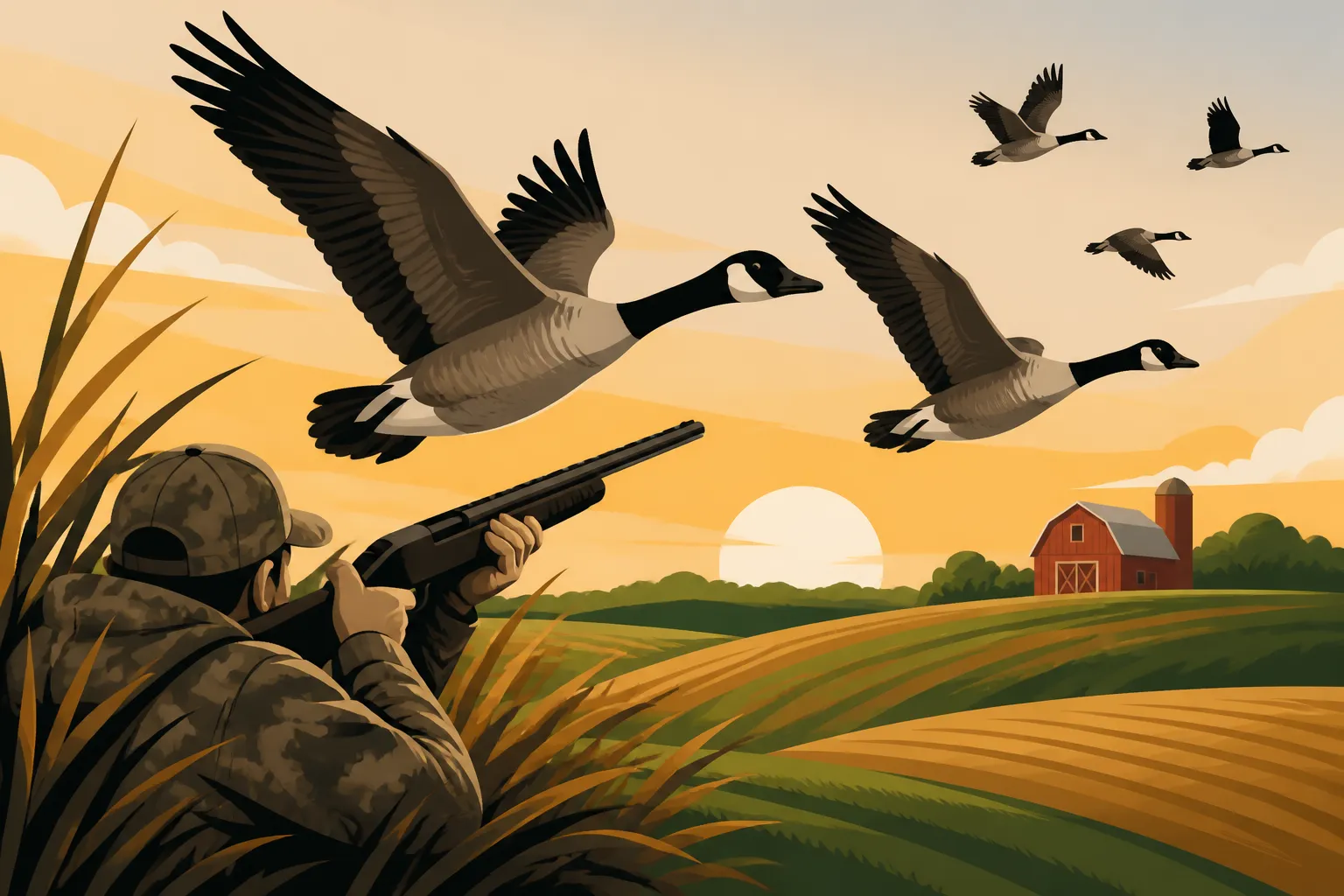
For many Georgia hunters, when they picture waterfowl, it’s often wood ducks diving into a cypress swamp or mallards trading over a flooded timber hole. But if you’ve spent any time driving through our state’s vast agricultural lands, especially in the central and southern regions, you’ve undoubtedly noticed something else: huge flocks of Canada geese. These intelligent birds have found a paradise in our farmlands, offering incredible, yet often overlooked, hunting opportunities. This guide will help you understand why these geese are here, how to find them, and the best ways to bring them into your spread on Georgia’s expansive fields.
Understanding the Georgia Canada Goose Population on Farmland
The presence of Canada geese across Georgia’s farmlands isn’t just a seasonal blip; it’s a fascinating story of adaptation and changing migration patterns. What once might have been a rare sight has become a consistent feature of our winter agricultural landscapes, driven by both resident populations and migratory birds finding new pit stops.
The Rise of Resident and Migratory Geese in Georgia
Georgia’s Canada goose story is a dual narrative. On one hand, we have a thriving population of resident Canada geese. These birds didn’t migrate from the far north but were often introduced decades ago to lakes, parks, and golf courses for aesthetic purposes or as part of restoration efforts. Over time, these local populations boomed, becoming quite comfortable living year-round in Georgia. As their numbers grew and urban pressure increased, many of these resident flocks started exploring beyond city limits, discovering the rich bounty of agricultural fields. They quickly learned that a freshly cut cornfield or a sprouting winter wheat patch offered an irresistible smorgasbord, far more appealing and plentiful than most suburban ponds.
Then there are the migratory geese, part of the broader Atlantic Flyway population. Historically, many of these birds would push further south into Florida or deeper into the Gulf states. However, factors like milder winters, increased hunting pressure in northern states, and the sheer abundance of food in Georgia's agricultural belt have led to a noticeable shift. More and more migratory flocks are choosing to shorten their journey, finding our state's farmlands to be a perfect wintering ground. They can find ample food without expending the energy for an even longer flight. This means that hunters in Georgia might encounter both incredibly wary, fresh-off-the-flyway birds and slightly more complacent, patterned resident geese, sometimes even in the same field. The interplay of these two populations creates a dynamic and exciting challenge for waterfowlers.
Identifying Different Goose Subspecies and Their Habits
While they all fall under the "Canada Goose" umbrella, it's worth noting that you might encounter slightly different sizes and behaviors among the flocks you pursue in Georgia. The most common you'll see are the Giant Canada Geese (often the bulk of our resident populations, and a significant portion of the migratory birds too). These are big, robust birds, known for their powerful flight and distinctive honk. They are intelligent and, especially if they've been pressured, can be incredibly wary, circling high and scrutinizing decoy spreads with an eagle eye.
Less commonly, but still possible, you might encounter smaller subspecies, though true "Lesser" Canada geese are typically found further west. However, size can vary within a flock based on age, sex, and individual bird. The key takeaway here isn't necessarily about subspecies identification in the field, but rather recognizing the behavioral nuances that come with different goose experiences. Migratory flocks, having run the gauntlet of hunters from Canada down the eastern seaboard, often arrive more educated and cautious. Resident flocks, while perhaps more patterned, can become equally wary if they've been shot at consistently. Observing how a flock approaches, how readily they commit, and their overall flight patterns will tell you more about how to hunt them than trying to pinpoint their exact genetic lineage. A careful scout can even distinguish between a large, high-flying migratory flock that only gives a passing glance to a field, and a more comfortable resident group that drops in quickly for a feeding frenzy.
Why Georgia Farmland is a Goose Magnet
You might wonder why these majestic birds, equally at home on a vast northern lake or a coastal marsh, choose to set down in a sprawling peanut field in South Georgia. The answer, simply put, is food and security. Georgia's agricultural heartland offers an irresistible combination that makes it a prime wintering destination for Canada geese.
Abundant Food Sources in Agricultural Fields
The primary draw for Canada geese on Georgia farmland is the sheer, undeniable buffet of food. After harvest, many fields are left with a significant amount of waste grain. Think about a vast cornfield after the combines have rolled through – there are always spilled kernels, shattered ears, and leftover stubble. For a goose, this isn’t waste; it’s a goldmine of high-energy carbohydrates. Corn is king, offering dense calories that fuel their large bodies through the colder months. But it’s not just corn. Peanut fields, after the shaking and digging, leave behind countless dropped peanuts, another high-fat, high-energy food source. Soybean fields offer similar leavings, as do wheat and rye fields post-harvest. These concentrated food sources allow geese to quickly replenish energy reserves and put on weight, which is crucial for survival and, for migratory birds, the journey back north.
Beyond waste grain, Georgia's agricultural landscape also provides ample green browse. Many farmers plant winter wheat, rye, or clover as cover crops to enrich the soil, prevent erosion, or for livestock forage. These tender green shoots are a vital part of a goose's diet, providing essential roughage and nutrients for digestion. Geese will often alternate between fields, hitting a cornfield for energy and then a nearby winter wheat field to graze. This diversity of food ensures a balanced diet, making these farmlands not just a temporary stop, but a viable long-term habitat for the entire winter season. Understanding what crops are planted and harvested in an area is key to predicting where geese will be feeding, making your scouting efforts much more targeted and effective.
Proximity to Roosting and Loafing Water
While food is paramount, geese also need safe places to rest, digest, and escape predators. This is where the abundance of water sources in and around Georgia's farmlands becomes critical. Geese are highly reliant on open water for security, especially at night. Large farm ponds, reservoirs, rivers, and even larger drainage ditches can serve as ideal roosting sites. These bodies of water offer a sense of safety from ground predators like coyotes and foxes, allowing the geese to rest without constant vigilance. They'll often spend the night rafted together in open water, feeling secure before flying out to feed at first light.
Beyond nighttime roosts, geese also utilize what hunters call "loafing areas" during the day. These are often smaller ponds, flooded ditches, or even open sections of slow-moving rivers located conveniently close to their chosen feeding fields. After a morning feeding session, a flock might fly to a nearby loafing area to drink, preen, and digest their meal before heading back to the fields for an afternoon snack, or simply resting until it's time to fly back to the main roost. Successful goose hunting on farmland hinges not just on finding their feeding fields, but also understanding their entire daily cycle: where they roost, where they loaf, and their flight paths between these locations. A prime hunting spot will often be a field located directly between a major roost and a loafing area, intercepting their predictable movements.
Hunting Tactics for Geese on Georgia Farmland
Hunting Canada geese on Georgia farmland is a different beast than jump-shooting wood ducks in a swamp. It demands meticulous preparation, keen observation, and the right approach to fool these highly intelligent birds. Unlike some other game, geese are creatures of habit, but they're also quick to learn and avoid danger.
Scouting and Patterning Goose Movements
This is arguably the most critical step to consistently harvesting Canada geese on Georgia farmland. You simply cannot just show up to a field on opening morning and expect success. Geese are patternable. They will typically fly from their roost to a specific feeding field, sometimes day after day, until the food source is depleted or they've been pressured too heavily. Your job as a hunter is to become a detective.
Start by driving backroads in agricultural areas, looking for geese in fields. Pay attention to freshly harvested corn, peanut, or soybean fields, or lush green winter wheat. When you spot them, don’t immediately pull over. Observe from a distance. Where are they entering the field? How are they spread out? Are they feeding aggressively or just loafing? Note the specific field locations and try to pinpoint their roosting water source, often a large lake or pond, by watching their flight lines at dawn and dusk. This is where tools like the GoHunt app can be invaluable, helping you identify property lines, landowner information (for gaining permission), and map out potential flight corridors between known roosts and feeding areas.
Focus on fresh sign: goose droppings, tracks, and disturbed stubble in a field are like gold. The fresher the sign, the more recently geese have used that exact spot, indicating it's still a preferred feeding location. Remember, geese prefer to land in areas where they can see danger, so open fields are usually favored. Don't be afraid to scout multiple days in a row if possible, as their patterns can shift with weather or hunting pressure. Working a Dove Field on Opening Day can teach you a thing or two about scouting open fields for migratory birds, as many of the principles apply directly to goose hunting. The more time you spend scouting, the higher your chances of setting up in the exact right spot.
Decoy Spreads and Concealment
Once you've identified a hot field, your next challenge is convincing wary geese that your setup is safe and inviting. This is where decoy spreads and concealment become paramount. For Canada geese, especially on open farmland, bigger is often better when it comes to decoy spreads. These birds are accustomed to feeding in large groups, and a small, sparse spread can look unnatural and unappealing. Aim for at least two dozen full-body or shell decoys, and if you can manage more, go for it. A mix of feeding, sentry, and resting poses creates realism. Arrange your decoys in family groups or loose clusters, leaving a clear "kill hole" – an open landing zone directly in front of your blinds – where you want the geese to commit. Pay attention to the wind direction; geese almost always land into the wind. Your kill hole should be downwind of your spread, allowing birds to approach over the decoys.
Concealment is non-negotiable. On open farmland, you're exposed. Layout blinds are the standard for field hunting and are essential. They allow you to lie flat and emerge only when birds are in range. Ensure your layout blinds are thoroughly brushed in with natural vegetation from the field you're hunting—corn stalks, peanut stubble, dry grass, anything to break up the outline. If you can hunt near a natural break like a fencerow, ditch, or an old hay bale, these can also offer excellent cover, but still require careful brushing. Remember, geese have incredible eyesight, and even a slight glint from an unmasked face or an unnatural lump in the field can send them flaring. Decoy Spreads for Coastal Georgia Divers might be for ducks, but the core principles of creating a natural, inviting setup apply directly here.
Calling Strategies and Situational Awareness
Goose calling is an art, but it's one that can be learned and perfected with practice. For Canada geese, you'll primarily use short-reed calls, which produce a realistic honk, cluck, and moan, or occasionally a flute call for a deeper sound. The key is knowing when and how to call. When geese are distant, aggressive calling with a series of honks and clucks can grab their attention. As they get closer and begin to circle, temper your calling. Mimic a feeding flock with soft clucks and moans, making them feel secure. If they start to cup their wings and commit, stop calling—let the decoys do the rest. Sometimes, no calling at all is the best strategy if they're already headed your way.
Situational awareness is paramount. Constantly watch the birds' reactions. Are they flaring away? Your calling might be too aggressive, or your hide isn't good enough. Are they circling but not committing? Perhaps a subtle cluck or a soft "come back" call is needed. Pay attention to the wind, as it dictates how birds will approach and how fast they'll be moving. Strong winds can make them come in faster and lower. Conversely, calm days might see them circle higher and be warier. Understanding the subtle cues—a head snap, a slight shift in wingbeat, a change in altitude—will dramatically improve your success rate. For learning how to identify the right moment to take a shot, strategies like those discussed in Pass-Shooting Georgia Wood Ducks can help sharpen your instincts on approaching birds.
Essential Gear for Georgia Farmland Goose Hunting
Being prepared with the right gear can make all the difference between a frustrating day in the field and a successful, comfortable hunt. Goose hunting on Georgia farmland requires specific tools, from the firearm in your hand to the clothes on your back.
Shotguns, Ammunition, and Choke Choices
For Canada geese, a 12-gauge shotgun is the standard, offering the versatility and power needed for these large, resilient birds. While a 10-gauge can provide a bit more punch at longer ranges, a 12-gauge, especially one chambered for 3-inch or 3.5-inch shells, is more than adequate. The key is patterning your shotgun with your chosen ammunition to understand its effective range.
When it comes to ammunition, remember that non-toxic shot is legally required for all waterfowl hunting, including geese, across Georgia. You cannot use lead shot for geese. Your primary options are steel, bismuth, or tungsten. Steel shot is the most common and affordable, but it's lighter than lead, meaning you need larger shot sizes (BB, BBB, or T) to carry enough energy for geese. Bismuth offers performance closer to lead but at a higher cost. Tungsten alloys (like Hevi-Shot) are the densest and most effective but also the most expensive. They allow for smaller shot sizes with devastating results. Choose a shot size appropriate for geese (BBs or larger) and pattern it with your shotgun and choke combination to ensure a dense, effective spread at 30-45 yards.
Your choke choice is also critical. A Modified choke is a good all-around choice for many situations, providing a balance of pattern density and spread. For birds that are consistently coming in closer, a Light Modified or even an Improved Cylinder might be effective. If geese are consistently hanging up at longer ranges, a Full or even an Extra Full choke might be warranted, but remember that tighter chokes can be less forgiving on closer shots. Always confirm that your choke is rated for steel shot if you are using it, as some older chokes are not.
Blinds, Decoys, and Field Transport
Effective concealment and an enticing spread are the backbone of successful goose hunting. As mentioned, layout blinds are the go-to for field hunting. Brands like Avery, Tanglefree, or Rig'Em Right offer robust, comfortable options. Look for blinds that are low profile, easy to brush in, and provide good protection from the elements. If you're hunting with a larger group or have access to a natural structure, an A-frame blind or panel blinds can also be effective, but they require even more meticulous brushing.
For decoys, a mix of types can be highly effective. Full-body decoys offer the most realistic profile but are heavy, bulky, and expensive. They demand commitment but can pay off in high-pressure situations. Shell decoys are lighter and stackable, making them easier to transport, and still provide a decent profile. Silhouettes are the lightest and most portable option, excellent for adding bulk to a spread quickly or for run-and-gun tactics, though they lack the 3D realism up close. Many hunters find success with a combination, using full bodies up front near the kill hole and shells or silhouettes to fill out the back of the spread. Don't forget flagging decoys or a goose "flapper" to add motion, which can be a huge draw for circling birds.
Moving all this gear, especially a large spread of decoys, across a vast Georgia field can be exhausting. A decoy sled or a sturdy decoy bag with shoulder straps is essential. If you have permission from the landowner, an ATV or side-by-side can be a game-changer for transporting gear, saving your back for the hunt itself.
| Decoy Type | Pros | Cons | Best Use Case |
|---|---|---|---|
| Full-Body | Highly realistic, visible from distance | Heavy, bulky, expensive, takes up space | High-pressure areas, when realism is paramount |
| Shells | Lighter than full-bodies, stackable, cheaper | Less realistic profile from some angles | Larger spreads, easier transport |
| Silhouettes | Very light, packable, affordable, quick setup | Flat profile, less realistic up close | Run-and-gun, adding numbers to a spread, budget hunts |
| Floaters | Essential for water spreads | Limited use in dry fields | Hunting on ponds, lakes, or flooded fields |
Clothing, Hydration, and Field Essentials
Georgia winters can be unpredictable, ranging from mild and damp to surprisingly cold and windy. Layering is key. Choose warm, waterproof, and breathable outerwear in a camouflage pattern that blends with the colors of the specific field you're hunting (e.g., corn stubble camo, darker patterns for green fields). A good layout blind coat can also add warmth and help with concealment. Don't forget a face mask and gloves—any exposed skin or shine can flare birds. Keeping your face and hands warm will also significantly increase your comfort.
Hydration is important, even in cold weather. Bring a thermos with coffee or hot cocoa for warmth, and plenty of water. Snacks are also a good idea for longer sits. Other field essentials include a good hunting knife, a headlamp for pre-dawn setups and post-hunt breakdowns, and a small first-aid kit. Having your phone loaded with mapping apps like GoHunt is also a must, especially for navigating large properties and verifying land ownership. For keeping your feet warm and dry in potentially muddy fields, consider waterproof boots, similar to what you might wear for Waders for Georgia Tidal Marsh Hunting though full waders are generally unnecessary for dry field hunting.
Regulations and Ethical Considerations for Goose Hunting
Hunting Canada geese in Georgia involves more than just finding birds and setting decoys; it requires a thorough understanding of state and federal regulations, as well as a commitment to ethical hunting practices. Failing to adhere to these rules can result in penalties and negatively impact the perception of all hunters.
Understanding Georgia Waterfowl Regulations
Canada geese are migratory birds, which means their hunting is governed by both federal and state laws. First and foremost, you'll need a valid Georgia Hunting License and a Georgia Big Game License. Beyond that, every waterfowl hunter age 16 and older is required to purchase a Federal Migratory Bird Hunting and Conservation Stamp, commonly known as the Federal Duck Stamp. This stamp contributes significantly to wetland conservation efforts. In addition to the federal stamp, you'll also need a Georgia Migratory Bird Stamp, which helps fund state-level waterfowl management. All of these licenses and stamps can typically be purchased through the Georgia Department of Natural Resources' online portal, often tied to a "Go Outdoors Georgia" account. You can find detailed information on these requirements in our guide to Georgia Hunting Licenses and What They Cost.
Beyond licenses, you must be aware of season dates and bag limits. These can change annually, so always consult the current Georgia Hunting Regulations digest before heading afield. Canada goose seasons usually run in split segments through the fall and winter, and bag limits are typically a daily limit with a possession limit. Your shotgun must be plugged to limit its capacity to no more than three shells (one in the chamber, two in the magazine). Baiting is strictly prohibited for all migratory birds—you cannot hunt geese over any area where bait (like corn, milo, or other grains) has been placed to attract them. This is a serious offense, so be absolutely certain that any field you hunt is legal and free of bait. You can read more about various waterfowl hunting rules in Georgia Waterfowl Hunting on Coast and Swamp, which covers broader principles relevant to all Georgia waterfowl.
Respecting Landowners and Practicing Safe Hunting
Gaining access to prime goose hunting territory on private farmland in Georgia almost always means interacting with landowners. Always obtain explicit permission before stepping foot on private property. This isn't just a courtesy; it's the law. A simple "no trespassing" sign means no entry without permission. Even if you don't see signs, assume the land is private. Knock on doors, introduce yourself respectfully, and explain your intentions. Offer to share some of your harvest, and always leave the property cleaner than you found it. Being a good steward of the land and a respectful guest goes a long way in securing future hunting opportunities. Our article on Getting Private Land Permission in Georgia offers in-depth advice on how to approach landowners and build positive relationships.
Once in the field, safety is paramount. When hunting in groups, always communicate shooting lanes and call your shots clearly. Never swing on a low-flying bird that puts a fellow hunter, dog, or vehicle in the line of fire. Be aware of safety zones around dwellings, roads, and livestock—state laws dictate minimum distances for discharging firearms. Ensure all firearms are unloaded when transporting them in a vehicle. Pick up all spent shells and any trash, and be mindful of your presence in agricultural areas, especially near livestock or farm equipment.
Responsible Game Handling and Conservation
Ethical hunting extends beyond the shot. Once a goose is down, retrieve it quickly and efficiently. Make every effort to recover all birds you shoot. Field dress your geese as soon as practical to cool the meat, especially in Georgia's often-mild temperatures. This means removing the entrails and, for many, breasting out the birds. Proper handling ensures high-quality table fare.
Canada geese are a fantastic source of wild game meat, and it's important to utilize your harvest. There are countless recipes for goose meat, from roasts and stews to jerky and sausages. Hunters play a vital role in conservation; the money from licenses and stamps directly funds wildlife research, habitat acquisition, and management efforts. By following regulations and practicing ethical hunting, you contribute to the healthy populations that allow us to continue this tradition. While not directly related to geese, understanding broader conservation efforts, like those described for Georgia's Chronic Wasting Disease Management Area, highlights the importance of responsible wildlife management and hunter participation in these critical programs.
Disclaimer
This article is for general informational purposes only and does not constitute professional advice. Laws, prices and regulations vary by location and change over time. Consult a qualified professional for guidance on your specific situation.