Crossbows Under Georgia Rules
Hunting in Georgia offers a wide array of experiences, but navigating the specific regulations for various weapons can sometimes feel like trying to solve a puzzle in the dark. Many hunters, especially those new to the sport or looking for different methods, often find themselves scratching their heads over crossbow rules. Is it considered "archery" equipment? Can anyone use one? When exactly are they legal? This guide is here to shed light on Georgia's crossbow regulations, helping you understand where and when these powerful tools fit into your hunting adventures.
Understanding Georgia's Crossbow Regulations
For a long time, there was a perception, often rooted in older regulations or traditional bowhunting circles, that crossbows were in a kind of gray area or were only for specific groups of hunters. Thankfully, Georgia's wildlife resources division has clarified and generally embraced crossbows as a legitimate and effective tool for many hunters. This shift acknowledges the modern appeal and accessibility that crossbows offer, bringing more people into the field responsibly. It's a significant move that makes hunting more inclusive without compromising fair chase principles.
The primary rule to grasp is that crossbows are indeed considered legal archery equipment in Georgia. This means that if a season permits the use of archery equipment, a crossbow typically falls under that umbrella. This broad inclusion simplifies things considerably for hunters who prefer a crossbow or need it due to physical limitations. However, like all hunting, it's never just a blanket statement, and understanding the nuances is key to staying legal and ethical in the woods.
Historical Context and Evolution of Rules
It wasn't always this straightforward. There was a time when crossbows faced more restrictions, sometimes limited to specific seasons or even requiring special permits based on age or physical condition. These rules often stemmed from debates about what constituted "primitive" or "traditional" archery, and concerns about crossbows potentially offering too much of an advantage over vertical bows. As technology advanced and more hunters expressed interest, the state's approach began to evolve. The current regulations reflect a more progressive stance, recognizing crossbows as a viable and widely accepted hunting method. This evolution has made it much easier for folks who might have physical challenges that prevent them from drawing a compound or traditional bow to still participate actively in Bowhunting Georgia's Early Archery Season, which is a huge win for hunter recruitment and retention.
The state's shift didn't happen overnight; it was a gradual process influenced by hunter feedback, biological studies, and a desire to harmonize Georgia's rules with those of neighboring states. This historical context helps us appreciate the current, more accommodating regulations. It shows a responsiveness to the hunting community's needs and technological advancements, aiming to keep hunting accessible and enjoyable for a broader demographic.
Key Legal Definitions and Equipment Standards
When we talk about legal definitions for crossbows in Georgia, it's generally quite broad. The regulations typically define archery equipment to include longbows, recurve bows, compound bows, and crossbows. What's crucial is that these weapons must be capable of casting an arrow or bolt. There aren't usually specific requirements for minimum draw weight or kinetic energy for crossbows, as there might be for certain vertical bows in some states, but hunters are always encouraged to use equipment powerful enough for a clean, ethical kill. Common sense and ethical hunting practices dictate that you should select a crossbow with sufficient power to humanely harvest the game you're pursuing.
Beyond the crossbow itself, remember to consider the projectile. For deer and bear, broadheads must have at least two sharp cutting edges and be a minimum of 7/8 inch wide. This is a standard requirement for all archery equipment, including crossbows, ensuring lethal performance. While the crossbow itself might not have strict power mandates, the broadhead rules are there to maintain a high standard of ethical hunting. Always double-check the current regulations before heading afield, perhaps by looking them up on the GoHunt platform, to ensure your equipment meets all the legal specifications.
Who Can Use a Crossbow and When
One of the best aspects of Georgia's current crossbow regulations is their broad applicability. No longer are crossbows exclusively for disabled hunters or specific age groups. Now, any hunter who holds the appropriate licenses can typically use a crossbow during any season designated for archery equipment. This inclusivity has opened up hunting opportunities for many, whether they're seasoned hunters looking for a different challenge or newcomers finding traditional bow drawing too difficult.
This widespread acceptance means you can plan your hunts with confidence, knowing your crossbow is a legal option during key seasons. It removes a layer of confusion and ensures that hunters can focus on scouting, practice, and enjoying their time outdoors rather than worrying about specific weapon restrictions, assuming they've checked the local rules for their specific hunting area, especially if it's a Wildlife Management Area (WMA) or a special quota hunt.
Crossbow Use During Statewide Archery Season
The most significant takeaway for crossbow enthusiasts is that these tools are fully legal for hunting during Georgia's statewide archery season. This means when the leaves are still green and the temperatures are high, you can be out there with your crossbow pursuing deer, Feral Hog Hunting Year-Round in Georgia, and other game where legal. The archery season is a fantastic time to be in the woods, with less hunting pressure than the firearms season and often more predictable deer movement patterns.
Being able to use a crossbow during this period levels the playing field for many. It allows hunters who may not have the strength, flexibility, or extensive practice time required for a vertical bow to still participate in the early season. This is particularly beneficial for those looking for longer shot opportunities or who appreciate the hold-and-aim stability a crossbow provides. It's truly a game-changer for accessibility in the early part of deer season, letting more folks get out there and enjoy Georgia's abundant wildlife.
Special Provisions for Youth and Disabled Hunters
While crossbows are broadly legal for all hunters during archery season, Georgia also has special provisions that can be particularly beneficial for youth and hunters with disabilities. For youth hunters, the relative ease of aiming and holding a crossbow steady can be a great advantage, fostering confidence and making their early hunting experiences more successful and enjoyable. There are specific guidelines for Georgia Youth Deer Hunt Rules that allow younger hunters to participate, and a crossbow can often be an ideal tool to introduce them to ethical hunting practices and shot placement.
Similarly, for hunters with certain physical disabilities or mobility impairments, crossbows can be a lifeline to continuing their passion. While general crossbow use is widespread, hunters with specific documented disabilities might qualify for permits or exemptions that could allow them to use crossbows in situations where other methods might be restricted, such as during primitive weapons seasons that typically exclude crossbows. It's always a good idea to check the specific guidelines for Georgia Disabled Hunter Permit Options to see if any additional advantages or season extensions apply. These provisions underscore Georgia's commitment to making hunting an inclusive activity for everyone who wants to participate responsibly.
The Versatility of Crossbows in Georgia Hunting Scenarios
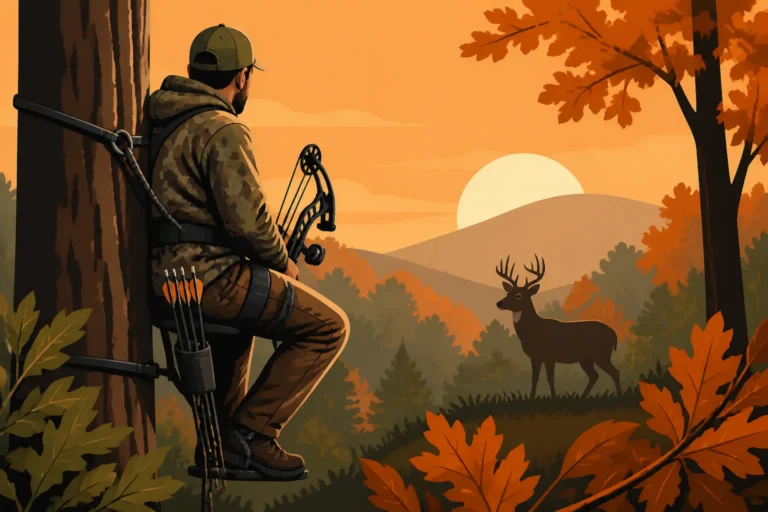
Crossbows offer remarkable versatility for hunters across Georgia's diverse landscapes, from the thick pine forests of the Coastal Plain to the rugged mountains of North Georgia. Their inherent accuracy and ease of use, compared to vertical bows, make them an excellent choice for a variety of game and hunting situations. Whether you're tucked into a ground blind on a field edge or perched high in a treestand, a crossbow can be an incredibly effective tool. This adaptability is one of the main reasons they've gained so much popularity in recent years, allowing hunters to adapt to different terrains and animal behaviors throughout the season.
The straightforward aiming process and ability to hold at full draw for an extended period can be a real advantage when dealing with wary game. This means less movement at the moment of truth, which can be critical for success, especially on animals like deer or turkey that are quick to notice changes in their environment. From early season deer in sweltering humidity to late-season hogs, crossbows provide a consistent and reliable option.
Whitetail Deer Hunting with a Crossbow
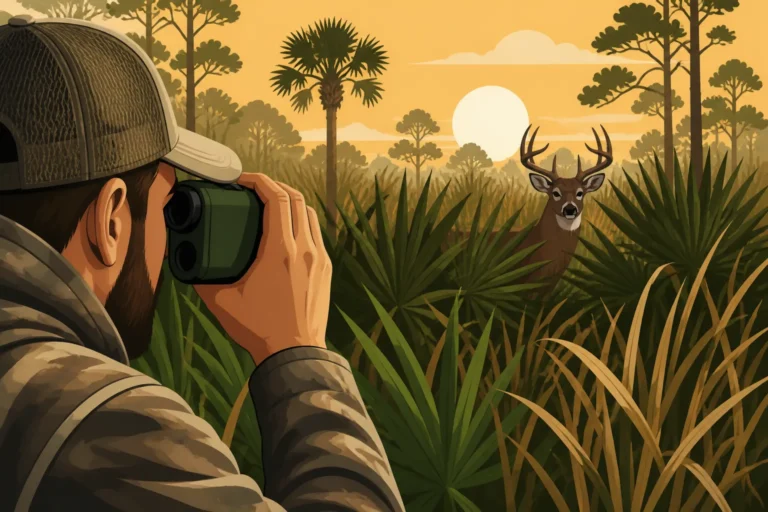
For whitetail deer hunting, crossbows truly shine. Georgia's terrain varies immensely, from dense bottomland hardwoods to expansive agricultural fields. In the thick cover of the Piedmont or the Coastal Plain, where shots are often close and quick, the crossbow's stability can be a huge asset. You can quickly bring it to bear on a buck slipping through the pines, or hold steady as a doe slowly works her way through brush. In more open areas, like along a powerline cut or a sprawling food plot, the longer effective range of a modern crossbow can be incredibly beneficial, extending your ethical shooting distance compared to a traditional or compound bow.
The ability to maintain a steady aim, even after a long sit, means you're more likely to make a precise shot when a deer finally presents itself. This consistency is particularly valuable when hunting pressured deer on public land or during the peak of the rut in mid-October when deer can be unpredictable. When combined with smart scouting, using tools like the GoHunt app to identify potential deer travel corridors or bedding areas, a crossbow can significantly increase your chances of filling your tag.
Expanding Your Opportunities: Hogs and Turkeys
Beyond deer, crossbows are an excellent choice for hunting other popular game species in Georgia, specifically feral hogs and wild turkeys. Hogs can be hunted year-round in Georgia, and their elusive nature often means shots are taken quickly and sometimes in less-than-ideal light conditions. A crossbow's steady aiming platform and the power to penetrate tough hog hide make it a formidable weapon for these destructive animals. Whether you're ambushing them near a feeder or still-hunting through a swamp, a crossbow provides the accuracy and knockdown power you need. Feral Hog Hunting Year-Round in Georgia is a popular pursuit, and a crossbow is a prime candidate for this type of hunting.
For Spring Turkey Hunting in Georgia, crossbows also offer distinct advantages. Turkeys have incredible eyesight and are notoriously wary. The ability to draw a crossbow silently and hold it ready for an extended period while a gobbler struts into range can be the difference between success and a bust. Setting up a ground blind over decoys and waiting for that perfect shot becomes much less physically demanding with a crossbow, allowing you to maintain focus and composure. Just remember to use appropriate broadheads or specialized turkey heads to ensure a clean harvest, as turkeys can be tough to bring down if not hit precisely.
Selecting the Right Crossbow and Accessories for Georgia
Choosing the right crossbow for Georgia hunting involves a balance of power, portability, and features that suit your personal hunting style and the specific environments you frequent. With so many options on the market, it can feel a bit overwhelming, but focusing on key aspects related to Georgia's conditions will help narrow down your choices. You want a crossbow that's reliable in humid conditions, quiet for close encounters, and powerful enough for ethical kills. Think about the types of stands you use, how much walking you do, and the typical shot distances you expect.
Just like with any hunting equipment, the best crossbow for you is one that you can handle safely, shoot accurately, and that fits comfortably within your budget. Don't get caught up in the "fastest" or "most expensive" mindset; instead, prioritize functionality and how well it integrates with your overall hunting strategy.
Key Features to Consider
When shopping for a crossbow, several features stand out as particularly important for Georgia hunting. Speed is often touted, and while faster bows translate to flatter trajectories and more kinetic energy, anything over 300-350 feet per second is generally more than sufficient for deer-sized game. Focus more on accuracy and consistency. Look for models known for tight groupings at typical hunting ranges. Weight and balance are also critical, especially if you plan on carrying your crossbow for long distances or holding it steady for extended periods in a treestand. Lighter, more compact models might be easier to maneuver in dense cover.
Noise is another factor. While modern crossbows are generally much quieter than older models, some are still louder than others. A quiet shot can prevent game from "jumping the string" and improve your chances of a clean kill. Finally, consider the cocking mechanism. Manual cocking is always an option, but integrated rope cockers or cranking devices can make drawing the bow much easier and quieter, which is a huge benefit, especially on cold mornings or for hunters with limited upper body strength.
Essential Accessories
No crossbow setup is complete without the right accessories. A high-quality scope is paramount, as it's your primary aiming tool. Look for one with good low-light performance and illuminated reticles, which can be invaluable during those crucial dawn and dusk hours in Georgia's shadowed woods. Your broadheads are another critical component; whether you prefer Fixed Versus Mechanical Broadheads, ensure they are sharp, legal, and match the weight recommended for your crossbow arrows. Carrying a mix of field points for practice and broadheads for hunting is standard practice.
A reliable cocking device, whether it's an integrated crank or a rope cocker, is essential for safe and consistent loading. A quiver that securely holds your bolts and attaches easily to your crossbow or pack is also a must-have. Don't forget wax and string lubricant to maintain your string and cables, especially in Georgia's humid climate. Finally, consider a sturdy case to protect your investment during transport. And when planning your hunts, don't forget digital tools like the GoHunt app which can help with scouting and identifying property lines, ensuring you're always hunting legally and ethically.
Ethical Hunting and Practical Considerations
Owning a crossbow is one thing; hunting ethically and responsibly with it is another. While crossbows can be incredibly accurate and efficient tools, they are still a form of archery, and as such, demand a high level of respect for the animal and dedication to practice. A crossbow doesn't eliminate the need for careful shot placement, understanding animal anatomy, or knowing your own limitations. Ethical hunting is about making a clean, humane kill, and that responsibility rests squarely on the hunter.
It's easy to get caught up in the excitement of a hunt, but pausing to consider the ethical implications of your actions and decisions is paramount. This includes everything from the moment you take aim to the crucial steps you take after the shot, ensuring the animal is recovered quickly and respectfully.
Shot Placement and Practice
The single most important aspect of ethical crossbow hunting is impeccable shot placement. Just like with a vertical bow, aiming for the vitals (heart and lungs) is crucial for a quick, humane harvest. This means understanding deer anatomy thoroughly and practicing relentlessly to ensure you can hit a vital zone consistently. Don't assume that because a crossbow is "easier" to shoot than a compound, you can skip practice. Quite the opposite! Regular practice sessions will build muscle memory, confirm your scope's zero, and help you understand your effective range.
Practice at various distances, from close-range shots in dense cover to longer shots across open fields, replicating real-world hunting scenarios. Use broadhead-tipped bolts during practice, or at least practice points that match the weight of your hunting broadheads, to ensure your point of impact doesn't shift. A good hunting plan includes knowing your crossbow's capabilities and your own, ensuring that when the moment comes, you're confident in making an ethical shot.
Understanding Limits and Recovery
Every hunter has an ethical range limit, and with a crossbow, it's vital to identify yours. While a crossbow might be capable of shooting accurately at 60 yards or more, consider the real-world variables: animal movement, wind, obstacles, and your own composure. Often, an ethical shot with a crossbow for deer is well within 40 yards, particularly in thick Georgia cover. Don't push your limits, especially on live animals. Prioritize a clean kill over a long shot.
Post-shot, effective game recovery is critical. A well-placed shot will often result in a quick recovery, but sometimes animals travel. Knowing how to Blood Trailing After Dark in Georgia or during daylight hours is an essential skill. Pay attention to the animal's reaction, the direction it runs, and any initial blood sign. In Georgia's often dense and humid environment, blood trails can be difficult to follow, making a methodical approach and patience invaluable. Using a tool like GoHunt to mark the last known position and track your recovery path can be incredibly helpful. Always assume a hit and give the animal time before beginning your retrieve, especially if the shot wasn't ideal.
Comparing Crossbows to Vertical Bows in Georgia
The debate between crossbows and vertical bows (compound, recurve, longbow) is an age-old one, often sparking passionate discussion among hunters. In Georgia, both are legal forms of archery equipment during the statewide archery season, but they offer distinctly different hunting experiences and have their own sets of advantages and disadvantages. Understanding these differences can help you decide which tool best suits your hunting goals, physical capabilities, and personal preferences.
It's not necessarily about one being "better" than the other, but rather which is better for you in a given situation. Many hunters in Georgia choose to use both, adapting their weapon choice to the season, game, or even specific hunting spots. For example, some might prefer a compound bow for its challenging skill curve, while others appreciate the ease of use offered by a crossbow for Crossbow Versus Vertical Bow in Georgia.
Advantages and Disadvantages of Crossbows
Crossbows offer several compelling advantages. Perhaps the most significant is their ease of use and accuracy. They are generally easier to learn and master than vertical bows, requiring less physical strength to operate and providing a stable aiming platform similar to a rifle. This can lead to greater confidence and accuracy, especially for new hunters, youth, or those with physical limitations. The ability to hold at full draw indefinitely without muscle fatigue is another major benefit, allowing for more patient shot selection on wary game. Their flat trajectory also means less guesswork at varying distances.
However, crossbows also come with disadvantages. They are typically heavier and bulkier than vertical bows, making them less maneuverable in tight spaces or when still-hunting. The reloading process is slower and often requires more movement, which can be problematic for follow-up shots or if multiple animals are present. While modern crossbows are quieter, they can still be louder than a well-tuned vertical bow, potentially causing game to react more. Some traditional bowhunters also perceive crossbows as requiring less skill, which can sometimes lead to an ethical debate within the hunting community.
Integrating Crossbows into Your Overall Hunting Strategy
Instead of viewing crossbows as a replacement for vertical bows or firearms, many Georgia hunters find success by integrating them into a broader hunting strategy. A crossbow can be an excellent primary weapon for the archery season, allowing you to take advantage of those crucial early-season opportunities. It's particularly well-suited for hunters who prefer to hunt from a fixed position, such as a treestand or ground blind, where their bulk is less of a factor.
For those who hunt throughout multiple seasons, a crossbow can serve as a versatile option when other weapons are restricted or less practical. For example, using it for year-round hog hunting where legal, or as a reliable choice during special youth or mobility-impaired hunts. While firearms are generally more powerful and offer longer ranges for Georgia's Long Firearms Deer Season, the crossbow provides a unique challenge and connection to the hunt that many archers appreciate. The key is to understand when and where a crossbow excels, and how it complements your other hunting methods, ensuring you're prepared for whatever Georgia's diverse hunting landscape throws your way.
| Feature | Crossbow | Vertical Bow (Compound/Recurve) |
|---|---|---|
| Ease of Learning | Generally easier, rifle-like aiming | Requires significant practice and strength |
| Physical Demand | Low; mechanical cocking devices available | Moderate to high; requires strength |
| Accuracy | High, easy to hold steady, scope aiming | High, but requires more skill to maintain |
| Speed/Trajectory | Fast, flatter trajectory | Good, but often more parabolic than crossbows |
| Weight/Bulk | Heavier and bulkier, less maneuverable | Lighter, more compact, easier to carry |
| Reloading | Slower, often noisy, more movement | Faster, quieter re-draw |
| Ethical Range | Can be longer, but ethical range still key | Typically shorter ethical range |
| Season Legality | Legal during all archery seasons | Legal during all archery seasons |
| Cost | Can be comparable to high-end vertical bows | Wide range, from budget to high-end |
| Target Game | Deer, Hogs, Turkey, Small Game | Deer, Hogs, Turkey, Small Game |
Disclaimer
This article is for general informational purposes only and does not constitute professional advice. Laws, prices and regulations vary by location and change over time. Consult a qualified professional for guidance on your specific situation.