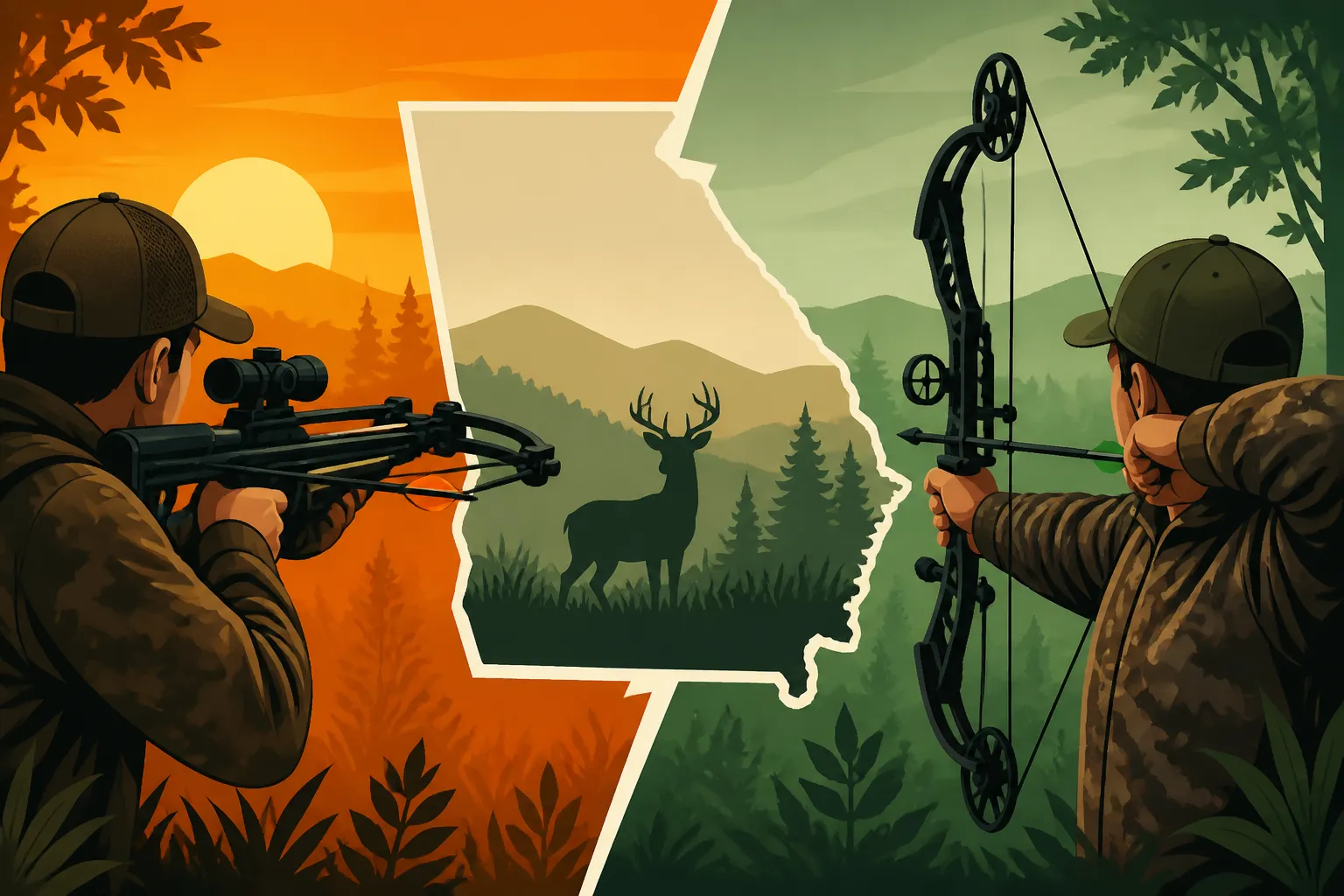
Crossbow Versus Vertical Bow in Georgia
Choosing between a vertical bow and a crossbow for hunting in Georgia can feel like navigating a dense thicket of regulations, personal preferences, and equipment considerations. Many hunters, whether seasoned veterans or newcomers eager to hit the woods, wrestle with this decision, wondering which option offers the best balance of challenge, effectiveness, and compliance with state laws. This guide aims to clear up that confusion, offering a detailed look at both types of archery equipment, their pros and cons, and how they fit into the Georgia hunting landscape.
Understanding Georgia's Archery Regulations for Bows and Crossbows
Before you even think about stepping into the woods, it's crucial to understand Georgia's specific rules regarding archery equipment. The Georgia Department of Natural Resources (DNR), through its Wildlife Resources Division, sets clear guidelines that dictate what's permissible during various hunting seasons. Disregarding these regulations, even accidentally, can lead to a world of trouble and hefty fines, so it’s always best to be well-informed.
Legal Definitions and Season Structure
In Georgia, both vertical bows (which include traditional longbows, recurves, and compound bows) and crossbows are legal hunting implements during the state's extensive archery season. The key distinction often lies in the mechanics: a vertical bow requires the hunter to hold the string back at full draw, while a crossbow allows the string to be cocked and held by a trigger mechanism. For a long time, there was a perceived difference in "difficulty" between the two, but Georgia's regulations generally treat them as equals during the established archery season.
When Georgia's Archery Season Opens, typically in early September, it kicks off a period where only archery equipment is allowed for deer hunting, offering hunters a quiet, focused opportunity before the firearms season begins. This period often extends for several weeks, providing ample opportunity. It's important to remember that while both are legal during archery season, certain managed hunts on Wildlife Management Areas (WMAs) might have specific restrictions or additional permits required, so always check the specific WMA regulations before heading out.
Hunter Education and Apprentice Licenses
Regardless of whether you choose a vertical bow or a crossbow, if you were born on or after January 1, 1961, you are required to complete a hunter education course to legally hunt in Georgia. This is a fundamental rule designed to promote safety and ethical hunting practices. The course covers everything from firearm safety to wildlife identification and hunting regulations.
However, Georgia does offer an "Apprentice Hunter License" for those who want to try hunting before completing the full hunter education course. This license allows an individual to hunt under the direct supervision of a licensed hunter aged 18 or older who has already completed hunter education or is exempt from it. This is a fantastic pathway for newcomers, especially younger hunters or adults looking to get into the sport, to experience hunting with either a vertical bow or a crossbow under the guidance of a mentor. It's an excellent way to determine if bowhunting resonates with you before making a full commitment to gear and training. To find out more about the requirements, check out the information on Who Needs Georgia Hunter Education.
Specific Zones and Restrictions
While Georgia's statewide regulations provide a broad framework, specific areas can have their own nuances. For instance, some suburban areas, particularly those with higher population densities, might be designated as "archery-only zones." These zones are typically established to manage deer populations safely in areas where firearm discharge might be deemed too risky. In such zones, both vertical bows and crossbows are generally permitted, offering vital tools for urban deer management. Always confirm local ordinances in these areas, as they can sometimes be more restrictive than statewide regulations.
Additionally, certain Wildlife Management Areas (WMAs) may have specific rules regarding equipment or hunting methods during their scheduled hunts. While these typically don't distinguish between vertical and crossbows in terms of legality, it's always a good habit to review the WMA's specific hunt dates and regulations pamphlet, which can be found on the Georgia DNR website or through resources like the GoHunt app. You might find additional requirements, such as the need for a Georgia WMA Access Stamp Requirement, or specific rules for tree stands or ground blinds that could impact your choice of equipment or setup. Being proactive in checking these details can save a lot of headaches later on.
The Traditional Vertical Bow Experience in Georgia
For many, the vertical bow—be it a compound, recurve, or longbow—represents the purest form of archery hunting. It's a method steeped in tradition, demanding a unique blend of physical prowess, mental discipline, and a deep connection to the hunt. When you successfully take an animal with a vertical bow, it’s an accomplishment that resonates deeply.
Advantages of Vertical Bowhunting
One of the most frequently cited advantages of vertical bowhunting is the inherent challenge and the profound sense of accomplishment it brings. Mastering a vertical bow requires significant dedication to practice, developing consistent form, and understanding your equipment intimately. This pursuit of proficiency itself becomes part of the outdoor experience. When you finally connect with an animal, knowing the hours of practice, the focus on form, and the precise execution required, the feeling is unparalleled. It truly is a testament to skill development.
Vertical bows are also generally lighter and often more maneuverable than crossbows, especially modern compound bows. This can be a huge benefit when navigating the thick, often dense undergrowth found in Georgia's diverse hunting landscapes, from the sprawling pine forests of the Coastal Plain to the rugged terrain of the North Georgia Mountains. A lighter setup is less fatiguing on long still-hunts or while carrying gear to a remote stand. Their sleeker profile can also make them easier to handle in tight treestand setups or when shooting from a ground blind, allowing for quicker adjustments in close quarters. Furthermore, the act of drawing a vertical bow is often quieter than cocking a crossbow, which can be a factor when trying to maintain stealth in a sensitive hunting situation. Be sure to understand appropriate Bow Draw Weight for Georgia Whitetails to ensure an ethical harvest.
Challenges and Skill Requirements
Despite the rewards, vertical bowhunting presents a steeper learning curve and demands a significant investment of time and effort. Achieving proficiency requires consistent practice, often year-round, to develop the muscle memory, strength, and consistent form necessary for accurate shooting. Unlike a rifle or a crossbow, a vertical bow requires you to hold the string at full draw under tension until you're ready to release the arrow. This can be physically demanding, especially after sitting still for hours in a treestand, and can lead to "buck fever" shakes if not properly managed.
Shooting effectively from a vertical bow often requires a more open shooting lane and can be challenging from awkward angles or in tight quarters. If you're hunting dense swamp bottoms or heavily wooded areas, finding a clear shot without obstructions can be a real struggle. Mastering the precise aiming required, especially when dealing with varying yardages and potential obstacles, takes considerable practice. For more on navigating these challenges in specific environments, check out tips on Bow Sights for Swamp Timber Shots. The learning curve is real, and it can be frustrating, but for many, that challenge is exactly what draws them to vertical bowhunting.
Gear Considerations for Vertical Bows
The world of vertical bows is rich with options, each offering a distinct experience. Traditional longbows and recurves offer a primal connection to the past, requiring pure instinct and form. Compound bows, on the other hand, are the workhorses of modern bowhunting, featuring cams and a system of cables and pulleys that significantly reduce the holding weight at full draw, making them easier to aim steadily.
When setting up a vertical bow for Georgia hunting, you'll want to consider several components. Sights, from simple fixed pins to advanced multi-pin models with rangefinding capabilities, are crucial for accuracy. A reliable arrow rest, whether a simple whisker biscuit or a drop-away model, ensures consistent arrow flight. Stabilizers can help balance the bow and reduce vibration. And, of course, broadheads are paramount. For deer and other medium-sized game in Georgia, both fixed-blade and mechanical broadheads are popular, each with its advocates. Fixed blades are known for their ruggedness and reliability, while mechanicals often fly more like field points and deploy on impact for a wider cutting diameter. Arrow selection, matched to your bow's draw weight and length, is also critical for optimal performance and penetration.
The Crossbow: Accessibility and Precision for Georgia Hunters
The crossbow has seen a significant surge in popularity over recent years, and for good reason. It offers a unique blend of rifle-like precision with the quiet, close-range challenge of archery, making it an attractive option for a wide array of hunters.
Advantages of Crossbow Hunting
One of the most compelling advantages of crossbow hunting is its accessibility. For many, the learning curve is significantly shorter compared to a vertical bow. Crossbows are aimed much like a rifle, often featuring scopes that allow for precise shot placement without the need to manage a held draw weight. This makes them an excellent choice for new hunters, youth, or anyone looking to get into archery hunting without the extensive physical conditioning and practice required for a vertical bow. The simplicity of aiming and shooting can allow hunters to get into the field and experience success much quicker.
The ability to hold a crossbow at full draw for an extended period is another major benefit. Unlike a vertical bow, where holding at full draw quickly leads to fatigue and potential "let-down" situations, a crossbow can remain cocked and ready, waiting for the perfect shot opportunity. This is particularly useful in treestand hunting scenarios where a deer might hesitate or offer only fleeting shot windows. For older hunters, those with physical limitations, or anyone struggling with the strength and endurance required for a vertical bow, a crossbow can extend their hunting careers and allow them to continue enjoying the archery season. The precision offered by a quality scope on a crossbow can be a game-changer, giving hunters confidence in their shot. In fact, many hunters leverage resources like GoHunt to research and compare various crossbow models and their sighting systems, ensuring they pick the best setup for their individual needs and preferred hunting style in Georgia's diverse terrain. For more on optimizing your sighting, consider looking at Crossbow Scopes for Georgia Swamp Ranges.
Potential Drawbacks and Perceptions
While crossbows offer many benefits, they do come with a few potential drawbacks. They can be bulkier and heavier than most vertical bows, which might make navigating dense Georgia woods or hauling them up into a treestand a bit more cumbersome. The wider limb configuration on some models can also present challenges in very tight ground blinds or thick brush. Additionally, the act of cocking a crossbow, while made easier with cocking aids, can sometimes be a louder process than silently drawing a vertical bow.
There's also a perception among some traditional archery enthusiasts that crossbows are "less traditional" or "too easy." While this is a matter of personal opinion, it's a sentiment you might encounter in the hunting community. From a practical standpoint, mechanical issues can sometimes arise, just like with any piece of complex equipment. String wear, limb issues, or trigger malfunctions are possibilities, though rare with well-maintained, quality crossbows.
Key Gear for Crossbow Hunters
Setting up a crossbow for hunting involves a few specialized pieces of gear. The most important is typically the scope. Unlike open sights common on many vertical bows, crossbows usually employ magnified optics, often with illuminated reticles and specific hold-over points for various distances. These scopes greatly enhance precision and confidence, especially in low-light conditions.
Bolts, rather than arrows, are the projectiles for crossbows. They are generally shorter and heavier than vertical bow arrows, designed for the higher speeds and energies generated by crossbows. Just like with vertical bows, selecting the right broadheads is crucial for ethical harvest. Mechanical and fixed-blade broadheads are both popular, and performance can vary based on crossbow speed and kinetic energy.
Cocking aids are almost essential. Whether it's a rope cocker, a crank cocker, or an integrated system, these devices significantly reduce the effort required to cock the crossbow, making it accessible to a wider range of hunters. Maintenance, including waxing the string and inspecting components, is vital for ensuring longevity and safety. Hunters can often find comprehensive reviews and comparisons of these accessories through platforms like GoHunt, which can help in making informed purchasing decisions for their Georgia hunting adventures.
Making Your Choice: Vertical Bow or Crossbow for Georgia Hunting
The decision between a vertical bow and a crossbow is ultimately a personal one, influenced by a variety of factors. There's no single "best" option; rather, it's about what best suits your hunting style, physical capabilities, and overall objectives.
Personal Factors and Hunting Style
Consider your physical condition and experience level. If you're an experienced archer with years of practice under your belt, a vertical bow might feel like a natural extension of your skills, offering the challenge you crave. If you're new to archery, or if physical limitations (such as shoulder injuries, age, or limited strength) make drawing and holding a vertical bow difficult, a crossbow provides an excellent pathway to participate in archery season.
Your preferred hunting style in Georgia also plays a big role. Are you primarily a treestand hunter, sitting patiently and waiting for deer to come into a specific kill zone? Both can work, but the crossbow's ability to hold at full draw might offer a slight edge in waiting for the perfect moment. Do you enjoy still-hunting or stalking through varied terrain? A lighter, more maneuverable vertical bow might be less cumbersome than a bulkier crossbow. Will you be hunting the rugged elevations of the North Georgia Mountain Country, or perhaps the dense, flat expanses of the Coastal Plain? Each environment presents its own challenges and advantages for different equipment types.
Ethical Considerations and Shot Placement
Regardless of whether you choose a vertical bow or a crossbow, ethical hunting practices remain paramount. The responsibility to make a clean, humane kill rests entirely on the hunter. This means understanding the vital anatomy of your target animal, practicing relentlessly at realistic hunting distances, and knowing your personal effective range. No piece of equipment, however advanced, can compensate for poor judgment or inadequate practice.
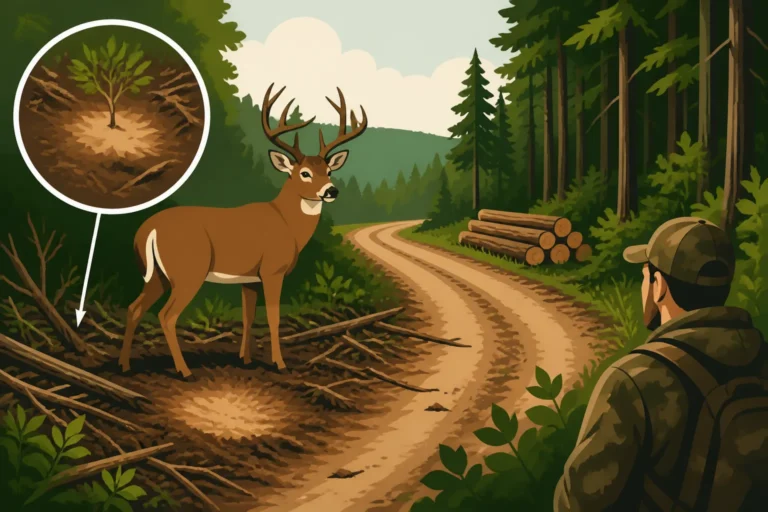
Both vertical bows and crossbows are highly effective when used within their capabilities and in the hands of a proficient hunter. The key is consistent practice, not just at a target range, but simulating real-world hunting scenarios. Practice shooting from your treestand, from your ground blind, and while wearing your hunting clothes. This preparation ensures that when the moment of truth arrives, you can execute a precise shot for a swift and humane harvest. Also, be prepared for post-shot scenarios, including knowing how to Tracking a Deer Through Georgia Pine Straw effectively.
Cost and Investment Comparison
The initial cost of entry for both vertical bows and crossbows can vary widely, from budget-friendly packages to high-end custom setups. Generally, a quality entry-level compound bow package (bow, sight, rest, quiver) can range from $400 to $800, with higher-end models often exceeding $1,000 without accessories. Arrows and broadheads are ongoing expenses.
Crossbows, particularly modern compound models, tend to have a slightly higher entry-level price point. A decent starter crossbow package (crossbow, scope, bolts, quiver, cocking aid) usually begins around $500 and can easily go up to $1,500 or more for premium models. Bolts and broadheads are also recurring costs.
It's wise to consider the long-term investment as well. Vertical bows often require periodic string and cable replacement, as well as tuning. Crossbows also need string and cable maintenance, and limbs can sometimes require replacement. When factoring in accessories like releases, cases, and rangefinders, the total investment can add up for either option. Resources like GoHunt are great for comparing the costs and features of various Bow and Crossbow Setups for Georgia, helping you make an informed decision that fits your budget.
Here’s a quick comparison to help visualize the choice:
| Feature | Vertical Bow (Compound) | Crossbow |
|---|---|---|
| Learning Curve | Moderate to Steep (requires more practice/strength) | Moderate to Easy (aims like a rifle) |
| Physical Demand | High (holding draw weight) | Low (can hold cocked indefinitely) |
| Maneuverability | High (lighter, more compact when uncocked/undrawn) | Moderate (bulkier, wider limbs) |
| Accuracy | Excellent with practice (hunter skill-dependent) | Excellent (optics assist, less hold-dependent) |
| Noise | Generally very quiet when drawn/shot | Can be louder when cocking, some shot noise |
| Typical Range | 20-50 yards (hunter skill dependent) | 30-70 yards (optics assist, flatter trajectory) |
| Entry Cost | $400 – $1000+ (plus accessories) | $500 – $1500+ (plus accessories) |
| Ethical Focus | Practice, form, knowing limits | Practice, scope calibration, shot placement |
Optimizing Your Hunt: Tips for Both Vertical Bow and Crossbow Hunters in Georgia
Once you’ve made your choice, the real work (and fun!) begins. Regardless of your weapon, successful bowhunting in Georgia relies on fundamental principles that hold true for both vertical bow and crossbow enthusiasts.
Practice, Practice, Practice
This cannot be stressed enough. The off-season is when you build confidence and proficiency. Don't just shoot a few arrows or bolts a week before season opener. Make practice a regular, year-round activity. For vertical bow hunters, this means consistently working on your form, strength, and aiming. For crossbow hunters, it's about confirming your scope's zero, practicing at various distances, and understanding how your bolts perform with different broadheads.
Crucially, practice in hunting conditions. Wear your hunting clothes, including your safety harness if you use one. Shoot from your treestand or ground blind. Practice shooting from various angles – sitting, kneeling, or even slightly off-balance, because deer rarely present a perfect, level shot. Shoot in different lighting conditions, mimicking dawn and dusk, when deer are most active. This kind of realistic practice will make you more confident and effective when a deer steps into your shooting lane.
Scouting and Stand Placement
Effective scouting is the bedrock of a successful bowhunt in Georgia. Deer sign doesn't lie. Look for fresh tracks, rub lines, scrape lines, and consistent travel corridors. Pay attention to food sources, especially during the early archery season when natural mast crops like acorns might not be prevalent. Identifying bedding areas and understanding how deer move between these areas and feeding zones is critical.
Once you've identified key areas, strategic stand placement is next. Consider wind direction, sun position, and your entry and exit routes to and from the stand. The goal is to maximize your shot opportunities while minimizing your detection. For general public land scouting tips, check out Scouting Georgia Public Land Before Season. For specific advice on setting up in the varied terrain, you might find valuable insights in articles like Treestand Setups in North Georgia Mountains. A great stand location with poor entry or exit can quickly blow a hunt, so always approach and depart stealthily.
Understanding Deer Behavior and Wind
Deer are masters of their environment, and understanding their behavior, especially in relation to wind and thermals, is paramount for both vertical bow and crossbow hunters. Georgia's diverse topography, from the mountains to the coastal plains, means thermals can play a huge role. In the mountains, air often rises in the morning and falls in the evening. In flat areas, wind direction is more consistent but can swirl unpredictably in dense cover. Always use a wind checker to confirm the wind direction before and during your hunt.
Scent control is not just a buzzword; it's a critical component of close-range hunting. While no product eliminates all human odor, minimizing it through scent-free washes, clothing, and storage can give you a crucial edge. Pay attention to how deer react to pressure and changes in the environment. The rut in Mid-October in Georgia, for example, often sees bucks behaving erratically, making them more susceptible to calls and less wary of human presence, but also requiring careful attention to wind direction as they cruise for does. Ultimately, the more you understand the natural world, the better your chances of filling your Georgia's Twelve-Deer Bag Limit. For more details on adapting to atmospheric conditions, read up on Wind and Thermals on a Mountain Ridge. Using tools and information, like that found on GoHunt, can help you track weather patterns and understand the nuances of local deer behavior, further enhancing your hunting strategy.
Disclaimer
Please remember that hunting regulations can change. Always consult the latest official Georgia Department of Natural Resources (DNR) Wildlife Resources Division regulations before heading afield. This guide is for informational purposes only and does not supersede state laws or official publications. It is your responsibility as a hunter to know and abide by all current hunting laws and regulations.