Broadheads for Swamp Timber Shots
Hunting the dense, often unforgiving swamp timber in Georgia presents a unique set of challenges for bowhunters. The sheer thickness of the vegetation, combined with the often-gnarly nature of our whitetails, means your broadhead isn't just a projectile; it's a critical tool that needs to perform flawlessly under pressure. This guide is all about helping you understand what makes a broadhead excel in these demanding conditions, ensuring you get the penetration and ethical harvest you're aiming for.
The Unique Challenges of Hunting Swamp Timber in Georgia
Georgia's swamps and river bottoms are incredibly rich ecosystems, but they're also notorious for being some of the toughest places to bowhunt. The environment itself throws up obstacles that demand specific gear choices, especially when it comes to the business end of your arrow. It's not just about hitting the deer; it's about hitting it right and getting a clean pass-through in conditions that seem designed to prevent it.
Thick Cover and Limited Shot Windows
Picture this: you've finally slipped into a honey hole deep in a cypress slough, and a heavy-racked buck steps out. The problem? He's often partially obscured by vines, palmetto fronds, or thick privet. You might only have a narrow lane, a small window of opportunity between branches, and that means your shot angle isn't always ideal. A broadhead needs to fly true through any potential glancing contact with small twigs or leaves, something that can absolutely derail less forgiving designs. The last thing you want is a broadhead that veers off course or has its blades deploy prematurely because it clipped a leaf. The dense canopy also limits light, making precise aiming harder, and if you do get a shot, you want confidence that your arrow will punch through anything it encounters before the vitals. For more insights on navigating these environments, check out Hunting Georgia Swamp and River Bottom Deer.
High Humidity, Tough Hides, and Bone Density
Georgia's climate is notoriously humid, especially during the early archery season. This humidity can sometimes affect broadhead components, causing corrosion or dulling if not properly maintained. Beyond the weather, the deer themselves in these areas can be pretty robust. Bucks that have grown up navigating swamps and river bottoms often have incredibly tough hides, thick muscle, and substantial bone structure, especially around the shoulder and scapula. Your broadhead needs to be designed to cut through this resistance efficiently. A broadhead that struggles to penetrate these initial layers risks losing kinetic energy, preventing a pass-through, and potentially leading to a long, arduous tracking job in unforgiving terrain.
Retrieving Game in Difficult Terrain
Let's be honest, nobody enjoys a difficult blood trail, but in Georgia's swamps, it can quickly turn into a nightmare. Water-logged ground, thick vegetation, briars, and cypress knees make tracking incredibly challenging. A broadhead that provides maximum penetration and a good blood trail is absolutely paramount. If you don't get a pass-through, or if the wound channel isn't sufficient, the chances of recovering your animal plummet significantly. Having confidence that your broadhead will do its job, creating a wound that ensures a quick, ethical harvest and a detectable blood trail, minimizes stress and increases your success rate when you're already facing the obstacles of a swamp hunt. This is where companies like GoHunt, with their detailed mapping tools, can help hunters identify areas where game might concentrate, but the broadhead's performance is still key for recovery.
Understanding Broadhead Types for Swamp Conditions
Choosing the right broadhead for swamp timber hunting isn't a one-size-fits-all decision. Each type of broadhead has its own strengths and weaknesses, and understanding these can help you match the best tool to your specific hunting style and the challenges of the environment. It often comes down to a trade-off between cutting diameter, penetration, and durability.
Fixed Blade Broadheads
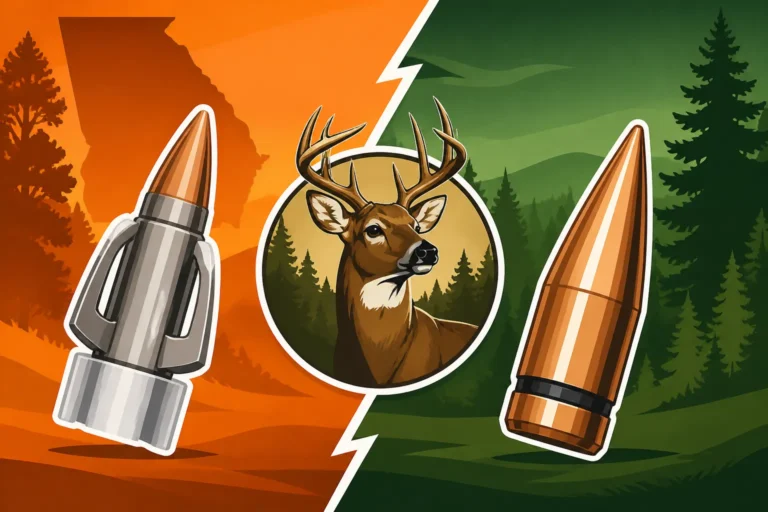
Fixed blade broadheads are the traditional workhorses of bowhunting, and for good reason. They consist of a solid ferrule with blades that are permanently attached and don't move or deploy upon impact. This design typically results in superior structural integrity and reliability, especially when encountering bone. In the thick timber and unpredictable conditions of a Georgia swamp, fixed blades are often favored for their consistent flight and robust construction. They are less prone to mechanical failure or premature deployment if they clip a branch. However, their cutting diameter is generally smaller than most mechanical broadheads, which some hunters feel can lead to less effective blood trails if penetration isn't perfect. Still, for sheer reliability and bone-crushing performance, many seasoned swamp hunters swear by a good fixed blade.
Mechanical Broadheads and Their Considerations
Mechanical broadheads, sometimes called expandable broadheads, feature blades that are tucked back or folded against the ferrule during flight and deploy outward upon impact with the animal. The main advantage here is usually a larger cutting diameter once deployed, which can create a wider wound channel and potentially a better blood trail. They also tend to fly more like field points, making tuning sometimes easier for some archers.
However, mechanical broadheads come with specific considerations for swamp hunting. The mechanism for deployment adds a potential point of failure; if the blades don't deploy properly on impact (perhaps due to hitting a tough hide at an awkward angle or a minor obstruction), penetration can be severely compromised. Some mechanicals are designed for maximum expansion and may sacrifice a bit of penetration in tougher hide and bone, which is a big concern in Georgia's robust deer population. If you choose a mechanical for the swamp, you'll want one specifically designed for deep penetration and reliable deployment in challenging conditions, perhaps those with a more robust ferrule and a wider cut-on-contact tip.
Hybrid Broadheads: A Blend of Both Worlds
Hybrid broadheads aim to offer the best of both fixed and mechanical designs. They typically feature a set of small, fixed blades that provide some initial cutting and structural integrity, combined with a set of larger, expandable blades that deploy upon impact. The idea is to get the reliable penetration of a fixed blade with the wider wound channel of a mechanical.
For swamp timber, a good hybrid can be an excellent compromise. The fixed blades help ensure initial penetration and flight stability, especially if you happen to nick a small branch. The expandable blades then offer that wider cut for better blood trails. The key is to select a hybrid that has a strong fixed component and a robust mechanical section that deploys reliably. They offer a bit more versatility than a pure fixed or mechanical, which can be beneficial when you're hunting in varied swamp terrain and shot opportunities might be unpredictable.
Key Broadhead Features for Optimal Swamp Performance
When you're threading an arrow through dense cypress knees and thick undergrowth, your broadhead needs to be a mini-tank. Certain features become absolutely paramount to ensure success in the challenging environment of Georgia's swamps. It's not just about sharp blades; it's about the entire package working together under pressure.
Blade Design and Cutting Diameter
The design of the broadhead's blades is critical for efficient cutting. For swamp hunting, "cut-on-contact" tips are often preferred for fixed blades, as they begin cutting immediately, aiding penetration through tough hides and potentially small bone. For mechanicals, a robust tip is equally important to initiate the cut and ensure the blades deploy correctly.
Cutting diameter is a balance. While a larger cutting diameter generally means a wider wound channel and better blood trail, it can sometimes come at the expense of penetration, especially if the broadhead isn't designed efficiently. In the swamps, where deer can be stout and shot angles aren't always perfect, consistent, deep penetration is king. A moderate cutting diameter (around 1.25 to 1.5 inches for mechanicals, or a multi-blade fixed head) that ensures pass-throughs is often more effective than an ultra-wide cutter that might stop short. You want a broadhead that creates an exit wound, allowing for two holes to bleed from, which is crucial for tracking in water-logged areas. This becomes especially important when you're trying to Recovering a Deer From a Cypress Swamp.
Durability and Construction Materials
The sheer abuse a broadhead can take in the swamp—hitting bone, possibly deflecting off a stubborn cypress knee or glancing off a limb—means durability is non-negotiable. Broadheads constructed from high-quality, hardened steel or aircraft-grade aluminum are going to hold up much better than cheaper alternatives. Look for thick, sturdy blades that resist bending or breaking on impact. The ferrule, which is the main body of the broadhead, should be robust and well-machined.
Any moving parts on mechanical broadheads need to be precision-engineered and strong enough to withstand impact without failing. Corrosion resistance is also a factor, given Georgia's humidity. While it might seem minor, a broadhead that dulls or rusts easily can compromise its performance when you need it most. Investing in durable broadheads means they'll hold their edge and integrity even after repeated practice shots (on appropriate targets) and, more importantly, when it counts in the field. GoHunt's gear reviews often highlight the durability of various broadheads, which can be a great resource.
Penetration Power for Deep Shots
Penetration is arguably the most critical factor for swamp hunting. Getting a pass-through means a better blood trail and a more ethical, quicker kill. Several factors contribute to a broadhead's penetration power: its design, sharpness, and the kinetic energy of your arrow. Broadheads with a minimal profile and steep blade angles tend to penetrate better than those with a wider, flatter profile.
Heavy, high-FOC (Front of Center) arrows, combined with a well-designed broadhead, will deliver maximum penetration. In dense cover, where you might only get a quartering-away shot through thick muscle, a broadhead that drives deep is essential. You want your broadhead to slice through hide, muscle, and bone efficiently, retaining as much energy as possible to exit the other side. Consider broadheads that are engineered to minimize drag and maximize their cutting efficiency throughout the entire wound channel. This deep penetration can make all the difference when Tracking a Deer Through Georgia Pine Straw or tangled vines.
Tuning Your Bow and Broadheads for Swamp Success
Having the best broadhead means nothing if your bow isn't tuned to shoot it accurately. In the close quarters and often fleeting shot opportunities of swamp timber, precision is paramount. A well-tuned setup not only improves your accuracy but also enhances the broadhead's performance, ensuring it flies true and penetrates as designed.
Ensuring Perfect Arrow Flight
The foundation of broadhead accuracy is perfect arrow flight. This means your bow needs to be properly tuned, and your arrows need to be matched to your bow and broadheads. For fixed blade broadheads, "broadhead tuning" is essential. This process involves making small adjustments to your rest or nocking point until your broadheads group with your field points at various distances. If your broadheads are consistently hitting left, right, high, or low compared to your field points, your arrow is not flying true, and you'll experience inconsistencies in the field.
Mechanical broadheads are often touted for flying like field points, but even they can benefit from proper tuning. Issues like nock pinch, stiff or weak arrow spine, or cam timing can all affect arrow flight and broadhead performance. A paper tune or bare shaft tune can help diagnose these issues. A perfectly tuned bow ensures that your arrow exits the bow cleanly, flying straight and true, which is absolutely critical for accuracy when you only have a small window to shoot through. For more on optimizing your setup, check out Bow and Crossbow Setups for Georgia.
Practice Makes Perfect: Realistic Scenarios
It's one thing to shoot broadheads at a target in your backyard, it's another to do it in conditions that mimic a Georgia swamp. Your practice routine should incorporate elements of realistic hunting scenarios. Practice shooting from elevated positions (if you use a treestand) or from a kneeling or seated position (if you use a ground blind). Practice at varied, often shorter distances, as swamp shots are rarely long bombs.
Simulate shooting through narrow lanes by placing obstacles like small PVC pipes or hanging ropes to represent branches. This helps you understand how your broadhead flies and what might cause a deflection. Pay attention to your form, especially when shooting at awkward angles or with limited mobility. The more you can replicate the challenges of the swamp in your practice, the more confident you'll be when that big buck steps out. Even consider practicing with your Warm-Weather Clothing for Georgia Hunters on, as bulky layers can sometimes interfere with your draw cycle.
Broadhead Maintenance in Humid Environments
Georgia's humidity is a constant battle for gear, and broadheads are no exception. Proper maintenance ensures your broadheads remain sharp and corrosion-free, ready for action. After each practice session or hunt, inspect your broadheads for any damage, dullness, or rust. Many fixed blade broadheads can be resharpened with a good sharpening stone or a specialized broadhead sharpener. Replace any blades that are bent or nicked.
For mechanical broadheads, check the deployment mechanism, O-rings, and any set screws. Ensure the blades are free of debris and move smoothly. A light coat of a rust-preventative oil can protect the metal parts, especially if you're storing them for extended periods in humid conditions. Always store your broadheads in a protective case to prevent accidental damage to the blades or yourself. A well-maintained broadhead is a sharp broadhead, and a sharp broadhead is an ethical broadhead.
Top Broadhead Recommendations for Georgia Swamp Hunters
Choosing from the multitude of broadheads on the market can be overwhelming. However, focusing on designs that prioritize durability, penetration, and reliable performance in tough conditions will narrow your options significantly for Georgia's swamp timber. Here are some categories and examples of broadheads that often shine in these challenging environments.
Reliable Fixed Blade Options
When it comes to fixed blades for the swamp, you want designs known for their bone-shattering strength and consistent flight. Look for broadheads with sturdy ferrules and thick, robust blades. Cut-on-contact tips are a significant advantage for breaking through tough hide and bone.
- GrizzlyStik: Known for their heavy, single-bevel design, these broadheads are engineered for deep penetration, especially when paired with a heavy arrow system. Their two-blade design offers incredible strength and a spiraling wound channel. While on the higher end, their performance in deep tissue and bone is legendary.
- Wasp Archery Sharpshooter/Boss: These are multi-blade fixed heads that are built like tanks. Their solid steel ferrule and thick blades ensure excellent durability. They offer a good balance of cutting diameter and superior penetration, making them a consistent choice for many Georgia hunters.
- Iron Will Outfitters: While a premium option, Iron Will broadheads are renowned for their exceptional sharpness, strength, and precision engineering. Made from hardened tool steel, they maintain their edge and integrity even after tough impacts, ensuring superior penetration.
- VPA Terminators: These are machined from a single piece of tool steel, resulting in incredible durability and concentricity. Available in different weights and blade configurations, they offer excellent penetration and are easy to sharpen.
The key with these options is their unwavering reliability. When you get a shot through a tight window, you trust that these broadheads will fly true and punch deep, every time. Many hunters also consider Arrow Weight for Short Shots in combination with these broadheads to maximize kinetic energy and penetration.
Mechanicals Built for Tough Conditions
While fixed blades are often king in heavy cover, there are mechanical broadheads specifically designed to handle tougher conditions, offering a wider cutting diameter without sacrificing too much penetration. Look for those with robust tips, strong blades, and a reliable deployment mechanism.
- Grim Reaper Hades Pro: This broadhead is a hybrid of sorts, with a cut-on-contact tip and a more compact design that still provides a good cutting diameter. Its robust construction and forward-deploying blades help ensure penetration even on tough animals.
- Rage Hypodermic NC: Rage is a well-known name in mechanicals, and the Hypodermic NC (No Collar) is designed to eliminate blade retention issues while still providing a devastating cut. The streamlined ferrule and solid construction help improve penetration, making it a more suitable option for thicker-skinned game.
- Slick Trick RaptorTrick: Combining the best aspects of fixed and mechanicals, the RaptorTrick has four fixed blades and two expandable blades that deploy rearward. This gives you a cut-on-contact fixed blade for initial penetration with the added wound channel of a mechanical, offering great versatility for swamp conditions.
When considering mechanicals, pay close attention to reviews and ensure the specific model you choose has a reputation for reliable deployment and structural integrity when impacting dense materials or bone.
Hybrids Offering Versatility
Hybrid broadheads are an excellent choice for hunters who want a blend of advantages, particularly for the variable conditions you might find in a Georgia swamp.
- NAP Killzone Max: The Killzone Max features a cut-on-contact tip and a spring-clip blade retention system, which helps prevent premature deployment. Its large cutting diameter on deployment is impressive, and the robust design means it can handle solid impacts.
- Muzzy Trocar HB Hybrid: This broadhead combines three fixed blades with two expandable blades, giving you a 1-inch fixed cutting diameter and a 1.625-inch mechanical cutting diameter. The fixed blades ensure solid flight and initial penetration, while the mechanical blades create a large wound. This blend offers excellent versatility and confidence in various swamp scenarios.
- Swhacker Broadheads: Known for their unique blade deployment system where the blades only open after penetrating the hide, Swhacker broadheads aim to preserve kinetic energy for deeper penetration into the vitals. While requiring careful shot placement, their design can be effective in ensuring a pass-through in tough hide.
A hybrid choice gives you the confidence of a fixed blade with the expanded wound channel of a mechanical. The key is to select one where both components are built to last and perform consistently in the humid, dense environment of a Georgia swamp. Use resources like GoHunt to cross-reference broadhead performance data with real-world hunter experiences to make the best choice.
Ethical Considerations and Shot Placement in the Swamps
Beyond the gear, the hunter's skill and ethical approach are paramount, especially when hunting in challenging environments like Georgia's swamps. A broadhead is only as effective as the shot placement it receives. Understanding your broadhead's capabilities and knowing when to take a shot, and crucially, when not to, is a mark of a responsible hunter.
Understanding Your Broadhead's Limitations
Every broadhead, no matter how well-designed or expensive, has its limitations. Fixed blades might not offer the widest wound channel, while some mechanicals might struggle with bone on severely angled shots. Before heading into the field, spend time not just shooting your broadheads but also understanding their design principles. What kind of penetration can you realistically expect from your setup? How does your specific broadhead perform on quartering-away shots compared to a perfect broadside?
Knowing these limits helps you make real-time decisions in the woods. If you're shooting a broadhead known for extreme penetration but smaller cutting diameter, you might prioritize a slightly more forward shot to ensure vitals are hit. If you're using a mechanical with a larger cutting diameter but less bone-splitting power, you'll want to absolutely avoid the shoulder blade. Resources like GoHunt can sometimes offer diagrams or articles illustrating broadhead performance on different game, which can be invaluable for visualizing these limitations.
Prioritizing Clean Kills
The goal of every bowhunter is a swift, ethical, and clean kill. In the dense swamp timber, where tracking can be a nightmare, this priority is amplified tenfold. A clean kill means making sure your broadhead passes through the vital organs, leading to rapid blood loss and incapacitation. This directly relates to broadhead choice: selecting one that reliably delivers deep penetration and a sufficient wound channel is a moral imperative.
Resist the urge to take questionable shots, especially if an animal is partially obscured or at an extreme angle. If you have any doubt about achieving a clean pass-through into the vitals, err on the side of caution and wait for a better shot opportunity. No deer is worth a potentially wounded, unrecovered animal, especially in habitat as difficult as a Georgia swamp. The commitment to a clean kill should guide every decision, from your gear selection to your trigger discipline.
Dealing with Unfavorable Angles
Hunting in thick cover often means dealing with less-than-ideal shot angles. Deer might present themselves quartering-to, quartering-away, or even with a slight incline or decline. A well-placed shot on a quartering-away deer can be highly effective, allowing your broadhead to enter behind the shoulder and angle forward into the vitals, ensuring a double-lung or heart shot. However, a quartering-to shot significantly increases the risk of hitting dense bone in the shoulder or sternum, potentially preventing broadhead penetration to the vitals.
For these trickier angles, broadheads designed for maximum penetration, like robust fixed blades or heavy-duty mechanicals with cut-on-contact tips, become even more critical. Understanding deer anatomy and where your arrow needs to enter and exit for vital organ damage is paramount. Always aim to hit the vitals and allow your broadhead to do its job. If the angle looks too steep or offers too little margin for error, it's always best to let the deer walk and hope for another opportunity. In scenarios where deer are moving in Hunting a Funnel Between Two Swamps, you might have very limited time to assess the best shot, so preparation and quick judgment are essential.
Below is a table summarizing key broadhead characteristics important for swamp timber hunting in Georgia:
| Broadhead Type | Pros for Swamp Hunting | Cons for Swamp Hunting | Ideal Usage | Key Features to Look For |
|---|---|---|---|---|
| Fixed Blade | – Maximum reliability and durability – Superior bone penetration – Consistent flight through light obstacles – Excellent for pass-throughs |
– Smaller cutting diameter – Can be harder to tune than mechanicals – May result in less blood if no pass-through |
Dense timber, tough hides, close-range shots, heavy bone | Cut-on-contact tip, sturdy ferrule, thick blades, minimal deflection |
| Mechanical | – Larger wound channels – Often flies like a field point (easier tuning) – Potentially better blood trails (if full deployment) |
– Risk of non-deployment or partial deployment – Can sacrifice penetration for cutting diameter – More mechanical parts to fail – Can be affected by light brush contact |
More open areas within swamps, perfect broadside shots, lighter bone structures | Robust tip, strong blade retention, durable blades, reliable deployment mechanism |
| Hybrid | – Combines fixed blade penetration with mechanical cutting diameter – Good all-around versatility – Often cut-on-contact for initial penetration |
– Can be more complex than pure fixed blades – Balance between fixed and mechanical components varies by brand |
Mixed swamp terrain, variable shot distances/angles, where maximum versatility is desired | Strong fixed blades, reliable mechanical deployment, cut-on-contact tip |
Disclaimer
This article is for general informational purposes only and does not constitute professional advice. Laws, prices and regulations vary by location and change over time. Consult a qualified professional for guidance on your specific situation.