Saddle Hunting in Georgia Hardwoods
If you've spent any time trying to find that perfect treestand spot in Georgia's sprawling hardwood forests, you know the frustration: leaning trees, dense undergrowth, and weary game that seems to spot you no matter how high you climb. Traditional stands often feel rigid, limiting your options and sometimes your success. This guide explores saddle hunting, a dynamic, minimalist approach that offers unparalleled mobility and concealment, helping you navigate Georgia's challenging terrain and get closer to your quarry.
Why Saddle Hunting Shines in Georgia's Hardwoods
Georgia's hardwoods, from the rolling Piedmont to the foothills of the Appalachian Mountains, present unique challenges. The timber can be incredibly dense, with a mix of towering oaks, poplars, and maples, often intertwined with thick vines and underbrush. Finding a perfectly straight, limbless tree suitable for a traditional hang-on or climber stand can feel like searching for a needle in a haystack. This is precisely where saddle hunting truly excels, offering a versatility that conventional methods simply can't match.
Navigating Dense Cover and Irregular Trees
Imagine a prime hunting spot you've scouted – a saddle between two ridges, or a creek bottom funnel. You get there on opening morning, only to find the "perfect" tree you envisioned for your hang-on stand is either too gnarly, has too many low limbs, or isn't quite in the right spot for the wind. With a saddle, many of those "unsuitable" trees suddenly become viable. You don't need a perfectly straight trunk; in fact, a leaning tree can sometimes offer even better concealment and shooting lanes. This adaptability means you're no longer restricted to a handful of "stand-ready" trees, opening up far more potential ambush points in the deep woods. It allows you to utilize trees that might be too small or too crooked for a fixed platform, letting you tuck into tighter cover where those big Georgia bucks often feel safe. When you're trying to Hunting Chattahoochee Mountain Ridgelines or set up in a thick bottomland, the ability to use almost any sturdy tree is a game-changer.
Minimizing Your Profile and Maximizing Concealment
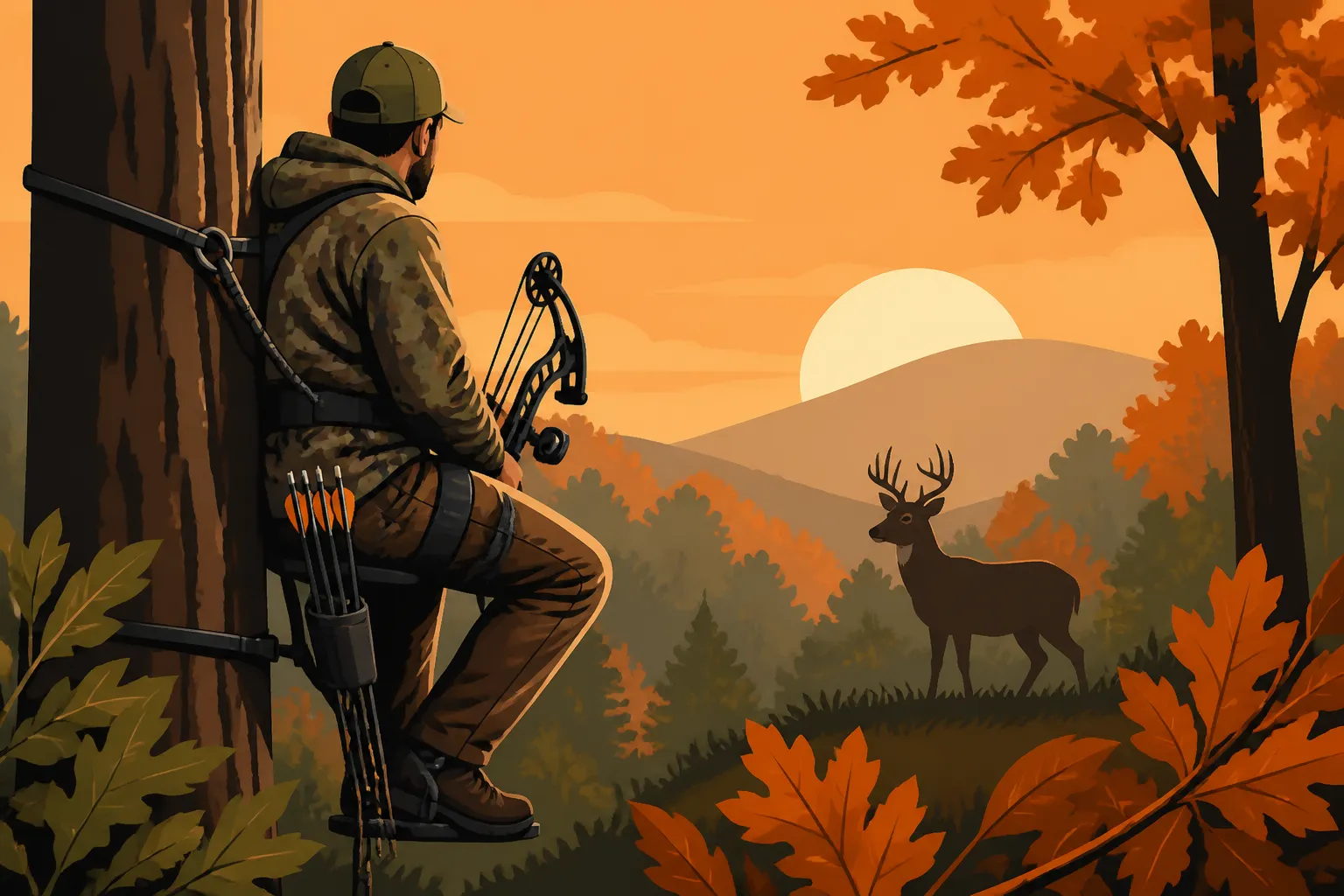
One of the most immediate benefits of saddle hunting is the dramatically reduced profile you present. Instead of sitting upright on a platform, you're essentially tethered to the tree, leaning back into the saddle, with your body pressed tight against the trunk. This not only breaks up your silhouette but also makes you incredibly difficult for deer, and especially turkeys, to spot. In the open canopy of hardwoods once the leaves have fallen, minimizing your profile is paramount. Georgia's whitetails are incredibly wary, especially in areas with high hunting pressure. Being able to melt into the tree, with a much smaller footprint, gives you a significant edge. You're less likely to be skylined against the open fall and winter skies, and your movements are naturally more restricted, forcing you to be slower and more deliberate, which further aids in concealment.
Adapting to Changing Conditions
Georgia weather and game patterns can be notoriously fickle. A morning sit might start with a perfect north wind, only for it to shift unexpectedly by midday. Or perhaps the deer movement you anticipated along a particular trail isn't materializing, but you see fresh sign just 50 yards away. With a traditional stand, moving means a full tear-down, relocation, and noisy re-setup. With a saddle system, however, your mobility is greatly enhanced. If the wind shifts, you can often quickly climb down, move to another nearby tree that offers a better wind advantage, and be re-established with minimal fuss and noise. This agility is invaluable, especially during the rut when bucks might pop up anywhere, or if you're trying to Hunting a Ridge-Top Saddle for Rutting Bucks and need to adjust based on real-time activity. The modular nature of a saddle system, where your platform and climbing sticks are separate, allows for quick adjustments to your setup, ensuring you're always in the best possible position.
Essential Gear for Your Georgia Saddle Hunt
Saddle hunting, while minimalist in concept, still requires a thoughtful selection of specialized gear. Unlike a traditional stand that comes as a single unit, a saddle setup is a system of components designed for mobility, comfort, and safety. Each piece plays a critical role in your ability to get into position, stay comfortable, and make ethical shots in the Georgia woods.
The Saddle System Itself
At the core of saddle hunting is, naturally, the saddle. This isn't just a climbing harness; it's a carefully designed piece of equipment that distributes your weight, allows you to lean back into the tree, and provides attachment points for your tether and linemans belt. When choosing a saddle, comfort is king, especially for longer sits. Look for models with good padding, especially in the leg straps and around the waist. Materials should be durable and quiet, able to withstand the abrasions of tree bark and quiet enough not to make noise as you adjust. Safety ratings are paramount, ensuring it meets industry standards.
Most saddles come with a tether and a linemans belt. The tether connects you to the tree once you're at hunting height, allowing you to lean back. The linemans belt, on the other hand, is crucial for climbing. It wraps around the tree, allowing you to secure yourself as you ascend or descend, keeping both hands free to manage your climbing sticks or screw-in steps. Think about Georgia's warm weather; many saddles now incorporate breathable mesh to help manage sweat and stay comfortable during those humid early season hunts.
Sticks, Ropes, and Platforms
To get up the tree, you'll need climbing aids. Climbing sticks are the most popular choice for saddle hunters. They are lightweight, modular sections that attach to the tree and stack together for compact transport. Look for sticks that are easy to deploy silently and offer good grip in wet conditions. Some hunters prefer screw-in steps for a more minimalist approach, though these require more effort to install and can be slower. Your choice often depends on how often you plan to move and the type of trees you'll be climbing. Many Georgia trees have tough, thick bark, so strong, reliable stick attachments are essential. For a deep dive, check out Climbing Sticks for Mountain Hardwoods.
Once you're at hunting height, a platform gives you a stable surface to stand on, crucial for maneuvering for shots. Platforms come in various designs, from small, foldable steps to larger, more robust casting platforms. Some hunters opt for a simple ring of rope, while others prefer a more solid, manufactured platform. The key is stability, silence, and ease of attachment. A good platform allows you to rotate 360 degrees around the tree with minimal effort, providing wide shooting lanes.
| Climbing Aid Type | Pros | Cons | Best for |
|---|---|---|---|
| Climbing Sticks | Fast, quiet, reusable, adjustable | Bulkier than steps, can be heavier | Mobile hunters, frequent setups, public land |
| Screw-in Steps | Ultra-light, pack small | Slower to install, potentially noisy | Ultra-minimalist hunters, pre-set locations, private land (with permission) |
| Rope / Aider | Extremely light, adaptable to any tree | Requires practice, less stable | Advanced minimalist hunters, very quick setups |
Packing for a Mobile Hardwood Hunt
A key advantage of saddle hunting is its mobile nature, but that means you need to be smart about what you carry. Your pack should be lightweight, quiet, and streamlined, allowing you to move through dense Georgia woods without snagging or making noise. Beyond your saddle, tether, linemans belt, and climbing sticks/platform, consider these essentials:
- Optics: A good pair of binoculars is crucial for identifying game and scanning shooting lanes, especially in low light. Consider Binocular Power for Swamp Edge Hunting or similar models that perform well in diverse Georgia conditions.
- Weapon: Whether you're bowhunting or using a rifle, ensure it's easily accessible and can be secured while climbing. Bowhunters might consider Bow Sights for Swamp Timber Shots that are quick to acquire.
- Hydration: Georgia can get hot, even in the fall. A hydration bladder or water bottles are non-negotiable.
- Layers: Even if it starts warm, mornings can be chilly. Warm-Weather Clothing for Georgia Hunters is designed for adaptability, letting you shed or add layers as the day progresses.
- Safety items: A small first-aid kit, a headlamp for walking out in the dark, and a signaling device are always good to have.
- Navigation: While phone apps are popular, a backup GPS unit or compass is wise, especially in remote areas. Tools like GoHunt can be invaluable for marking trees, trails, and property lines digitally, helping you stay oriented and efficient. A good hunting app can streamline your scouting and help you pack only what's necessary.
- Game Processing: Field dressing knife, game bags, and gloves. Remember Georgia's warm weather can make quick processing critical. Packs Built for a Chattahoochee Day Hunt often have external straps or compartments suitable for carrying additional gear or bringing out meat.
Master the Techniques for Hardwood Success
Saddle hunting isn't just about the gear; it's about developing a set of skills and strategies that maximize its advantages. In Georgia's diverse hardwood environments, from the rolling hills to the river bottoms, understanding these techniques can mean the difference between seeing deer and connecting with one.
Scouting for Ideal Saddle Trees
Effective scouting is the foundation of successful saddle hunting. You're not looking for a "perfect" tree in the traditional sense, but rather a tree that offers safety, concealment, and good shooting lanes in your target area. When you're Scouting Georgia Public Land Before Season, look for trees with robust bark that will securely hold your climbing sticks and platform. Healthy, living trees are a must. Pay attention to natural features that offer cover, like dense foliage from a pine nearby, or a cluster of hardwoods that can break up your outline.
Beyond safety, consider the tree's strategic value. Is it overlooking a pinch point, a scrape line, or a well-used trail? Is it positioned for the prevailing wind, keeping you downwind of your target? Often, a slightly larger diameter tree can offer more concealment, allowing you to hug the trunk more effectively. Look for trees that are free of large, dead limbs that could fall, and ensure the surrounding area isn't too cluttered to allow for clear shots. Using aerial maps, especially with features found on apps like GoHunt, can help you identify potential travel corridors and then zoom in to find suitable tree clusters before you even step foot in the woods.
Silent and Efficient Ascent and Descent
The quiet nature of saddle hunting is a huge advantage, but only if your entry and exit are equally stealthy. Practice, practice, practice at home before you ever hit the woods.
- Minimize Gear Clatter: Ensure all your gear is securely fastened and won't clank against itself or the tree. Wrap metal items in tape or cloth if necessary.
- Slow and Deliberate Movements: When attaching sticks, do so smoothly and quietly. Avoid banging them against the tree or letting them drop. When climbing, lift your feet and place them on the sticks, avoiding any scraping or scuffing.
- The Linemans Belt is Your Friend: Use your linemans belt to stay secured to the tree as you move each climbing stick. This keeps you safe and allows you to use both hands to manipulate your gear, making the process smoother and quieter.
- Optimal Height: Aim for a height that gives you good visibility but still provides concealment. Sometimes, 15-20 feet is plenty, especially if the terrain or surrounding cover helps hide you. Going higher isn't always better if it exposes you more or makes your ascent too noisy.
Remember, deer and turkeys have incredible hearing. A branch snap or a metal clang can alert them long before they see you. Stealth is paramount, especially on public land where animals are often more pressured.
Shot Angles and Movement in a Saddle
Shooting from a saddle is different from a traditional stand, and it requires practice. Because you're typically leaning into the tree, your body position and anchor points will be slightly altered.
- Practice with Your Tether: Set your tether length to allow for comfortable leaning and a full range of motion. Practice shooting from various angles – left, right, forward, and backward – rotating around the tree.
- Master the "Around the Tree" Shot: A major benefit of saddle hunting is the ability to easily pivot and shoot around the tree. This lets you use the tree for concealment until the last moment, then pivot to make your shot. Practice drawing your bow or raising your rifle from different rotational positions.
- Rifle vs. Bow: For rifle hunters, aiming might feel more natural, but still practice getting a stable rest against the tree or your platform for accuracy. For bowhunters, drawing with your back against the tree or slightly pivoted takes getting used to. Ensure your shot sequence is smooth and silent. Consider how Rifle Scopes for Low-Light Swamp Edges might affect your field of view if you're trying to quickly acquire a target at an awkward angle.
- Stability: Your platform is key for foot placement and balance. Ensure your feet are spread wide enough for stability, and that you can comfortably shift your weight for different shot angles. Don't be afraid to take small steps around the platform to adjust your body for the perfect shot.
Safety and Best Practices in the Georgia Woods
Safety is paramount in any elevated hunting scenario, and saddle hunting is no exception. While saddles offer inherent safety advantages by keeping you tethered to the tree at all times, understanding and adhering to best practices specific to Georgia's hunting environment is crucial.
Prioritizing Safety Gear and Protocols
Never compromise on safety. Your saddle, tether, and linemans belt are your lifeline. Always inspect your gear before each hunt for any signs of wear, fraying, or damage. Replace anything that looks compromised.
- Full-Time Connection: The golden rule of saddle hunting (and any treestand hunting) is to be connected to the tree from the moment your feet leave the ground until they touch it again. Your linemans belt keeps you connected during ascent and descent, and your tether takes over once you're at hunting height. This constant connection drastically reduces the risk of a fall.
- Redundancy: Some hunters carry a backup linemans belt or an extra safety rope. While not strictly necessary, it provides an extra layer of security, especially when working in unfamiliar trees or in challenging conditions.
- Tell Someone: Always let someone know where you're hunting and when you expect to return. In remote areas, this can be a literal lifesaver if an accident occurs. This is a basic rule of thumb for all hunting, but it becomes even more critical when you're perched high in a tree. For more general advice, consider reading up on Treestand Safety Gear for Wet Ground.
Understanding Public Land Rules for Stands
Georgia offers vast opportunities on public lands like Wildlife Management Areas (WMAs) and National Forests. However, these lands often have specific regulations regarding the use and placement of treestands and climbing aids.
- Non-Damaging Methods: Most public lands require that your stand or climbing system not damage the tree. This means no screw-in steps that penetrate the bark or leaving permanent fixtures behind. Saddle hunting gear, with its strap-on sticks and platforms, generally adheres to these rules, but always double-check the specific WMA or National Forest regulations you plan to hunt.
- Temporary Placement: Often, stands must be removed daily or within a certain timeframe (e.g., 24 hours). This is where the mobility of a saddle system shines, as it's designed for easy setup and take-down, making compliance much simpler than with heavier, bulkier stands.
- Blaze Orange: During firearms seasons, remember Georgia's blaze orange requirements. Even if you're archery hunting from a saddle, if it's within a firearms season, you'll need to wear the appropriate amount of Blaze Orange Requirements to be visible to other hunters.
Always consult the Georgia Department of Natural Resources (DNR) regulations specific to the area you're hunting. Misunderstanding or ignoring these rules can lead to fines and loss of hunting privileges.
Weathering Georgia's Elements in a Saddle
Georgia's climate presents its own set of challenges, from stifling humidity to sudden thunderstorms, even during hunting season. Saddle hunting, by its nature, offers less shelter than some enclosed ground blinds or larger stands, so preparing for the elements is key.
- Humidity and Sweat: Early season hunts in Georgia are notoriously humid. Choose breathable, moisture-wicking clothing. Proper layering, as discussed in Warm-Weather Clothing for Georgia Hunters, is essential. You'll be doing a lot of physical activity during your ascent, so managing sweat is important for comfort and scent control.
- Rain Gear: Always carry lightweight, packable rain gear. A pop-up shower can drench you quickly, and sitting wet in a tree can lead to discomfort and hypothermia, even in milder temperatures. Some saddle hunters even use a small, collapsible umbrella that attaches to the tree for light rain protection.
- Sun Protection: While often overlooked, direct sun exposure in an open hardwood canopy can be intense. A wide-brimmed hat and sunglasses are good additions to your gear, especially for long morning or afternoon sits.
- Cold Weather: As the season progresses into late fall and winter, Georgia can experience significant cold fronts. Layering strategically, even with a smaller profile in a saddle, is critical. Pack hand warmers and choose insulated clothing that still allows for quiet movement.
Being prepared for Georgia's unpredictable weather ensures you can stay in your tree longer, remain comfortable, and focus on the hunt rather than the elements.
Disclaimer
This article is for general informational purposes only and does not constitute professional advice. Laws, prices and regulations vary by location and change over time. Consult a qualified professional for guidance on your specific situation.