Georgia Wild Turkey Subspecies
For many Georgia hunters, chasing a longbeard through the pines or hardwoods is an annual ritual, a tradition passed down through generations. However, sometimes it feels like all turkeys are created equal, just a gobble and a strut away from a successful hunt. The truth is, Georgia is home to distinct wild turkey subspecies, and understanding their unique characteristics, behaviors, and preferred habitats can be the key to unlocking consistent success in the field, especially when the birds are pressured or tight-lipped. This guide will dive into the specific subspecies of wild turkeys you'll find roaming the diverse landscapes of Georgia, helping you identify them and tailor your hunting strategies accordingly.
Understanding Georgia's Wild Turkey Subspecies
When we talk about wild turkeys in Georgia, we're primarily focused on one dominant subspecies: the Eastern Wild Turkey. While it might seem like a simple answer, the nuances of the Eastern's adaptations to Georgia's varied terrain—from the mountainous north to the coastal plain—are what truly matter for hunters. There isn't a wide array of different subspecies like you might find for deer across the continent, but rather one well-established type that thrives here.
The Eastern Wild Turkey (Meleagris gallopavo silvestris) is the most abundant and widespread subspecies across North America, and it's certainly the king of the roost throughout the Peach State. These birds are known for their impressive size, vibrant iridescent plumage, and robust gobble. They are incredibly adaptable, capable of living in a wide range of habitats, which is why they've done so well in Georgia's diverse ecosystems. While there might be subtle regional variations in appearance or behavior due to localized food sources and habitat, genetically, they are all Easterns.
Historically, Georgia's wild turkey populations faced severe declines due to habitat loss and unregulated hunting in the early 20th century. Thanks to dedicated conservation efforts, including trap-and-transfer programs and careful habitat management, the Eastern Wild Turkey has made a remarkable comeback, allowing us to enjoy the robust Georgia Spring Turkey Season Rules we have today. These birds are a true testament to successful wildlife management, and knowing what makes them tick is essential for any hunter.
The Eastern Wild Turkey: Georgia's Primary Resident
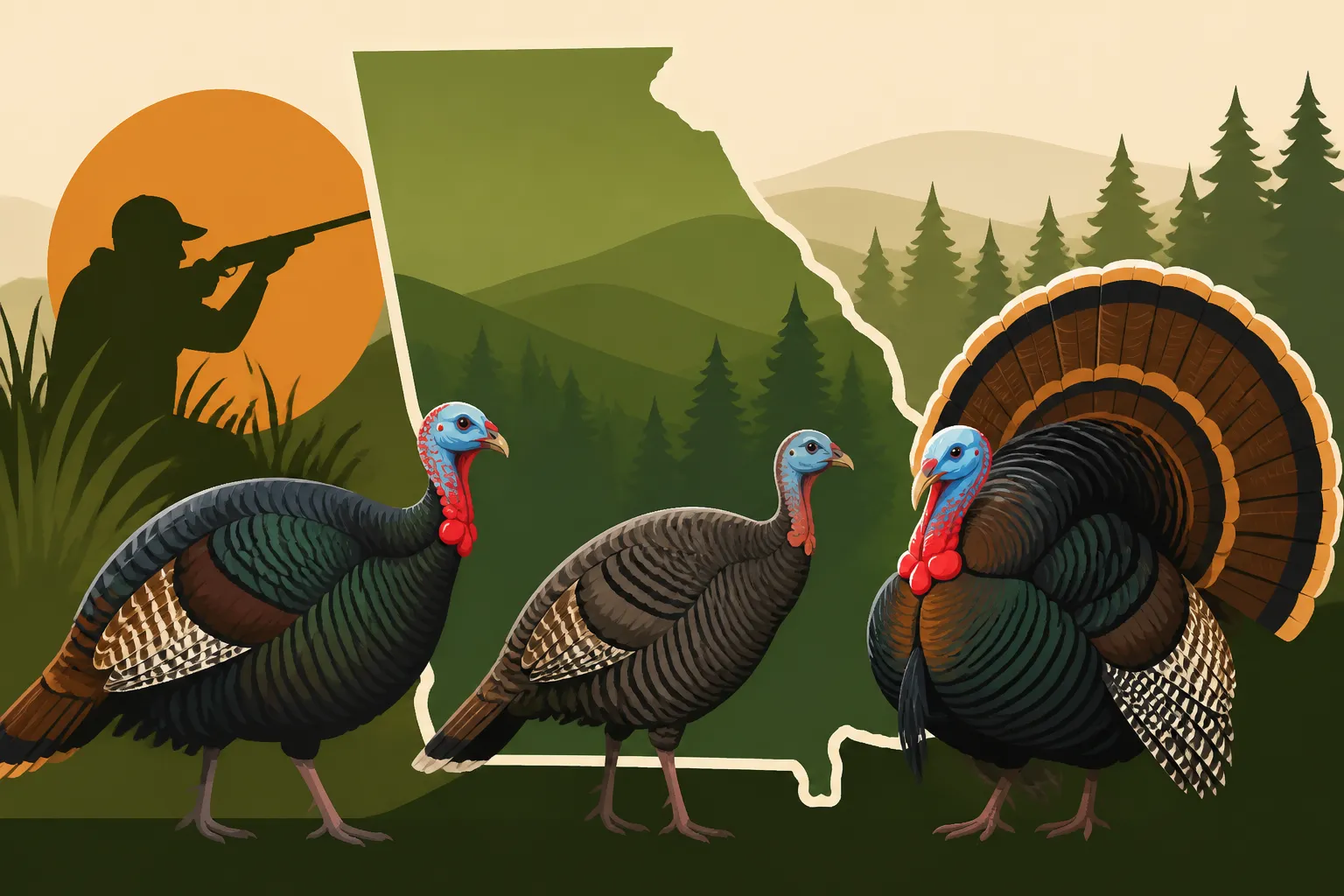
The Eastern Wild Turkey is easily recognizable. Males, or gobblers, are large, typically weighing between 18 and 24 pounds, though some can exceed that. They boast striking metallic green, copper, bronze, and red iridescence on their body feathers, especially when sunlight hits them. Their tail feathers have bands of dark brown, buff, and black, tipped with a wide, rusty chestnut band—a key identifier. Their heads are bare and can change color rapidly from white to red to blue, especially during the breeding season as they get fired up. Hens are generally smaller and less iridescent, with duller plumage that helps them camouflage while nesting.
These birds are incredibly wary and possess keen eyesight, hearing, and a sharp sense of their surroundings, making them a formidable challenge for even seasoned hunters. Their ability to quickly adapt to changing conditions and pressure is part of what makes them such a revered game animal. Understanding their daily routines—where they roost, feed, and breed—is crucial for a successful hunt. Roost Hunting Georgia Gobblers can be incredibly effective if you know how to approach their nighttime perches without alerting them.
Regional Adaptations within the Eastern Subspecies
While all Georgia turkeys are Easterns, the varied landscape of the state can lead to subtle differences in their behavior and patterns. A turkey in the North Georgia mountains might act a bit differently than one in the vast pine forests of the Coastal Plain or the river bottoms of the Piedmont. These aren't separate subspecies, but rather localized adaptations that hunters often observe.
For example, turkeys in the rugged mountain terrain might be more inclined to use steep slopes and thick laurel patches for cover, and their gobbling might carry differently through the valleys. In the South Georgia flatwoods, birds might cover vast distances in search of acorns and bugs, and their strutting grounds might be more spread out. The birds in the Piedmont region, with its mix of agriculture and hardwood forests, might pattern around field edges and creek bottoms. These regional behaviors are why what works in one part of the state might not be as effective in another, even for the same "type" of turkey. It's all about habitat and local pressure.
Key Characteristics of the Eastern Wild Turkey
Beyond the general appearance, understanding the specific characteristics of the Eastern Wild Turkey in Georgia will significantly enhance your hunting strategy. These traits influence everything from how they react to calls to their daily movements. Knowing these details helps you anticipate their actions and make more informed decisions in the field.
Easterns are known for their strong gobble, a vocalization that can carry for long distances, especially on clear, still mornings. This is their primary breeding call, used by gobblers to attract hens and assert dominance to other males. However, they have a wide vocabulary, including yelps, clucks, purrs, putts, and even drumming, all of which convey different messages. A hunter's ability to interpret and replicate these calls is paramount to success. Calling a Georgia Gobbler Off the Roost requires a specific touch and understanding of the bird's mood.
Their diet is varied and highly seasonal. In spring, they'll forage for tender greens, insects, and seeds. As summer progresses, berries and fruits become important. Fall and winter see them primarily consuming hard mast like acorns, pecans, and other nuts, which is a critical food source and often dictates where you'll find them. This flexibility in diet allows them to thrive across different agricultural and forested landscapes in Georgia.
Physical Attributes for Identification
When you're out in the field, confirming you've got an Eastern can be done by looking for these key features:
- Size: They are generally the largest of the wild turkey subspecies, with gobblers weighing significantly more than hens.
- Plumage: As mentioned, the rich iridescence with metallic green and copper hues on the body feathers is distinctive. The tail feathers will have the wide, rusty-chestnut band before the black and buff bands. Other subspecies have different tail banding colors (e.g., Osceola has a dark brown/black band, Merriam's has a white band).
- Legs and Spurs: Gobblers typically have dark, scaly legs with spurs that grow longer and sharper with age, indicating their maturity and dominance.
- Beard: Mature gobblers usually have a "beard"—a tuft of coarse, bristle-like feathers protruding from their breast. Beard length and thickness are indicators of age and health, and are often the prized trophy component.
It’s worth noting that genetic variations or environmental factors can sometimes lead to slight deviations, but these core characteristics hold true for the vast majority of Eastern Wild Turkeys in Georgia. Keeping these details in mind can help you identify if a bird is a trophy tom or a jake, which is important for adhering to Georgia Spring Turkey Season Rules regarding bag limits.
Behavioral Traits and Habitat Preferences
Eastern Wild Turkeys are highly social birds, often forming flocks outside of the breeding season. During the spring, gobblers will separate from bachelor groups, and hens will leave their winter flocks to nest. Their movements are often predictable, especially when patterned around specific food sources, water, and roosting sites. They typically roost in tall, sturdy trees, often over water or in dense timber, for protection from predators like coyotes and bobcats. Knowing Where Georgia Gobblers Roost is critical for a successful morning hunt.
In terms of habitat, Easterns prefer a mosaic of mature hardwood forests for roosting and foraging (especially for mast), mixed with open areas like fields, clear-cuts, or pine stands for feeding and strutting. They thrive where these different habitat types meet, creating "edge" environments. This preference is why they do so well in Georgia, which boasts a rich blend of mature timber, agricultural fields, and managed forests. Using a tool like GoHunt's mapping features can help hunters identify these prime habitat mosaics on public or private land, showing where hardwoods meet fields, or where water sources might funnel birds. It's all about reading the landscape.
Regional Distribution and Population Dynamics
The Eastern Wild Turkey is found throughout nearly every county in Georgia where suitable habitat exists. Their population density varies, of course, influenced by habitat quality, food availability, and hunting pressure. While you won't find significant isolated populations of other subspecies, the Easterns have carved out niches in every corner of the state, showcasing their remarkable adaptability.
From the southernmost swamps to the northernmost Appalachian foothills, Eastern Wild Turkeys have rebounded significantly. This comeback is a huge success story for Georgia's wildlife management. Monitoring efforts continue to track population trends and adjust regulations as needed, as seen with the recent changes to bag limits to ensure sustainable populations. Georgia Turkey Population Trends are closely monitored by wildlife biologists to ensure the health of the flock.
Turkey Concentrations Across Georgia's Diverse Landscape
You can find turkeys thriving in specific regions of Georgia, often tied to certain habitat features:
- North Georgia Mountains: Here, turkeys navigate steep, forested terrain, often using ridge tops and hollows. Their movements can be dictated by elevation and temperature, as well as the availability of acorns in oak-hickory forests. Hunting these birds often involves more challenging terrain and requires excellent physical conditioning.
- Piedmont Region: This central band of Georgia is characterized by a mix of agriculture, pine plantations, and hardwood creek bottoms. Turkeys in the Piedmont often key in on agricultural fields (corn, soybeans, peanuts) for food and strutting, while using the hardwood draws for roosting and travel corridors. Turkey Tactics for Piedmont Field Edges are crucial here, as birds will often move between the woods and open fields.
- Coastal Plain and South Georgia: This vast region features extensive pine forests, managed plantations, and riverine swamps. Turkeys here might range over larger areas, feeding on pine seeds, insects, and hard mast. The flat terrain can make spotting birds difficult, but calls carry well. River bottoms offer excellent roosting and foraging habitat.
Understanding these regional differences in habitat use helps hunters refine their scouting and tactics. A GoHunt subscription could provide invaluable satellite imagery to pinpoint potential roosting areas, feeding grounds, and travel corridors in any of these diverse regions, making your scouting efforts much more efficient.
Factors Influencing Local Turkey Populations
Several factors impact where and how many turkeys you'll find in a specific area:
- Habitat Quality: Access to diverse habitat, including roosting cover, nesting cover, and abundant food sources, is paramount. Areas with mature timber and adjacent open fields are often turkey magnets.
- Predator Pressure: While turkeys are naturally wary, high populations of predators like coyotes, raccoons, and opossums can impact nest success and poult survival, which affects overall Georgia Turkey Brood Survey Results and population density.
- Weather Patterns: Severe weather during nesting season can significantly reduce poult survival. Droughts can affect food availability, while excessive rain can make foraging difficult.
- Hunting Pressure: Public lands, especially those easily accessible, often experience higher hunting pressure. This can make birds more wary and less responsive to calls. Understanding how to find Finding Ground Others Walk Past is a vital skill.
Conservation Efforts and Future Outlook for Georgia's Turkeys
The story of the Eastern Wild Turkey in Georgia is one of incredible recovery, but conservation efforts are ongoing to ensure healthy and sustainable populations for future generations of hunters. Maintaining diverse habitats and managing hunting pressure are key components of this strategy. Hunters play a vital role in these efforts, not just through license fees that fund conservation, but also by adhering to regulations and being ethical stewards of the resource.
The Georgia Department of Natural Resources (DNR) actively monitors turkey populations, habitat health, and harvest data to make informed management decisions. Changes to Georgia Spring Turkey Bag Limit and daily limits are direct results of these ongoing evaluations, aiming to balance hunting opportunities with population health.
The Importance of Habitat Management
Habitat management is the cornerstone of turkey conservation. This includes:
- Prescribed Burning: Controlled burns in pine forests help clear undergrowth, promote new forage growth, and create open areas that turkeys prefer for foraging and strutting. Many WMAs use this tool to improve wildlife habitat.
- Timber Management: Selective logging and varied timber rotations create a mosaic of different age classes of forest, providing diverse cover and food sources. This includes maintaining mature hardwoods for roosting and mast production.
- Food Plot Management: Planting specific crops like chufa, clover, or various grains can supplement natural food sources, especially in areas with limited natural forage or during lean times of the year. This also benefits other game species like deer.
- Corridor Preservation: Protecting river bottoms, creek drainages, and other natural corridors allows turkeys to move safely between different habitat patches, facilitating gene flow and population distribution.
Many landowners and hunting clubs also engage in private land habitat management, often using techniques that mirror those on public lands. By understanding and supporting these practices, hunters contribute directly to the health of Georgia's turkey populations.
Hunter Participation and Ethical Practices
Hunters are crucial partners in conservation. By purchasing licenses and stamps, they provide direct funding for wildlife management, research, and law enforcement. Furthermore, ethical hunting practices are essential for maintaining the public's perception of hunting and ensuring healthy game populations. This includes:
- Adhering to Regulations: Following all season dates, bag limits, and legal methods ensures that harvest levels are sustainable. Checking Georgia Turkey Checking Requirements is a part of this process.
- Respecting Landowner Rights: Whether hunting on private land with permission or on public land, respecting property boundaries and leaving no trace is paramount.
- Responsible Harvest: Making clean shots and recovering all game minimizes waste and suffering.
- Reporting Violations: Being an extra set of eyes and ears for wildlife enforcement helps combat poaching and other illegal activities that undermine conservation efforts.
The future of Georgia's wild turkeys looks bright, thanks to robust management efforts and the dedication of hunters. By continuing to understand these birds, their habitats, and the role we play in their conservation, we ensure that the thrill of a gobble in the Georgia woods remains a cherished tradition for generations to come. Why Georgia Dropped the Turkey Limit to Two is a prime example of proactive management to sustain this valuable resource.
| Subspecies Feature | Eastern Wild Turkey (Georgia) |
|---|---|
| Plumage Iridescence | Strong metallic green, copper, bronze, red |
| Tail Fan Banding | Wide rusty-chestnut band at the tip, followed by black and buff |
| Body Size (Gobbler) | Large (18-24+ lbs typical) |
| Legs | Dark, often reddish-black, scaly |
| Head Colors (Spring) | Rapidly shifting white, red, and blue |
| Preferred Habitat | Mixed hardwood and pine forests, agricultural fields, river bottoms |
| Geographic Range | All suitable habitats throughout Georgia |
Disclaimer
This article is for general informational purposes only and does not constitute professional advice. Laws, prices and regulations vary by location and change over time. Consult a qualified professional for guidance on your specific situation.