Turkey Tactics for Piedmont Field Edges
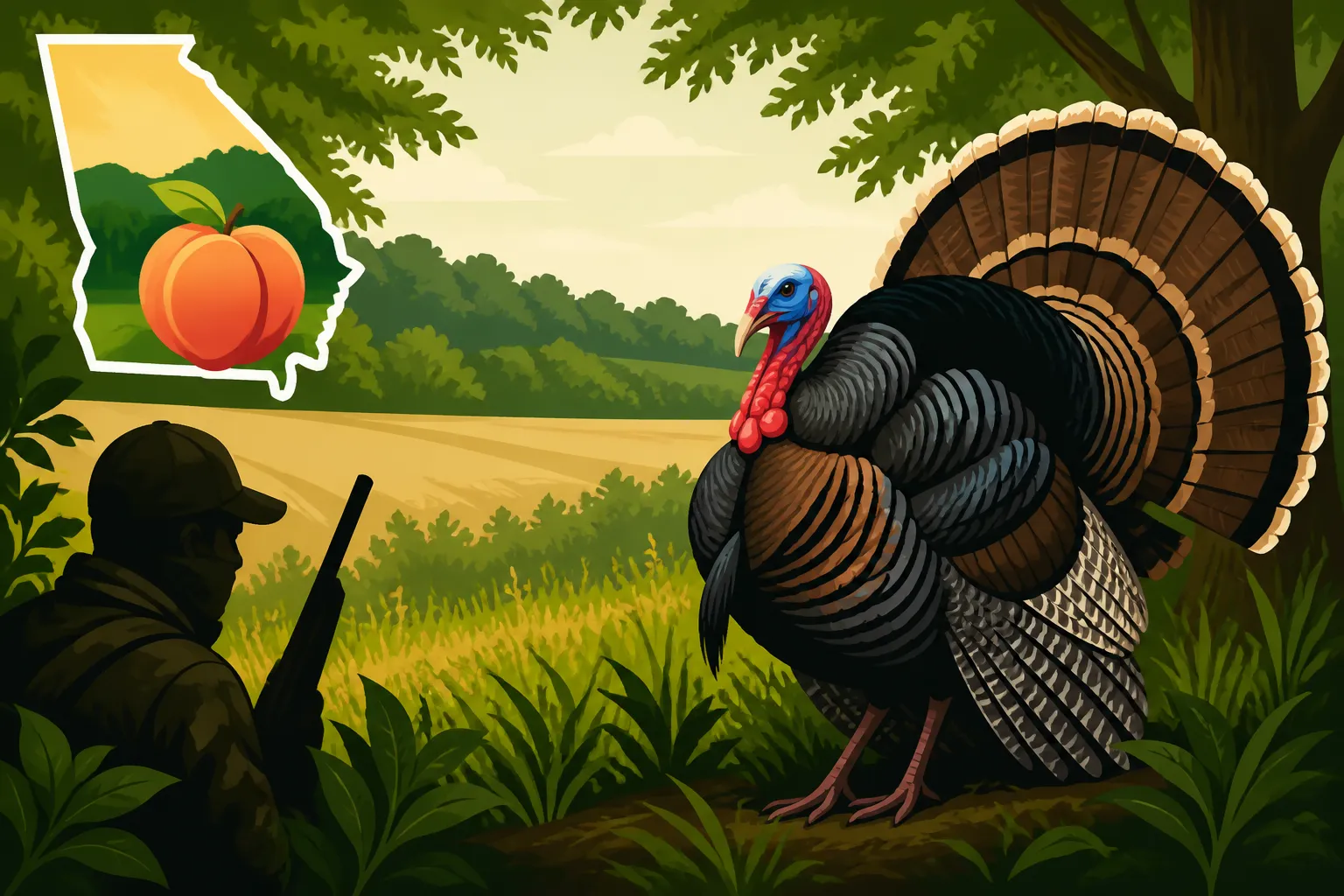
There’s nothing quite like the sight of a longbeard strutting in an open field, his iridescent feathers gleaming under the Georgia sun, but trying to call that bird into range from the timber can be one of the most frustrating challenges a turkey hunter faces. Those wily gobblers love to hang up just out of reach, often right on the edge of a vast field, leaving you wondering what you could have done differently. This guide is all about dissecting the specific tactics and strategies needed to successfully hunt wild turkeys along the field edges found throughout Georgia’s Piedmont region.
Understanding Piedmont Turkey Behavior on Field Edges
Georgia's Piedmont region is a mosaic of rolling hills, mixed pine-hardwood forests, and agricultural fields that create ideal turkey habitat. These field edges aren't just pretty scenery; they're critical zones where turkeys fulfill many of their daily needs, presenting both opportunities and unique challenges for hunters. Truly understanding why turkeys use these areas is the first step toward putting one in your vest.
Why Turkeys Love Field Edges
Turkeys are creatures of comfort and efficiency, and field edges offer a perfect blend of safety, food, and social opportunities. For starters, fields often contain crops like corn, soybeans, or wheat, which are excellent food sources. Even fallow fields provide bugs, seeds, and fresh green browse that turkeys relish. The edge itself, where the field meets the timber, offers quick access to cover, allowing them to feed in the open but dart into the woods at the first sign of danger. This provides a sense of security that they don't get in the middle of a wide-open field or deep in dense woods.
Beyond food and safety, field edges are prime social hubs, especially during the spring breeding season. Gobblers love to strut along these visible perimeters, showcasing their dominance to hens and challenging rival males. A mature gobbler strutting at the edge of a field is a magnificent display, and it's no accident; it’s a strategic move to attract hens that might be feeding or traveling nearby. Hens often use these edges as travel corridors, moving from roost to feeding areas or to nesting sites deeper in the woods. This constant traffic makes field edges high-activity zones where birds are almost always present.
Daily Routines and Travel Corridors
To effectively hunt field edges, you need to think like a turkey and anticipate their daily movements. A typical spring morning for a Piedmont gobbler might start with him flying down from a roost tree deep in the hardwoods, often within earshot of a field. He'll then make his way to the field edge, sometimes strutting and gobbling all the way, hoping to collect hens. The hens, after flying down, will often filter into the field to feed, sometimes meeting up with the gobbler.
As the morning progresses, especially if they’ve been pressured, birds might move in and out of the timber throughout the day, often using specific paths or "corridors" along the edge. These corridors could be old logging roads, slight depressions in the terrain, or even just subtle breaks in the brush along the timber line. Identifying these subtle travel routes is crucial, as they can tell you exactly where to set up. Mid-day, turkeys might disappear into the woods for a dust bath or to escape the heat, only to reappear on the field edge in the late afternoon to feed before heading to their evening roost. Observing these patterns, both from a distance and by studying sign, can be the difference between a frustrating hang-up and a successful hunt.
Reading the Landscape for Sign
Before you even think about calling or setting up, spend time reading the landscape. This means more than just looking for fresh tracks. Scan the entire field edge, looking for dust bowls where birds have been cleaning themselves. These often occur in sandy or loose soil, usually just inside the timber line or under low-hanging branches. Look for droppings, especially large, J-shaped droppings from gobblers, which indicate they've been spending time in that specific spot. Feathers, particularly primary wing feathers, can tell you if a bird has been flying down from a nearby roost.
Perhaps the most telling sign is the presence of strut marks – drag marks left by a gobbler's wingtips as he performs his full strut. These are often found in soft soil or freshly disked fields right along the edge. Combine these visual clues with aerial maps, perhaps using a tool like GoHunt to study terrain features, creek bottoms, and subtle elevation changes that might funnel birds into specific areas. If you find multiple signs converging in one spot, you're likely on to a consistent travel or strut zone. This pre-season reconnaissance is invaluable for understanding exactly where birds are likely to appear and giving you a leg up, even before the season begins. For more general insights into turkey behavior, check out our comprehensive guide on Spring Turkey Hunting in Georgia.
Strategic Scouting Before and During the Season
Effective turkey hunting, especially on field edges, starts long before you ever carry a shotgun into the woods. Scouting is paramount, and it involves a multi-faceted approach, combining technology with old-fashioned boot leather to paint a clear picture of turkey movements.
Pre-Season Reconnaissance: Maps and Boots on the Ground
Before the season even opens, spend as much time as possible studying your hunting area. Start with satellite imagery and topographic maps. Identify fields, timber lines, potential roosting areas (tall pines or mature hardwoods on ridges), and natural funnels where turkeys might enter or exit fields. Look for pinch points or areas where the timber line extends into the field like a finger, creating a natural staging area. This mapping exercise, perhaps using the detailed layers available on a platform like GoHunt, helps you pinpoint areas of interest before you ever step foot on the ground.
Once you have a few promising spots, it's time for boots on the ground. Walk the field edges, looking for the sign we discussed earlier: tracks, droppings, feathers, and strut marks. Pay close attention to the terrain immediately inside the timber line. Is there an old logging road? A sparse patch of undergrowth? These subtle features can be key to a successful setup. Don't be afraid to walk well into the timber adjacent to the field edge, searching for dust bowls or potential roost trees. The goal here isn't to disturb birds but to understand their preferred travel paths and hangouts. Early morning trips to listen for gobblers on the roost can be incredibly informative, letting you know exactly where birds are waking up. Our article on Scouting Georgia Public Land Before Season offers broader advice that can be adapted for private land scouting as well.
Locating Roost Sites and Strut Zones
Finding where turkeys roost is arguably the most critical piece of pre-season scouting. Gobblers will often use the same general areas, or even the same trees, consistently. Look for the tallest trees, particularly pines or mature hardwoods, situated on ridges or near water. Roost trees are often identifiable by the accumulation of droppings and primary feathers directly beneath them. Listen at dawn for gobbling, trying to pinpoint the exact location. Once you know a general roosting area, you can plan your approach to intercept birds as they fly down.
Strut zones are the specific areas along a field edge where gobblers regularly perform their display. These are often slightly elevated spots, clearings just inside the timber, or even small grassy knolls within the field itself that offer good visibility. Look for heavily tracked areas with numerous strut marks and fresh droppings. These are the "hot spots" where a gobbler feels safe and visible enough to perform his full breeding display. Setting up near a known strut zone can dramatically increase your chances, as you're placing yourself directly in his preferred performance space. Understanding Where Georgia Gobblers Roost can give you an edge in locating these key areas.
Utilizing Technology for Scouting
Modern technology has revolutionized turkey scouting. Beyond advanced mapping tools like GoHunt which allows you to mark waypoints for strut zones, roost trees, and travel corridors, trail cameras can be invaluable. Place cameras discreetly along field edges or known travel corridors just inside the timber. They can help you determine not only if turkeys are using the area but also their precise times of activity, which direction they are traveling, and even the ratio of gobblers to hens. This information can be critical for timing your hunts and choosing the best approach.
Additionally, listen to weather forecasts. Turkeys can be affected by changes in barometric pressure, wind, and rain. A high-pressure system after a cold front often means increased activity. Strong winds can make gobblers hesitant to come into open fields, sticking closer to the timber. Rain can shut down gobbling entirely. Knowing what to expect from the weather allows you to adjust your tactics, perhaps shifting your focus to different field edges that offer more protection or better visibility depending on the conditions. Our guide on Georgia Spring Turkey Season Rules can help you stay compliant while you plan your tech-aided scouting.
Setting Up and Calling Effectively on the Edge
Once you've done your homework and identified key areas, the next challenge is to set up in a way that maximizes your chances and delivers realistic, enticing calls. This involves thoughtful decoy placement, a mastery of calling sequences, and meticulous attention to concealment.
Decoy Strategies for Open Ground
Decoys are incredibly effective on field edges, as they provide a visual focal point for incoming birds. For field edges, a single hen decoy or a jake/hen combination is often best. The key is realistic placement. Position your decoy(s) about 20-30 yards from your setup, facing slightly away from you, as if they are feeding or casually moving. This forces an approaching gobbler to present his broadside to you as he circles to face the "hen." If using a jake, place it in a subordinate position, perhaps slightly behind the hen, mimicking a younger bird trying to move in.
Avoid placing decoys too far out into the field where they might be difficult to see or might make a gobbler hang up at extreme range. The goal is to draw the bird within shotgun range, ideally 30 yards or less. If hunting wary birds, sometimes a single, realistic hen decoy can be more effective than a full spread. Make sure your decoys are visible but not overly exposed, and always set them up before you start calling to avoid spooking a bird that might already be watching the field. The specific advice in Decoy Placement for Pressured Georgia Birds provides excellent context for these situations.
Mastering Field Edge Calling Sequences
Calling on field edges requires a blend of realism and restraint. Unlike deep woods hunting where loud, aggressive calling might be necessary to cover ground, field edge birds are often visible or within easy hearing range. Start with soft, subtle clucks and purrs. Listen intently. If you hear a distant gobble, respond with slightly louder yelps, but don't overdo it. The goal is to sound like a lone hen looking for company, not a whole flock.
If a gobbler responds, gauge his interest. If he's hot, he'll gobble frequently and often visibly strut. In this scenario, less is often more. Let him work himself into a frenzy. Only call enough to keep him interested and heading your way. If he hangs up, try subtle clucks, purrs, or even a soft "putt" to make him think another hen is slipping away. Using different calls, like a slate call for soft clucks and a diaphragm for excited yelps, can add realism. Our feature on Turkey Calls Worth Carrying in Georgia highlights several effective options for varied situations. Remember, patience is a virtue, and silence can be a powerful call in itself.
Concealment is Key
No matter how good your calling or decoy setup, poor concealment will ruin your hunt. Field edges offer less cover than dense woods, so meticulous attention to hiding is essential. Your back should be against a wide tree or a thick brush pile that completely breaks up your outline. Never set up with the open field behind you; if a gobbler circles, he'll spot you instantly. Use natural vegetation to your advantage, brushing in a natural blind if necessary.
Consider wearing full camouflage, including a face mask and gloves. Even small movements can be picked up by a turkey’s keen eyesight. Remain absolutely still once you start calling, only moving your eyes to scan for incoming birds. If hunting with a partner, ensure both of you are completely hidden and understand who will take the shot and when. Remember the lesson in Setting Up Against a Big Pine – a large, solid backdrop is your best friend. A good quality ground blind can also be highly effective if you have time to set it up properly and brush it in to blend with the natural surroundings.
Adapting to Pressure and Weather Changes
Hunting turkeys on field edges in Georgia's Piedmont means dealing with birds that are often educated and conditions that can shift rapidly. Being adaptable is key to turning a challenging hunt into a successful one.
Handling Pressured Birds
Piedmont turkeys, especially those on easily accessible field edges, tend to get pressured quickly once the season opens. These birds learn fast; loud, aggressive calling from the same spot day after day will often send them running the other way. When dealing with pressured birds, subtlety becomes your best friend. Reduce your calling volume and frequency. Focus on soft clucks, purrs, and maybe a few quiet tree yelps right at fly down. Try to sound like a real hen going about her business, not a hunter.
Another tactic for pressured birds is to move more, but move smart. If a gobbler hangs up consistently, don't keep hammering him from the same spot. Instead, try circling widely to get ahead of him or move to a different vantage point along the same field edge, hoping to catch him off guard. Sometimes, simply giving the bird space and calling intermittently can pique his curiosity enough to come investigating. Remember, these birds have likely heard every trick in the book, so being unpredictable and patient can pay off. Our piece on Calling a Georgia Gobbler Off the Roost delves into specific methods that can be tailored for these wary birds.
Wind, Rain, and the Hunter's Approach
Weather plays a huge role in turkey behavior, and knowing how to adjust is crucial. High winds are particularly challenging on field edges. The wind carries sound poorly, making it hard for turkeys to hear your calls and for you to hear their soft vocalizations. On windy days, try to set up on the downwind side of the field edge or find sheltered areas where the wind is less intense. Increase your calling volume slightly, but never so much that it sounds unnatural. Focus more on visual cues like decoys, as the wind might make it too hard for gobblers to pinpoint your exact location by sound alone.
Rain, especially heavy rain, often shuts down gobbling entirely. Turkeys tend to seek shelter in dense timber or under thick canopies during downpours. Light rain or drizzle, however, can sometimes make birds more active as they come out to feed on wet, exposed ground. On rainy days, it’s often best to focus on feeding areas along the field edges where they might emerge once the rain lightens. Be prepared with good rain gear, and consider using waterproof calls like box calls with lid covers or slate calls with sealed surfaces. Knowing these nuances can help you anticipate their moves and be in the right place at the right time.
Knowing When to Move On
Sometimes, despite your best efforts, a bird just isn't going to cooperate. Maybe he's henned up, maybe he's just not in the mood, or maybe he's so pressured he wants nothing to do with another call. Knowing when to cut your losses and move to a new spot is a critical skill for any turkey hunter. Don't waste an entire morning on a bird that's clearly not interested. After trying a variety of calling sequences, adjusting your decoy setup, and maybe even a subtle move, if the gobbler consistently hangs up or simply ignores you, it's time to change tactics.
Consult your scouting notes. Do you have another known strut zone on a different field edge? Is there a secondary roost site you located? Moving can be a pain, especially if you're packed for a static setup, but it dramatically increases your odds. Sometimes, simply walking a few hundred yards down the same field edge, or even going to a completely different field, can put you in front of an entirely new bird. Don't be afraid to employ a more aggressive "run-and-gun" approach, even on private land, if the situation calls for it. The best turkey hunters are persistent, but also know when to call it quits on a particular bird and find a new opportunity. For those challenging hunts, having a variety of call types, like those discussed in Box Calls Versus Mouth Calls, can give you versatility.
| Scenario | Decoy Strategy | Calling Strategy | Hunter Placement | Notes |
|---|---|---|---|---|
| Early Morning Fly Down | Single hen 20-30 yds out, facing away | Soft tree yelps, clucks; increase after fly down | 10-20 yds inside timber from anticipated fly-down spot | Be in position well before first light. Listen for wingbeats. |
| Mid-Morning Strut | Jake/hen combo near known strut zone, 20-25 yds out | Intermittent yelps and purrs; responsive | Against large tree/cover with clear shot lanes | Patience is key; let the gobbler put on a show. |
| Pressured Bird | Single, realistic hen (optional, can go without) | Very soft clucks, purrs; minimal, subtle | Deepest concealment, well camouflaged | Less is more. Focus on sounding totally natural. |
| Windy Conditions | Highly visible hen (ensure stable in wind) | Louder, sharper yelps; listen carefully | Downwind side of field edge, sheltered if possible | Visibility of decoys is crucial. Birds may hug timber. |
| Late Morning/Midday | Often none, or a lone feeding hen | Soft yelps, contented clucks, purrs | Near known travel corridors along timber/field edge | Birds might be searching for food or taking a break. |
Disclaimer
Hunting is an inherently dangerous activity. Always prioritize safety, understand and follow all Georgia Department of Natural Resources regulations, and obtain proper licenses and permits before heading afield. The information provided in this guide is for educational purposes only and should not replace professional instruction or local wildlife guidance.