Roost Hunting Georgia Gobblers
Georgia turkey hunters often struggle with locating gobblers reliably, especially on unfamiliar public land or when birds are tight-lipped. Getting a bead on a gobbler’s roost location, and knowing how to approach it effectively, can dramatically increase your chances of success. This guide will dive deep into the art and science of roost hunting Georgia gobblers, from pre-season scouting to successful fly-down and roosting tactics, helping you put more birds in the vest.
Understanding Gobbler Roosting Behavior in Georgia
Wild turkeys are creatures of habit, especially when it comes to where they spend the night. Understanding these patterns is the bedrock of successful roost hunting. Georgia's diverse habitats, from the steep ridges of the Appalachians to the flat pine plantations of the Coastal Plain, influence how and where gobblers roost. Ignoring these fundamental behaviors is like trying to find a needle in a haystack – frustrating and often fruitless.
Why Gobblers Choose Specific Roost Trees
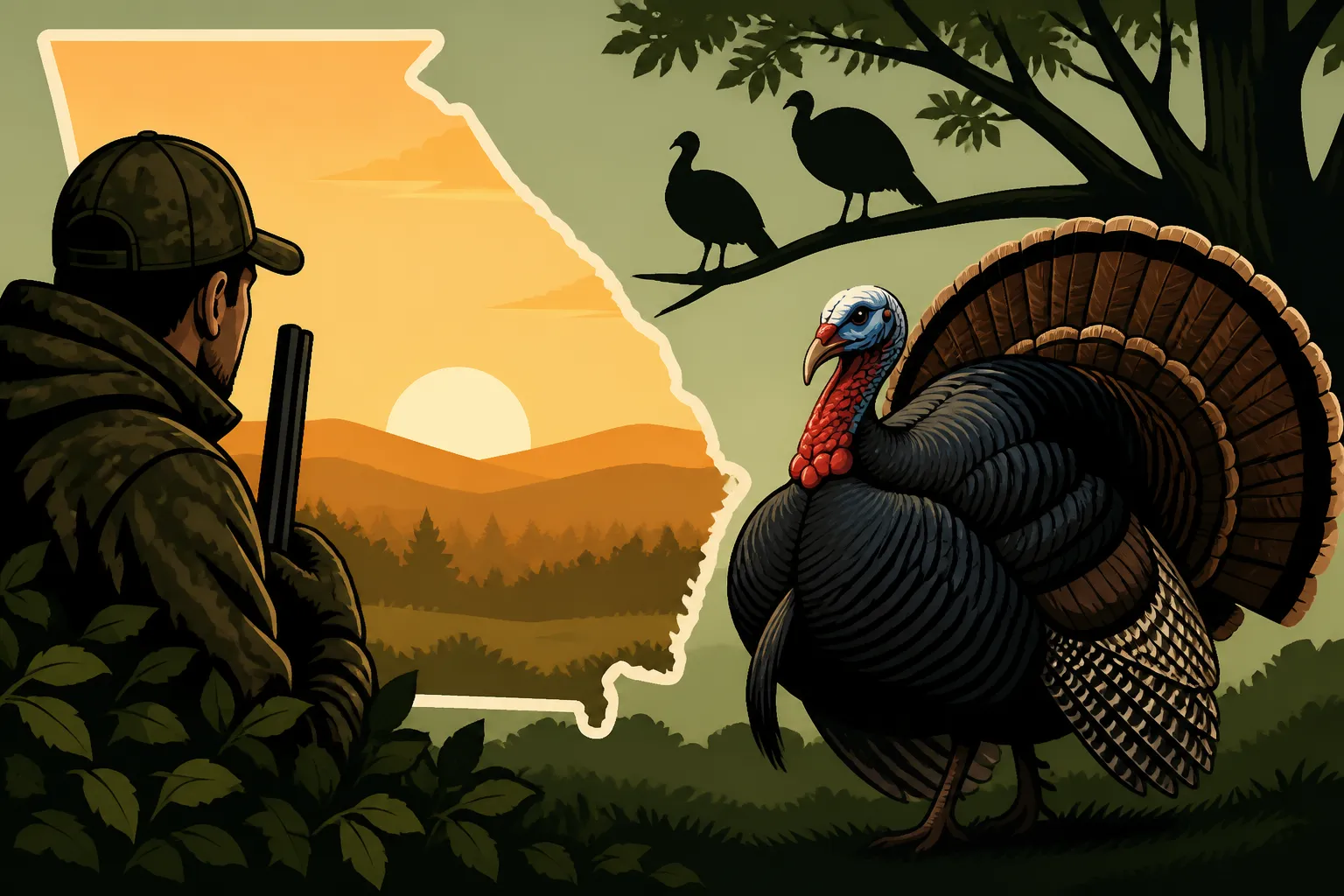
Gobblers, and hens too, seek out specific trees for roosting primarily for safety and visibility. They want a sturdy, high perch that offers a clear view of their surroundings, minimizing the chances of a ground predator sneaking up on them during the night. Large, mature trees with strong horizontal limbs are prime real estate. Think old-growth hardwoods like oaks and hickories in creek bottoms, or towering pines on a ridge top that stands above the surrounding canopy. These trees offer a commanding vantage point, allowing turkeys to spot potential threats, like coyotes or bobcats, from a distance as they fly up to roost and when they pitch down at dawn.
The location of these trees is also critical. Turkeys often choose roost sites near open areas, like fields or clear-cuts, or along river and creek bottoms where flight paths are unobstructed. These areas provide easy access for flying up and down, and often coincide with food sources, which makes the location doubly attractive. You'll frequently find them roosting over water, too, especially in the swampy regions of South Georgia. A big old cypress or tupelo gum stretching out over a creek can be a favorite spot, offering additional protection from terrestrial predators. Knowing where to look for these specific tree types and their surrounding topography will give you a huge advantage when scouting.
Seasonal and Weather Influences on Roosting Patterns
Gobbler roosting patterns aren't set in stone; they can shift throughout the spring season and certainly change with the weather. Early in the season, when temperatures are cooler and vegetation is sparse, gobblers might stick to more protected areas, or they might roost in thicker pines for thermal cover. As the season progresses and the woods green up, they might spread out more, influenced by available food sources and the movement of hens. During the peak of the rut, a gobbler might roost closer to where hens are gathering, or he might use a specific tree to broadcast his presence to potential mates. Understanding Georgia Turkey Population Trends can also give you insight into areas where you might expect more consistent roosting activity.
Weather plays a significant role, too. On calm, clear nights, gobblers might roost higher and be more vocal. But if a strong front is moving through, with high winds or heavy rain, they'll often seek more sheltered roosts, lower in the canopy or in a dense pine thicket. This can make them harder to locate. A bright full moon can sometimes make gobblers more active on the roost, sounding off throughout the night. Conversely, a dark, stormy night might keep them quiet until the very last minute. Always check the forecast and consider how recent weather has impacted bird behavior. It’s a dynamic game, and adapting to these changes is key.
Pre-Season Scouting for Roosting Success
You've heard it a thousand times, and it's true: turkey hunting success starts long before opening day. For roost hunting, pre-season scouting isn't just helpful; it's absolutely essential. You can't just stumble into a roost tree on opening morning and expect to set up successfully. This phase is about gathering intelligence, mapping out potential spots, and confirming where the birds are actually hanging out.
Utilizing Maps and Technology for Initial Reconnaissance
Before you even step foot in the woods, the best tool you have is often right in your hands: mapping apps and online satellite imagery. Programs like GoHunt or similar robust mapping platforms allow you to pour over aerial views of your hunting area, whether it's a vast tract of national forest or a smaller private parcel. Look for those tell-tale features: big, mature timber near fields, clear-cuts, creek bottoms, or any area with a significant elevation change. These are your red flags for potential roosting locations.
Pay close attention to topography lines. Ridge lines, especially those with isolated mature trees, are common roosting spots because they offer excellent visibility and often thermal advantages. Creek and river corridors are also prime because they provide flight lanes and often have the massive hardwoods turkeys prefer. Mark these potential spots on your map. This initial digital reconnaissance saves you countless hours of aimless wandering in the woods. You can then prioritize which areas to scout on foot, focusing your efforts where birds are most likely to be.
Boots-on-the-Ground Scouting for Roost Sign
Once you've identified some promising areas on your map, it's time to get out there and confirm your suspicions. This is where your feet hit the dirt. Walk the edges of fields, cruise creek bottoms, and traverse ridge tops, keeping your eyes peeled for actual roost sign. What are you looking for? Droppings on the ground directly beneath a large tree are a dead giveaway. Turkey droppings are distinct, and if there are many in one concentrated area, you've found a communal roost.
You might also find shed feathers, especially large primary wing feathers, which birds lose during their molting cycle or simply from daily wear and tear. Sometimes, you'll even see rub marks on the bark of a favored tree where a bird has scraped itself while flying up or down. Pay attention to the ground cover; if it's disturbed directly under a tree, it could be from turkeys flying down hard, kicking up leaves and dirt. These signs confirm that turkeys are using these trees, and that’s invaluable information for Scouting Georgia Public Land Before Season. The more sign you find, the more confident you can be in your chosen roost location.
Locator Calls for Pinpointing Roost Locations
During late afternoon or early morning scouting trips, locator calls are your best friend. These aren't your typical hen yelps or gobbler aggressive calls; rather, they're calls designed to elicit a shock gobble from a bird on the roost without drawing them to you on the ground. Owl hoots, crow calls, and even coyote howls are excellent for this purpose. The trick is to wait until just before dusk or right at dawn, when gobblers are most likely to sound off from their perch.
Walk slowly through your suspected roosting areas, stopping periodically to let out a series of owl hoots or crow calls. Listen intently for a return gobble. When you hear one, mark its general direction and distance. Repeat the process from another vantage point to triangulate the exact tree or cluster of trees. Remember, you're not trying to call the bird in at this stage, just get him to reveal his location. Once you confirm a roost, back out quietly. The goal is to get in, get the information, and get out without disturbing the birds. Doing this a few times before the season can give you multiple roost options for opening day, which is crucial, especially if one spot gets pressured.
Morning Fly-Down Tactics: Catching Them Off the Roost
The anticipation of a morning fly-down hunt is truly something special. The woods are just beginning to wake up, and there's a primal thrill in knowing a gobbler is just yards away, waiting for the first rays of sun. This is where all your scouting pays off, but flawless execution is paramount.
The Silent Approach and Optimal Setup
This cannot be stressed enough: silence is golden. Before the first hint of gray light, you need to be in position, having made your approach in absolute stealth. That means walking slowly, avoiding snapping twigs or rustling leaves, and using a headlamp with a red or green lens if necessary to preserve your night vision and not spook game. Know your route in beforehand, perhaps by using your GoHunt map on your phone, so you can navigate in the dark with minimal fuss.
Your setup needs to be within 100-150 yards of the roost tree, ideally closer if the terrain allows, but far enough not to be directly under him. You want to be positioned so that the gobbler will have to fly past or towards your setup to get to where he thinks the "hen" is. Look for a natural barrier – a thicket, a log, or a rise in the ground – to break up your silhouette. Most importantly, choose a wide tree, like a large pine or oak, to break up your outline and provide a solid backrest. Setting up against a big pine gives you excellent concealment. The moment he pitches down, he'll be looking, and any unnatural movement will send him running.
Calling Strategies at Fly-Down
Once you're set up, resist the urge to call too much, too early. Let the woods wake up. Listen for the first soft tree yelps from hens, or a gobbler's muffled morning vocalizations. A soft, subtle series of tree yelps and clucks, mimicking a hen still on the roost, can be incredibly effective. The goal is to make him believe a hen is near his fly-down zone, enticing him to pitch in your direction. Don't hit him with a full-blown cut-and-yelp series right away; you risk over-calling and making him suspicious, or worse, prompting him to fly down to real hens if they're closer.
As the light increases and you hear hens pitching down, you can increase the volume and intensity of your calls slightly. A few contented clucks and purrs after he gobbles might be all it takes. If he pitches down and holds up, sometimes a subtle kee-kee run or a fly-down cackle can seal the deal, especially if you also incorporate a decoy. Remember, the less you have to call after he's on the ground, the better. You want him to come looking for the source of the sound, not feel like he’s having a prolonged conversation with a stationary bird.
Decoy Placement for Morning Engagements
Decoys can be a game-changer for fly-down hunts, especially if you're dealing with a wary gobbler that likes to hang up just out of range. The key is realistic placement. Set your decoy (or decoys) within easy view of the roost tree, but far enough away that when the gobbler pitches down, he'll have to walk past your setup to get to it. A good rule of thumb is to place it about 20-30 yards from your position, giving you an ideal shot when the gobbler comes into range.
Consider using a single hen decoy, or a pair of hens, positioned as if they’ve just flown down and are feeding naturally. Sometimes adding a jake decoy can really tick off a dominant gobbler and draw him in aggressively. Ensure the decoy is facing away from your likely shot angle, presenting the gobbler with a broadside or slightly quartering-away shot as he approaches. For tips on Decoy Placement for Pressured Georgia Birds, it’s often best to keep it simple. Avoid overdoing it; one or two realistic decoys are usually more effective than a full flock. And always make sure the decoy is visible from the roost but not so obvious that it spooks him if he sees it too early.
Evening Roosting Strategies: Putting Them to Bed
While mornings get all the glory, don't underestimate the power of an evening hunt. "Putting a bird to bed" is essentially locating where he intends to roost for the night, allowing you to plan a perfect ambush for the next morning. This is less about calling the bird in and more about precision reconnaissance.
Low-Impact Scouting for Evening Gobblers
The name of the game in the evening is "low impact." You want to find out where gobblers are roosting without alerting them to your presence. Start your scouting several hours before dusk. Position yourself in an elevated area, like a ridge, or at the edge of a field or clear-cut, that offers a good view and allows you to hear well. Bring a good pair of binoculars to scan potential roosting timber from a distance. The less you move, the better.
As dusk approaches, turkeys will start moving towards their roosts. Listen for their contented clucks and yelps as they feed their way to bed. Watch for them flying up into trees, which they often do in stages, hopping from lower branches to higher ones. Once you hear or see them fly up, mark the spot. Again, locator calls can be useful here, but use them sparingly. A soft owl hoot or crow call right after dark can often provoke a shock gobble, confirming the exact tree. The goal is to get the information and then retreat quietly, leaving the birds undisturbed for your morning hunt.
Calling to Confirm the Roost
Just as in the morning, locator calls shine brightest when confirming evening roosts. As the sun dips below the horizon and the woods start to quiet down, turkeys will begin their ascent to their nightly perches. This is your window. Find a vantage point where you can hear well but remain concealed. Use an owl hooter or a crow call, waiting for a few minutes between calls, listening intently for a response. A gobbler, settled on his limb, will often let out a booming gobble in response to these sounds.
Once you get a gobble, you know you're in the right area. You can then try to triangulate his position by moving to another spot and calling again, pinpointing the specific tree. This is usually all the calling you want to do. Avoid hen calls, as you don't want to draw him down or get him curious about a "hen" he can't see. The key is to simply confirm his location, then quietly slip away, leaving him to a peaceful night's rest so he's there, fired up, for your morning hunt. Your Turkey Tactics for Piedmont Field Edges might differ slightly from mountain or swamp approaches, but the principle of confirming the roost remains constant.
Exiting Quietly and Planning for Morning
Once you've located a gobbler on the roost, the most critical step is to exit the area as quietly and quickly as possible. Every rustle, every misplaced step, could alert the bird to your presence and ruin your morning hunt. Take note of landmarks in the fading light, or use your GPS (many hunters use an app like GoHunt to mark their position and plan their exit route), to ensure you can navigate back in the dark without a hitch. Walk backwards if necessary, picking up your feet to avoid dragging leaves.
As you head out, mentally map out your approach for the next morning. Consider wind direction, potential setup locations, and the best path to get there silently. Where will you put your decoy? Which tree will you sit against? How will the gobbler likely fly down? Having a clear plan minimizes confusion and noise in the dark. This meticulous planning is the difference between a successful fly-down hunt and a bird that's spooked before you even get settled. It's about respecting the bird and the woods, ensuring your next encounter is on your terms.
Adapting to Challenging Situations and Pressured Birds
Turkey hunting, especially on public land, is rarely a textbook affair. You’ll encounter birds that don’t play by the rules, heavy hunting pressure, and uncooperative weather. Successful roost hunting requires a hunter who can think on their feet and adapt to these curveballs.
Dealing with "Hang-Up" Gobblers
Ah, the dreaded "hang-up" gobbler. You've done everything right: scouted, set up perfectly, called subtly, and he's hammered your calls from the roost. He flies down, lands exactly where you expected, and then… he just stands there, gobbling his head off, but refuses to take those last crucial steps into range. This is one of the most frustrating scenarios in turkey hunting. It often happens with older, more experienced gobblers, or birds that have been called to frequently.
When faced with a hang-up, patience is your first virtue. Don't immediately jump up and try to reposition. Sometimes, simply going completely silent for 10-15 minutes can make him nervous enough to come looking. If that doesn't work, try changing your call type or tone. If you've been using a box call, switch to a slate or mouth call. Try a few very soft, contented clucks and purrs, mimicking a hen that's comfortable and feeding, rather than aggressively yelping. Another tactic is to slowly, deliberately crawl away from your setup, peeking occasionally to see if he starts walking toward your last known position. Sometimes, making him think the hen is leaving is the catalyst he needs. Remember the advice in Calling a Georgia Gobbler Off the Roost – sometimes less is more.
Public Land Pressure and Avoiding Other Hunters
Hunting Georgia's public lands, particularly during the early part of the season like Hunting the Public-Land Turkey Opener in April, means you're going to encounter other hunters. This pressure can significantly impact gobbler behavior, making them warier, less vocal, and quicker to run from human presence. Roost hunting on public land requires an even more stealthy approach and often a willingness to walk further than most.
To avoid other hunters, use your scouting and mapping tools (like the topo layers on GoHunt) to find areas that are harder to access – steep terrain, thick swamps, or areas far from established roads and trails. These places often hold less pressured birds. If you arrive at your planned roost spot and hear another hunter calling or moving in, cut your losses and move on. Don't try to compete; it's unsafe and unethical. Have several roost options scouted out, so you always have a Plan B (or C, or D). Sometimes, waiting an hour or two after fly-down, when most hunters have moved on or given up, can yield opportunities on birds that have been bumped but settled back down.
Wind, Rain, and Other Environmental Factors
Georgia weather can be fickle, especially in spring. High winds make it incredibly difficult to hear gobblers on the roost or on the ground, and they make it harder for birds to hear your calls. In windy conditions, focus on sheltered creek bottoms, leeward sides of ridges, or dense pine stands where the wind's roar is somewhat muffled. Increase your call volume slightly, but not to the point of sounding unnatural.
Rain can also suppress gobbling activity. Turkeys often remain on the roost longer in a steady rain, or they may fly down silently and seek cover. If it's raining, consider focusing on open fields or food plots where birds might go to feed once the rain lightens. Sometimes, a short, light rain shower can actually make gobblers more vocal after it passes, as they "sound off" to re-establish their presence. Severe thunderstorms, of course, mean staying home. Snow, while rare in much of Georgia during turkey season, would also impact behavior significantly, pushing birds towards readily available food sources. Always be ready to adjust your Turkey Tactics for Piedmont Field Edges based on what Mother Nature throws at you.
Safety and Ethical Considerations for Roost Hunting
Roost hunting involves moving in the dark and setting up before legal shooting light, which inherently adds safety considerations. Beyond that, respecting the bird and the resource is paramount.
Legal Hours and Regulations
It's absolutely critical to know and abide by Georgia's hunting regulations, especially regarding legal shooting hours. In Georgia, legal hunting hours for turkey begin 30 minutes before sunrise and extend until sunset. This means you cannot shoot a bird while it's still on the roost in the dark. Your setup should be complete, and your shotgun ready, before legal shooting light. You must wait for the sun to rise and for the bird to fly down and be clearly identifiable as a legal target before taking a shot.
Always carry a watch or use a reliable app that provides sunrise and sunset times for your specific location. Never assume it's "light enough." Firing at a silhouette in the dim light is not only illegal but also incredibly dangerous, as you cannot properly identify your target or what might be beyond it. Ignorance of the law is no excuse, and violating these rules can result in hefty fines, loss of hunting privileges, and even criminal charges. Check the Georgia DNR regulations every season, as rules can occasionally change.
Hunter Safety and Awareness in the Dark
Moving in the pre-dawn darkness comes with inherent risks. Always tell someone where you are going and when you expect to return. Carry a reliable headlamp with fresh batteries, and consider a backup. When walking in the dark, move slowly and deliberately, constantly scanning your path for obstacles. It's easy to trip over roots, fall into holes, or snag yourself on briars.
Perhaps the most important safety rule during roost hunts, and all turkey hunting, is positive target identification. With multiple hunters often in the woods, especially on public land, the risk of mistaken identity is real. Never wear red, white, or blue in the turkey woods, as these colors are present on a gobbler's head and neck and can be mistaken for a bird. When you hear a sound, assume it's another hunter until proven otherwise. Never stalk a gobble. If you have to move, do so cautiously, using terrain features for concealment, and never "fan" (hold a fanned tail toward a gobbler) while moving, as this presents a highly enticing and potentially dangerous target to another hunter. When a gobbler does come in, make sure it's the only gobbler you see, and that you have a safe backdrop for your shot. The goal is to fill your tag, but doing so safely and ethically should always be your top priority.
Roost Hunting Georgia Gobblers: A Summary of Tactics
| Aspect | Morning Fly-Down | Evening Roosting (Scouting for Next Day) |
|---|---|---|
| Primary Goal | Harvest the bird | Locate bird for future hunt |
| Approach Time | Well before dawn | Several hours before dusk |
| Movement | Ultra-silent, direct | Stealthy, distant observation |
| Setup Distance | 100-150 yards from roost (closer if possible) | 200+ yards for observation |
| Calling | Soft tree yelps, clucks; increase after fly-down | Soft locator calls (owl/crow) only post-dark |
| Decoys | Often beneficial, hen/jake setup at 20-30 yards | Not used for evening roosting |
| Exit Strategy | Remove harvested bird, leave quietly | Slip away silently, avoid alerting birds |
| Key Challenge | Wary birds, hang-ups, legal light constraints | Confirming exact tree without disturbing |
Disclaimer
Hunting is an inherently dangerous activity. Always prioritize safety, adhere to all local, state, and federal regulations, and practice responsible wildlife management. The information provided in this guide is for informational purposes only and should not replace proper hunter education and personal judgment. Always be aware of your surroundings, properly identify your target and beyond, and never take unnecessary risks.