Calling a Georgia Gobbler Off the Roost
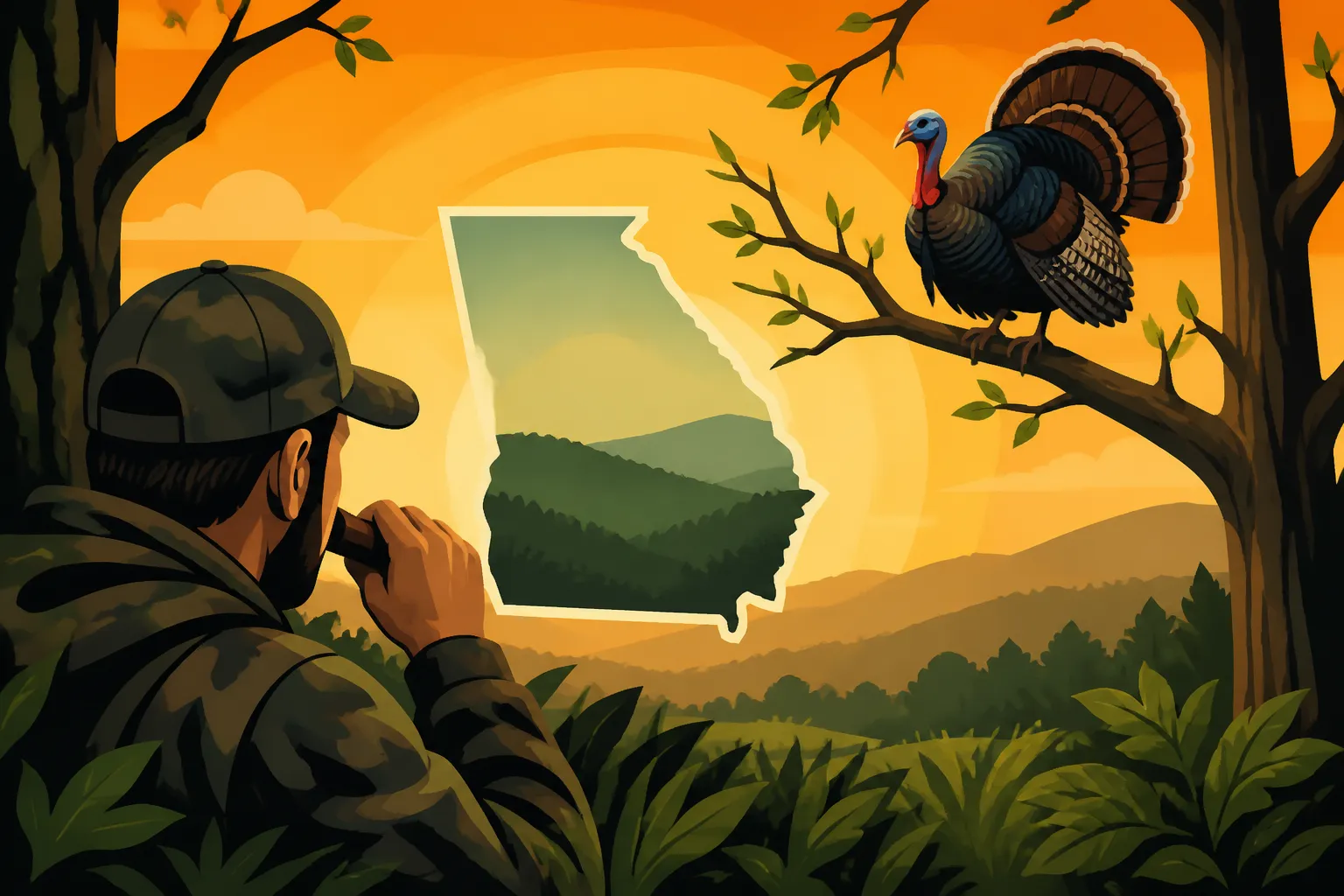
There's nothing quite like the morning anticipation in a Georgia turkey woods, the air crisp with the promise of spring. But let's be honest, getting a gobbler to fly down off the roost and march right into your setup is often easier said than done. Many of us have felt that familiar frustration as a bird hammers from the limb, only to sail off in the opposite direction or get hung up just out of range. This guide is all about mastering the nuanced art of calling a Georgia gobbler off the roost, ensuring you're ready for whatever those cunning longbeards throw your way.
Understanding Roosting Behavior and Morning Rituals
Before you can coax a gobbler off his perch, you've got to understand why he's up there in the first place and what his typical morning routine looks like. It's not just about calling; it's about anticipating his moves from the moment the first hint of light breaks.
Why Gobblers Roost Where They Do
Gobblers aren't just picking any old tree to spend the night in. They choose roost sites strategically, often seeking out tall, mature pines or hardwoods that offer a clear view of their surroundings, providing a sense of security from ground predators like coyotes and bobcats. These trees are typically found near water sources, along ridge lines, or on the edges of open fields where they can survey the area before pitching down. Sometimes they'll favor the same tree or general area night after night, especially if it's proven safe and convenient. Knowing these preferred spots, often discovered during pre-season scouting, gives you a significant advantage. Tools like the GoHunt app with its detailed topo maps and aerial imagery can be invaluable for identifying potential roosting habitat before the season even starts, helping you pinpoint those crucial locations. This type of reconnaissance is key to Scouting Georgia Public Land Before Season and truly understanding the terrain.
They're looking for high ground, particularly during the early spring when foliage isn't dense enough to offer much concealment. A big pine at the top of a ridge or a lone cypress standing tall in a swamp can be a prime roost tree. Sometimes, especially in the flat piney woods of South Georgia, they'll simply pick the tallest tree in a cluster. The key is elevation and visibility. If a gobbler feels safe enough to spend the night there, he’s probably got a good vantage point, which means he's also looking down at his landing zone. Understanding his perspective from the limb helps you choose your setup location.
The First Sounds of Daylight: Interpreting Early Morning Clues
The moment before fly-down is a symphony of subtle sounds and reactions. It usually begins with the first hoot owl or crow calling in the pre-dawn gloom, which often triggers a shock gobble. Pay close attention to these early morning gobbles. Are they faint and distant, or loud and close enough to vibrate the air around you? This tells you not only where the bird is but also how far away you need to be to avoid spooking him as you set up. A wise hunter gives a roosted gobbler plenty of space, especially when approaching in the dark.
Listen for the soft "tree yelps" or "clucks" from hens still on the roost. These are often quiet, almost conversational calls, signaling the hens are waking up and perhaps stretching their wings. If you hear a hen calling, it’s a good sign there are birds, potentially including your target gobbler, in the vicinity. The gobbler's own soft purrs, clucks, and occasional muffled yelps from the limb are also vital clues. He’s listening, assessing the situation on the ground, and perhaps trying to locate hens before he commits to flying down. Sometimes a series of fast, excited gobbles means he’s spotted a hen or is just feeling feisty. Other times, silent birds require a bit more coaxing.
The Art of the Soft Sell: Subtle Calling for Roosted Birds
Many hunters, especially when excited, tend to overcall a roosted bird. But when a gobbler is still on the limb, subtlety and patience are your best friends. Think of it as a delicate conversation, not a shouting match.
Mimicking the Hen's Natural Wake-Up Call
When you're trying to call a gobbler off the roost, you want to sound like a hen waking up naturally, not a hen in a full-blown frenzy. Start with soft, sleepy tree yelps and clucks. A simple series of 3-5 soft yelps, perhaps followed by a contented cluck, is often all you need. You're trying to pique his interest, make him believe there's a real hen just below him, ready to start her day. These early calls are not about volume or aggression. The key is realism and restraint. Too much calling, especially loud, excited calling, can make him suspicious or, worse, make him think you're too eager and he doesn't need to work for it.
Wait for his reaction. Does he gobble back immediately? Does he wait a few minutes? The timing of his response tells you a lot about his mood. If he gobbles hard after every soft yelp, he’s interested. If he’s silent, he might be listening more intently, or perhaps there are other hens closer that he’s focused on. Sometimes, the most effective call is no call at all. Let the natural sounds of the woods do some of the work. As the light improves, he'll be looking, and if you've set up correctly, your calls will just reinforce what he's already seeing or expecting to see. For specific recommendations on what to use, check out our guide on Turkey Calls Worth Carrying in Georgia.
Strategic Silence and Patience
This is arguably the hardest part of calling a roosted bird: knowing when to shut up. After those initial soft yelps, resist the urge to immediately call again, especially if he gobbles. Let him wonder. Let him ponder the location of that lonely hen. This silence forces him to make a decision. If he's really hot and bothered, he'll likely gobble again, trying to pinpoint you. That's your cue to offer another soft series of yelps, perhaps just a little louder than the first, but still not aggressive.
Consider the atmosphere: the woods are just waking up. There's a natural ebb and flow of sound. Your calling should mimic that. Think about how a real hen acts. She doesn't just continuously yelp for five minutes straight. She calls, waits, listens, moves, calls again. Your patience needs to be ironclad. Often, a gobbler will wait until he can see clearly before flying down, making sure the coast is clear and his landing zone is safe. If you've been calling subtly and then go silent, his natural curiosity, especially if he's alone, might be enough to draw him to your setup. Sometimes, especially on public land where birds are pressured, a silent approach after a minimal initial call is incredibly effective. This tactic can also apply when Roost Hunting Georgia Gobblers in general.
Reading the Gobbler's Reaction to Your Calls
A gobbler's reaction to your calls is a constantly unfolding story. A strong, immediate gobble often indicates high interest. However, if he gobbles once and then goes silent, he might be weighing his options or listening for other hens. If he's clucking and putting softly on the limb, he's considering his move, perhaps trying to get a visual before flying down. A series of quick, excited gobbles could mean he’s locked onto your position or has spotted a decoy.
It's not just about what you hear; it's about what you don't hear. If he stops gobbling altogether, he might have flown down silently, or he might have moved away. Sometimes, a gobbler will fly down and immediately start walking away if he doesn't see what he expects. This is where your setup positioning becomes crucial. You need to be ready to adjust. Paying attention to his cadence, the volume, and the frequency of his gobbles will help you determine when to call, how loudly to call, and when to simply let him come looking.
Transitioning from Roost to Ground: Decoys and Setup
The transition from the roost to the ground is the most critical phase. Your setup, including your position and decoy strategy, needs to instill confidence in the gobbler and guide him to within shooting range.
Optimal Setup Location Near the Roost
Choosing your setup location is paramount. You want to be close enough to the roost tree to be heard but far enough away that he doesn't spot you moving in the dark or pinpoint your exact location too easily when he flies down. A good rule of thumb is to set up 75-100 yards from the roost tree, giving him room to fly down and strut into your setup. You should always aim to place yourself between the gobbler and where you anticipate he wants to go – usually an open field, a food plot, or a known strutting zone. If you're on a ridge, set up just below the crest, so he has to come over the top to see you, giving you an advantage.
Always make sure you have good cover. A wide tree, a dense thicket, or even a subtle dip in the terrain can offer concealment. And crucially, think about your shooting lanes. There's nothing worse than having a gobbler strutting at 30 yards, but a bush is perfectly blocking your shot. Clear any small obstructions around your setup that might interfere with your line of sight. Utilizing natural breaks in the terrain or old logging roads can create perfect funnels to draw him in. When Setting Up Against a Big Pine, remember to consider your backdrop and vision.
Decoy Placement for Fly-Down Confidence
Decoys can be a game-changer, especially for a gobbler hot off the roost. The visual reassurance of a hen, or even a jake, can be enough to pull a bird right to your lap. For roosted birds, a single hen decoy, or a hen and a jake, is usually plenty. Place your decoys 20-30 yards from your position, directly in your primary shooting lane. This ensures that when the gobbler comes to investigate, he’ll be in easy range. Position the hen decoy looking away from the gobbler's anticipated fly-down direction, simulating a feeding or contented hen, which can be very inviting.
If using a jake decoy, place it slightly behind the hen, mimicking a younger, less dominant bird that might challenge an older gobbler. The key is realism. Make sure your decoys are visible from the roost tree and aren’t obscured by brush or shadows. Many hunters find that realistic, full-body decoys like those from Avian-X or Mojo Critter give them an edge. The goal is to make the gobbler feel safe and confident enough to pitch down and commit to the ground, especially if he’s heard your calls. Proper Decoy Placement for Pressured Georgia Birds can make all the difference, particularly on public lands where gobblers have seen it all.
Table: Roost Calling Strategy by Gobbler Reaction
| Gobbler Reaction | Recommended Calling Strategy | Decoy Placement | Notes |
|---|---|---|---|
| Loud, frequent gobbles | Start with soft, 3-5 tree yelps. Wait 5-10 min. Call softly again if he continues to gobble. Maintain silence after 2-3 call sequences. | Hen (feeding or looking away) at 20-30 yards, visible from roost. Jake optional, slightly behind hen. | This bird is hot. Let his enthusiasm work for you. Don't overcall. Your goal is to guide him to the ground, not entertain him on the limb. He's expecting to see a hen, so decoys are highly effective. Be ready; he might fly down quickly. |
| Infrequent, distant gobbles | Longer, slightly louder series of 5-7 yelps, perhaps a cluck. Wait longer (10-15 min) between calls. Use a locator call (owl hoot, crow) to gauge interest. | Hen decoy more critical here, potentially with a "come hither" pose if available, or a slight motion for realism. | He's interested but might be farther away or have other priorities. You need to keep his attention without sounding desperate. Patience is key. If he moves closer, scale back the calling. If he starts moving away, consider a soft fly-down cackle. |
| Silent on the roost | Very soft clucks or single yelps, spaced widely apart (15-20 min). Focus on realism over volume. Consider a fly-down cackle after first light. | Decoy highly recommended, ideally in an open, visible area to catch his eye if he flies down silently. | This is the trickiest bird. He's either very wary or has hens with him. You're trying to make him curious enough to fly down and look. If he flies down silently, your decoy needs to be convincing. Be prepared for him to circle wide or approach with extreme caution. Don't call much after fly-down unless he hangs up. |
| Gobbles, but flies down silently/away | After he flies down, locate his direction. Use soft calls to re-engage once he's on the ground and moving. Consider a "run-and-gun" approach if he's covering ground. | If he flies away from your setup, quickly move decoys if safe and practical, or abandon them for a mobile approach. | Your setup wasn't quite right, or he saw/heard something. Your priority is to get his attention once he's on the ground. A fly-down cackle as he pitches down might have helped, but now you need to be reactive. Run-and-Gun Turkey Tactics on Public Land can be useful here. |
Troubleshooting: When a Gobbler Hangs Up or Flies Down the Wrong Way
Even with the perfect calls and setup, gobblers are notoriously unpredictable. It's rare for everything to go perfectly, and knowing how to adapt when things don't go according to plan is what separates a good hunter from a great one.
Dealing With a Hung-Up Gobbler
Ah, the classic "hung-up gobbler." He’s strutting, drumming, and gobbling his brains out at 80 yards, just out of range, unwilling to take those final few steps. This is a common frustration, and it often happens because he expects the hen to come to him. If your setup allows, a subtle, slow crawl directly away from him, making soft clucks as you go, can sometimes make him nervous enough to follow. This "reverse calling" can trick him into thinking the hen is losing interest and walking away, triggering his instinct to pursue. Just be incredibly cautious with movement, and only attempt this if you have excellent concealment.
Another tactic is to introduce a different sound. If you've been using yelps, try switching to a lost hen call or a cutting sequence, just a short burst to signal a bit more urgency. Sometimes, a subtle purr or whinny from a diaphragm call is all it takes to close that last gap. The key is not to panic and start calling aggressively. Maintain that soft, subtle approach. If you’re hunting near a field edge, consider if Turkey Tactics for Piedmont Field Edges might offer some clues. Often, these birds have been called to repeatedly, making them warier of direct approaches.
Adapting to Unexpected Fly-Down Paths
Gobblers rarely read the script. You've set up perfectly, expecting him to fly down into your decoys, and instead, he sails down 100 yards to your left, or worse, directly behind you. This is where pre-planning multiple scenarios comes into play. If he flies down to your left, and you're set up for a frontal approach, you might have to make a quick, silent adjustment to your body position, or even a slow, deliberate pivot if your cover allows.
If he flies down and immediately starts walking away, don't give up. Let him get out of sight, then quickly reposition yourself ahead of his likely travel path. Use the terrain to your advantage – creek bottoms, logging roads, or thick tree lines can offer concealment for a quick move. Sometimes, a series of aggressive cutting calls after he's out of sight can make him stop and gobble, giving you a chance to pinpoint his new location and set up quickly. Remember that gobblers, especially those in areas with high hunting pressure, are very good at circling, trying to get behind what they perceive as a hen.
Re-engaging a Silent Bird
What if your gobbler flies down, goes silent, and you can't tell where he went? This is a tough one. First, give it time. He might be silently strutting or moving through thick cover. After 15-20 minutes of silence, if you still haven't heard or seen him, try a very soft series of yelps and listen intently. If he gobbles, you've re-engaged him. If not, it might be time to pack up your decoys and try a "run-and-gun" approach, slowly moving through the woods, stopping to call every 100 yards or so. This involves covering ground and calling frequently, trying to locate another bird or re-establish contact with the one you lost. This approach is highly effective for Run-and-Gun Turkey Tactics on Public Land.
Sometimes, the bird simply moved off with real hens. If you hear multiple hens yelping in the distance, your target gobbler is likely with them, and he’ll be much harder to pull away. In this scenario, it's often best to reposition and try to intercept the flock later in the morning when the hens might start to wander. It's important to remember that not every bird can be called in, but a thoughtful, adaptable approach gives you the best chance, even When Georgia Gobblers Go Quiet in May.
Disclaimer
Hunting is an activity with inherent risks. Always prioritize safety, follow all Georgia Department of Natural Resources (DNR) regulations, and respect private property. The information provided here is for educational purposes and should not replace proper hunter education and experience. Ensure you have the correct licenses and permits before heading afield.