When Georgia Coyotes First Arrived
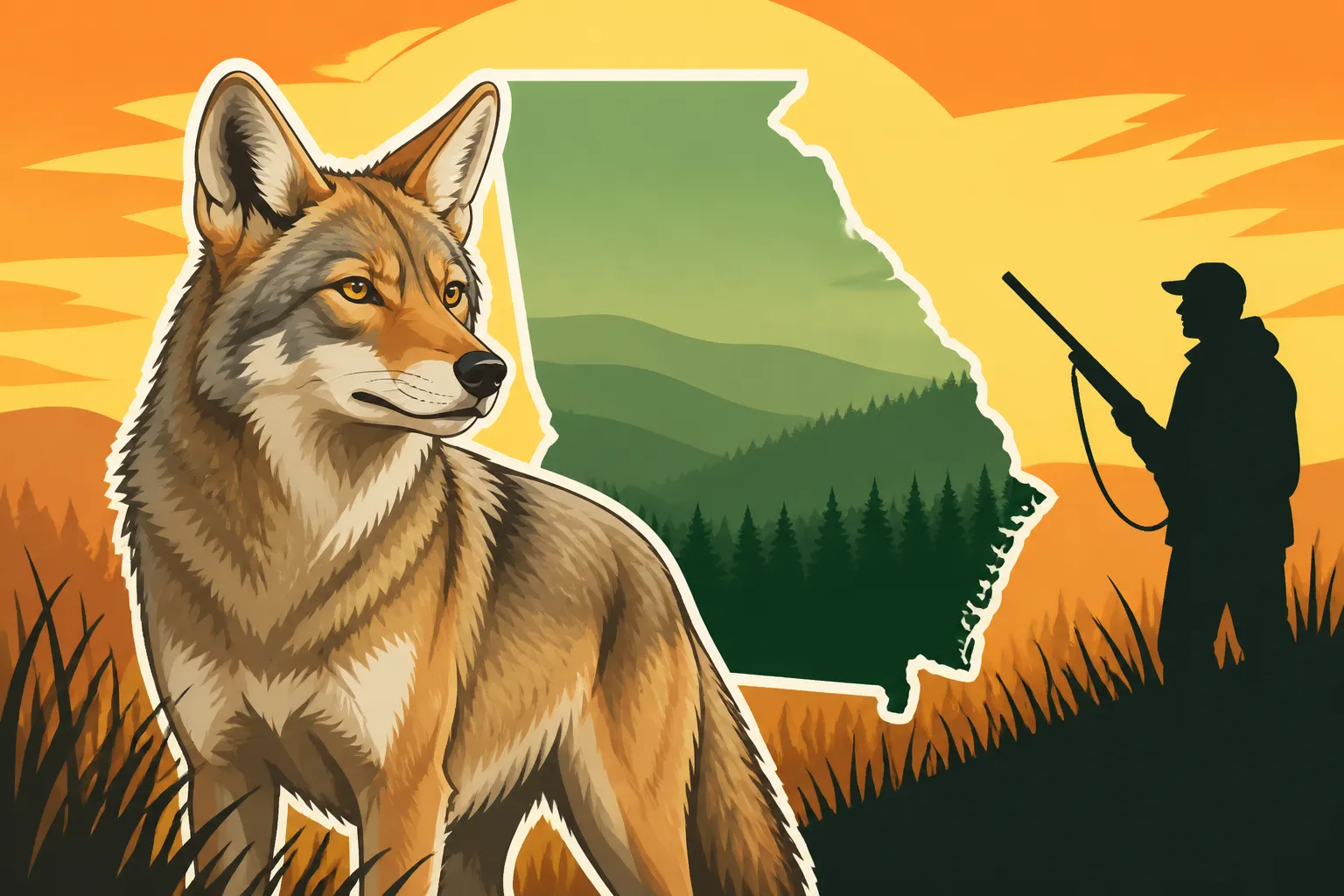
It's easy to feel like coyotes have always been a part of the Georgia landscape, especially with how frequently we encounter them now. For many of us, particularly deer hunters and landowners, they've become a constant presence, sometimes a frustrating one that seems to impact everything from fawn recruitment to small game numbers. But the truth is, these cunning canids are relative newcomers to our state, and their journey here is a fascinating tale of adaptation and opportunity. This guide is going to walk you through when Georgia coyotes first arrived, how they made their way across the country, and why our beloved Peach State proved to be such fertile ground for their expansion.
The Long Journey East: Tracing Coyote Expansion
Before coyotes became a common sight in Georgia, or even the eastern United States, their ancestral home was firmly rooted in the open plains and arid regions of western North America. They were truly creatures of the vast, wild West, playing their part in a delicate ecological balance alongside larger predators like wolves and grizzlies. For centuries, these natural barriers and the sheer expanse of the continent largely kept them within their established territories.
Natural Range and Initial Westward Movement
Historically, the coyote's range primarily stretched across the prairies, deserts, and foothills west of the Mississippi River. They were perfectly adapted to these environments, thriving on small prey and carrion. What kept them from expanding eastward were several key factors: dense eastern forests, which weren't ideal open country for them, and perhaps most significantly, the presence of Eastern timber wolves and red wolves. These larger, dominant canids occupied the top predator niche in the East and likely kept coyote numbers and range in check through direct competition and predation.
However, as European settlers pushed westward across the continent, they brought profound changes to the landscape. Extensive logging opened up dense forests, creating new habitats that were more favorable to coyotes. Simultaneously, and perhaps most critically, human expansion led to the widespread extirpation of wolves and other large predators from much of their historical ranges. This created a massive ecological vacuum, especially in the eastern half of the continent. Coyotes, with their incredible adaptability, keen intelligence, and opportunistic nature, were perfectly poised to fill that void. Their westward expansion wasn't a sudden burst but a gradual, persistent creep, taking advantage of every new opportunity.
The Great Plains and Beyond: Breaking into the East
The initial phase of their expansion saw coyotes pushing north into Canada and south into Mexico, but the most dramatic shift for us in Georgia was their move eastward. With the bison herds dwindling and the wolves largely gone from the Great Plains, coyotes began to flourish and radiate outwards. They proved adept at surviving in human-modified landscapes, thriving in agricultural areas where they could hunt rodents, rabbits, and even domestic livestock if the opportunity arose.
By the mid-20th century, typically by the 1950s and 60s, coyotes had already made significant inroads into states bordering the Mississippi River and were pushing further into the Midwest. This eastward surge wasn't a single, unified front but rather a series of opportunistic advances. They often followed river systems, used railroad tracks and highway corridors as travel lanes, and exploited the mosaic of farms, pastures, and regenerating forests that characterized the changing eastern landscape. It was only a matter of time before this wave reached the Deep South, and specifically, Georgia. Understanding these landscape changes can even be aided by modern tools; sometimes even platforms like GoHunt can offer historical aerial imagery or land use maps that illustrate how habitats have evolved over time, indirectly showing how amenable they became for new species.
Pinpointing Their Arrival in Georgia
For many lifelong Georgia hunters and rural residents, it can feel like coyotes have always been here, given how integrated they are into our ecosystems now. But that's just not the case. Their arrival wasn't a big, fanfare-filled event, but a subtle infiltration that slowly but surely changed the face of Georgia's wildlife.
First Sightings and Confirmed Presence
The first whispers of coyotes in Georgia began to circulate in the late 1960s. These were often anecdotal reports, sightings by farmers or hunters who weren't quite sure what they were seeing. Many of these early reports were dismissed as feral dogs or "coy-dogs," hybrids with domestic canines, which further muddied the waters. It's hard to get a definitive "first day" for any animal's range expansion, especially for a secretive and adaptable one like the coyote.
However, by the early 1970s, Georgia wildlife agencies began to receive more consistent and verifiable reports. It was during this period that the Georgia Department of Natural Resources (DNR), specifically the Wildlife Resources Division, officially confirmed the presence of coyotes as an established species within the state. They weren't just passing through; they were here to stay and, more importantly, they were reproducing. This marked a significant turning point, acknowledging that a new, dominant predator had set up shop in our state. This shift wasn't just interesting ecologically, it introduced new challenges for game management, especially regarding Georgia Deer Population Estimate and Georgia Fawn Survival Rates.
Migration Routes and Habitat Adaptations
Once confirmed, the question became: how exactly did they get here? While there isn't one single "coyote highway," biologists generally believe that coyotes migrated into Georgia from two main directions. One probable route was from the Midwest, pushing south through states like Kentucky and Tennessee, perhaps following the Appalachian mountain chain. Another significant pathway likely involved moving west from the Carolinas, where they had also established populations after spreading from northern states. River corridors, like the Chattahoochee, Oconee, and Savannah, would have provided natural travel lanes, offering cover, water, and prey as they navigated unfamiliar territory.
Their success in Georgia, and across the East, is a testament to their incredible adaptability. Unlike wolves, who generally prefer vast wilderness, coyotes are generalists. They thrive in a diverse range of habitats: from the dense pine forests and swamps of South Georgia, to the mixed hardwoods and farmlands of the Piedmont, and even the suburban fringes around metropolitan areas. This flexibility allowed them to quickly colonize nearly every corner of the state. They learned to hunt everything from deer fawns and rabbits to rodents, insects, and even discarded human food. This opportunistic diet, coupled with their ability to live close to human development, meant that very few areas in Georgia were unsuitable for them. When scouting new hunting grounds, particularly on Public Hunting Land in Georgia, recognizing the signs of coyote presence is as important as looking for deer tracks, and tools like GoHunt can sometimes aid in identifying potential travel corridors or dens on a map.
Why Georgia Was So Welcoming to Coyotes
It's one thing for a species to arrive, but quite another for it to truly thrive and become ubiquitous across an entire state. Georgia offered coyotes a perfect storm of conditions that allowed their population to explode after their initial arrival.
Absence of Apex Predators
Perhaps the most significant factor contributing to the coyote's rapid expansion and population boom in Georgia was the historical absence of native apex predators. As mentioned earlier, eastern wolves and cougars (mountain lions) were extirpated from Georgia and much of the Southeast long before coyotes arrived. This meant that when coyotes moved in, they encountered an environment with no natural rivals for the top predator spot. There were no larger canids to compete for food or territory, and no large felines to prey on adult coyotes or their pups.
This ecological void allowed coyotes to establish themselves without significant checks on their population growth. Without larger predators to keep their numbers in balance, coyote populations were able to grow unchecked, leading to a much higher density than might be seen in areas where wolves or cougars still exist. This lack of competition and predation meant that every new generation of coyotes had a high chance of survival, accelerating their spread and solidifying their place in Georgia's ecosystem, a dynamic that profoundly affected species like White-Tailed Deer Across Georgia.
Abundant Food Sources and Changing Landscapes
Beyond the lack of predators, Georgia provided a veritable buffet of food sources for the incoming coyotes. The state's burgeoning deer population, particularly the vulnerable fawns in spring, offered a consistent and high-calorie food source. Coyotes quickly became adept fawn predators, impacting local deer recruitment in many areas. But their diet was far from limited to deer. Georgia is rich in small game, including cottontail rabbits, squirrels, and various rodents, all of which are staples in a coyote's diet. Georgia Coyote Range and Density maps often overlap heavily with areas of high small game and deer populations.
Furthermore, Georgia's landscape underwent significant changes throughout the 20th century. Vast tracts of forest were logged and then regrew, creating a mosaic of different successional stages. This created abundant "edge habitat"—the transition zones between different types of cover, like forest and field—which is prime territory for many prey species, and consequently, for coyotes. Agricultural expansion also played a role, with fields of corn, peanuts, and soybeans providing not only food for deer and other herbivores but also easy hunting grounds for coyotes targeting rodents or gleaning dropped grains. Even urban and suburban sprawl, with its abundant trash and easy prey like domestic cats and small dogs, offered new niches. Many hunters use platforms like GoHunt to analyze these landscape features, both current and historical, to understand wildlife patterns—including those of the ever-present coyote.
The Impact of Their New Home and Modern Challenges
The arrival and subsequent proliferation of coyotes in Georgia has undeniably reshaped the state's ecological landscape, bringing with it a unique set of challenges and frustrations for hunters, landowners, and wildlife managers alike.
Ecological Shifts and Hunter Frustrations
When coyotes became established, they weren't just another animal; they filled a significant niche as the state's primary medium-to-large predator. This has had measurable effects on prey populations. For deer hunters, the most significant concern revolves around fawn recruitment. Studies have shown that coyote predation can significantly impact the survival rates of newborn fawns, especially in certain areas. This isn't to say coyotes are the only factor influencing deer numbers, but they are a notable one, and it's a valid frustration for hunters who see fewer young deer each year.
Beyond deer, coyotes also prey on wild turkeys, particularly poults and nesting hens, and other ground-nesting birds, as well as small game like rabbits and quail. While these impacts are complex and vary by local conditions and other environmental factors, the perception of increased predator pressure is a very real concern for many sportsmen. This perceived shift leads to discussions about Georgia Predator Impact on Fawn Recruitment and the overall health of game populations. Landowners also face issues, sometimes dealing with Georgia Coyote Attacks on Livestock, leading to very real economic losses.
Living with Coyotes: Management and Hunting Strategies
Given that coyotes are here to stay, management efforts generally focus on understanding their impacts and providing opportunities for population control. In Georgia, coyotes are classified as a non-game species, meaning they can be hunted year-round with no bag limits and often without needing a specific season. This liberal approach allows hunters to help manage local populations on their private land or on Scouting Georgia Public Land Before Season trips.
For hunters, adapting to the presence of coyotes means incorporating them into their overall strategy. Many now actively pursue coyotes as a form of predator control, particularly during the deer off-season or as part of a general hunting plan. Techniques like calling can be highly effective, especially for those interested in Coyote Calling in Georgia Farm Country. While it's unlikely that hunting will eliminate coyotes from Georgia, consistent pressure can help manage local populations, potentially leading to healthier fawn recruitment and small game numbers in specific areas. Utilizing mapping apps like GoHunt can be particularly useful for identifying potential ambush points, travel corridors, or areas where coyote activity is high, giving hunters an edge in managing these adaptable predators.
When considering hunting them, remember to review Georgia Hunter Education Requirements and all local regulations. Whether you see them as a nuisance, a challenge, or just another part of the natural world, understanding when Georgia coyotes first arrived helps us appreciate the dynamic and ever-changing landscape of our state's wild places.
| Era/Timeframe | Event | Significance for Georgia Coyotes |
|---|---|---|
| Pre-1900s | Historical Western North American Range | Primarily west of the Mississippi River |
| Early-Mid 20th Century | Eastward Expansion Across U.S. | Filling ecological void left by extirpated wolves/cougars |
| Late 1960s | First Anecdotal Sightings in Georgia | Initial, unconfirmed reports by residents |
| Early 1970s | Confirmed Presence in Georgia | Official recognition by Georgia DNR, established breeding |
| 1980s – Present | Rapid Colonization & Population Growth in GA | Became ubiquitous across all habitats, impacting prey |
Disclaimer
This article is for general informational purposes only and does not constitute professional advice. Laws, prices and regulations vary by location and change over time. Consult a qualified professional for guidance on your specific situation.