Georgia Squirrel Harvest Numbers
It’s a common misconception that squirrel hunting in Georgia is just a simple walk in the woods, yielding a full limit every time. While plentiful, understanding the nuances of Georgia's squirrel harvest numbers goes far beyond just heading out with a .22. This guide will peel back the layers on these humble game animals, helping you understand population trends, where to find crucial harvest data, and how to use that knowledge to put more squirrels in your game bag.
Understanding Georgia's Squirrel Resource
Georgia offers a rich habitat for squirrels, making them one of the most accessible and enjoyable small game animals to pursue. However, even for squirrels, harvest numbers aren't just arbitrary figures; they're vital indicators of population health and hunter participation. Understanding these figures, even broadly, can help you become a more informed and successful hunter.
Species and Distribution Across the State
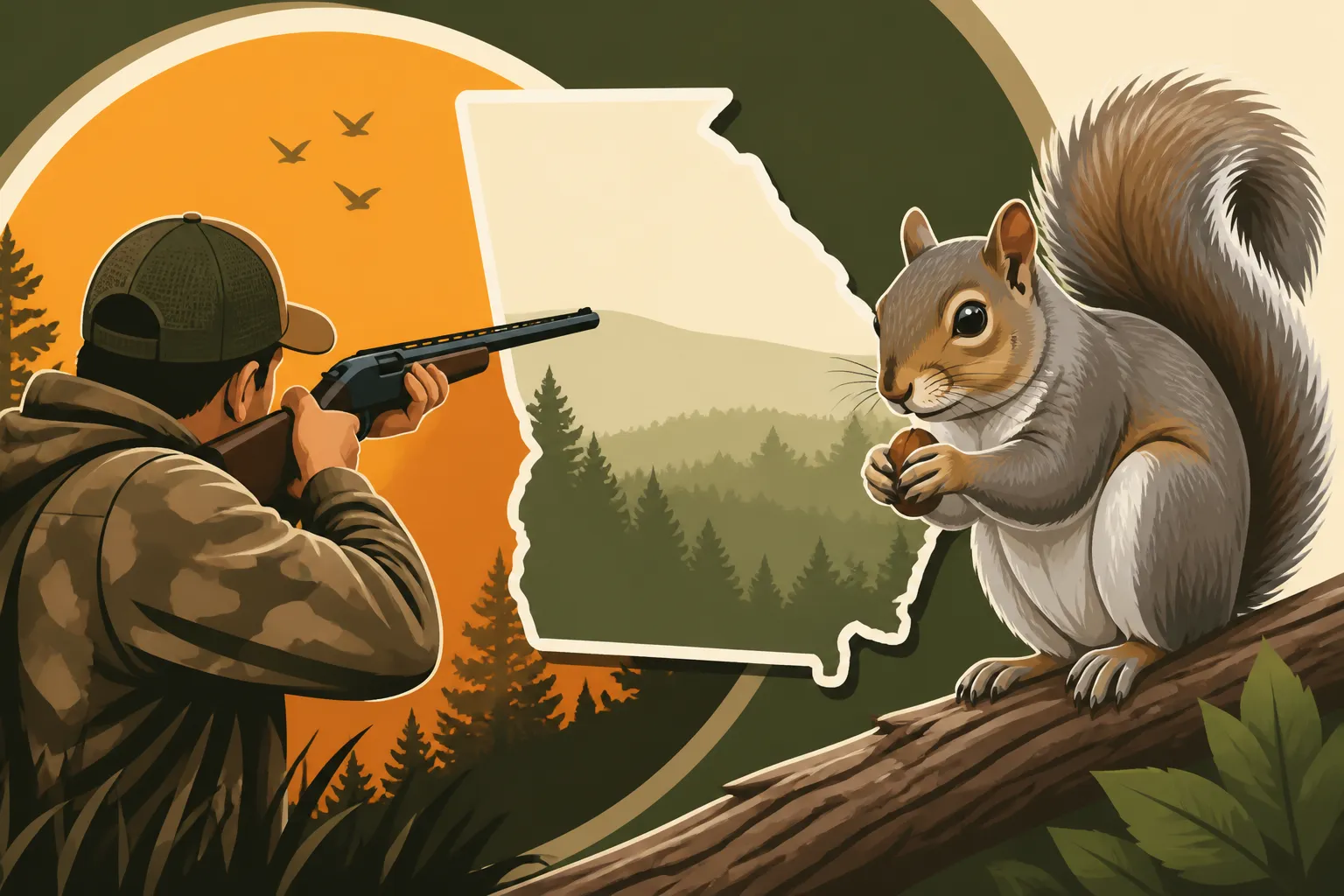
When we talk about squirrels in Georgia, we're primarily focused on two main species: the gray squirrel and the fox squirrel. The gray squirrel, often called the "bushytail," is the more widespread and numerous of the two. You’ll find them in nearly every hardwood forest, bottomland, and even urban parks across the state. They're highly adaptable, often living in close proximity to human development, especially where mature oak and hickory trees provide ample food and den sites. Their populations are robust, and they make up the vast majority of the annual squirrel harvest.
Fox squirrels, on the other hand, are a bit more elusive and considerably larger. They come in a variety of color phases, from tawny reds to grizzled grays and even black, making them truly striking. Unlike their gray cousins, fox squirrels prefer more open, mature pine-oak woodlands, often associated with longleaf pine savannas in the southern part of the state, or open hardwood ridges further north. They tend to be less common and more solitary than gray squirrels, meaning while they are prized by hunters for their size and challenge, they contribute less to the overall statewide harvest numbers. Understanding their distinct habitats, as detailed in our article on Gray Versus Fox Squirrels in Georgia, is crucial for success.
Population Dynamics and Annual Fluctuations
Squirrel populations, like all wildlife, are dynamic. They ebb and flow based on a complex interplay of factors, with food availability being perhaps the most significant. A bumper crop of acorns, hickory nuts, and other mast in the fall often leads to higher overwinter survival rates and better reproductive success in the spring. This, in turn, can result in a higher squirrel population the following season and, consequently, a higher potential harvest for hunters. Conversely, a poor mast year can lead to fewer squirrels, weaker animals, and a tougher hunting season.
Beyond food, other elements play a role. Predation by hawks, owls, bobcats, and coyotes constantly impacts numbers. Disease can also cause localized die-offs, though this is less common with squirrels than with some other species. Weather patterns, especially severe winters or prolonged droughts, can also take a toll. Hunters aiming for a good harvest should always keep an eye on these underlying ecological factors, as they set the stage for the season.
Factors Influencing Squirrel Harvest Numbers
You might think squirrel hunting is straightforward, but what actually shows up in the harvest data is a result of many moving parts. It's not just about how many squirrels are out there, but how accessible they are, how many hunters are pursuing them, and even what the weather's doing.
Habitat Health and Mast Crop Success
The health of Georgia’s forests is paramount to its squirrel populations and, by extension, to hunter success. Squirrels rely heavily on hard mast (acorns, hickory nuts, walnuts) for their primary food source, especially heading into winter. When Georgia experiences a robust mast crop, squirrels are well-fed, healthy, and numerous. They’re also often more concentrated in areas where that mast is abundant, making them easier for hunters to locate. You might find them tirelessly cutting nuts in a specific oak flat, broadcasting their location with falling shell fragments.
However, a poor mast year can turn the tables entirely. Squirrels may be forced to travel further for food, utilize less desirable food sources, or compete more fiercely. This can scatter them, making them harder to pattern, and even reduce their overall numbers, leading to a noticeable drop in harvest figures. Hunters often have to adjust their strategies significantly in these lean years, perhaps focusing on alternative food sources like pine cones or even certain fungi. For insights into adapting, our piece on Hunting After a Poor Acorn Year offers valuable advice, though it's primarily for deer, the principles of scouting for food apply to squirrels too.
Hunter Effort, Participation, and Seasonal Timing
It stands to reason that the more hunters who go out, and the more time they spend afield, the higher the overall harvest numbers will be. Squirrel hunting is often seen as a beginner-friendly pursuit, a great way to introduce new hunters to the woods, or a casual outing for seasoned veterans between big game seasons. As such, hunter participation can fluctuate based on factors like economic conditions, fuel prices, or even the general popularity of hunting in a given year. If deer season is slow, more hunters might turn to squirrels for some action.
The timing of the season also plays a critical role. Georgia Squirrel Season Dates typically run for a long stretch, from late summer well into winter. Early season hunting can be hot and buggy, pushing hunters away. As fall progresses and cooler weather arrives, hunter effort tends to pick up. Similarly, prime hunting times—early mornings and late afternoons—are when most squirrels are active, and thus when most successful harvests occur. A year with many weekends of favorable weather during the peak activity windows often correlates with higher harvest numbers.
Regulatory Framework and Bag Limits
Compared to deer or turkey, Georgia's squirrel hunting regulations are relatively liberal. We enjoy a generous daily bag limit and a season that spans many months. These regulations are designed to provide ample opportunity for hunters without negatively impacting the overall squirrel population, which is generally quite resilient. Because populations are strong, the regulations rarely act as a limiting factor on the total harvest. Hunters can, and often do, take full limits without significant concern for overharvesting the resource.
This isn't to say regulations are unimportant. They provide a framework ensuring sustainable hunting. For instance, while you can hunt squirrels during many other open seasons, understanding specific rules regarding methods, equipment, and public land access is still crucial. The ease of obtaining a Georgia hunting license also contributes to participation, which indirectly impacts harvest numbers.
Accessing and Interpreting Georgia's Harvest Data
While squirrel hunting might seem like a simple pleasure, the state actually tracks harvest data, just like it does for larger game. Knowing where to find this information and how to interpret it can give you a deeper understanding of the resource and help you plan your hunts.
Where to Find Official Harvest Information
The primary source for official Georgia wildlife data, including squirrel harvest numbers, is the Georgia Department of Natural Resources (DNR) Wildlife Resources Division (WRD). They compile annual hunting reports that summarize harvest figures for various game species across the state. These reports are typically available on their official website. You might have to dig a bit, as squirrel data might be part of a larger small game or furbearer report, rather than a standalone publication.
These reports often include total estimated harvest numbers, hunter participation rates, and sometimes even county-level or regional breakdowns. While they might not be as detailed as deer or turkey reports, they still offer valuable insights. For hunters who enjoy geeking out over statistics, these resources are a goldmine for understanding long-term trends and potential hot spots. Tools like GoHunt or the Georgia Outdoors App might integrate some of this public data, but the WRD website is the definitive source. Scouting With the Georgia Outdoors App or understanding onX Layers for Georgia Land Status can complement this by showing where you can apply these insights on the ground.
What the Numbers Tell Us About Squirrel Populations
It’s crucial to understand that harvest numbers are an indicator, not a precise census of the entire squirrel population. They reflect hunter success and effort, which are influenced by the population size and health. A high harvest number generally suggests a healthy, abundant population and good hunting conditions. A decline might signal a tougher year due to a poor mast crop, unfavorable weather, or reduced hunter participation.
When reviewing these figures, look for trends over several years rather than just focusing on a single year's data. A one-year dip isn't usually cause for alarm, but a sustained decline over multiple seasons could indicate a more significant environmental shift or population issue. The good news for Georgia squirrel hunters is that, historically, these populations have remained stable and abundant, reflecting a healthy ecosystem capable of supporting both squirrels and the hunters who pursue them.
Let's look at a hypothetical breakdown of squirrel harvest trends over a few years, keeping in mind actual numbers vary.
| Year | Total Estimated Squirrel Harvest | Gray Squirrels (%) | Fox Squirrels (%) | Hunter Participation (Estimate) | Mast Crop Condition |
|---|---|---|---|---|---|
| Year 1 | 250,000 | 92% | 8% | 40,000 | Excellent |
| Year 2 | 220,000 | 90% | 10% | 38,000 | Good |
| Year 3 | 205,000 | 91% | 9% | 36,000 | Average |
| Year 4 | 240,000 | 93% | 7% | 39,000 | Excellent |
This table illustrates how varying factors, like mast crop condition and hunter participation, can influence annual harvest totals, with gray squirrels consistently forming the bulk of the take.
Boosting Your Own Squirrel Harvest in Georgia
Beyond the statistics, what really matters to most of us is putting squirrels in the pot. Knowing the statewide numbers is one thing, but translating that into personal success requires practical hunting knowledge.
Effective Scouting and Timing Your Hunts
The best way to improve your personal squirrel harvest is through diligent scouting and smart timing. Squirrels are creatures of habit and food. Before the season, or even a few days before your hunt, head into the woods and look for "sign." This includes cut nut hulls (acorns, hickory nuts), particularly under large mast-producing trees. You'll also want to listen for the distinct sounds of squirrels barking, chattering, or even the subtle chink-chink of them cutting nuts. In the vast Chattahoochee-Oconee National Forest Hunting lands or any of Georgia’s numerous WMAs, locating these specific food sources is key.
Timing is everything. Squirrels are most active during the first few hours after sunrise and the last few hours before sunset. During midday, especially in warmer weather, they tend to den up or rest, making them harder to find. Plan your hunts for these peak activity windows. If you’re hunting early in the season when temperatures are still high, consider an early morning hunt and then head home before the heat of the day. As the weather cools, squirrels might remain active longer throughout the day.
Gear and Tactics for Success
Squirrel hunting doesn't require a ton of specialized gear, which is part of its appeal. A good .22 caliber rifle or pistol is ideal for headshots, preserving meat. Alternatively, a small gauge shotgun, like a 20 gauge or .410, loaded with small shot (like #6 or #7.5) works well for fast-moving targets in thick cover. Don't forget good optics; a pair of binoculars, perhaps 8×42, can be invaluable for spotting squirrels camouflaged against tree bark or high in the canopy. While you might be focusing on deer, remember that Georgia Deer Season Overlap With Small Game means you can often combine hunts.
As for tactics, still-hunting and sitting are the most common and effective. Still-hunting involves moving slowly and deliberately through the woods, pausing frequently to scan the trees and listen for activity. Take a few steps, then freeze for several minutes, letting the woods settle and squirrels resume their activity. When you spot one, move slowly into a position for a clear shot. Another highly effective method is to find a productive mast tree, set up quietly nearby (perhaps with a small stool or even using a ground blind, as discussed in Using a Ground Blind on Georgia Public Land), and wait for squirrels to appear. This is especially good for younger hunters or those who prefer less strenuous activity.
A good mapping tool can seriously elevate your squirrel hunting game. Using an app like GoHunt allows you to mark prime mast trees, squirrel den locations, and even track your movements. You can consult aerial photos to identify hardwood bottoms or oak ridges, then save these locations as waypoints for future hunts. This type of digital scouting is just as useful for small game as it is for deer, helping you maximize your time in the field.
Processing Your Harvest and Enjoying the Reward
Once you've made a successful harvest, proper field dressing and processing are important, especially in Georgia's often-warm climate. For squirrels, this typically means skinning and gutting them soon after the shot. Learning to quickly Butchering a Deer at Camp offers transferable skills, though squirrels are much smaller!
Squirrel meat is delicious and versatile. It can be fried, stewed, or used in pot pies. Don't let the small size deter you; a successful squirrel hunt can provide a fantastic meal and a rewarding outdoor experience. It’s an accessible way to put wild game on the table and connect with the rich hunting heritage of Georgia.
Disclaimer
This article is for general informational purposes only and does not constitute professional advice. Laws, prices and regulations vary by location and change over time. Consult a qualified professional for guidance on your specific situation.