Georgia Predator Impact on Fawn Recruitment
It’s a concern many Georgia hunters whisper about around the campfire: "Where are all the fawns?" You spend months scouting, plant your food plots, hang your stands, and then during deer season, the doe groups you see seem to be missing the little ones. It's a disheartening feeling, and it often leads to questions about what's happening to the future of our deer herd. This guide is here to shed some light on one of the most significant, yet often unseen, challenges facing Georgia's whitetails: the impact of predators on fawn recruitment.
What is Fawn Recruitment and Why Does it Matter?
When we talk about the health of Georgia's deer population, "fawn recruitment" is a term that often comes up in wildlife management circles, but what does it really mean for us as hunters? It's more than just fawns being born; it's about fawns making it to adulthood.
Defining Fawn Recruitment
At its core, "fawn recruitment" refers to the number of fawns that survive long enough to join the breeding population. Typically, this means fawns that live past six months of age or, more broadly, those that make it to their first birthday. Think of it as the nursery class for our deer herd; if too few graduate, the school quickly empties out.
This isn't just a technical term for biologists; it's a critical indicator of the deer herd's overall health and sustainability. If recruitment numbers are consistently low, it directly translates to fewer deer in the woods in the coming years. This impacts our ability to have robust hunting seasons and meet harvest goals. When you notice fewer yearlings during bow season or a lack of new blood in the doe groups you monitor, you're observing the effects of recruitment, or the lack thereof. A healthy population needs a steady stream of new individuals to replace those lost to old age, disease, or hunting pressure. Without strong recruitment, even a large initial population can decline over time. Understanding Georgia Deer Herd Size isn't just about counting heads; it's about the health of the fawns entering that count.
Factors Affecting Fawn Survival Beyond Predation
While predator impact is definitely the focus here, it’s important to remember that fawn survival is a complex puzzle with many pieces. Predation might be a huge factor, but it's rarely the only one. Other environmental and biological elements can play a significant role, sometimes even exacerbating the predator problem.
Consider the role of habitat quality. A doe that is well-nourished due to abundant, high-quality forage is more likely to give birth to healthy, robust fawns. These fawns, in turn, often have a better chance of surviving their first few critical weeks. Conversely, does in poor habitat, perhaps struggling with nutrition, might produce weaker fawns, or even fewer of them. Drought conditions can stress both the does and the fawns, making them more vulnerable. Similarly, severe weather events, like a late-season cold snap after fawning has begun, or prolonged heavy rains leading to flooding in prime bedding areas, can directly impact fawn survival. Diseases, though less common in very young fawns, can also play a role, as can less obvious factors like human disturbance in critical fawning areas. It's often a combination of these stressors that truly challenges a fawn's chances, and a stressed fawn becomes an easier target for a waiting predator.
Identifying Georgia's Primary Fawn Predators
When we think about threats to young deer in Georgia, a few usual suspects immediately come to mind. While some are well-known, others often operate under the radar, contributing significantly to fawn mortality. Understanding who these predators are and how they hunt is the first step in comprehending their impact.
The Ever-Present Coyote
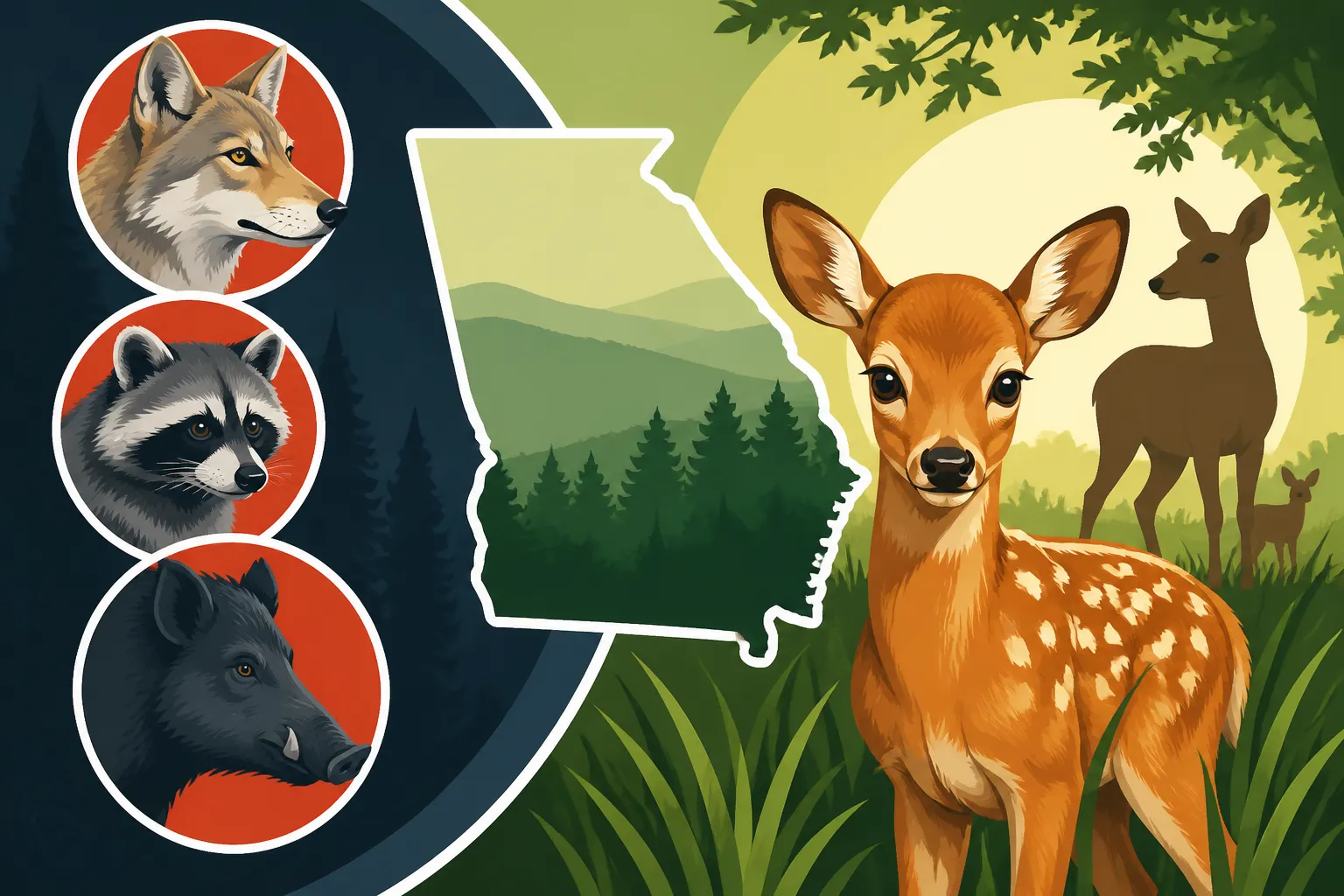
Across Georgia and much of the Southeast, the coyote stands as the undisputed champion of fawn predation. These highly adaptable canids have spread throughout the state, from the North Georgia mountains to the coastal plain, making their presence felt in almost every deer habitat. Coyotes are incredibly opportunistic hunters, and a newborn fawn, with its small size and limited mobility, is an irresistible target.
Coyotes will actively hunt fawning grounds, often using their keen sense of smell to locate a fawn hidden in dense cover. A lone coyote can easily dispatch a fawn, but groups, even small family units, can be even more effective. They don't just stumble upon fawns; they learn patterns, identifying areas where does are likely to drop their fawns and patrolling those regions. This constant pressure during the fawning season can have a significant impact on recruitment rates, especially in areas with high coyote densities. Hunters who have heard the yips and howls of a coyote pack at dawn or dusk know they are always on the move, always looking for an easy meal. For a deeper dive into their prevalence, check out Georgia Coyote Range and Density.
Feral Hogs and Their Destructive Impact
While coyotes often get the most attention, feral hogs are perhaps the most underestimated and devastating predator of fawns in Georgia. Many hunters view hogs primarily as competitors for food sources or as destructive rooters, but their omnivorous diet means they will absolutely prey on fawns. A sounder of hogs moving through a thicket can literally vacuum up every fawn in their path.
Hogs are incredibly prolific, reproducing quickly and often, which means their populations can explode, increasing their impact on fawns. They don't need to actively "hunt" in the way a coyote does; a hog simply foraging in a fawning area will readily consume any fawn it encounters. This is particularly problematic in the vast bottomland swamps, dense pine plantations, and agricultural areas of South Georgia where hog populations are notoriously high. Beyond direct predation, their constant rooting activity destroys ground cover and critical fawning habitat, indirectly making surviving fawns more vulnerable. The combination of direct predation and habitat degradation makes feral hogs a double threat to Georgia's fawn recruitment. They cause widespread Damage Feral Hogs Cause Georgia Farms, but their impact on deer is just as profound.
Other Notable Predators
While coyotes and feral hogs are the top two, other predators also contribute to fawn mortality in Georgia, albeit often on a smaller, more localized scale.
- Black Bears: In certain areas, particularly the mountainous regions of North Georgia or the dense swamps of the Ocmulgee and Altamaha zones where bear populations are healthy, black bears can certainly take fawns. While their diet is primarily vegetarian, bears are opportunistic and will not pass up an easy meal. A bear that stumbles upon a bedded fawn, especially during the spring when protein sources might be less abundant, will readily consume it. Their impact is usually less widespread than coyotes or hogs, but locally, it can be significant. More on these impressive animals can be found in Georgia's Black Bear Population.
- Bobcats: These elusive wildcats are expert ambush predators. While they typically focus on smaller prey like rabbits, squirrels, and birds, a young fawn presents a substantial meal. Bobcats are stealthy and can easily sneak up on a bedded fawn. Their impact is generally less than that of coyotes, but they are certainly contributors to the overall predator pressure on fawns, especially in areas with good cover that favors their hunting style.
- Domestic Dogs: This is perhaps the most frustrating and often overlooked category. Free-ranging domestic dogs, whether they are strays, abandoned pets, or simply uncontained pets from nearby residences, can cause immense damage to fawn populations. These dogs, often hunting in packs, will chase and kill fawns, sometimes just for sport rather than sustenance. This issue is particularly prevalent in the rural-suburban interface where human populations encroach on deer habitat. The emotional toll of seeing a fawn killed by a domestic dog is immense, and it’s an issue that directly reflects irresponsible pet ownership.
Mechanisms and Contributing Factors to Predation
Understanding who the predators are is only half the battle; knowing how and why fawns are so vulnerable helps us grasp the true scope of the problem. It's a delicate balance of biology, behavior, and environment that often tips in favor of the predator.
Vulnerability of Young Fawns
Fawns are born with a primary defense mechanism: immobility and camouflage. This "hider" strategy involves the fawn lying perfectly still, relying on its spotted coat to blend into dappled sunlight and its lack of scent to evade detection. For certain visual predators, this can be effective. However, it's a huge liability against predators that hunt by scent, like coyotes and hogs. They can simply track a doe or systematically search an area until they literally sniff out the hidden fawn.
The first few weeks of a fawn's life are incredibly perilous. Newborns have very limited mobility, making escape virtually impossible if a predator gets too close. Their small size means they offer little resistance. Does often leave their fawns hidden for extended periods, returning only to nurse, a necessary behavior to avoid leading predators directly to the fawn's location. This strategy, while evolutionarily sound, leaves the fawn exposed and alone for crucial hours each day. The peak fawning season, usually late spring to early summer in Georgia, becomes a critical window where these tiny, vulnerable creatures face a gauntlet of threats. The difference between a thriving herd and a struggling one can often be traced back to Georgia Fawn Survival Rates during these initial weeks.
Habitat Quality and Cover
The old adage "habitat is king" holds especially true when discussing fawn survival. The quality and type of habitat directly influence a fawn's chances against predators. Dense, diverse cover provides fawns with numerous hiding spots, making it harder for predators to locate them. Think of thick briar patches, regenerating clear-cuts, young pine plantations with dense undergrowth, or extensive stands of tall native grasses. These areas offer both visual obstruction and scent baffling, giving fawns a better chance to go undetected.
Conversely, fragmented or poor habitat leaves fawns exposed. If a fawning area lacks adequate hiding spots, predators have an easier time locating and preying on young deer. Large, open mature timber stands with little understory, or expansive monoculture agricultural fields without adjacent brushy cover, offer little refuge. The doe may have few safe places to drop her fawn, and once dropped, the fawn has nowhere to effectively hide. Good habitat not only provides physical protection but also offers better nutrition for the mother, which, as we discussed, leads to healthier, more resilient fawns.
Predator-Prey Ratios and Cycles
The simple truth is: the more predators there are, the greater the potential impact on prey populations. When predator populations, particularly coyotes and feral hogs, are high, fawn recruitment can suffer significantly. It's a numbers game, and if there are too many mouths to feed among the predators, fawns become an increasingly important food source.
Predator-prey dynamics aren't always straightforward. Predator populations can fluctuate based on the availability of all prey species, not just deer fawns. For instance, if rabbit and rodent populations are booming, coyotes might exert less pressure on fawns. However, when other prey is scarce, fawns become an even more attractive and necessary food source. These cycles can lead to periods of very low fawn recruitment, especially if multiple predator populations are high simultaneously. Wildlife managers constantly monitor these ratios, as an imbalance can have long-term consequences for the deer herd.
Strategies to Mitigate Predator Impact on Fawn Recruitment
While we can't eliminate every predator, there are indeed strategies that hunters and landowners can employ to help swing the odds back in favor of Georgia's fawns. These approaches often involve a combination of habitat work and, in some cases, direct predator management.
Habitat Enhancement and Management
One of the most effective long-term strategies for improving fawn recruitment is through proactive habitat management. A healthy habitat benefits deer in countless ways, not least by providing better cover for vulnerable fawns. Think of it as creating a fortress for the little ones.
- Dense Cover Creation: Focus on fostering thick, tangled areas. This can involve prescribed burning, which, when done correctly and on a rotation, can stimulate dense regrowth of grasses and forbs, as well as create thickets. Timber thinning, rather than clear-cutting vast tracts, can also encourage understory growth. Creating brush piles from downed trees can offer immediate, effective hiding spots.
- Early Successional Habitat: Fawns thrive in early successional habitats – areas where fields are reverting to forest, or where recent timber harvests have left a tangle of young growth. These areas provide both food and unparalleled hiding cover. For hunters looking to enhance their understanding of Georgia’s dynamic deer habitat, platforms like GoHunt can be invaluable for identifying and managing these areas.
- Food and Nutrition: While not direct predator control, ensuring does have access to abundant, high-quality forage throughout the year leads to healthier, more robust fawns that are inherently more resilient to predation. This means managing for diverse native browse, planting food plots (where permissible), and ensuring water sources are available.
By providing optimal hiding spots, we give fawns a fighting chance. It’s about making the predator's job harder, forcing them to expend more energy to find a meal, and thus, often encouraging them to move on. This kind of habitat work also supports other game species, like Longleaf Pine and Quail Habitat, creating a richer ecosystem overall.
Targeted Predator Control
While blanket predator removal campaigns are often ineffective and can even be detrimental to ecosystem health, targeted predator control, specifically aimed at reducing coyote and hog populations during critical fawning periods, can show localized benefits.
- Timing is Key: The most impactful predator control efforts for fawn recruitment occur just before and during the fawning season. Reducing predator numbers at this specific time means fewer predators are present when fawns are most vulnerable.
- Methods for Coyotes: Trapping is often the most effective method for consistent coyote removal. Hunters can also employ Coyote Calling in Georgia Farm Country to harvest coyotes, especially during the colder months when their fur is prime. Consistent pressure can make a difference on a local level, but it requires dedication.
- Methods for Feral Hogs: Hogs are prolific, and effective control requires a multi-faceted approach. Trapping is highly efficient for capturing multiple animals at once. Hunting, including night hunting where legal and safe, also contributes to population reduction. Some landowners utilize Running Dogs on Georgia Feral Hogs to locate and dispatch them. Understanding local conditions, which can be scouted more effectively with mapping tools often found on platforms like GoHunt, is key to planning these efforts.
- Consistency: Predator control isn't a one-and-done solution. Both coyotes and hogs have high reproductive rates and are quick to recolonize an area. Ongoing, consistent effort is required to maintain reduced predator numbers and see sustained benefits for fawn recruitment.
Reducing Domestic Dog Impact
This is perhaps the simplest, yet often most challenging, aspect of predator management, as it involves human behavior directly. Educating neighbors and communities about responsible pet ownership is crucial.
- Leash Laws and Containment: Encourage adherence to local leash laws and emphasize the importance of keeping dogs contained, especially in rural areas adjacent to deer habitat. Fencing, secure kennels, and supervision are key.
- Spay/Neuter Programs: Supporting local spay/neuter initiatives can help reduce the number of stray and free-ranging dogs over time.
- Reporting Strays: Encouraging the reporting of stray or feral dogs to local animal control agencies can help remove problematic animals from the landscape before they impact wildlife. A friendly conversation with a neighbor whose dog is regularly ranging free can sometimes prevent a tragedy.
Monitoring Fawn Recruitment and Predator Populations
As hunters and conservationists, understanding the health of our deer herd and the dynamics of predator populations is an ongoing process. We play a vital role in collecting and interpreting data, helping to inform management decisions that benefit Georgia's wildlife.
Hunter Observations and Data Collection
Your eyes and experiences in the field are incredibly valuable. Hunters spend countless hours in deer habitat, observing wildlife behavior that professional biologists can't always capture.
- Fawn Sightings: Pay close attention to how many fawns you see with does throughout the season. Are you seeing one, two, or no fawns with individual does? Are the fawns appearing healthy and robust, or do they seem small and stressed? Keeping a personal log of these observations over time can reveal trends in your hunting area.
- Predator Activity: Note sightings of coyotes, hogs, or even domestic dogs. Are you seeing an increase in tracks, scat, or hearing more vocalizations? This anecdotal evidence, when combined with observations from other hunters, can paint a broader picture of local predator pressures.
- Harvest Data: While not directly about fawns, the deer you harvest provide crucial information. Are you seeing an adequate number of yearling bucks in the population? Yearling buck numbers are a good indicator of past fawn recruitment success. Tools like GoHunt can help hunters keep detailed logs of their sightings and harvest data, contributing to their personal understanding of local deer and predator trends. Analyzing Georgia Buck-to-Doe Ratio by Region can also provide insights into the overall population structure, which is influenced by recruitment.
Wildlife Agency Research and Surveys
Georgia's wildlife management agencies, like the Georgia Department of Natural Resources (DNR), undertake extensive research and surveys to scientifically assess fawn recruitment and predator populations.
- Fawn Survival Studies: Biologists often conduct specific studies involving tagging newborn fawns with radio collars or GPS units. This allows them to track individual fawns and determine survival rates and causes of mortality. These studies provide invaluable, hard data on how many fawns are being lost to various factors, including predation.
- Camera Trap Surveys: Strategically placed trail cameras can help estimate deer and predator populations, as well as observe their interactions. This non-invasive method provides visual evidence of species presence and relative abundance.
- Population Modeling: Using all available data – hunter harvest reports, observation surveys, survival studies, and environmental factors – wildlife managers develop sophisticated models to estimate overall deer populations and predict recruitment success. This helps them make informed decisions about bag limits, season structures, and specific management interventions. Understanding these population estimates, like Georgia Deer Population Estimate, is foundational to effective management. Many hunters also rely on resources, including mapping and data analysis features from providers like GoHunt, to inform their strategies and understand the broader context of wildlife management efforts.
By combining the observations of passionate hunters with the scientific research of wildlife agencies, we build a more complete understanding of Georgia's deer herd and the challenges it faces, ensuring a healthy future for our hunting traditions.
Primary Fawn Predators in Georgia: A Comparison
To better understand the distinct threats posed by different predators, here's a quick overview of their key characteristics and management considerations.
| Predator | Primary Impact Mechanism | Key Characteristics | Management Considerations |
|---|---|---|---|
| Coyote | Opportunistic predation on vulnerable newborns | Highly adaptable, widespread, intelligent, scent-based hunter | Targeted removal (trapping, calling), consistent effort, timing with fawning season |
| Feral Hog | Opportunistic predation, habitat destruction | Omnivorous, prolific, destructive rooters, widespread across Georgia | Trapping (highly effective), year-round hunting, habitat protection, consistent pressure |
| Black Bear | Opportunistic predation (less common overall) | Larger, primarily herbivorous but will take fawns if encountered | Habitat management to reduce encounters, focus on non-lethal deterrents in residential areas |
| Domestic Dog | Chase/kill, sport, nuisance, often by packs | Free-ranging, sometimes feral, can be very destructive | Responsible pet ownership, leash laws, animal control, community awareness |
| Bobcat | Opportunistic predation (smaller scale contribution) | Elusive, ambush predator, primarily targets smaller prey but will take fawns | Habitat enhancement (dense cover), generally less focus on direct removal due to lower impact |
Disclaimer
This article is for general informational purposes only and does not constitute professional advice. Laws, prices and regulations vary by location and change over time. Consult a qualified professional for guidance on your specific situation.