Setting Up Against a Big Pine
It’s a tale as old as time for Georgia hunters: you've scouted a promising area, seen some fresh sign, and now it's time to settle in. But whether you're still-hunting, planning a short sit, or setting up for a calling sequence, finding truly effective, natural concealment on the ground can feel like a constant battle. You don't want to be silhouetted against the skyline or stand out like a statue in an open woods. This guide is all about turning that frustration into a winning strategy, showing you how to perfectly utilize a big pine tree as your ultimate natural blind, offering both cover and clear sight lines for a successful hunt.
Why a Big Pine is Your Go-To Natural Blind
When you’re trying to melt into the Georgia woods without dragging in a bulky ground blind, a substantial pine tree can be an absolute godsend. These majestic trees offer inherent advantages that lighter foliage or smaller hardwoods just can't match, making them a prime choice for impromptu setups or planned ambush points.
The Unmatched Concealment of a Broad Trunk
Think about it: a big, mature pine tree in Georgia often boasts a trunk several feet in diameter, sometimes even wider. This isn't just a bit of cover; it's a solid, impenetrable wall that breaks up your outline completely. When you settle in tightly against that bark, you become virtually invisible from any angle directly behind the trunk. This is especially critical when you're dealing with wary whitetails or keen-eyed turkeys. They're constantly scanning, looking for anything that seems out of place – a vertical human form sticks out, but a hunter seamlessly integrated into the thick girth of a pine? That's a different story.
Beyond just the sheer size, the texture and color of pine bark often blend beautifully with common hunting apparel, especially camo patterns designed for Georgia's diverse forests. The rough, furrowed bark creates natural shadows and breaks up light, further aiding your concealment. This makes them ideal for situations like Still-Hunting South Georgia Pine Flats, where visibility can be long but natural cover sparse. You can move slowly through these flats, then quickly pivot and set up against a massive pine when you spot movement or a promising funnel.
Strategic Benefits of Low-Hanging Limbs and Pine Straw
It's not just the trunk that offers protection. Many mature pines, particularly in areas where they aren't crowded out by other trees, often retain some lower limbs. These limbs, while not always providing total visual blockage, create a natural "skirt" around the base of the tree. This additional layer of cover helps to further disrupt your outline and can even obscure some of your movements as you draw a bow or shoulder a rifle. Even dead, dry limbs can be advantageous, adding to the visual clutter that confuses a deer's discerning eye.
Then there's the pine straw. Oh, the glorious pine straw! Georgia's pine forests are famous for their thick, soft carpet of fallen needles. This isn't just pretty; it's incredibly practical for hunters. Setting up against a big pine usually means you're on a generous cushion of pine straw. This makes for a much quieter approach and a much more comfortable sit. No crunching leaves or snapping twigs underfoot when you're trying to shift position or sneak into your spot. It absorbs sound, which is a huge advantage when you're trying to remain undetected by game that relies heavily on its hearing. Plus, it provides a softer, drier base for a long wait, especially during damp Georgia mornings.
Scouting for the Perfect Pine Setup
Choosing the right pine isn't just about finding the biggest tree in the woods. It's about strategic placement, understanding the terrain, and anticipating game movement. A well-chosen pine isn't just a hiding spot; it's a command center that maximizes your chances of success.
Location, Location, Location: Where Deer Travel
The most magnificent pine in the world is useless if it’s not along a deer travel corridor or near a key food source. When scouting, you're not just looking for a tree; you're looking for a tree in the right place. This means actively seeking out big pines that sit on the edges of food plots, along established rub lines, near bedding areas, or in natural funnels between different habitat types. For instance, a lone, grand pine on the corner of a cutover or Setting Up on a Piedmont Field Edge can offer an incredible vantage point over a feeding area while providing ample back cover.
Consider pines that are adjacent to thick cover, such as a clear-cut regrowth edge or a swampy bottomland. Deer often skirt these dense areas, using the more open pine stands as travel routes. A big pine strategically positioned at a pinch point where two types of cover converge can be a goldmine. You might even find success along a logging road where deer feel comfortable walking, and a large pine just off the trail provides the perfect ambush point. Tools like GoHunt can be invaluable here, allowing you to use aerial photos to identify these features and pinpoint potential setup locations before you even step foot in the woods. You can mark specific large pines that appear to be along travel corridors or overlook key habitat features.
Features of an Ideal Pine for a Ground Blind
Once you've identified a promising location, it's time to scrutinize the individual trees. Not all big pines are created equal for a hunting setup. You're looking for a few key characteristics to elevate your hide.
First and foremost, the pine needs to be large. We're talking about a trunk wide enough to completely disappear behind, offering a full screen from multiple angles. The wider, the better. Next, look at the trunk itself – ideally, it will be fairly straight and clear of too many low branches that might impede your draw or shot. While some lower limbs can offer additional cover, too many can block your sight lines.
Consider the surrounding terrain and smaller vegetation. Is there any brush, palmetto, or saplings around the base of the pine that can further enhance your concealment? This natural undergrowth acts like an extension of your blind, helping to break up your outline even more. A pine with a small cluster of cedars or hollies at its base is often better than one standing completely alone in a clean, open woods. Finally, think about your shooting lanes. Even with perfect concealment, you need clear lanes to make an ethical shot. Pick a pine that naturally offers good lanes in the directions you expect game to appear. Sometimes, a few quick snips with a small pair of hand pruners can open up critical shooting windows without disturbing the natural cover too much.
Table: Key Features of a Great Pine Setup
| Feature | Description | Benefit for Hunters |
|---|---|---|
| Large Diameter | Trunk wide enough to completely obscure a standing or sitting hunter. | Full silhouette break-up, maximum concealment from multiple angles. |
| Low-Hanging Limbs | Some branches, dead or alive, extending to chest height or lower. | Additional visual disruption, breaks up vertical lines, offers dappled shade. |
| Dense Pine Straw | Thick accumulation of fallen pine needles at the base. | Sound dampening for quiet movement, comfortable sitting, dry ground. |
| Strategic Location | Along travel corridors, near food sources, or in natural funnels. | Maximizes encounters with game, positions you where deer expect to move. |
| Surrounding Cover | Smaller bushes, saplings, or thickets immediately around the pine. | Enhances natural camouflage, provides layering for ultimate concealment. |
| Clear Shooting Lanes | Openings in the canopy and undergrowth in anticipated directions of travel. | Ensures ethical, unobstructed shots without revealing your position. |
Mastering the Setup: Blending In and Maximizing Your Shot
Once you’ve found that perfect pine, the real artistry begins. It’s not enough to simply lean against it; you need to become one with it. This involves a careful approach, precise positioning, and an understanding of the conditions to truly maximize your effectiveness.
The Silent Approach and Positioning
You've done your scouting, and you know which big pine is your chosen spot. Now, how do you get there without blowing your cover? A silent approach is paramount. Utilize the pine straw carpet to your advantage, treading softly and deliberately. Avoid crunching through fallen leaves or snapping twigs. If you’re hunting early archery season, consider wearing lightweight, quiet clothing that won't snag or rustle against brush. For later seasons, pay attention to layers that minimize noise as you move.
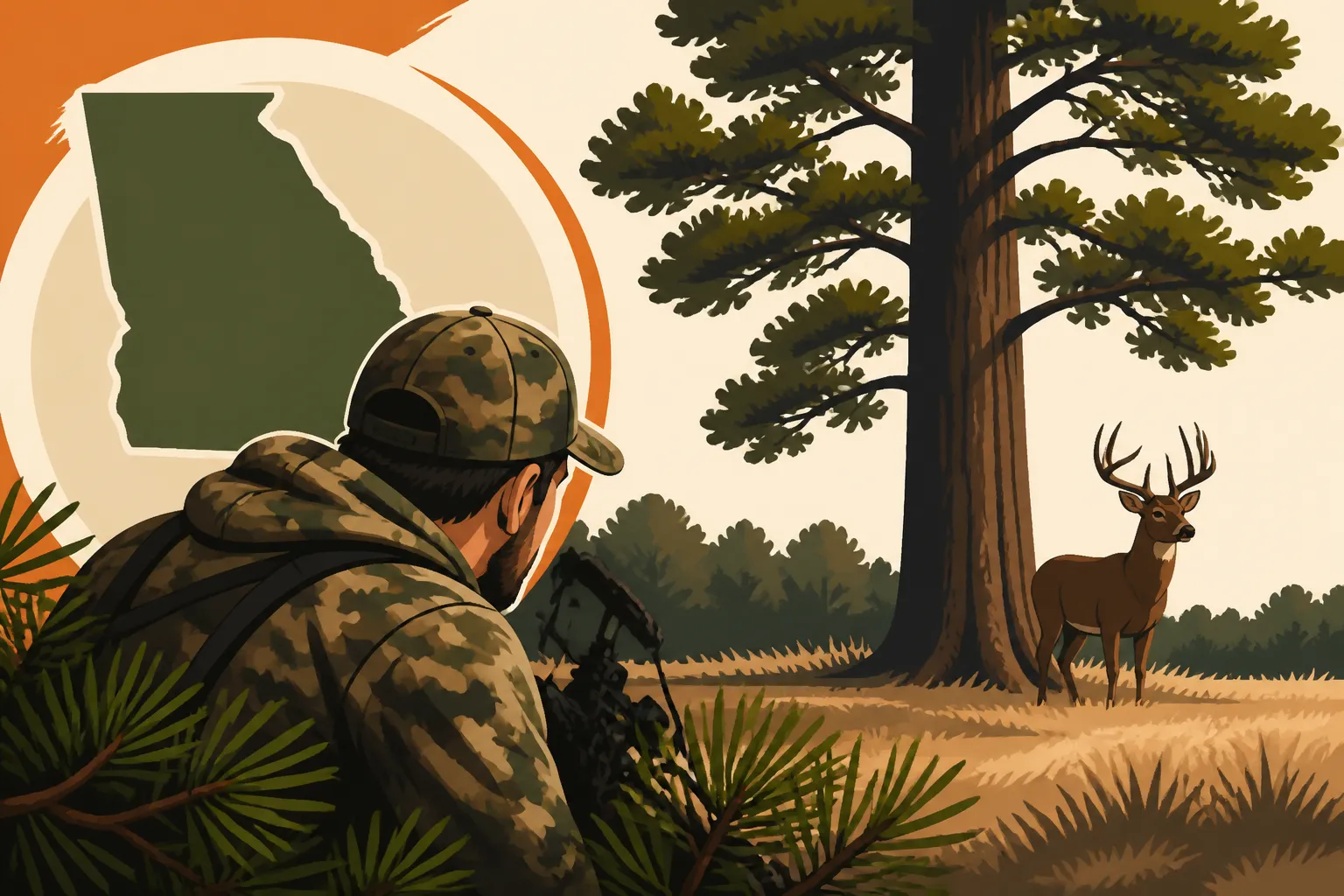
When you reach your chosen pine, position yourself tightly against the trunk. The goal is to completely eliminate your silhouette. Sit or kneel directly against the bark, ensuring your back, shoulders, and even your head are pressed against it. This isn't about being comfortable; it's about being invisible. If you have a small, portable hunting seat or cushion, place it directly on the pine straw at the base of the tree. This offers a bit of comfort for a longer sit while keeping your profile low. Orient yourself so that the widest part of the tree is between you and the most likely direction of game approach. This gives you the maximum amount of "shielding" from the trunk. You might find that looking at your aerial maps on GoHunt during your approach helps you stay on track and anticipate any potential obstacles or open areas to avoid. This can also help you determine the best Entry Routes Through a Standing Peanut Field or other open areas to approach your pine from.
Managing Wind, Sun, and Shot Angles
Beyond just hiding, you need to consider the elements. Wind direction is always crucial. When setting up against your pine, ensure the prevailing wind is in your favor, carrying your scent away from where you expect deer to approach. Even with perfect cover, a deer will bust you immediately if it smells you. Often, this means sacrificing some visual advantage to maintain a good wind, especially in areas with tricky terrain like those described in Wind and Thermals on a Mountain Ridge. Thermals, the rising and falling air currents, are also a factor, particularly in morning and evening hunts. Understand how they typically flow in your chosen area and adjust your setup accordingly.
The sun can also be your friend or your enemy. Try to position the pine so the sun is either at your back or directly in the deer's eyes during prime hunting hours. If the sun is in your face, it will silhouette you and make it incredibly difficult to see incoming game. If it's at your back, you'll be naturally shadowed, and the glare might make it harder for game to pick you out.
Finally, think about your shot angles. Before game appears, identify your shooting lanes in every probable direction. Practice drawing your bow or shouldering your rifle, ensuring you can do so smoothly and quietly without hitting any branches or revealing yourself. Sometimes, a tiny branch that looks insignificant can completely deflect an arrow or obscure a rifle shot. Clear these small obstacles if necessary, but do so minimally to maintain the natural look of your setup. Remember that with a bow, you often need to pivot your entire body, not just your head, so ensure you have the space and the quiet pine straw to do so undetected.
Beyond the Bark: Advanced Tactics and Common Pitfalls
While setting up against a big pine is a fundamental skill, there are nuances and advanced considerations that can elevate your success even further. Understanding these can mean the difference between seeing deer and tagging one.
Integrating Calls and Decoys
A big pine setup offers a fantastic base for calling sequences, especially for deer and turkeys. For deer, hunkering down against a massive trunk provides a solid, steady position for using grunt tubes, bleat cans, or even rattling antlers. The thick wood behind you helps to muffle any sound that might travel backward, pushing your calls forward. If you're using a ground blind or setting up against a big pine, consider how Rattling Volume in Thick Pine Cover needs to be adjusted. You don't want to overdo it in dense areas, but the pine can help direct the sound.
For turkeys, the pine becomes your stage. You can easily lean forward to cluck, purr, or yelp on a slate or box call. The natural cover helps hide your movements as you adjust your call or peek around the trunk. If you use a decoy, place it out in front of your pine at a distance that creates an ethical shot. Position it to face away from you, as if it's casually feeding, drawing the game's attention away from your hiding spot. However, make sure your pine is wide enough that you aren't silhouetted when you lean out to see the results of your calling.
Public Land Considerations and Pressure
Hunting public land in Georgia often means dealing with increased pressure. While a big pine can be an excellent natural blind, it's also a common setup. To truly stand out, you might need to find pines that are in less obvious locations. This could mean walking a bit further than others, venturing into rougher terrain, or utilizing scouting tools like GoHunt to find overlooked pockets. Using detailed maps to identify areas others might walk past, such as remote creek bottoms or thick transition zones, can lead you to prime, undisturbed pines. You might be surprised at the difference just an extra half-mile walk can make. This is critical for Finding Ground Others Walk Past on pressured WMAs.
Also, be aware of visibility from roads or trails. While you want good shooting lanes, you don't want to be easily spotted by other hunters. Position yourself for angles that favor game coming in, but avoid being completely exposed to main travel paths for humans. Sometimes, picking a pine that requires a slightly more challenging approach can deter casual hunters and leave you with more undisturbed hunting.
Adapting to Habitat Changes
The Georgia landscape is constantly changing, and what was a prime pine setup last year might not be this year. Timber companies might have clear-cut an area, or a natural disaster might have opened up new travel corridors. Always be scouting and adapting. If a clear-cut happens, look for the big pines on the new edges – these become critical ambush points as deer navigate the change. Similarly, after a poor acorn year, deer patterns will shift dramatically towards other food sources. Your go-to pine on a ridge might be quiet if the acorns aren't there, so you'll need to find pines overlooking Late-Season Food Sources for Georgia Whitetails like green fields or agricultural plots.
Using satellite imagery on platforms like GoHunt can help you stay ahead of these changes, allowing you to see recent timber operations or agricultural shifts from the comfort of your home. This proactive scouting, combined with on-the-ground investigation, ensures that your big pine strategy remains relevant and effective no matter how the Georgia woods evolve.
Disclaimer
Hunting involves inherent risks, including but not limited to those associated with firearms, archery equipment, wildlife encounters, and outdoor conditions. Always prioritize safety, adhere to all local, state, and federal hunting regulations, and ensure you have the proper licenses and permits. The information provided in this guide is for informational purposes only and should not replace professional instruction or local wildlife agency guidelines. It is the responsibility of each individual hunter to ensure their own safety and ethical conduct in the field.