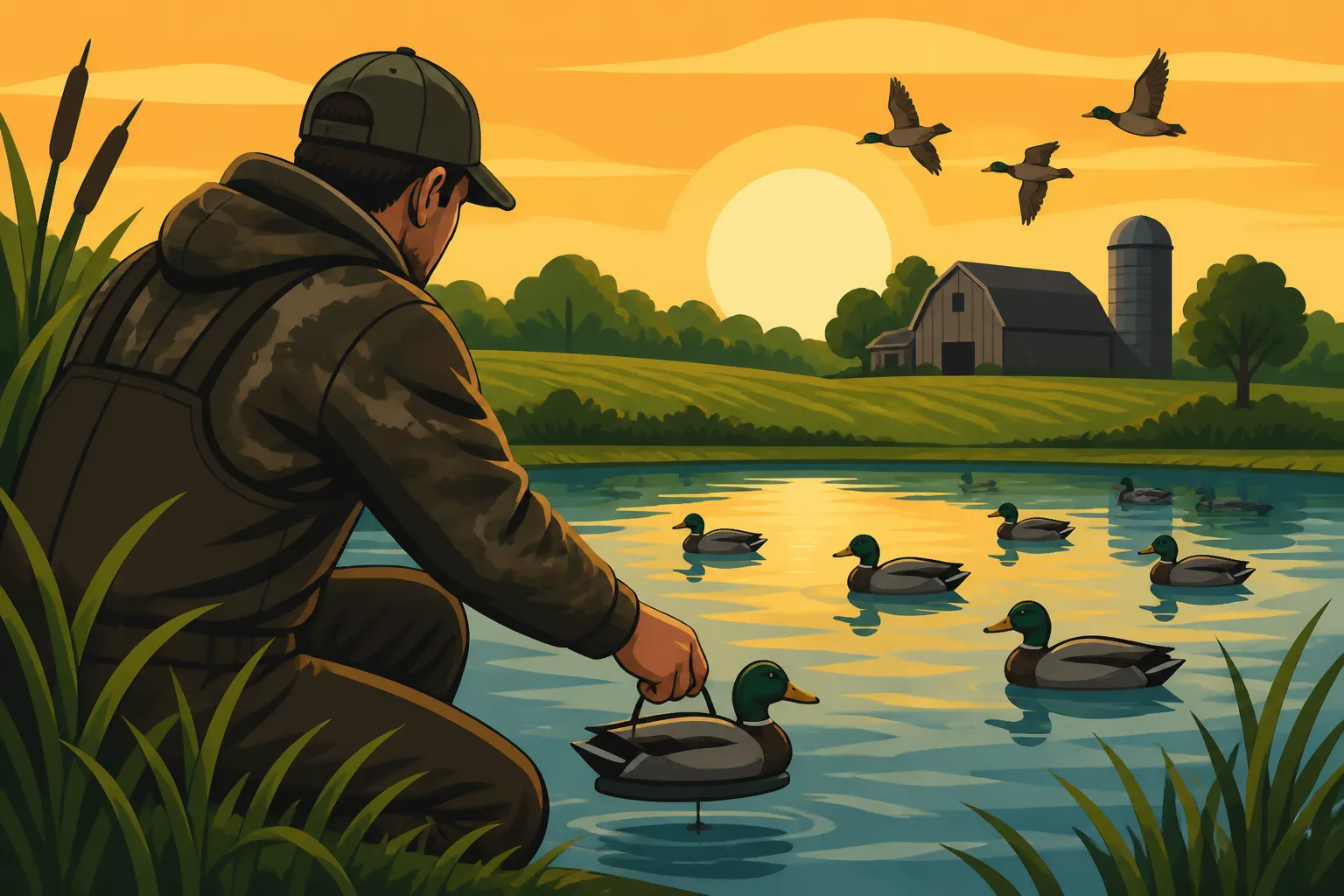
Setting Decoys on a Farm Pond
It’s a scene all too familiar to Georgia waterfowl hunters: you wake before the sun, shiver through the decoy setup, huddle in a makeshift blind, and then watch in frustration as flock after flock of ducks buzz your spread, only to flare at the last second and disappear into the cypress. Those farm ponds, seemingly perfect little oases, can be the trickiest places to hunt if you don't have a solid decoy strategy. This guide is all about turning those frustrating fly-bys into committed drops, specifically tailored for the unique challenges and opportunities of setting decoys on a Georgia farm pond.
Understanding Your Georgia Farm Pond Waterfowl Habitat
Hunting farm ponds in Georgia offers a unique blend of challenge and reward. These smaller bodies of water often act as magnets for migrating and resident waterfowl, but they demand a different approach than large reservoirs or sprawling coastal marshes. Getting your decoys right starts with truly understanding the specific pond you’re hunting and why ducks choose to be there in the first place.
Why Farm Ponds Attract Waterfowl in Georgia
Georgia’s landscape is dotted with countless farm ponds, and these seemingly unassuming water bodies can be absolute goldmines for duck hunters. Why? Well, for starters, they often offer a safe, relatively undisturbed resting and feeding area away from the heavy pressure found on larger public waters. Many of these ponds are fed by natural springs or rainwater runoff, providing a consistent water source.
What makes them truly attractive to ducks like our ubiquitous wood ducks, and often mallards and various species of teal, is the combination of available food and shelter. You'll find a buffet of aquatic vegetation, from submerged grasses to duckweed, and if the pond is near agricultural fields, ducks will readily dabble for waste grain. Think about a pond nestled beside a harvested cornfield or a pecan grove; that’s a five-star hotel for a hungry duck. The edges often provide excellent cover, with cattails, thick brush, or even overhanging trees offering refuge from predators and bad weather. Unlike big, open water, these ponds provide a sense of security. Imagine a small, secluded pond, maybe only an acre or two, hidden by pines and hardwoods. This type of spot is a prime candidate for a dedicated wood duck hunt, especially in the early mornings. For more about specific tactics in different Georgia waterfowl habitats, check out our guide on Georgia Waterfowl Hunting on Coast and Swamp.
Scouting Your Pond Before the Hunt
You wouldn't head into the deer woods blind, and you certainly shouldn't treat a duck pond any differently. Pre-hunt scouting is absolutely non-negotiable for consistent success. This isn't just about showing up an hour before legal light; it’s about observing the pond over several days, if possible. You need to become a duck detective.
First, identify common entry and exit points. Ducks are creatures of habit, and they’ll often use the same flight paths repeatedly, especially in low light. Is there a particular gap in the trees they always fly through? Are they coming in from a specific direction, perhaps from a nearby river or larger lake? Observe where they prefer to loaf, which might be a sunny bank on a cold morning, or a secluded pocket of still water. Note their feeding zones – are they tipping up in a shallow area filled with submerged vegetation, or are they plucking seeds from the muddy edges?
Mapping tools are your best friend here. Platforms like GoHunt, or even Google Earth, can give you an invaluable aerial perspective of the pond and its surroundings. You can identify potential hiding spots, analyze the wind patterns based on surrounding topography, and even get a sense of where ducks might be feeding in adjacent fields. Knowing the prevailing winds for your hunting day is crucial, as ducks almost always land and take off into the wind. This knowledge will dictate your decoy placement and your hide location. If you’re seeing lots of wood ducks, understanding where they prefer to Jump-Shooting Georgia Beaver Ponds for Wood Ducks can give you clues as to how they’ll approach a pond.
Selecting and Arranging Your Decoy Spread
Once you’ve done your homework and understand the pond’s layout and its resident or visiting waterfowl, it's time to think about the hardware: your decoys. It's not just about tossing a dozen fakes into the water; it's about crafting an illusion that screams "safety and food" to passing birds.
Choosing the Right Decoys for Georgia Ponds
When it comes to decoy selection for Georgia farm ponds, versatility and realism are key. While you can certainly go overboard, a strategic, smaller spread often works wonders.
- Mallards: The Universal Language. Even if you're primarily targeting wood ducks, a core of 6-12 mallard decoys is almost always a good idea. Mallards are recognizable to most dabblers, signifying safety and calm. They act as a universal welcome mat.
- Wood Ducks: A Must-Have. Given their prevalence in Georgia, especially on smaller, timbered ponds, having an equal or greater number of wood duck decoys is absolutely essential. Their vibrant colors can be a beacon to their own kind.
- Teal and Other Species: If you’ve scouted and know that teal, gadwall, or ringnecks are frequenting your pond, adding a few of those specific decoys can be beneficial. However, for most farm pond scenarios, mallards and woodies will cover your bases effectively. For example, during the early season, when Duck Migration Timing Through Georgia might bring in early teal, a handful of teal decoys can make a big difference.
- Quantity Over Quality? Not Quite. On small farm ponds, less can often be more. A dozen high-quality, realistic decoys with good paint jobs and natural postures are far more effective than three dozen cheap, shiny, unrealistic fakes. Don't be afraid to mix in some feeders, some uprights, and some resting birds to create a natural look.
- Motion Decoys: Spinners (like Mojo decoys) can be incredibly effective, especially on calm days or when trying to draw in high-flying birds. The flash of their wings simulates active ducks, signaling a safe landing spot. Just be mindful of overusing them, as heavily pressured birds might shy away from too much unnatural movement. A jerk string can offer more subtle, realistic motion, mimicking ducks splashing and feeding. This can be especially effective for wary mallards. Remember that when considering Waterfowl Loads for Coastal Georgia Divers, you're often thinking about bigger water, but the principles of effective shooting remain similar.
Crafting Effective Decoy Spreads
This is where the art and science of decoy setting truly come together. The goal is to create an inviting landing zone that looks natural and guides ducks right into your kill hole.
- The Landing Zone is King: Every decoy spread needs a clear, open space where ducks can confidently land. This is the "sweet spot" you want to aim for. Imagine yourself as a duck; where would you land? It should be free of obstacles and look safe.
- "J" Hook or "U" Shape: These are classic, highly effective spreads for a reason. The idea is to have your decoys form a "J" or "U" shape, with the open part facing into the wind and pointing towards your blind. Ducks will naturally want to land in that open water, setting them up perfectly for a shot. The "hook" or "arms" of the spread provide visual cues and give the illusion of a larger flock. For larger ponds, you can extend the arms of the "U" to create a more expansive, welcoming scene.
- Loose vs. Tight Spreads: For undisturbed birds or early season hunts, a looser, more spread-out pattern can look incredibly natural, indicating a relaxed feeding or resting flock. However, if you’re hunting heavily pressured birds – and you'll often encounter them on public access ponds or those regularly hunted – a tighter, more clustered spread can sometimes work better. Wary ducks might avoid large, spread-out groups that look "too perfect."
- Grouping Species: While a mixed bag of decoys works, grouping similar species together can add to the realism. Keep your mallards mostly together, perhaps with a few loners, and place your wood duck decoys closer to cover or timbered edges where they naturally prefer to hang out. This mimics natural flock behavior.
- Adding Variety: Don't be afraid to add a few full-body field decoys on the bank if the pond has shallow, muddy edges. This creates the illusion of ducks preening or feeding out of the water, enhancing the overall natural feel of your setup. You can even strategically place a goose decoy or two a little further out from your duck spread; a single goose can convey a strong sense of safety and calm to incoming ducks.
Here’s a quick overview of popular decoy spreads:
| Spread Type | Description | Best For | Advantages | Disadvantages |
|---|---|---|---|---|
| J-Hook / U-Shape | Decoys form a J or U, with the open end facing into the wind, creating a clear landing zone. | Most farm pond scenarios, mallards, wood ducks. | Funnels birds into a specific landing area, looks natural. | Can be disrupted by strong crosswinds if not anchored well. |
| Loafing Bunch | A tight cluster of decoys, often near a bank or log, mimicking resting birds. | Pressured birds, small ponds, calm days. | Conveys safety and undisturbed behavior. | May not attract high-flying birds as effectively as larger spreads. |
| Runway | A sparse line of decoys leading into a small pocket of open water, often used for timber hunting. | Wood ducks, small, tight pockets of water, heavy timber. | Creates a clear flight path into a tight opening. | Less effective in open water, requires precise placement. |
| X-Pattern | Two lines of decoys crossing to create four landing zones, typically used on larger bodies of water. | Larger ponds, mixed species, variable wind directions. | Offers multiple landing options, effective from various approach angles. | Can spread birds out, making shooting challenging if not well-defined. |
Strategic Decoy Placement and Hide Considerations
You’ve got your decoys, you know your pond, and you’ve picked your spread. Now comes the crucial step of actually putting those fakes in the water and, just as importantly, making yourself disappear. The most realistic spread in the world won’t work if the ducks see you first.
Positioning Decoys Relative to Your Blind
This is where all your scouting pays off. The relationship between your hide, the wind, and your decoy spread is the ultimate trifecta for success.
- Wind is Your Master: I can't stress this enough – ducks always want to land and take off into the wind. Your landing zone must be positioned so that incoming ducks will fly directly into it, ideally giving you a clear shot as they cup their wings to land. This means your decoys should be upwind of your hide, with the open landing zone directly in front of you. If the wind shifts mid-hunt, be prepared to get out there and adjust your spread. Trust me, it’s worth the momentary disturbance.
- Shot Distance is Critical: Place your landing zone within your effective shotgun range. For most hunters, this means 20 to 35 yards. Anything closer, and you might jump-shoot them too early or be out of position. Anything further, and you risk wounding birds. Practice estimating distances or use a rangefinder during setup. You want the birds to be fully committed and within a comfortable range when you call the shot.
- Utilize Natural Features: Look for natural funnels or holding areas in the pond itself. The edge of a lily pad field, a small opening in emergent vegetation, a bend in a creek channel, or even a patch of slightly deeper water can all be excellent places for your landing zone. Ducks are drawn to structure.
- Avoid Straight Lines: Nature isn't perfectly symmetrical. Avoid lining up your decoys in rigid rows. Create natural-looking clusters, small groups of two or three, with some single decoys out on the fringes. This randomness adds to the realism. Think about how a group of live ducks would naturally disperse while feeding or resting.
- Shallow vs. Deeper Water: Mallards and teal are dabblers and prefer shallower water where they can tip up to feed. Wood ducks will often land in slightly deeper pockets, especially near timber. If your pond has varied depths, place your decoys accordingly to maximize realism for the species you're targeting. When Hunting Coastal Georgia Marsh Waterfowl, you're thinking about tides and deeper water, but the principle of matching decoy placement to bird behavior holds true.
Camouflage and Concealment for Farm Pond Hunting
Even the most perfectly set decoy spread is useless if you're standing out like a neon sign. Ducks have incredible eyesight, and they've evolved to spot anything out of place.
- Natural Blinds are Best: Whenever possible, use what the environment gives you. A thick patch of cattails, a fallen log at the water’s edge, dense brush along the bank, or even the shadows cast by large trees can provide excellent concealment. Augment these natural features with cut vegetation from the immediate area to break up your outline and blend in perfectly.
- Portable Blinds: If natural cover is sparse, a well-camouflaged portable blind is your next best option. Layout blinds work great if you have a low-profile bank, while pop-up blinds can be effective if you're tucked into thicker cover. The key is to make sure your blind's camouflage matches the surrounding habitat. Don't use marsh grass camo if you're surrounded by pine needles. For specialized hides, our article on Layout Blinds and Marsh Boats offers some great insights.
- Break Up Your Outline: Ducks will spot the distinct human form. Wear camouflage that blends with your surroundings, and pay attention to your face and hands, which can gleam in the sun. Face paint or a face mask and gloves are cheap insurance.
- Manage Your Dog: If you’re hunting with a retriever, ensure they are also well-hidden. A good dog will lie still and remain invisible until sent for a retrieve. Teach them to stay low and only emerge on command.
- Use Mapping Tools for Cover: Before you even hit the field, use tools like GoHunt to identify potential blind locations. Look for dense vegetation, bottlenecks, or points of land that offer natural screening. This proactive scouting prevents you from arriving only to find nowhere to hide.
Adapting to Conditions and Maximizing Success
Hunting waterfowl, especially on dynamic farm ponds, is rarely a "set it and forget it" affair. Conditions change, ducks adapt, and you need to be ready to change with them. The most successful hunters are those who can read the situation and make smart adjustments.
Adjusting for Changing Weather and Duck Behavior
The weather in Georgia can be famously fickle, swinging from warm and sunny to cold and blustery in a matter of hours. Each shift affects how ducks behave and how your decoys will perform.
- Bright Sun vs. Cloudy Days: On bright, sunny days, decoys can sometimes shine unnaturally, particularly if they’re older or have glossy paint. Try to position your decoys to minimize glare, perhaps putting the sun at your back so the ducks are looking into it as they approach. On overcast days, the light is more even, and realism becomes even more paramount. The subtlety of a well-placed, matte-finished decoy can be the difference.
- Wind Shifts: This is perhaps the most common challenge on farm ponds. A gentle breeze at sunrise can turn into a gusty crosswind by mid-morning. If the wind changes direction, your carefully crafted landing zone is suddenly in the wrong place. Ducks will continue to land into the wind, which might now put them directly over your head or, worse, completely out of range. Don't be lazy! Take the time to adjust your spread. It's a pain, but it's often the difference between birds cupping into your spread and flaring away.
- Hunting Pressure: Ducks are smart. They learn quickly from negative experiences. If your farm pond sees a lot of hunting pressure, ducks will become "burnt" and wary. In these situations, simplify your spread. Use fewer decoys, make them look exceptionally natural, and consider forgoing motion decoys, which can sometimes look too artificial to educated birds. Try a very loose, spread-out "family group" of decoys rather than a large, aggressive spread. Sometimes, just three or four highly realistic decoys are more effective than two dozen. It's similar to how deer become more elusive after the initial rush of Why Georgia's Gun Opener Draws the Biggest Crowds.
- Cold Fronts: A strong cold front rolling through Georgia can be a blessing and a curse. While new birds might push into the area, they could also be extremely high-flying and cautious. Be prepared for faster flight, and consider adding a few more high-visibility decoys or more aggressive calling to get their attention. Conversely, a prolonged period of warm, stable weather might mean fewer new birds and more resident ducks that know every trick in the book. You might have seen how Hunting Deer After a Georgia Cold Front can change deer movement, and the same principle applies to ducks — they react to major weather shifts.
Calling and Decoy Interaction
Your decoys provide the visual appeal, but your duck call is the audio invitation. These two elements work in tandem to convince wary ducks that your little slice of water is the safest, most appealing spot around.
- The Symphony of Decoys and Calls: Think of your decoy spread as the stage and your calling as the performance. The decoys draw their eyes, but the calls seal the deal. You want to convey a sense of calm and contentment. A soft, contented quack or a feeding chuckle can often be more effective than loud, aggressive calling, especially on pressured birds.
- Subtle vs. Aggressive: Early in the season or when birds are unpressured, a simple hail call to get their attention, followed by contented quacks and chuckles as they approach, is usually all you need. If birds are high and circling, a more aggressive hail call might be necessary to break them off. But as soon as they commit and start working towards your spread, ease off the calling or switch to soft, reassuring quacks. The goal is to draw them in, not to scare them off with too much noise once they've seen your setup.
- Confidence Calls: Once ducks are locked on your decoys and cupping their wings, sometimes a soft, raspy "come here" call or a quiet feeding chuckle can provide that final bit of confidence they need to commit. This sounds like an active, happy group of ducks.
- Don't Overcall: This is a mistake many new hunters make. If ducks are headed your way, don't keep blasting your call. Watch their body language. If they're turning, dropping altitude, and extending their feet, they're committed. Let the decoys do their work. Overcalling can make a spread sound unnatural or even threatening to incoming birds. Knowing when to be quiet is just as important as knowing when to call.
By paying close attention to these details—scouting, selecting the right decoys, arranging them strategically, ensuring perfect concealment, and adapting to changing conditions with both your spread and your calling—you’ll dramatically increase your chances of having those Georgia farm pond ducks drop right into your lap, ready for a clean shot.
Disclaimer
Hunting is an inherently dangerous activity. Always prioritize safety, understand and follow all Georgia Department of Natural Resources (DNR) hunting regulations, and ensure you have the appropriate licenses and permits before heading afield. The information provided in this guide is for informational purposes only and should not be considered a substitute for professional instruction or official regulations.