Working a Fencerow for Late-Season Deer
As the late season grinds on here in Georgia, many of us start to feel that familiar frustration. The woods often seem empty, those early-season hotspots have gone cold, and deer behavior shifts dramatically. It’s enough to make you wonder if there are any deer left to hunt! But don't despair; sometimes, the overlooked spots are the most productive, and for late-season success, you absolutely need to start thinking about fencerows. This guide will walk you through why these unassuming linear features are magnets for Georgia whitetails when the temperatures drop and food becomes scarce, and how you can effectively hunt them.
Why Fencerows Become Late-Season Magnets for Deer
During the peak of the rut and early firearms season, deer can seem like they’re everywhere, chasing does or focused on abundant acorns. But once the leaves drop, the cold sets in, and those easy food sources are gone, deer become far more selective and secretive. This is precisely when fencerows, especially here in Georgia's diverse landscapes, transform from simple property dividers into crucial deer highways and hideouts. They offer a unique combination of cover, travel routes, and often, overlooked food sources that can make or break your late-season hunt.
Thermal Cover and Security
Think about those crisp, clear December mornings when the frost is thick on the ground. A deer bedded out in the open feels every bit of that chill. Fencerows, particularly those that have grown thick with briars, honeysuckle, or saplings, offer a surprising amount of thermal cover. These dense thickets, even if narrow, can block biting winds and hold warmth, making them incredibly attractive bedding areas, especially on sunny days when deer want to soak up every bit of warmth.
Beyond just warmth, fencerows provide a vital sense of security. Deer are creatures of habit and survival, and in areas with increased hunting pressure, they learn quickly to utilize any available cover. A fencerow, even if it’s only a few yards wide, creates a visual barrier that allows deer to move from one woodlot to another, or from bedding to feeding, without feeling exposed. It’s a low-risk corridor, often paralleling open fields where deer might graze at night but are hesitant to cross in daylight. They can sneak along these lines, staying just out of sight, listening and sniffing for danger before venturing out.
Access to Scarce Late-Season Food
Once the acorns are gone and agricultural fields have been harvested, late-season food sources in Georgia can be hard to come by. This is where fencerows often shine. Many fencerows grow up with a variety of persistent, natural browse that deer will eagerly seek out when other options are depleted. Think about the wild muscadine vines, greenbrier thickets, or even lingering persimmons and honeysuckle that can still offer calories. These aren't always high-energy foods, but they are reliable, readily available, and often overlooked by hunters focusing on larger food plots or cutovers.
Moreover, fencerows frequently border agricultural fields that might have residual crops. A field of cut corn might not seem appealing, but a fencerow running right alongside it provides deer with safe access to any missed kernels or spilled grain. Similarly, a fencerow bordering a Late-Season Food Sources for Georgia Whitetails like a winter wheat plot or a brassica field becomes a natural staging area. Deer will emerge from the safety of the fencerow, browse briefly, and then retreat quickly if they sense danger. Understanding this connection between the fencerow and the adjacent food source is key to setting up your ambush.
Reading the Fencerow: Signs and Strategy
Successfully hunting a fencerow isn't just about finding one and sitting down. It’s about understanding how deer are using it, which means becoming a master detective of deer sign. The clues deer leave behind will tell you if a fencerow is merely a casual travel route or a primary thoroughfare, and that distinction is vital for effective hunting.
Scouting for Active Deer Sign
Start by walking the length of the fencerow, paying close attention to both sides and the immediate area. You’re looking for fresh tracks, especially those indicating frequent travel. Don't just look for one or two sets; you want to see a worn path or multiple fresh tracks overlaying older ones. These well-defined trails, often worn down to bare earth, are gold. Deer will consistently use the path of least resistance, especially when moving between bedding and feeding areas.
Beyond tracks, keep an eye out for droppings and rubs. Droppings tell you deer are not just passing through, but potentially stopping to browse or bed down. The freshness of the droppings can give you an idea of recent activity. Rubs, especially fresh ones, indicate a buck is moving through the area. While the rut might be over, bucks still move and rub, often leaving sign on smaller saplings within the fencerow itself or on trees just inside the adjacent woodline. Use a mapping tool like GoHunt or the Scouting With the Georgia Outdoors App to mark these spots, creating a clear picture of deer movement patterns along the fencerow. Over time, you might notice patterns, such as heavier sign at one end of the fencerow where it meets a larger block of woods, or near a specific water source.
Identifying Key Travel Corridors and Funnels
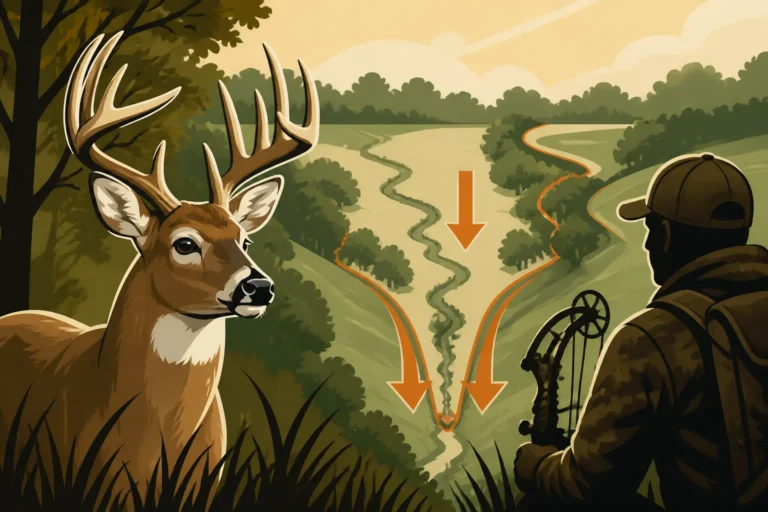
Not all fencerows are created equal. Some might be too open, too short, or lead to nowhere significant. The most productive fencerows are usually those that connect two larger blocks of cover, effectively acting as a natural funnel. Imagine a thick woodlot on one side of a field and another thicket on the other. A fencerow running between them forces deer to traverse that narrow strip, making it a predictable travel route. These are true "pinch points" that deer can't easily avoid.
Also, consider how the fencerow interacts with terrain features. Does it run along a creek bottom? Does it climb a slight rise? Does it connect two areas of different habitat types, like a pine plantation to a hardwood stand? These transitions create natural breaks and additional layers of cover or food that deer will exploit. For example, a fencerow that dips down into a low spot or crosses a small drain might be a preferred crossing point, especially if it offers slightly more cover or moisture. When you're using aerial imagery, whether it's on your phone or a desktop app, really zoom in and analyze the landscape around these fencerows. You can learn a lot about Reading Aerial Photos for Piedmont Deer by looking for these subtle funnels and identifying where deer will naturally be directed.
Hunting Tactics for Georgia Fencerows
Once you’ve identified a promising fencerow and understood how deer are using it, it’s time to strategize your hunt. The tight nature of fencerows often requires a different approach than hunting wide-open timber or expansive food plots. You need to consider entry and exit, wind direction, and the exact placement of your stand or blind to maximize your chances.
Stand Placement and Concealment
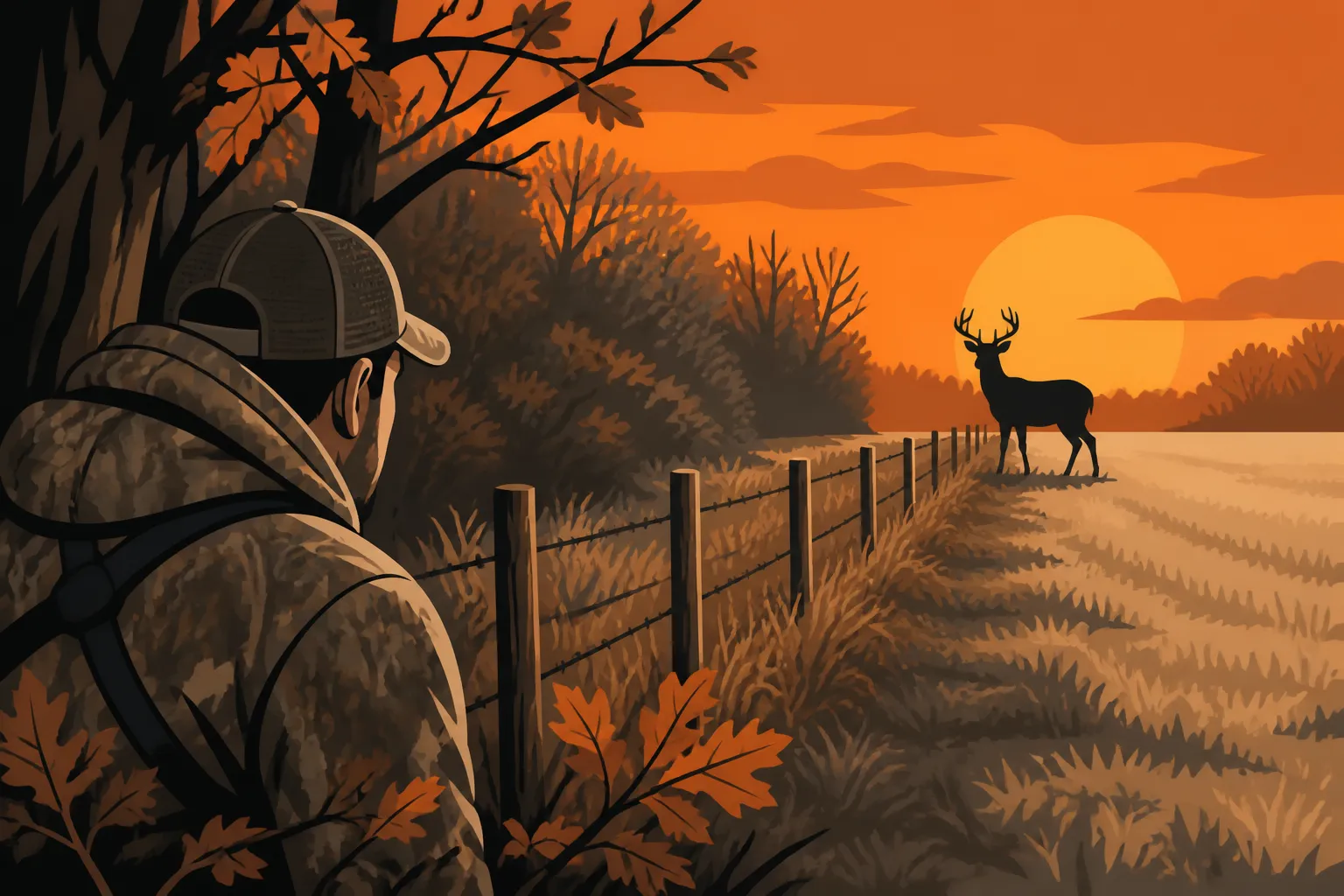
When setting up on a fencerow, concealment is paramount. Deer are moving along a narrow lane, often expecting safety. Any silhouette or unnatural movement will send them packing. A good approach is to set up just inside the wood line, slightly off the fencerow itself, allowing you to observe the fencerow without being directly in it. If the fencerow is thick enough, you might even consider setting a stand or saddle right in a larger tree within the fencerow, using the dense growth to break up your outline. For example, if you're hunting in a situation that mirrors a Treestand Setups in North Georgia Mountains scenario but in a flatter, agricultural area, applying the same principle of using natural cover for your stand can be effective.
Ground blinds can also be incredibly effective, especially if you can brush them in naturally against the thick fencerow vegetation. This allows you to hunt from eye level and stay completely hidden, which is ideal when deer are moving cautiously. Position your stand or blind to take advantage of the prevailing wind direction, ensuring your scent is carried away from the expected travel path. Remember, deer will often travel with the wind in their face or crossing, constantly checking for danger ahead. You want to be downwind of their likely approach.
| Fencerow Type | Key Characteristics | Best Hunting Strategy |
|---|---|---|
| Thick Hedgerow | Dense briars, honeysuckle, small trees; 5-15 ft wide. | Excellent for thermal cover/bedding. Set up 20-30 yds off in adjacent woods, downwind. |
| Old Wire Fence Line | Sparse brush, scattered trees, often borders fields. | Travel corridor to fields. Use ground blind brushed in at field edge for evening hunts. |
| Creek Bottom Fencerow | Follows a wet drain, more deciduous growth, water access. | Often a primary travel route due to water/cover. Focus on crossing points; consider a saddle stand. |
| Transition Fencerow | Separates habitat types (e.g., pines/hardwoods, cut/mature). | Prime funnels. Ambush at the transition points where deer move between cover types. |
Low-Impact Entry and Exit Strategies
This is where many fencerow hunts go wrong. Even the perfect stand placement is useless if you spook deer walking in or out. Because fencerows are often linear and exposed on at least one side, your approach needs to be meticulously planned. Identify routes that keep you hidden, perhaps using a ditch, a larger block of timber, or even the topography of a field to conceal your movement. Walk slowly, quietly, and use the cover the fencerow provides as you get into position.
For morning hunts, try to get in well before daylight, approaching from a direction that doesn't put you between the fencerow and a primary bedding area. For evening hunts, consider approaching from the feeding area side if possible, or using a creek or natural depression. Always think about the deer’s perspective. If you were a deer, where would you feel safe walking, and where would you expect danger? Consider using an app like GoHunt to mark your entry and exit routes, ensuring they don't cross known deer trails or bedding areas. This pre-planning is essential for keeping the area undisturbed and effective throughout the late season.
Gear and Considerations for Fencerow Hunting
Hunting fencerows in Georgia's late season comes with its own set of challenges, from unpredictable weather to the specific needs of hunting tight quarters. Having the right gear and being prepared for common issues can significantly improve your comfort and success rate.
Adapting to Changing Weather and Terrain
Late season in Georgia can be a mixed bag. One day it’s frosty and cold, the next it’s surprisingly mild. You need to be prepared for both. Layering is your best friend. Start with a good moisture-wicking base layer, add insulating layers, and top it with a quiet, waterproof outer shell. Even if it feels warm at midday, those early morning and late evening sits can get chilly. Don't forget a warm hat and gloves. If you're hunting particularly wet fencerows that run along creek bottoms or swampy areas, investing in a good pair of Rubber Boots for Swamp Walking will make your hunt much more comfortable and keep your feet dry and warm.
The terrain around fencerows can also vary wildly. Some might be flat and easy walking, while others could be choked with briars, making movement difficult. Wear durable, briar-resistant pants if you anticipate pushing through heavy cover. A small, portable saw or pruners can be invaluable for clearing a shooting lane or improving your entry route, though always check WMA rules if on public land, and always ask permission on private land before altering anything.
Essential Tools for Fencerow Hunters
Beyond your primary weapon, a few key tools can make a big difference when working fencerows. A quality rangefinder is crucial, as shooting lanes can be tight and distances deceptive. Knowing your exact range to that key opening or a specific tree where you expect a deer to pass can mean the difference between a clean shot and a miss. For bowhunters, especially, this precision is vital.
Binoculars are also indispensable. Even in thick cover, patiently glassing a fencerow can reveal a bedded deer or one slowly browsing. Remember to bring a good headlamp for those dark walks in and out. And of course, a sturdy pack with essentials like water, snacks, a small first-aid kit, and a game call (grunts or bleats can sometimes coax a curious deer into view) should always be with you. Considering you might be hunting Deer Drives With Three or Four Hunters or just still-hunting alone, having your gear well-organized in a Packs for a Day on Public Land is key. Remember that even in late season, proper scent control is still important. Deer are always on high alert, and a strong human odor can ruin your hunt even in a productive fencerow.
Disclaimer: Always check and adhere to Georgia Department of Natural Resources (DNR) hunting regulations and local laws. Hunting involves inherent risks, and safety should always be your top priority.