Duck Migration Timing Through Georgia
One of the biggest headaches for Georgia duck hunters is trying to nail down exactly when the birds will show up. It feels like every year is different, with unpredictable weather patterns throwing a wrench into all our carefully laid plans. This comprehensive guide is here to help you understand the intricate dance of duck migration through our state, giving you the insights and strategies needed to be in the right place at the right time.
The Driving Forces Behind Georgia's Duck Migration
Ducks don't consult a calendar when they decide to pack up and head south; their movements are primarily dictated by environmental cues. Understanding these fundamental forces is crucial for any hunter hoping to intercept migrating waterfowl in Georgia. It’s not just about a date on the calendar, it’s about a complex interplay of nature's signals.
Northern Cold Fronts and Their Ripple Effect
The most significant driver of duck migration, particularly for those species that winter further south, is the arrival of sustained cold weather in their northern breeding grounds. When temperatures drop consistently below freezing in states like North Dakota, Minnesota, or even further north into Canada, water bodies start to freeze over. Ducks are built to withstand cold, but they need open water to feed and roost. Once their primary feeding grounds become locked in ice, they have no choice but to push south.
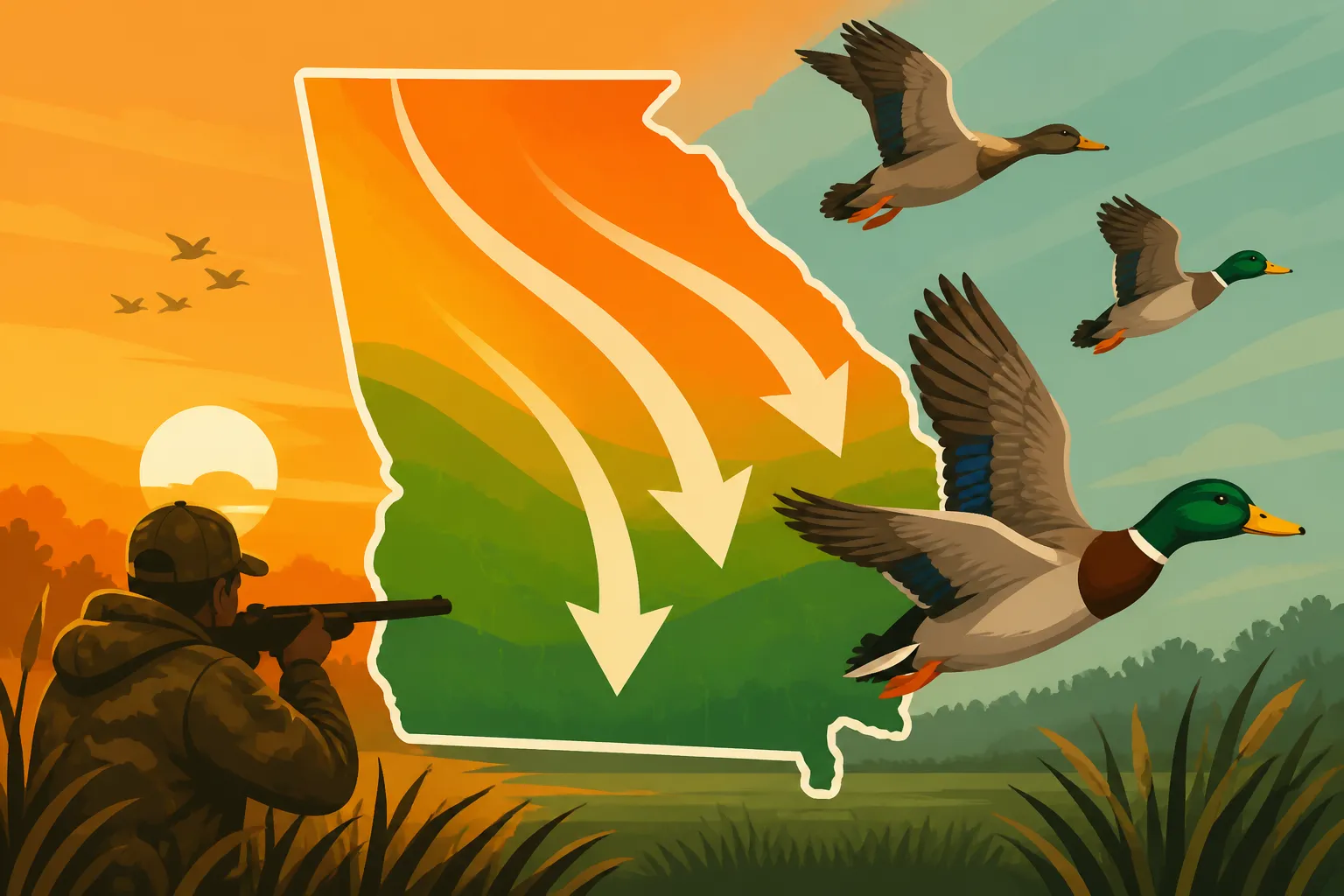
Think of it like a domino effect. A strong arctic cold front sweeps across the Midwest and Northeast, bringing widespread freezing conditions. This isn't just a single cold night; it's a deep freeze that lingers for days. The leading edge of this cold front often triggers the first major push of birds down the Atlantic Flyway, of which Georgia is a crucial stop. These birds aren't necessarily staying; they're moving through, looking for a place where they can find food and open water. We often see a distinct surge in migratory bird activity a day or two after one of these fronts passes through Georgia, bringing with it cooler temperatures. While you can keep an eye on national weather maps, locally, watch for a sharp drop in overnight lows following a north wind for a good indicator of birds on the move.
Water Levels: The Ultimate Habitat Indicator
Even with cold fronts pushing birds, ducks still need suitable habitat when they arrive in Georgia. And for ducks, "suitable habitat" almost always means water – specifically, shallow, food-rich water. This is where local conditions, especially rainfall and drought, play a massive role. If Georgia has experienced a dry fall, many of the smaller sloughs, beaver ponds, and flooded timber areas that ducks typically utilize might be dry or too low to be attractive.
Conversely, a wet fall and winter can create abundant new habitat, drawing birds away from traditional larger bodies of water. Think about those low-lying areas that flood after heavy rains, like agricultural fields, creek bottoms, or even low-lying areas in the Chattahoochee-Oconee National Forest Hunting region. If these areas are flooded and offer submerged vegetation, seeds, or invertebrates, they become prime duck real estate. Ducks are constantly surveying from above, and they'll gravitate towards areas with adequate water depth for feeding and security. Using resources like GoHunt's mapping layers can help you identify potential flooded timber or agricultural areas that might hold water after heavy rains. The challenge for hunters is that these ephemeral spots can dry up just as quickly, so constant scouting is key.
Food Availability Across the Flyway
Ducks are driven by hunger, and their migration path often follows a buffet line. The availability of diverse food sources along the Atlantic Flyway influences not only when they move but also where they choose to stop and stage. In Georgia, this means a variety of options. Natural food sources include acorns in flooded hardwoods, smartweed, wild millet, and other aquatic vegetation. These are particularly important in undisturbed areas and along river bottoms.
Agricultural crops also play a huge role. Flooded cornfields, rice paddies (though less common in Georgia compared to other states), and even waste grain in harvested soybean fields can be irresistible to migrating ducks. If ducks find an abundance of easily accessible food in a particular area, they're likely to stick around until those resources are depleted or new cold fronts push them further south. This is why some years see fantastic hunting in specific areas, while other years, those same spots might be barren – the food simply wasn't there, or the water conditions didn't allow access. A good hunter pays attention to crop rotations and harvest schedules, especially when Hunting Flooded Timber for Mallards or other field-feeding species.
A Species-by-Species Look at Duck Migration Timing
While we talk about "duck migration" as a single event, it's really a series of distinct movements by different species. Each type of duck has its own internal clock and preferred environmental triggers, meaning some will arrive much earlier than others. Knowing which birds to expect and when can help you tailor your hunting efforts.
Early Arrivals: Teal and Wood Ducks
The first significant pushes of migratory ducks into Georgia often involve teal and a bolster of our resident wood duck population.
-
Blue-winged Teal: These fast-flying little ducks are typically the first "true" migrants to show up in numbers, often arriving as early as September during our special early teal season. Their migration is less tied to severe northern cold fronts and more to day length and subtle temperature changes. They move through quickly, often stopping for just a few days to fuel up before continuing their journey further south, perhaps to Florida or even Central and South America. If you blink, you might miss them, making the early season a high-energy, fast-paced hunt. Hunting Coastal Georgia Marsh Waterfowl can often be productive for these birds during the early split.
-
Green-winged Teal: Hot on the heels of the blue-wings, green-winged teal typically arrive in good numbers from mid-October through November. They are a bit hardier than blue-wings and will stick around longer if conditions are favorable, especially in shallow flooded fields or muddy margins of larger ponds. They often follow the first moderate cold fronts that begin to impact the upper Midwest.
-
Wood Ducks: While Georgia has a healthy resident population of wood ducks that provide excellent opportunities throughout the season, our numbers are significantly boosted by migrant woodies starting in late September and continuing through October. These birds are less dependent on massive northern freezes, preferring to move when autumn fully sets in and their northern food sources become less abundant. They thrive in flooded timber, beaver swamps, and along shaded creek bottoms. Pass-Shooting Georgia Wood Ducks is a common tactic, as they often utilize similar routes day after day. You'll notice a marked increase in the number of wood ducks in these areas, and they tend to stick around for a good portion of the main season.
Mid-Season Mainstays: Mallards, Gadwall, Wigeon
As autumn deepens into early winter, usually from late November through December, we see the arrival of the classic "puddle ducks" – the bread and butter for many Georgia waterfowl hunters.
-
Mallards: The iconic greenhead is often what hunters envision when they think of duck season. Mallards tend to arrive in Georgia in significant numbers after sustained freezing weather hits states just north of us, like Arkansas, Missouri, or the Carolinas. Their peak arrival in Georgia often coincides with late November and early December, and they will remain throughout the winter if open water and food are available. They're highly adaptable, found in flooded timber, agricultural fields, and large open water bodies. When you're scouting, look for fresh mallard sign, indicating new birds have dropped in. Georgia Mallard and Wood Duck Numbers can fluctuate year to year, but mallards remain a top target.
-
Gadwall: Often overlooked, gadwall are hardy ducks that typically arrive with the main push of mallards, often a bit earlier. They prefer sloughs, impoundments, and areas with plentiful submerged aquatic vegetation. They'll often join larger rafts of other puddle ducks. Their migration is also heavily influenced by northern cold fronts that begin to freeze over their staging areas further north.
-
American Wigeon: These "baldpates" often travel with mallards and gadwall, making their appearance in Georgia from late November through December. They are grazers, preferring to feed on aquatic plants and even dabbling in short, flooded agricultural greens. Their timing is similar to other mid-season puddle ducks, contingent on significant cold pushing them down the flyway.
Late Season Surges and Coastal Divers
January can be a feast or famine for duck hunters in Georgia, largely depending on whether extreme cold fronts continue to blast the northern half of the continent. This is when we often see a final, significant push of ducks, and often an increase in diver species.
-
Late Season Puddle Duck Push: If severe, prolonged cold weather grips the Midwest and Northeast in December and January, Georgia can experience a huge influx of puddle ducks – mallards, gadwall, and pintails – that were previously held up further north. These are often the "last of the last" birds, pushed by conditions they simply can't tolerate any longer. This late push can offer some of the most exciting hunting of the season, but it's entirely dependent on Mother Nature delivering the deep freeze.
-
Diver Ducks (Ring-necks, Buffleheads, Scaup): While some divers arrive earlier, the peak for species like ring-necked ducks, buffleheads, and scaup often occurs in December and January. These birds typically prefer larger, deeper bodies of water like big reservoirs, lakes, and coastal estuaries. Their migration is also strongly linked to the freezing of larger lakes and rivers up north. Hunting Coastal Georgia Marsh Waterfowl can be particularly good for divers, as they utilize the vast estuaries and open water areas. You'll often find them further offshore or in wide open bay areas where they can dive for food.
Strategies for Predicting and Adapting to Duck Movement
Given the dynamic nature of duck migration, a static approach to hunting simply won't cut it. The most successful Georgia duck hunters are those who are constantly gathering information and willing to adapt their plans on the fly.
Decoding Weather Patterns and Migration Reports
The number one tool in your arsenal for predicting duck movement is the weather forecast, specifically tracking cold fronts originating far to our north. Don't just look at the Georgia forecast; pull up national weather maps and observe temperatures in states along the Atlantic Flyway, like Illinois, Indiana, Ohio, Pennsylvania, and New York. A sustained dip into the teens and single digits for several days in these areas is a strong indicator that ducks will be on the move within a week.
Beyond raw weather, many online resources and forums provide migration reports. These reports, often compiled by fellow hunters and wildlife agencies, can give you a real-time snapshot of bird movement. While you don't want to blindly follow every report, they can confirm what the weather maps are suggesting. Using a comprehensive tool like GoHunt can help you consolidate weather data, identify patterns, and even access public land information to cross-reference with migration reports. Look for reports indicating major pushes of birds out of areas north of Georgia. Remember, a major cold front that sweeps through in mid-October often triggers a different set of birds than one in mid-December.
The Critical Role of Local Scouting
Even the best long-range forecast or flyway report is no substitute for boots on the ground (or waders in the water) scouting. Ducks don't always follow the rules, and local conditions can create unexpected hotspots or render traditional areas barren. Scout areas before your hunt, preferably within a few days, to confirm that birds are present and that water and food conditions are favorable.
- Early Morning and Late Evening Reconnaissance: Drive or walk potential hunting areas at dawn and dusk. Look for birds flying into or out of feeding and roosting areas. Pay attention to how many birds you see and what species they are.
- Observe Water Levels: Check sloughs, flooded timber, and agricultural fields. Are they holding enough water? Are they accessible? This is particularly important for Hunting Georgia Swamp and River Bottom Deer, as these areas often flood and attract waterfowl.
- Identify Food Sources: Has the acorn crop dropped? Are there waste grains in harvested fields? Ducks will go where the food is, so confirming available groceries is paramount. GoHunt’s detailed satellite imagery can help you pinpoint potential food sources and water bodies, but ground-truthing is always the final step.
- Look for Sign: Even if you don't see birds, look for droppings, feathers, or mud stirred up in shallow water, which indicates recent feeding activity.
Flexibility is Key to Hunting Success
Perhaps the most important strategy for dealing with unpredictable duck migration is embracing flexibility. Don't get locked into a single hunting spot or a fixed schedule. The weather and the birds will dictate where and when the best hunting opportunities arise.
- Have Backup Plans: If your go-to spot is dry or void of birds, have several alternative locations in mind. This might mean switching from a flooded timber hole to a beaver pond, or from a major reservoir to a smaller creek bottom. Reading a Tidal Marsh for a Morning Flight might be your primary plan, but if inland conditions are better, you need to be ready to shift gears.
- Adjust Hunting Times: While early morning is often prime, some days, especially after a fresh push of birds, mid-morning or late afternoon hunts can be incredibly productive as birds move between roosting and feeding areas.
- Embrace Different Conditions: Some days might be frigid and windy, perfect for bringing in high-flying ducks. Other days might be calm and warm, requiring more stealth and patience. Learn to adapt your calling, decoy spreads, and concealment tactics to the prevailing conditions.
- Stay Informed: Keep an ear to the ground, talk to other hunters (if they're willing to share intel!), and monitor those weather and migration reports right up until your hunt. The ability to make last-minute adjustments based on fresh information can be the difference between a frustrating day and a successful hunt.
| Duck Species | Typical Early Arrival (Georgia) | Peak Migration (Georgia) | Preferred Habitat (Georgia) | Primary Migration Driver |
|---|---|---|---|---|
| Blue-winged Teal | Early September (special season) | Late September – Mid-October | Shallow flooded fields, muddy margins, coastal marshes | Day length, subtle temperature drop |
| Wood Duck (migrant) | Late September | October – November | Flooded timber, beaver swamps, shaded creek bottoms | Autumnal temps, declining northern food |
| Green-winged Teal | Mid-October | November | Shallow water, flooded fields, smaller ponds | Moderate northern cold fronts |
| Mallard | Late October | Late November – December | Flooded timber, agricultural fields, larger ponds/rivers | Sustained northern freezing |
| Gadwall | Early November | December | Sloughs, impoundments, aquatic vegetation areas | Northern cold fronts |
| American Wigeon | Early November | December | Grazing areas, aquatic vegetation, short flooded greens | Northern cold fronts |
| Ring-necked Duck | Mid-November | December – January | Larger lakes, reservoirs, coastal estuaries | Freezing of northern lakes/rivers |
| Bufflehead / Scaup | Late November | January | Large open water, coastal bays, deep reservoirs | Severe northern cold fronts |
Duck hunting in Georgia is rarely a predictable affair, but by understanding the forces that drive migration, knowing what species to expect when, and adopting a flexible, informed approach, you can significantly increase your chances of success. It's all about being a student of the flyway, reading the signs, and being ready to move when the birds do.
Disclaimer
This article is for general informational purposes only and does not constitute professional advice. Laws, prices and regulations vary by location and change over time. Consult a qualified professional for guidance on your specific situation.