Recovering a Deer From a Cypress Swamp
There's almost nothing that makes a hunter's heart sink faster than a good shot on a deer, only for it to disappear into the tangled, watery depths of a cypress swamp. We've all been there, standing on the edge of that dark, mysterious water, gut-punched by the thought of a lost animal. But losing a deer to a swamp isn't inevitable. This guide will walk you through the precise steps and critical preparations you need to recover a deer from the most challenging terrain Georgia has to offer.
Preparing for the Murky Depths: Pre-Hunt Swamp Considerations
Before you even step foot in a stand or blind near a cypress swamp, it's absolutely crucial to anticipate the unique challenges this environment presents for deer recovery. A little foresight and the right gear can make the difference between a successful retrieval and a disheartening loss. This isn't just about having good intentions; it's about practical, hands-on preparation.
Essential Gear for Wet and Wild Conditions
When you're hunting near a cypress swamp, your gear needs to be up to the task of the wet, thick, and often unforgiving environment. Standard woods-walking gear just won't cut it. First and foremost, think about your feet and legs. Investing in a quality pair of knee-high or even hip-wader style snake boots is non-negotiable. These aren't just for snake protection, though that's a huge bonus in Georgia's swamps; they’re primarily for keeping you dry and allowing you to wade through standing water without soaking your entire lower body. There’s nothing worse than tracking a deer in cold, wet socks and boots, making a miserable situation even more unbearable.
Beyond footwear, consider waterproofing everything else. Your pack should either be waterproof or contain dry bags for critical items like your phone, wallet, and extra clothes. A high-lumen headlamp or handheld flashlight is another must-have, and not just for walking in and out. If you end up tracking after dark, you'll need every bit of light you can get to pick up subtle blood trails. Pack extra batteries or a portable charger. Think about bringing a robust, foldable saw or even a small machete. Cypress swamps are notorious for downed trees and thick vines, and you might need to clear a path to reach your deer or to create an extraction route. Don't forget bug spray, either; the mosquitoes and gnants in these wet areas can be ferocious, especially in early season. A good quality, long-lasting bug repellent can make a massive difference in your focus during a stressful recovery.
Scouting Smart in Swampy Terrain
The real work of swamp recovery starts long before you pull the trigger. Effective scouting, especially when hunting the unique landscape of Hunting Georgia Swamp and River Bottom Deer, can save you hours of heartache. Before the season even begins, spend time walking the edges of the swamp you plan to hunt. Look for "high ground" fingers that push into the swamp, natural funnels where deer might travel, or even subtle changes in water depth that could offer a firmer footing. These areas are not only prime spots to set up your stand, but they also offer potential routes for a deer to escape or for you to track and extract it.
Using mapping tools, like the one offered by GoHunt, is invaluable here. Mark potential entry and exit points, note any deep water crossings or exceptionally thick sections, and identify areas of slightly higher elevation that might serve as temporary drying-out spots for a downed deer. Knowing these details beforehand can give you a massive advantage when the time comes to track. If you know there’s a shallow section 100 yards to the east, you’ll know to push your search in that direction if the trail goes cold. Pay attention to how deer move in and out of the swamp. Are there specific trails leading from drier food sources into the cover? Understanding these patterns will give you a better idea of where a hit deer might try to go. Even if you're hunting public land, taking the time to truly understand the topography of the swamp before the season is a critical step.
The Critical Moments: Shot Placement and the Waiting Game
So you’ve made the shot, and the deer has bolted, seemingly into the abyss of the swamp. This moment, directly after the shot, is perhaps the most critical for a successful recovery. Panic is your enemy. Patience and a clear head are your greatest allies.
Understanding Deer Behavior Post-Shot in Swamps
When a deer is shot, especially one that runs into a cypress swamp, its immediate reaction is often to seek the densest cover or the deepest, most inaccessible water it can find. This is a natural instinct to hide from predators. In a swamp, this means plunging into thick tangles of briars, fallen timber, or deeper water where they feel secure. They often won't run far once mortally wounded, but the terrain makes even a short distance feel like miles. Knowing this behavior helps you predict their path and focus your initial search efforts.
They might try to cross a slough, hide in a patch of water lilies, or bed down under a dense canopy of cypress trees. Understanding these tendencies prevents you from wasting precious time searching open areas or high ground if the sign points deep into the swamp. If you see them enter the water, note the exact spot and direction. This visual information is golden and will be your primary starting point for a tracking job that could become incredibly difficult very quickly. Sometimes they will follow the path of least resistance, which in a swamp might be a subtle game trail through thinner cover, or even a slight current in a creek.
The Waiting Period: Patience is a Virtue
After the shot, the absolute hardest thing to do is wait. Every fiber of your being will scream at you to go find that deer. But unless you saw the deer drop, or you're certain it was a perfect heart/lung shot and you can see it piled up, you need to resist that urge. Pushing a wounded deer, especially into a swamp, is often a death sentence for recovery efforts. A deer that is mortally wounded but not yet dead will often travel a short distance and then bed down if left undisturbed. If you pursue too quickly, that deer will get up, adrenaline pumping, and run much further, often deeper into the nastiest parts of the swamp, leaving an even more diluted or non-existent blood trail.
The general rule of thumb is to wait at least 30 minutes for a gut shot, and an hour or more for a questionable shot. For a solid lung or heart shot where you didn't see it drop, a 15-30 minute wait is usually sufficient. But in a cypress swamp, with its inherent challenges for tracking, I lean towards longer waits if there's any doubt. Let the deer expire. Use this time to calm your nerves, replay the shot in your mind, and mentally prepare for the tracking job ahead. Mark the exact spot where you were standing when you shot, and the last place you saw the deer. These reference points are invaluable when you begin your search. Remember, a deer lost to pushing too quickly is a deer wasted.
Navigating the Murky Depths: Tracking in a Cypress Swamp
Once you’ve given the deer enough time, the real work begins. Tracking in a cypress swamp is unlike tracking in open hardwoods or pine flats. The soft ground, standing water, and dense vegetation conspire to make a difficult task even harder.
Reading Sparse Sign
Forget about those textbook blood trails you see in hunting magazines when you're tracking in a Georgia cypress swamp. The blood trail might be sparse, washed away by water, or absorbed into the thick, dark mud and leaf litter. You’ll have to become a detective, looking for every subtle clue. Instead of a consistent blood trail, you might find only occasional drops on cypress knees, smeared blood on a fallen log, or dark, murky water where the deer paused. Pay attention to bubbles in the water, which can indicate recent movement.
Look for disturbed vegetation, broken twigs, or scuff marks on muddy banks. Fresh tracks in the soft mud, especially if they show signs of a stumble or drag, are extremely important. Understanding how to differentiate between a fresh track and an older one, or how to interpret what a particular track means, is vital. This is where your knowledge of Reading Georgia Mud for Fresh Deer Movement really comes into play. You might have to move very slowly, literally on your hands and knees at times, scanning every inch of ground and water. Don’t just look for blood; look for anything out of place. This meticulous approach is exhausting but often necessary.
Tools and Techniques for Difficult Trails
Having the right tools at your disposal will significantly improve your chances. A powerful headlamp or spotlight is crucial for spotting blood, even in daylight, as it can make fresh blood appear iridescent. Flagging tape is your best friend. Every time you find a sign, no matter how small, tie a piece of flagging tape to a branch. This creates a breadcrumb trail, preventing you from getting lost and helping you to reorient if you lose the trail. If you’re tracking a deer through the cypress and you lose the blood, you can always go back to your last flag and start again, working in circles from there.
Using mapping apps like GoHunt is also incredibly useful for marking waypoints where you find blood or signs. This way, you have a digital record of your progress and can share it with others if you call for help. Don't be afraid to call in a tracking dog if permitted in your area. Many specialized dog teams are available for hire and can do what no human can in thick, wet conditions. A good tracking dog, combined with your slow, methodical search, can overcome the challenges of a swamp. Remember, every piece of technology and every technique adds to your overall capability to find that deer. If you're on public land, be aware of rules regarding items like trail cameras or specific types of flagging, but most importantly, focus on the recovery. Also, ensure you're familiar with the nuances of Blood Trailing After Dark in Georgia if your tracking extends into the evening hours, as swamp environments can become even more disorienting.
Dealing with Water and Obstacles
Cypress swamps are defined by their water and the obstacles that come with it. You'll encounter standing water, deep sloughs, cypress knees, and tangles of roots and fallen trees. You need to be prepared to get wet, dirty, and potentially scratched up. Your snake boots are essential here, but sometimes the water will be deeper than your boots. This is where you might need to make a judgment call: is it safe to wade through, or do you need to find a way around? Use a stick to probe water depths before stepping. The bottom can be deceptively soft and uneven.
Cypress knees, those knobby growths protruding from the water, can trip you up or make walking a nightmare. Fallen logs often create natural bridges, but they can be slick. Move slowly and deliberately, always checking your footing. If the deer ran into a truly impassable section of water, consider whether it might have gone to the nearest high ground, or if it might have followed a slight rise in the swamp floor. Sometimes deer will use subtle currents or even partially submerged logs as routes. Patience and careful observation are your most important assets. When the water gets deep, using a small, inflatable raft or a lightweight canoe might even become a consideration if you have a team.
The Final Haul: Extraction from the Swamp
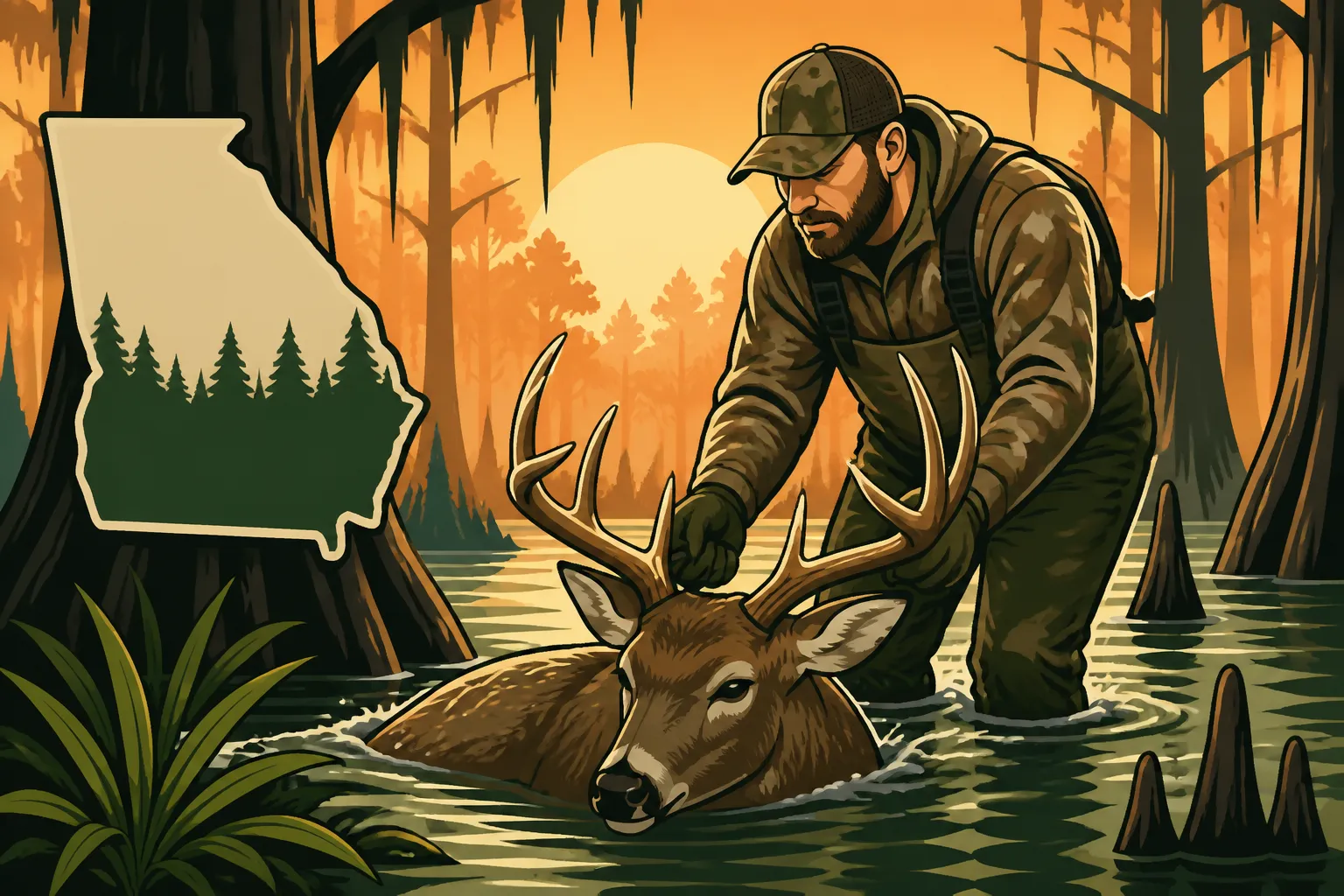
You've found your deer! Congratulations, that's often the hardest part. But now you face the next significant challenge: getting it out of the swamp. This isn't a job for one person, and it’s rarely easy.
Essential Extraction Tools and Teamwork
First, you'll need the right tools for the job. A sturdy game drag or a game sled is absolutely invaluable. While a sled might be cumbersome in the densest thickets, it can be a lifesaver across open water or slightly less obstructed ground. Heavy-duty rope is also essential for tying off the deer, creating leverage, or pulling it through tough spots. Consider a small, lightweight chain saw if legal and safe for your area, as it can clear downed trees that block your path, though typically a hand saw is safer and more practical for this type of recovery.
This is where teamwork shines. Seriously, trying to drag a mature Georgia whitetail out of a cypress swamp by yourself is a recipe for exhaustion, injury, and frustration. Recruit friends, family, or fellow hunters. The more hands, the lighter the load. Before you start dragging, quickly assess the easiest route out. It might not be the way you came in. Use your mapping app to identify the path of least resistance back to solid ground or a nearby road. Sometimes, finding an old logging road or even a subtle game trail that leads out of the swamp will be far more efficient than brute-forcing it through the thickest parts. You might find that Dragging a Deer Out of a Swamp is a full-body workout that requires multiple breaks.
Preserving the Meat in Warm, Wet Conditions
Georgia's climate, especially during early and mid-season, can be notoriously warm, even in a cypress swamp. This means you need to prioritize getting that deer field-dressed and cooled down as quickly as possible to preserve the meat. As soon as you find the deer, get to work. Field Dressing a Deer in Warm Weather is a skill you'll want to be proficient in. Remove the guts immediately to allow the carcass to begin cooling from the inside out. If you have ice packs or frozen water bottles, placing them inside the cavity can help, but the priority is to get the heat out.
Once field-dressed, if you're facing a long, arduous extraction, consider quartering the deer in the field. This significantly reduces the weight you have to drag or carry, allowing for quicker trips out of the swamp. While it’s more work initially, it can save you hours and prevent spoilage. Ensure you have game bags to protect the meat from flies and debris. Once out of the swamp, get the meat into coolers packed with ice as quickly as possible. Every minute counts when the temperatures are high. Don't let all that hard work go to waste by neglecting proper meat care once the deer is on dry land. The goal is not just recovery, but also to bring home delicious venison.
Disclaimer
The information provided in this guide is for educational purposes only and is not a substitute for official regulations or professional advice. Always consult the Georgia Department of Natural Resources (DNR) for the most current hunting laws, regulations, and safety guidelines. Hunting involves inherent risks, and it is the responsibility of each individual hunter to ensure their own safety and comply with all applicable laws.