Layout Blinds and Marsh Boats
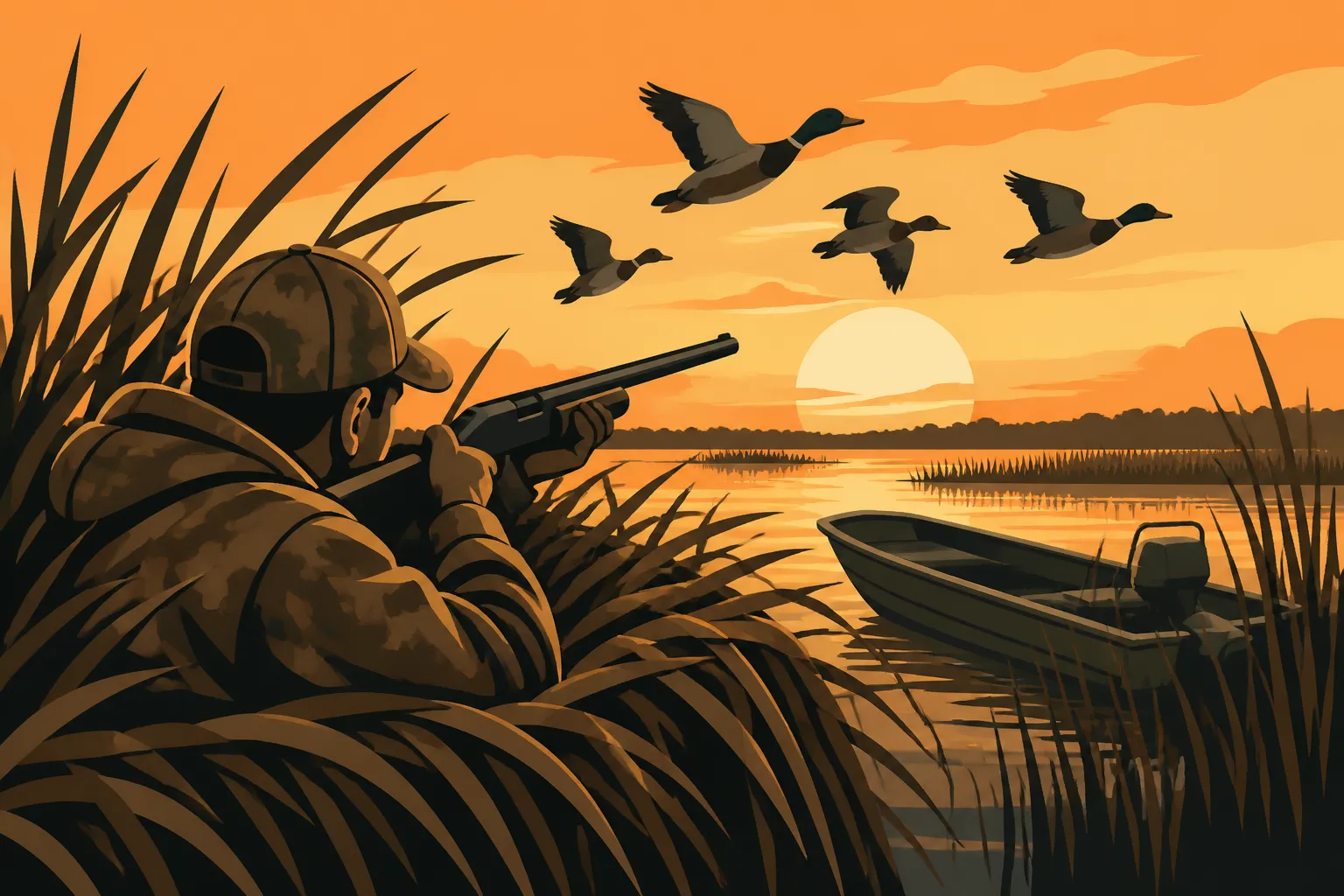
The biting chill of a pre-dawn Georgia morning, the whisper of wings overhead, and then the stark realization that those ducks flared because your silhouette stood out like a billboard. Every waterfowl hunter in Georgia has faced the challenge of disappearing into the diverse landscapes our state offers, from sprawling coastal marshes to flooded timber and wide-open agricultural fields. This guide is dedicated to helping you master the art of concealment and access, diving deep into the world of layout blinds and marsh boats so you can blend seamlessly into your surroundings and reach those elusive honey holes.
The Art of Concealment: Layout Blinds for Georgia Waterfowlers
Waterfowl hunting is often a game of hide-and-seek, and the ducks and geese are remarkably good at spotting anything out of place. This is where a good layout blind becomes your best friend, allowing you to essentially melt into the environment. It's not just about covering yourself; it's about becoming part of the natural landscape, making you virtually invisible to wary birds.
Why Low-Profile Matters: Adapting to Open Spaces
Think about hunting a wide-open cut peanut field in Southwest Georgia, or perhaps a vast mudflat exposed at low tide along the coast. In these scenarios, standing up or even sitting in a regular chair blind screams "hunter!" to high-flying ducks and geese. A layout blind, by its very design, keeps you prone and close to the ground, breaking up your human form and allowing you to disappear into stubble, cover crops, or even just subtle changes in terrain. This low profile is critical, especially when birds are circling high, scrutinizing every detail before committing to your decoy spread. It’s the difference between ducks cupped and committed, and ducks flaring a hundred yards out, never giving you a shot.
The effectiveness of a low-profile blind isn't just theoretical; it's proven every season. When you're tucked down, often with only your head visible through a mesh screen, you present a far smaller and less alarming profile than if you were perched on a five-gallon bucket or even within a slightly taller panel blind. This is particularly true for later-season birds that have seen every trick in the book. They've been shot at, spooked, and educated, making them incredibly sensitive to anything resembling a threat. A good layout blind is your best defense against their sharp eyes.
Camouflage and Concealment: Becoming Part of the Landscape
Simply having a layout blind isn't enough; it has to look like it belongs. The best blinds come in various camouflage patterns, but true concealment goes beyond the factory finish. You need to "brush in" your blind, using natural materials from the immediate area to break up its outline and make it indistinguishable from the surrounding habitat. If you're hunting a cornfield, grab corn stalks. In a marsh, use reeds, Spartina grass, or marsh elder branches. The goal is to make it disappear, blending its form, texture, and color with the environment.
This brushing-in process isn't just an afterthought; it's an essential part of your setup. Many hunters will arrive early, get their decoys set, and then spend a good 20-30 minutes meticulously camouflaging their blinds. You'd be surprised what a difference a handful of local vegetation can make. Some layout blinds even have special stubble straps or loops designed specifically for holding this natural cover, making the job easier. When you're scouting for a spot, pay attention not just to where the ducks are, but to what kind of cover you'll have to work with to effectively hide your blind. Layout Blind Hunting a Cut Cornfield takes this concept to heart, emphasizing how crucial local vegetation is.
Comfort and Functionality: Staying Put for Hours
Let's be honest, laying prone for hours in a damp field or marsh can be uncomfortable, especially during those frigid winter fronts that sweep through Georgia. A well-designed layout blind addresses this with features like padded headrests, backrests, and even insulated floors. These small comforts make a huge difference in your ability to stay focused and patient, waiting for that perfect moment. If you're constantly shifting or fidgeting because you're cold or uncomfortable, you're more likely to give yourself away.
Beyond comfort, functionality is key. Can you sit up quickly and smoothly for a shot? Is the flagging hole easy to access? Can you retrieve a downed bird without fully exposing yourself? These are all considerations that separate a mediocre blind from an excellent one. Some blinds feature a hinged lid that springs open, allowing for a quick, unobstructed shot. Others have mesh viewing ports that let you keep an eye on the sky without having to lift your head, minimizing movement. When the ducks are working, every second counts, and a functional blind helps you capitalize on those opportunities.
Navigating Georgia's Wetlands: Choosing the Right Marsh Boat
While layout blinds help you disappear, marsh boats are all about getting you to the disappearance point, often in places regular boats simply can't reach. Georgia's waterfowl habitats are incredibly diverse, from the vast, shallow estuaries of the coast to the winding, cypress-choked sloughs of the Altamaha River. A specialized marsh boat is often the only way to effectively hunt these areas.
Shallow Water Specialists: Hull Designs and Materials
Forget your typical V-hull fishing boat. Marsh boats are built for one thing: navigating extremely shallow, often obstruction-filled waters. Their hull designs are typically flat-bottomed or modified V's, which allow them to skim over inches of water. This is crucial for areas like the expansive tidal flats along the Georgia coast or the shallow backwaters of inland swamps where a traditional boat would quickly get stuck. These boats are designed to be pushed, poled, and even dragged over obstacles without getting bogged down.
The materials used in marsh boats are also chosen for durability and lightweight performance. Many are made from heavy-gauge aluminum, known for its resistance to punctures and abrasions from submerged logs or oyster shells. Others might be constructed from sturdy rotomolded polyethylene, which is incredibly tough and often quieter in the water. These boats aren't meant for speed or choppy open water; they're workhorses designed to withstand the abuse of tight cover and abrasive bottoms, getting you and your gear into the heart of the action.
Propulsion Options: From Push Pole to Electric Motor
How you move your marsh boat depends entirely on the terrain and the regulations of your hunting area. In extremely shallow water, especially within Wildlife Management Areas (WMAs) where motors might be restricted or impractical, a push pole is your primary mode of propulsion. Learning to effectively pole a boat quietly through dense reeds or muddy bottoms is an art form, but it allows for silent, stealthy access that won't spook birds. Many experienced hunters find that a good Marsh Boats and Push Poles setup is indispensable for silent entry.
For slightly deeper, but still challenging, water, a small outboard motor—often a mud motor or a prop-driven engine with a protected prop—is a game-changer. Mud motors are particularly effective in Georgia's mucky bottoms, designed to power through thick vegetation and shallow, silty areas where a conventional outboard would bog down or suck mud. Electric trolling motors are another popular option, especially for their quiet operation, which can be invaluable when trying to sneak up on birds or make minor adjustments to your position without creating a disturbance. The right propulsion choice can make or break your hunt, so matching it to your typical hunting grounds is essential.
Carrying Capacity and Stability: Hauling Gear and Dogs
Waterfowl hunting isn't a minimalist endeavor. You've got decoys, guns, calls, extra clothing, snacks, and, for many of us, our trusty retriever. A good marsh boat needs to have sufficient carrying capacity and, perhaps even more importantly, stability. Imagine standing up to shoot or helping your dog into the boat after a retrieve – you don't want to feel like you're about to tip over. Wider, flatter bottoms generally offer more stability, which is a major advantage when dealing with heavy gear and an excited canine companion.
Beyond just raw weight capacity, consider the layout of the boat. Are there good, secure spots for your gun? Can you easily access your decoy bag? Is there a designated platform or area for your dog to comfortably sit or stand, keeping them out of your way but ready for action? Many marsh boats include features like integrated gun boxes, storage compartments, and even dog ladders to make the entire experience smoother and safer. These boats are more than just transportation; they're mobile bases of operation for your waterfowl hunt. When you're hauling a few dozen decoys and a cooler full of lunch and drinks, you'll truly appreciate the thoughtful design of a specialized marsh craft.
Putting It All Together: Strategic Deployment in Georgia Habitats
Knowing your gear is one thing, but knowing how to use it effectively in Georgia's diverse waterfowl habitats is where the real skill comes in. Each type of environment presents its own set of challenges and opportunities for both concealment and access.
Coastal Marsh and Tidal Flats: Mastering the Tides
Hunting Georgia's coastal marshes, from the expansive low country near Savannah down to the Brunswick area, is a truly unique experience. Here, the tides dictate everything. You might be poling across what was dry mud just hours before, or setting your decoys in water that will soon disappear. This environment demands both a shallow-draft marsh boat for access and a robust layout blind that can handle being partially submerged or set right on the muddy shoreline. Hunters often target natural humps, oyster rakes, or the edges of Spartina grass stands as prime locations. Hunting Coastal Georgia Marsh Waterfowl is a masterclass in this, highlighting the importance of tidal knowledge.
When deploying your layout blind in these areas, consider the incoming or outgoing tide. You want to place your blind so that as the water level changes, you remain concealed and at a good shooting height. Often, hunters will "dig in" their blinds slightly into the mud or sand to get an even lower profile. Brushing in with local marsh grasses like Spartina, salt marsh hay, or marsh elder is absolutely critical here. Remember that bright sun on exposed mudflats can make even well-camouflaged blinds stand out, so pay attention to the sun's angle throughout the morning. Understanding Duck Migration Timing Through Georgia can also help you anticipate when certain species will be prevalent in these coastal zones.
Inland Swamps and Flooded Timber: Overcoming Obstacles
Further inland, Georgia offers incredible opportunities in its vast swamps and flooded timber, particularly along major river systems like the Altamaha, Oconee, and Ocmulgee. These areas are dense with cypress, tupelo, and various hardwoods, often with thick undergrowth and variable water depths. A narrow, maneuverable marsh boat is essential here to navigate tight channels and shallow, stump-filled backwaters. For concealment, you might be setting a layout blind on a slightly drier hummock, or even on a small platform within the flooded timber itself.
The key to success in these environments is often finding hidden pockets of open water or natural clearings within the timber. Ducks, especially wood ducks, love to feed in these protected areas. Hunting Flooded Timber for Mallards perfectly illustrates the challenges and rewards of this unique habitat. Your layout blind needs to be brushed in heavily with branches, leaves, and moss to mimic the surrounding forest floor. Because visibility can be limited, calling becomes even more important here, drawing birds into your shooting lane. Being able to quietly slip into a flooded area with your marsh boat and set up an invisible ambush is the pinnacle of swamp hunting.
Field Edges and Agricultural Settings: The Dry Land Challenge
While "marsh boat" implies water, many waterfowl hunters utilize layout blinds in dry (or just damp) agricultural fields across the Piedmont and Coastal Plain. These open areas, like cut cornfields, peanut fields, or harvested soybean fields, are magnets for geese and various duck species, especially late in the season. Here, your marsh boat might be used to get across a flooded ditch to reach the field, or simply to haul gear, but the layout blind is the star for concealment.
Setting up on a field edge or right in the middle of a cut field requires careful consideration of stubble height and natural depressions. You want to place your blind where you can disappear, often mimicking a natural clump of dirt or residue. Brush in extensively with the crop stubble that's already there – cornstalks, peanut vines, or soybean leaves. The flat, open nature of these fields means birds have a wide view, so your concealment needs to be impeccable. Using a mapping tool like those found on GoHunt can really help identify high points, drainage ditches, or field irregularities that offer natural breaks in the terrain for a layout blind. Remember, geese especially have incredible eyesight, so leaving no detail to chance is paramount.
Maintaining Your Investment: Gear Care for Georgia's Conditions
Your layout blind and marsh boat are investments, and Georgia's humid climate, combined with muddy and often brackish water, can take a toll. Proper care isn't just about extending their lifespan; it's about ensuring they perform reliably when you need them most.
Post-Hunt Rituals: Cleaning and Drying Your Blind
After a successful (or even unsuccessful) hunt, it's tempting to just toss your muddy, wet layout blind in the garage. Don't! Mud, especially the acidic kind found in some swamps, can degrade fabric over time. Saltwater from coastal hunts is even worse, leading to corrosion on zippers and snaps, and premature wear on materials. As soon as you can, give your blind a good hose-down to remove all mud, grit, and salt residue. Pay special attention to zippers, buckles, and any moving parts.
Once clean, it's absolutely crucial to let your blind dry completely before storing it. Mold and mildew are rampant in Georgia's humidity, and they can not only ruin the fabric and camouflage pattern but also create an unpleasant odor that can spook birds. Hang it open in a well-ventilated area, preferably out of direct sunlight to prevent UV degradation. Only when it's bone dry should you fold it up and store it. This simple ritual will keep your blind looking good and functioning well for many seasons to come.
Boat Maintenance for Longevity in Freshwater and Saltwater
Your marsh boat, whether aluminum or polyethylene, faces constant exposure to harsh conditions. For freshwater use, pay attention to mud and debris. Flush out any mud from the hull, especially if you're running a mud motor, and check your propeller for nicks or damage. For saltwater use, the maintenance routine becomes even more critical. Saltwater is highly corrosive. After every single coastal trip, thoroughly rinse your boat, motor, and trailer with fresh water. Flush your outboard motor according to the manufacturer's instructions to remove salt from cooling passages.
Regularly inspect your boat for any signs of wear, damage, or corrosion. Check the hull for dents or cracks, especially if you've been dragging it over oyster beds or stumps. Look at all the rivets and welds. Inspect the wiring for your lights or electric motor, ensuring connections are clean and corrosion-free. Lubricate moving parts on your trailer and ensure your tires are properly inflated. A well-maintained boat is a safe boat, and it means less chance of a breakdown when you're miles from the ramp in a remote marsh.
Pre-Season Checks and Off-Season Storage Tips
Before the season kicks off, give all your gear a thorough inspection. For your layout blind, check for rips, tears, broken zippers, or faded camouflage. Make any necessary repairs or consider re-dying faded sections. Ensure all the spring-loaded mechanisms work smoothly. For your marsh boat, perform a comprehensive tune-up on your motor – change oil, fuel filter, spark plugs, and check the prop. Inspect your trailer lights, bearings, and tires. Make sure your battery is charged and holding a charge.
During the off-season, proper storage is paramount. Store your layout blind in a cool, dry, dark place, away from rodents that might chew through the fabric. Your marsh boat should ideally be stored under cover, either in a garage or under a boat cover, to protect it from UV exposure and the elements. If storing outside, ensure it's tilted to allow water to drain, preventing stagnation and mosquito breeding. Removing the battery and storing it indoors on a trickle charger is also a good practice. Treating fuel with a stabilizer is wise if your boat will sit for an extended period. These proactive steps ensure your gear is ready to roll when the ducks start flying again.
Safety on the Water: Essential Practices for Georgia Duck Hunters
Hunting from a marsh boat, especially in low light or unfamiliar waters, carries inherent risks. Being prepared and practicing good safety habits are non-negotiable for a successful and safe waterfowl season in Georgia.
Navigational Awareness: Reading the Water and Weather
One of the biggest dangers when hunting from a marsh boat is getting lost or running aground in unfamiliar territory, particularly in the dark. This is especially true in Georgia's vast coastal marshes, where countless creeks and channels look identical, or in the sprawling, featureless inland swamps. Always have a reliable GPS unit or a mapping app like GoHunt on your phone, loaded with detailed satellite imagery and your planned route. Mark your launch point, your hunting spot, and any potential hazards. Scouting Georgia Public Land Before Season becomes even more critical when planning marsh boat routes.
Beyond navigation, pay close attention to weather forecasts. Sudden squalls, dense fog, or rapidly dropping temperatures can turn a pleasant morning into a dangerous situation. High winds can make poling a boat impossible and even make marsh boats unstable. Always err on the side of caution. If the weather looks iffy, it’s better to stay home or choose a more protected hunting spot. The water is unforgiving, and a bad weather decision can have serious consequences.
Personal Flotation Devices and Emergency Gear
It might seem obvious, but wearing a properly fitting personal flotation device (PFD) or having readily accessible PFDs for everyone on board is absolutely essential. Accidents happen fast, and in cold water, without a PFD, survival time can be drastically reduced. Modern PFDs are comfortable and low-profile, making them easy to wear without impeding your hunting. Don't just stash them under a seat; wear them. This is especially true when operating your marsh boat in unfamiliar areas or in adverse conditions.
Beyond PFDs, a small dry bag packed with essential emergency gear should always be part of your kit. This includes a fully charged cell phone (in a waterproof case), a first-aid kit, a whistle, a powerful headlamp or spotlight, a knife, and perhaps a fire starter or emergency blanket. Having basic tools for minor boat repairs, like a wrench or screwdriver, can also be a lifesaver. Ensure you have proper boat lighting for navigating in the dark, and make sure they are in good working order.
Communication and Contingency Planning
Never hunt alone without telling someone exactly where you're going and when you expect to return. This simple act of "leaving a float plan" is one of the most important safety measures you can take. Provide details about your boat, your hunting location, and who is with you. If you don't check in by your designated time, your contact knows to initiate a search. This is especially important for remote areas that can be accessed via a marsh boat, far from main roads.
Also, have a contingency plan for unexpected situations. What if your motor dies? Do you have oars or a paddle as a backup? What if someone gets injured? Do you know the nearest emergency access point or how to signal for help? Discussing these scenarios with your hunting partners before you leave the boat ramp can save precious time and potentially lives if an emergency arises. Familiarize yourself with emergency procedures for the specific public lands you hunt, especially for Georgia WMAs or National Forests. Remember, responsible hunting includes being prepared for anything.
Comparison of Layout Blinds
| Feature | Traditional Layout Blind | Panel/Low-Profile Blind | Portable A-Frame Blind (Ground Blind) |
|---|---|---|---|
| Concealment Level | Excellent (prone position, disappears into stubble) | Good (low to the ground, breaks up silhouette) | Moderate (sits higher, needs more brushing-in) |
| Primary Use | Open fields, mudflats, short grass | Field edges, shorelines, subtle terrain breaks | Thicker cover, woods edges, brush piles |
| Comfort | Good (padded head/backrest, insulated floor options) | Varies (some are very basic, others have padded seats) | Good (can sit upright, more interior space) |
| Mobility/Setup | Generally quick setup, but heavier to move once brushed | Quickest to deploy and move, often lightweight | Takes more time to set up, heavier and bulkier |
| Visibility | Excellent (mesh top allows full view of sky) | Good (can peek over the top or through mesh) | Varies (mesh windows, but can obstruct full view of sky) |
| Weather Protection | Moderate (protection from above, can be cold/wet below) | Minimal (primary function is concealment, not weather) | Good (offers more protection from wind, rain) |
| Brushing In | Essential and effective with stubble straps | Moderate to Essential, less surface area to cover | Highly essential, needs heavy brushing to blend |
Disclaimer
This article is for general informational purposes only and does not constitute professional advice. Laws, prices and regulations vary by location and change over time. Consult a qualified professional for guidance on your specific situation.