Hunting the Georgia Public-Land Turkey Opener
The Georgia public-land turkey opener can feel like a mad dash, a frustrating mix of excited hunters and wary gobblers that suddenly go silent under pressure. You've scouted, you've practiced your calls, but the sheer volume of other hunters on opening day often throws a wrench in the best-laid plans. This guide dives deep into navigating the unique challenges of chasing spring gobblers on Georgia's public hunting grounds, offering strategies to increase your odds and make that opening morning memorable, for the right reasons.
The Unique Challenges of Public Land Turkey Hunting
Hunting wild turkeys on Georgia's public lands, particularly on opening day, presents a distinct set of hurdles that private-land hunters rarely encounter. It's not just about finding a gobbler; it's about finding a gobbler and having the space and opportunity to work him without interference. This requires a solid understanding of hunter behavior, turkey patterns under pressure, and the specific regulations governing these valuable public areas.
Understanding Hunter Pressure and Its Impact
The biggest factor to contend with on the public-land turkey opener is, without a doubt, other hunters. From the pre-dawn headlights lining the roads to the sound of distant calls and even the occasional mistaken hunter walking into your setup, the presence of others dramatically alters turkey behavior. Gobblers that were vocal and eager to respond during scouting trips can suddenly become tight-lipped or "heavily educated" as soon as the first wave of hunters hits the woods. This isn't a reflection of your calling prowess or scouting efforts; it's simply the reality of finite public resources meeting high demand.
This pressure forces turkeys to change their routines. They might roost in thicker, more inaccessible areas, pitch down silently, or immediately head to dense cover upon hitting the ground. Often, they'll become very sensitive to unnatural sounds, like slamming truck doors or human voices, quickly moving away from these disturbances. Recognizing this fundamental shift is crucial, as it dictates how you approach your morning hunt. You can't hunt public land turkeys the same way you would birds that rarely hear a call or see a human.
One common frustration is when a gobbler you've been working suddenly goes silent, only for you to later discover another hunter moved in. It happens. The key is to anticipate it and have backup plans. Instead of getting discouraged, view it as a challenge to adapt. This might mean moving to more remote areas or changing your tactics entirely. Understanding Hunting Pressure on Georgia Public Land is vital for long-term success.
The Importance of Habitat Diversity
While hunter pressure is a major concern, the habitat itself plays an enormous role in where turkeys are likely to be found and how they'll react. Georgia's public lands offer a huge diversity, from the steep, pine-studded ridges of the North Georgia Mountains to the vast, flat pine plantations and river bottoms of the Coastal Plain. Each of these environments presents different opportunities and challenges for the turkey hunter. A bird in the Chattahoochee National Forest might behave differently from one in the Altamaha River Wildlife Management Area.
Areas with a mix of mature hardwoods for roosting, open fields or thinned pine stands for strutting and feeding, and dense cover for escape will almost always hold more turkeys and offer better hunting opportunities. This habitat diversity provides everything a gobbler needs to survive and thrive, even with hunting pressure. Conversely, monoculture pine plantations with little understory or heavily logged areas might offer less appeal for turkeys, making them harder to find and call consistently.
During your scouting, pay close attention to transitions between different habitat types – where a pine stand meets a hardwood bottom, or a swamp edge borders an open field. These "edge" habitats are often magnets for turkeys and can offer natural travel corridors and congregation points. Having a good grasp of the terrain will not only help you find birds but also help you anticipate their movements once they hit the ground.
Season Dates and Regulations on Public Lands
Before you even step foot in the woods, it's absolutely paramount to understand the specific season dates and regulations for Georgia's public lands. While there's a general statewide turkey season, many Wildlife Management Areas (WMAs) and National Forest lands have their own unique rules, including different opening dates, bag limits, and legal hunting weapons. For instance, the Georgia Spring Turkey Public-Land Opener Date is typically a week later than private land, allowing private land hunters to have their fun before the crowds move to public property.
Always consult the current Georgia Hunting Regulations Guide and the specific WMA or National Forest regulations online. These can change year to year, so don't rely on last season's knowledge. Some WMAs might be archery-only, some might require a quota permit, and others might have specific check-in/check-out procedures. Ignoring these rules can lead to citations, fines, or even losing your hunting privileges – a terrible way to start the season.
Beyond season dates and bag limits, pay attention to rules regarding vehicle access, camping, and the use of trail cameras. Many public lands restrict vehicle travel to designated roads, and some areas may require a Georgia WMA Access Stamp in addition to your general hunting license. Being compliant ensures you're hunting ethically and legally, protecting both yourself and the resource for future generations.
Strategic Pre-Season Scouting for Public Land Success
When it comes to public land turkeys, opening day is often won or lost weeks, if not months, before the season even begins. "Luck" rarely plays a significant role; it's almost always a direct result of diligent, strategic pre-season scouting. You need to know where the birds are, what their general patterns are, and, perhaps most importantly, where other hunters are likely not to be.
Digital Scouting with Mapping Tools
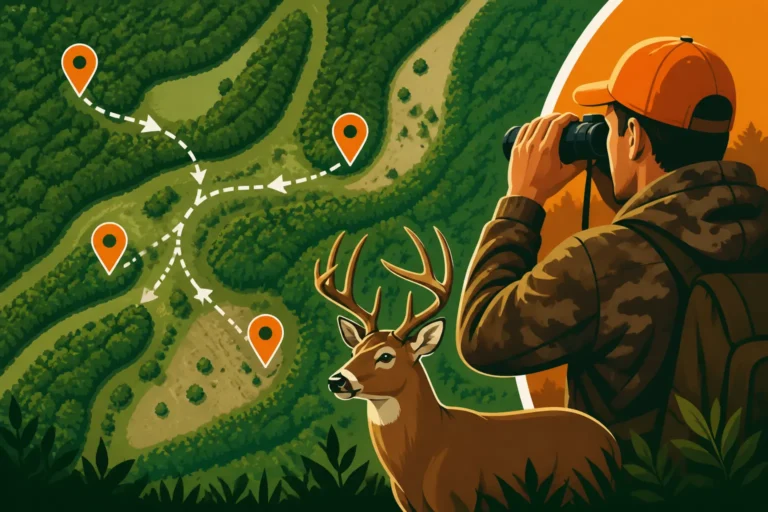
Your scouting efforts should always start from the comfort of your home with digital mapping tools. Platforms like Google Earth, OnX Hunt, or the Georgia Outdoors App are invaluable resources for public land hunters. You can spend hours virtually walking the terrain, identifying potential roosting areas (tall hardwoods near water or ridge lines), open strutting zones (fields, clear-cuts, thinned pines), and natural travel corridors (creek bottoms, saddles, logging roads). I find a tool like GoHunt particularly useful for layering maps and identifying property boundaries, which is crucial for staying on public land.
Look for areas that are difficult to access. Roads that dead-end, long walks into remote sections, or areas cut off by natural barriers like swamps or steep ridges are prime candidates for finding less pressured birds. Mark potential parking spots, likely entry routes, and areas of interest with pins. Remember, the further you're willing to walk, the better your chances of escaping the crowds. While digital scouting won't show you fresh tracks, it provides an incredible overview of the landscape and helps you prioritize areas for boots-on-the-ground investigation.
Focus on topographical features. Steep terrain can funnel birds, while saddles between ridges often serve as crossroads. Look for areas with significant elevation changes, as gobblers love to sound off from high points. Conversely, flat, swampy areas might require different tactics, but often hold less pressure. This initial digital reconnaissance allows you to maximize your time in the field, guiding you to the most promising spots rather than aimlessly wandering. This groundwork is foundational for Scouting Georgia Public Land Before Season.
Boots-on-the-Ground Reconnaissance
Once you've identified promising spots digitally, it's time to hit the woods. This hands-on scouting is irreplaceable. The goal isn't necessarily to call birds – in fact, it's often best not to call much during pre-season scouting to avoid educating them. Instead, you're looking for concrete turkey sign: tracks, droppings, scratch marks in the leaves, dusting bowls, and shed feathers. More importantly, you're confirming the accuracy of your digital map and discovering the nuances of the terrain that maps can't fully convey.
Visit the areas you identified during the evening to listen for gobblers flying up to roost, and then return the next morning before dawn to listen for them gobbling on the limb and pitching down. This helps you establish their preferred roosting sites and their general direction of travel once they hit the ground. Note the presence of other hunters' sign – old boot prints, spent shells, or even leftover decoys. If you see abundant evidence of past hunting, consider that spot already pressured and move on, or plan to approach it differently.
Don't be afraid to cover a lot of ground. Walking key areas, especially during the spring prior to the season, gives you a firsthand feel for where the birds are active. You'll learn the best approach routes, identify natural obstacles, and find subtle features like small clearings or logging decks that aren't obvious from above. This on-the-ground work helps you build a detailed mental map, which will be invaluable when you're navigating in the dark on opening morning.
Interpreting Turkey Sign and Activity
Learning to read turkey sign is like being a detective in the woods. Every track, every scratch, every pile of droppings tells a story. Fresh tracks in soft dirt or mud, especially large tom tracks (often over 4 inches long) with splayed toes, indicate recent presence. Look for groups of tracks, which can suggest hens, or solo large tracks, which are often a gobbler's. Understanding these signs helps you confirm that birds are using an area, not just passing through.
Droppings are another key indicator. Gobbler droppings are typically "J-shaped" or coiled, while hen droppings are more amorphous or globular. The size and freshness of droppings can tell you about the bird's size and how recently it was there. Scratching in the leaves, particularly broad, V-shaped patterns where turkeys have raked the ground for food, points to feeding areas. If you find dusting bowls – shallow depressions where turkeys have fluffed their feathers to remove parasites – it tells you where they feel safe and comfortable enough to relax.
Taken together, these various signs help you piece together a picture of turkey activity. A concentration of fresh tracks, J-shaped droppings, and significant scratching in a particular area suggests it's a primary feeding or strutting zone. Finding these high-activity areas away from obvious access points is the holy grail of public land turkey scouting. It provides confidence that your chosen spot is holding birds, and that those birds might be less accustomed to human interaction.
Opening Day Tactics to Outsmart Wary Gobblers
Opening day on public land is often a chess match, not a footrace. The goal isn't always to be the first one to a gobbler, but rather to be the smartest one. This means having a flexible approach, being patient, and knowing when to be aggressive and when to back off.
Roosting and Early Morning Approaches
The absolute best chance you have at a public land gobbler often comes in the first hour after he flies down from the roost. Knowing where a bird is roosting from your pre-season scouting is a huge advantage. On opening morning, you want to get into position before light, as close as you dare without spooking him. This often means navigating in the dark, which is where those meticulously scouted entry routes come into play. Quiet is paramount – avoid headlamp beams shining up into the trees, rustling loud leaves, or making any unnecessary noise.
Once you're set up, wait for the first gobble. Often, other hunters will start calling immediately, but on public land, patience can pay off. Let the bird gobble a few times naturally. Sometimes, a very soft tree yelp or cluck, barely audible, is all you need to let him know a hen is nearby. The challenge is getting him to commit to your setup before another hunter does, or before he flies down and immediately bolts for thicker cover due to pressure. Remember, Calling a Georgia Gobbler Off the Roost requires finesse and timing.
If the bird flies down silently or heads away, don't panic. Sometimes a softer, more subtle approach is best. Instead of chasing, try to intercept him along a likely travel corridor, or set up in a known strutting zone and let him come to you. Aggressive, loud calling can often work against you on public land, as gobblers become wary of any sound that isn't naturally occurring. They hear enough hen talk from other hunters that they often learn to go to the real thing rather than investigate every call.
Aggressive Calling vs. Subtle Sweet Talk
The debate between aggressive and subtle calling is particularly relevant on public land. An aggressive, loud series of cuts and yelps might work on an unpressured bird, but on opening day with multiple hunters around, it can easily backfire. Other hunters will hear you and might move in, or the gobbler might peg you as a hunter and hang up just out of range. My general rule of thumb for public land is to start subtle and escalate only if necessary. A soft series of yelps, clucks, and purrs sounds more natural and less threatening.
However, there are times when an aggressive approach is warranted. If you've been working a bird for a while and he's hung up, or if you hear another hunter working the same bird, a sudden burst of excited hen calls might just be enough to pull him in. The key is to read the bird. Is he gobbling hard and heading your way? Stay subtle. Is he gobbling occasionally but not moving? A little more volume or enthusiasm might entice him. Is he silent but you know he's there? Keep calling softly and consistently.
One effective tactic is to use locator calls – crow, owl, or coyote calls – to get a shock gobble without giving away your exact position as a "hen." Once you pinpoint him, move closer, set up, and then switch to soft hen talk. Vary your calls and don't overcall. A turkey's natural communication isn't a continuous barrage of sound. Sometimes, silence is your most powerful tool, allowing the bird's curiosity to get the better of him. When dealing with pressured birds, consider Decoy Placement for Pressured Georgia Birds to give them a visual draw.
Setting Up for the Shot on Public Ground
Your setup location is critical on public land. Not only do you need to be concealed from the turkey, but also from other hunters. Always set up with a tree wider than your shoulders to protect your back, especially if you're calling. Position yourself where you have good visibility and clear shooting lanes in the direction you expect the turkey to approach. Avoid setting up in thick brush where your view is obstructed or where a gobbler might hang up just out of sight. Remember, Setting Up Against a Big Pine is a classic move for a reason.
Consider the terrain. Turkeys often prefer to approach on high ground, so if you're in a creek bottom, a gobbler might stay on the ridge above you. Use natural funnels like creek bends, logging roads, or subtle terrain changes to guide the bird into your shooting zone. If using a decoy, place it where it's visible but not so close that the gobbler hangs up out of range. Ideally, you want him to approach the decoy, giving you a broadside shot at a comfortable distance.
Be prepared to adjust your setup. If a bird hangs up or goes silent, don't be afraid to quietly reposition, especially if you can use terrain or cover to make a move. Sometimes, simply moving 50-100 yards can change the dynamic completely. On public land, patience combined with the willingness to adapt your setup can make all the difference between a silent walk out and a successful harvest.
Navigating Other Hunters and Maintaining Safety
Dealing with other hunters is an unavoidable aspect of public land turkey hunting. While most hunters are courteous and respectful, it's essential to have strategies in place to avoid conflicts and, more importantly, ensure your safety.
Avoiding Crowded Areas and Finding Seclusion
The best way to avoid other hunters is to go where they don't. This often means embracing the concept of "hunter's pressure equals effort." Look at your maps and identify areas that require a long walk, a difficult creek crossing, or a steep climb. These are the places where most hunters won't venture, especially on opening morning when enthusiasm is high but effort often wanes after the first hour. This is where a detailed mapping tool like GoHunt truly shines, helping you find those overlooked pockets.
Consider hunting during the week rather than on weekends if your schedule allows. Weekday pressure is typically significantly lower. If you must hunt on opening day, arrive exceptionally early – often an hour or more before what you think is necessary – to secure your preferred spot and quietly make your approach. If you arrive and see a dozen trucks already parked, consider having a backup plan to move to a different, less accessible area. It's frustrating, but sometimes cutting your losses and moving on is the best strategy.
Don't be afraid to explore areas that might not look "turkey-y" at first glance. Sometimes, a gobbler will hole up in an unexpected thicket or a small, overlooked woodlot simply to escape pressure. These out-of-the-way spots, often surrounded by heavier hunting traffic, can be goldmines for a hunter willing to adapt their expectations and explore. Remember, Finding Ground Others Walk Past is often the key to public land success.
Communicating and Cooperating with Fellow Hunters
Despite your best efforts, you will eventually encounter other hunters. When you do, a little courtesy goes a long way. If you see headlights at your chosen parking spot, or hear another hunter calling in the area you planned to hunt, try to give them a wide berth. A simple wave or a quick, quiet conversation can often prevent conflicts. If you're walking in and hear a gobble followed by calling, it's generally good etiquette to back off and give that hunter space.
If another hunter walks into your setup, remain calm. Identify yourself in a clear, audible voice, without yelling, so they know you're human. "Hunter here!" or "Hey, I'm over here, hunter!" is usually sufficient. Never stand up or wave frantically, as this can be mistaken for a turkey in low light or at a distance. The goal is to make your presence known safely and calmly. Remember, they likely didn't see you, and may not even realize they're interfering.
Sometimes, you might even be able to cooperate. If two hunters are working the same bird from different angles, a quick, respectful chat might lead to a joint strategy. "Hey, I'm on his left, if you can get him to come your way, I'll back off." This kind of sportsmanship, while not always possible, can turn a potentially negative encounter into a positive one and speaks volumes about the hunting community.
Safety First: Blaze Orange and Situational Awareness
Safety is paramount, especially on public land. While blaze orange isn't required for turkey hunting once you're stationary, it's highly recommended to wear it when walking in or out of the woods, especially during periods of low light. You can easily remove it once you're set up. This simple step significantly reduces your risk of being mistaken for game by another hunter. While turkey hunting requires camouflage, those few minutes of visibility during transit are critical. Familiarize yourself with Georgia Blaze Orange Requirements.
Always, always assume that every sound you hear could be another hunter. Never "sneak up" on a gobble you hear unless you are absolutely certain it's a bird and not another person calling. If you hear a turkey gobble, pinpoint its location, and then move to a safe, concealed setup before you start calling. Never mimic an animal sound without first visually confirming it's not another hunter.
Beyond the obvious, maintain constant situational awareness. Scan your surroundings, listen for approaching footsteps, and be aware of your backdrop. Never shoot at a sound or at movement without positively identifying your target. On public land, there's always the chance of hikers, dog walkers, or even other non-hunters sharing the woods. Your primary responsibility is to yourself and others to hunt safely and ethically.
Essential Gear for the Public Land Turkey Hunter
Having the right gear won't guarantee success, but it will certainly improve your comfort, efficiency, and overall experience on Georgia's public lands. Every piece of equipment should be chosen with mobility, concealment, and versatility in mind.
Calling Devices for Every Scenario
When it comes to calls, versatility is key for public land. You need a repertoire that can handle various scenarios, from subtle soft talk to loud, aggressive pleading. A good selection would include:
- Mouth Calls (Diaphragm Calls): These are perhaps the most versatile, allowing for hands-free operation and a wide range of sounds. They're excellent for producing soft clucks and purrs when a gobbler is close, or loud, excited cuts when you need to get his attention. A seasoned hunter might carry 3-5 different mouth calls with varying reed cuts for different tones.
- Slate or Glass Calls: These friction calls produce incredibly realistic hen yelps and purrs. They require two hands but offer excellent sound quality. They're perfect for working a bird that's a bit further out or for producing consistent, pleading yelps.
- Box Calls: Classic and easy to use, box calls produce loud, resonant yelps that carry well over long distances. They are great for getting a shock gobble from a distant bird or for starting a conversation from afar.
- Locator Calls: Crow, owl, or coyote calls are essential for getting a gobbler to sound off without suggesting a hen. This allows you to pinpoint his location without giving away your exact position as a potential mate.
Carrying a variety of calls means you can adapt to any situation. If a bird is far, start with a box call or a loud mouth call. As he gets closer, switch to a slate or softer mouth call. If he hangs up, try a different tone or cadence. Having options allows you to speak the turkey's language effectively, especially when they're pressured and wary. You'll find many Turkey Calls Worth Carrying in Georgia at your local sporting goods store or online.
Camouflage and Concealment Strategies
Effective camouflage is non-negotiable for turkey hunting, particularly on public land where birds are often more skittish. Your pattern should ideally match the early spring foliage of Georgia – a mix of greens, browns, and grays that mimic the woods before the full canopy has emerged. Head-to-toe camo is essential, including a full face mask and gloves. Turkeys have exceptional eyesight and will pick up on the slightest movement or unnatural color.
Beyond just the pattern, your concealment strategy involves using the environment. Always set up against a tree that is wider than your shoulders to break up your outline and provide a safe backrest. Utilize natural cover like fallen logs, thick brush, or changes in elevation to blend in. Avoid sitting in open areas unless absolutely necessary and ensure you have a clear shooting lane while remaining hidden.
Consider what you're sitting on. A comfortable turkey vest with a built-in seat cushion or a small, lightweight folding stool can make hours of sitting much more bearable. The more comfortable you are, the less likely you are to fidget, which can spook a sharp-eyed gobbler. Your camo shouldn't just be a fashion statement; it's a functional tool that helps you disappear into the Georgia landscape.
Mobility and Comfort for Long Days Afield
Public land turkey hunting often involves covering significant distances on foot, potentially through challenging terrain. Therefore, your gear needs to be lightweight, comfortable, and optimized for mobility. A good quality turkey vest is invaluable; it keeps all your calls, water, snacks, and other essentials organized and easily accessible without needing to carry a separate backpack.
Comfortable, supportive hiking boots are a must. You'll be walking through diverse terrain, from muddy creek bottoms to rocky ridges, and your feet will thank you for proper footwear. Depending on the time of year and specific location, snake boots or gaiters might be a wise choice, given Georgia's healthy population of venomous snakes.
Finally, don't forget essentials like water, snacks, a headlamp for walking in and out in the dark, and a small first-aid kit. A fully charged phone with a mapping app (like GoHunt) is also crucial for navigation and safety, especially when you're deep in unfamiliar public land. Remember, you might be out there all day, so plan accordingly to stay fueled, hydrated, and able to navigate back to your vehicle. Long days demand the right kind of setup, making Run-and-Gun Turkey Tactics on Public Land much more feasible.
Post-Hunt Responsibilities and Continued Success
The hunt doesn't end when the shot is fired. Ethical hunters understand that a successful harvest comes with responsibilities, and even unsuccessful hunts offer valuable lessons for the future.
Game Recovery and Ethical Harvest
Once you've taken a shot at a turkey, the immediate priority is ethical game recovery. Even if the bird appears to drop, approach with caution and a loaded gun, ready for a follow-up shot. A wounded turkey can quickly disappear into cover, so marking the exact spot where it was hit is critical. If it flies off or runs, observe its direction of travel and the location of the impact as best you can.
Begin your search at the point of impact, looking for feathers, blood, or body parts. Turkeys don't leave massive blood trails, so you'll need to be meticulous. If you find signs, follow them slowly and systematically. If you lose the trail, circle out from the last known sign. Patience is key here. If the bird is still alive and moves off again, give it time (an hour or two) to expire before continuing the pursuit, especially if it's wounded in a non-lethal area.
An ethical harvest means not only making a clean shot but also making every reasonable effort to recover the animal. Leaving a wounded bird in the woods is antithetical to responsible hunting. Your commitment to recovery reflects your respect for the animal and the hunting tradition.
Reporting Your Harvest and Regulatory Compliance
In Georgia, successfully harvesting a turkey requires reporting it to the Department of Natural Resources (DNR). This is typically done through the Georgia Game Check system, either online or via their mobile app. You'll need your license information, the date and county of harvest, and details about the bird (e.g., sex, spurs, beard length). This process is quick and easy, but it is mandatory.
Reporting your harvest isn't just a bureaucratic step; it's vital for wildlife management. The data collected from hunter reports helps the Georgia DNR monitor turkey populations, assess harvest rates, and make informed decisions about season lengths, bag limits, and conservation efforts. It's how they ensure healthy turkey populations for future generations of hunters. Being compliant is part of being a responsible steward of the resource. You can find detailed instructions on Georgia Turkey Checking Requirements.
Failure to report your harvest can result in penalties, so don't skip this step. Make it a habit to report your bird as soon as possible after recovery, before you get distracted with cleaning or celebrations. This ensures you stay on the right side of the law and contribute to important conservation efforts.
Learning from Each Hunt and Adapting
Every hunt, successful or not, is a learning opportunity. Did the bird respond to your calls, or did it hang up? Was your setup effective? Did other hunters interfere, and how could you have avoided them? Take mental notes, or better yet, keep a hunting journal. Document the conditions, your tactics, the turkey's reactions, and the outcome. This data will help you refine your strategies for future hunts.
If you weren't successful on opening day, don't get discouraged. Public land turkey hunting is tough. Review your scouting notes and consider what you might have missed. Perhaps the birds shifted their patterns due to pressure, or maybe you need to adjust your calling technique. The season is still young, and subsequent hunts often involve less pressure, as many fair-weather hunters drop out. This might be a good time to consider When Georgia Gobblers Go Quiet in May to adjust your strategy for later in the season.
The true success of hunting on Georgia's public lands isn't always measured by a full game bag, but by the knowledge gained, the challenges overcome, and the time spent connecting with nature. By embracing these challenges, learning from your experiences, and constantly adapting, you'll become a more skilled and ethical hunter, ready to chase those elusive public land gobblers year after year.
Public Land Turkey Hunting: Common Scenarios & Tactics
Successfully hunting turkeys on Georgia's public lands means being prepared for various situations. Knowing how to react can make all the difference.
| Scenario | Common Turkey Behavior | Recommended Tactic |
|---|---|---|
| Silent Fly-Down | Gobbler pitches down without gobbling, moves quietly. | Be in position well before fly-down. Use soft tree yelps before he hits the ground. If he's silent, assume he's landed and use subtle clucks and purrs. Don't immediately chase; let him come to you or intercept along a known travel route. |
| Hung-Up Gobbler | Responds to calls but stays just out of range. | Stop calling for a while to make him think you've left. Try a different call type or cadence after a period of silence. If possible, sneak to a new position to change the angle, simulating a hen moving away. Sometimes, a subtle "cluck and purr" and scratching in the leaves can make him think a hen is feeding. |
| Pressure from Other Hunters | Gobbler goes silent, moves away from calls/noise. | Locate less-pressured areas via digital maps and deep woods scouting. Get in early and deep. Use locator calls to find birds without revealing your "hen" location. When you hear other hunters, give them wide berth and find a new bird, or try to intercept a bird they're pushing. Prioritize safety with blaze orange when moving. |
| Multiple Hens with Gobbler | Gobbler often ignores calls, prefers real hens. | This is tough. Try aggressive hen yelps to challenge the real hens, or soft, contented clucks and purrs to pique the gobbler's interest. Sometimes, letting the hens and gobbler walk past you, then calling softly from behind them, can make the gobbler double back. Patience is key; wait for the hens to disperse slightly. |
| Mid-Day Lull | Turkeys quiet down after morning activity. | Don't give up! Turkeys often become more active later in the day. "Roam and gobble" or "run-and-gun" tactics can work, covering ground and stopping to call every 100-200 yards. Focus on areas where turkeys feed or loaf during the day, like shaded creek bottoms or open fields. |
| Rainy/Windy Weather | Gobblers are less vocal, harder to hear. | Hunt sheltered areas like thick pine plantations or creek bottoms where sound carries better. Use louder calls if needed, but still focus on realism. Turkeys will often feed more in these conditions, so focus on known feeding areas and fresh sign. Consider using a ground blind for added concealment and protection from elements. |
Disclaimer
Hunting is an inherently dangerous activity. This guide provides general information and strategies, but it is your responsibility to understand and comply with all Georgia Department of Natural Resources (DNR) regulations and local laws. Always prioritize safety, proper firearm handling, and ethical hunting practices. Conditions in the field can change rapidly, and hunters should always exercise good judgment and be prepared for emergencies.