Damage Feral Hogs Cause Georgia Farms
For anyone who's spent time working Georgia's fields or tending to their land, the sight of a rutted-up field or a busted fence post is an all too familiar punch to the gut. Feral hogs are more than just a nuisance; they're an agricultural catastrophe for our state's farmers, costing millions in damage and heartache every single year. This guide will dive deep into the extensive destruction these invasive animals inflict on Georgia farms, explore why they're so hard to control, and look at the strategies being used to push back against their relentless spread.
The Relentless Assault on Georgia's Agriculture
Feral hogs aren't just passing through; they're actively destroying the very foundation of Georgia's agricultural economy. Their impact is immediate, visible, and devastating, leaving a trail of ruined crops and damaged infrastructure in their wake. It’s a battle many farmers feel they are fighting daily, often with limited resources against an enemy that seems to multiply overnight.
Crop Devastation and Yield Loss
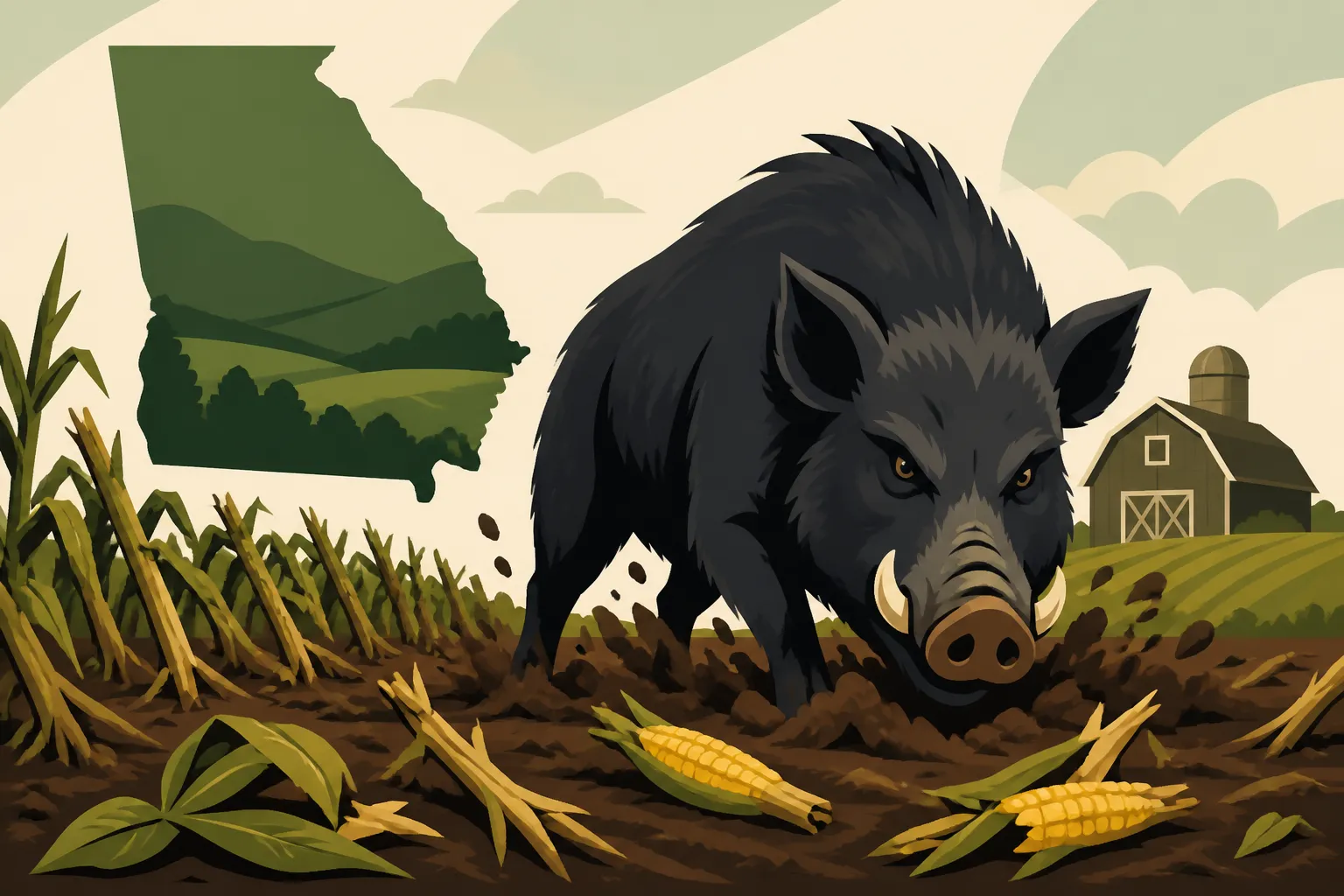
The most obvious and direct hit farmers take from feral hogs is the destruction of their crops. Hogs are omnivorous, but they have a particular fondness for newly planted seeds, mature grains, and underground tubers. Imagine a farmer in South Georgia, after months of hard work and significant investment, waking up to find acres of young corn or peanut fields torn to shreds. These animals use their incredibly strong snouts to "root" through the soil, digging up seeds, plant roots, and entire plants. This rooting behavior doesn't just consume the crop; it often pulls up or damages far more than they could ever eat.
Beyond direct consumption, the sheer trampling of plants by sounders—large groups of hogs—can wipe out substantial portions of a field. For instance, a group of hogs moving through a mature soybean field can flatten rows, making mechanical harvesting impossible and leading to significant yield losses. Pecan growers, especially in areas like Albany or Valdosta, face different challenges. Hogs will aggressively consume fallen pecans, drastically reducing the harvestable crop, and their rooting can damage the shallow root systems of valuable pecan trees themselves, impairing future production. The economic impact isn't just lost income from the current harvest, but potentially long-term damage to the land's productive capacity.
Infrastructure Destruction
The damage wrought by feral hogs extends far beyond just the crops themselves. Farmers invest heavily in infrastructure to make their operations run smoothly, and hogs have a knack for finding and exploiting weaknesses. Fences, designed to keep livestock in or other animals out, are routinely pushed over, rooted under, or simply torn apart by these powerful creatures. This means increased costs for repairs and the potential for domestic animals to escape or become injured.
Irrigation systems, crucial for many row crops in drier periods, are also prime targets. Hogs will root up pipes, chew on drip lines, and wallow in irrigation ditches, causing costly ruptures and blockages. A ruptured irrigation line can lead to significant water loss, crop stress, and a hefty repair bill, often disrupting crucial watering schedules. Access roads, especially those that are unpaved, can become deeply rutted by hog traffic and rooting, making it difficult for farm equipment to navigate and increasing maintenance needs. Even small ponds or watering holes can be damaged, as hogs wallow in the mud, causing erosion and impacting water quality for other wildlife or livestock. It's a never-ending cycle of fix-it-up for Georgia's diligent farmers.
Soil Degradation and Erosion
Perhaps one of the more insidious long-term effects of feral hog activity is the degradation of soil health and increased erosion. When hogs root through fields, they completely disturb the soil structure. This intense tilling action breaks down the natural aggregates that hold soil together, making it much more susceptible to wind and water erosion. A rainstorm after a sounder has rooted through a field can wash away valuable topsoil and nutrients, diminishing the land's fertility for future plantings.
This constant churning also brings weed seeds to the surface, potentially increasing weed pressure in subsequent growing seasons. The soil compaction caused by heavy hogs walking repeatedly over the same areas can further hinder root development for crops. Farmers are then left not only with lost harvests but with the added burden of soil remediation, which can include expensive practices like deep tillage, adding organic matter, or implementing cover crops—all extra costs and labor that directly impact profitability.
Beyond the Field: Broader Economic and Environmental Impacts
The devastation wrought by feral hogs isn't confined to crop fields and farm infrastructure. Their presence creates a ripple effect, impacting livestock health, water quality, natural ecosystems, and adding significant financial strain to Georgia's agricultural backbone. It's a complex web of problems that makes managing these animals so incredibly challenging for our communities.
Disease Transmission to Livestock
One of the most alarming threats posed by feral hogs is their potential to transmit diseases to domestic livestock. These wild pigs are known carriers of several serious diseases, including brucellosis and pseudorabies. While these diseases typically don't affect humans, they can be devastating to cattle and domestic swine herds. Brucellosis can cause abortions and infertility in livestock, leading to significant economic losses for ranchers. Pseudorabies, though not true rabies, causes neurological issues and death in domestic pigs, and can also affect cattle, sheep, and dogs.
For a Georgia hog farmer, the risk of their carefully managed, healthy herd contracting a disease from wild hogs rooting just outside their fence line is a constant worry. The strict biosecurity measures required to protect against such outbreaks are costly and time-consuming. An outbreak could lead to quarantines, culling of infected animals, and severe restrictions on selling and transporting livestock, all of which directly hit a farmer's bottom line and can jeopardize their entire operation.
Water Quality and Ecosystem Damage
The environmental footprint of feral hogs extends far beyond agricultural lands, severely impacting water quality and natural ecosystems across Georgia. As these animals wallow in streams, ponds, and wetlands, they directly contribute to increased turbidity and bacterial contamination. Their waste carries pathogens like E. coli, which can wash into water sources, posing health risks to humans, livestock, and native wildlife, and making recreational use of these water bodies unsafe.
Their incessant rooting also disrupts sensitive ecosystems. Wetlands and riparian zones, crucial habitats for many native species, are particularly vulnerable. The removal of vegetation through rooting can lead to increased erosion along stream banks, further clouding water and destroying aquatic habitats. This disturbance can also facilitate the spread of invasive plant species, as hogs carry seeds on their bodies and in their digestive tracts, effectively acting as mobile vectors for ecological disruption. Native plant communities and the wildlife that depend on them can struggle to recover from continuous hog activity, altering the biodiversity of affected areas.
Financial Strain on Farmers
The cumulative financial burden on Georgia farmers due to feral hogs is staggering. It's not just the direct loss of crops and the cost of repairing fences or irrigation systems. It's the cost of prevention, control, and the constant vigilance required. Consider the expense of purchasing and deploying traps, the fuel and time spent checking them, the cost of bait, and the labor involved in removing trapped animals. Farmers might spend countless hours patrolling fields, attempting to deter hogs, which takes away from other crucial farm tasks.
For smaller family farms, these unbudgeted expenses and losses can make the difference between a profitable year and one that barely breaks even, or worse, pushes them closer to bankruptcy. Larger operations might have more resources, but the sheer scale of the problem means they too incur substantial costs. Government agencies and university extension programs, like those at the University of Georgia, offer support and information, but the primary financial weight often falls squarely on the shoulders of the individual farmer. It truly highlights the critical need for effective control strategies and perhaps even financial assistance for those on the front lines.
Why Feral Hogs Are Such a Persistent Threat
You might wonder why, with all the efforts to control them, feral hogs remain such an intractable problem across our state. It's a combination of their remarkable biological traits, intelligence, and widespread distribution that makes them one of the most challenging invasive species to manage in Georgia. The truth is, these animals are perfectly adapted to thrive here, even in the face of intense pressure.
Rapid Reproduction and Population Explosion
The primary reason feral hog populations are so difficult to control is their incredible reproductive capacity. Unlike many other large game animals, sows can breed at a very young age, sometimes as early as six months old. They can have multiple litters in a single year, often two, sometimes even three. Each litter can consist of anywhere from 4 to 12 piglets, with an average of 6-8. Do the math on that, and you realize how quickly their numbers can skyrocket.
In areas with abundant food and limited pressure, a population can literally double in a year. When you consider that Georgia lacks significant natural predators for adult hogs—coyotes might take a few piglets, but rarely a full-grown sow or boar—there's very little to naturally keep their numbers in check. This biological advantage means that even with sustained hunting and trapping efforts, you have to remove a significant percentage of the population just to keep it from growing, let alone reduce it. This dynamic makes the fight against them feel like trying to empty a bucket with a hole in it while someone keeps refilling it.
Adaptability and Intelligence
Beyond their reproductive prowess, feral hogs are incredibly adaptable and surprisingly intelligent creatures. They can thrive in almost any habitat Georgia has to offer, from the dense swamps of the Okefenokee to the pine forests of the Piedmont, and, of course, the rich agricultural lands. They'll adjust their behavior based on pressure, becoming largely nocturnal if hunting activity is high during the day. This makes them incredibly elusive and difficult to target effectively.
Hogs learn quickly from their experiences. If a particular trap is only partially effective, they’ll learn to avoid it. They can develop "trap shyness" or "shot shyness" after encounters, making subsequent efforts to control them even harder. This adaptability extends to their diet as well; if one food source becomes scarce, they'll readily switch to another. This means a farmer can't simply plant a crop hogs don't like; they'll just move on to something else, or damage the less palatable crop out of sheer destructive habit. Their ability to learn and adjust makes every control method a continuous challenge, requiring constant innovation and persistence.
Widespread Distribution Across Georgia
The feral hog problem isn't confined to one corner of the state; these animals are found in virtually all of Georgia's 159 counties. While certain regions, particularly the rich agricultural lands of the Coastal Plain, might see higher densities and more significant damage, there isn't a single farmer or landowner who can afford to be complacent. The population estimates for Georgia's feral hog population are notoriously difficult to pin down precisely due to their elusive nature and rapid reproduction, but suffice it to say, the numbers are substantial and concerning.
This widespread distribution means that control efforts in one county can be quickly undermined by hogs migrating in from neighboring areas. Effective management requires a coordinated, regional approach, not just isolated efforts on individual properties. Knowing Which Georgia Counties Have the Most Hogs can help prioritize large-scale efforts, but the reality is that almost every corner of the state is affected. This pervasive presence makes it a true statewide challenge, demanding collaboration and sustained dedication from diverse stakeholders.
Strategies Farmers Employ to Mitigate Damage
Despite the uphill battle, Georgia farmers are far from throwing in the towel. They, often with the support of local wildlife agencies and agricultural extensions, employ a variety of strategies to try and mitigate the severe damage caused by feral hogs. It's a constant game of cat and mouse, requiring ingenuity, persistence, and sometimes, significant investment.
Trapping Programs and Technologies
Trapping is widely considered one of the most effective methods for reducing feral hog populations, especially when dealing with entire sounders. Traditional cage traps work, but modern approaches often involve large, circular corral traps that can capture multiple hogs at once. These large traps are baited heavily, often with soured corn, and once hogs become accustomed to feeding inside, the gate is remotely triggered, often via a cell signal. This technology, sometimes integrated with services like GoHunt, allows farmers to monitor the trap remotely and wait until the maximum number of hogs are inside before closing the gate, increasing the efficiency of the effort.
Snares are another tool, though they require careful placement to minimize the risk to non-target species. The key to successful trapping lies in consistent baiting and patient observation. Hogs are smart, and they’ll quickly learn to avoid traps that are poorly set or that only catch one or two animals at a time. Farmers often spend weeks "pre-baiting" an area without setting the trap to get hogs comfortable feeding there, increasing the chances of a large catch when the trap is finally deployed. Understanding effective baiting strategies, like those outlined in Baiting a Feral Hog Trap Site, is crucial for success.
Hunting and Depredation Permits
Hunting remains a popular and, in some cases, necessary tool for managing feral hog populations. Unlike deer or turkey, Feral Hog Hunting Year-Round in Georgia has no closed season or bag limits on private land, allowing continuous pressure. Farmers and landowners can engage in recreational hunting, which can help reduce localized populations. The use of thermal and night vision equipment, often seen in Thermal Hunting Georgia Hogs at Night, has become increasingly popular and effective, especially since hogs often become nocturnal due to hunting pressure. Georgia's flexible regulations around night hunting, including for predators, make these tools a game-changer for control efforts.
For more aggressive control, farmers can obtain depredation permits from the Georgia Department of Natural Resources (DNR). These permits often allow for methods not typically permitted for recreational hunting, such as shooting from vehicles or using specialized equipment. Many farmers also rely on Running Dogs on Georgia Feral Hogs to locate and bay hogs, allowing for quick removal. This can be particularly effective in dense cover where hogs are hard to spot. Whether it's a casual hunt or a targeted eradication effort, staying informed about Georgia Feral Hog Regulations is paramount.
Exclusion Fencing and Other Deterrents
While often cost-prohibitive for large agricultural fields, exclusion fencing can be an effective strategy for protecting high-value crops, smaller paddocks, or specific areas like pecan groves or gardens. Electric fencing is generally the most effective, using multiple strands of high-tensile wire, often combined with a woven wire base, to create a physical and psychological barrier. Hogs will test fences, and a strong shock can quickly teach them to avoid an area.
However, installing and maintaining several miles of hog-proof fence is a significant undertaking, both in terms of labor and expense. It requires consistent checking for breaks, vegetation growth that can short out electric lines, and ensuring the fence is properly grounded. Other deterrents, such as acoustic devices or scent-based repellents, have shown limited success over the long term, as hogs quickly habituate to them. Ultimately, fencing is a commitment, best used in conjunction with other lethal removal methods, especially for areas critical to a farm's livelihood.
The Cooperative Approach: Working Together Against Hogs
Given the scale and complexity of the feral hog problem, individual efforts, while important, often aren't enough. The most effective long-term solutions invariably involve cooperation—among landowners, with government agencies, and through the application of ongoing research. It truly takes a village, or at least a community, to make a meaningful dent in this pervasive issue.
Community-Wide Control Efforts
One of the biggest challenges in controlling Why Feral Hogs Spread So Fast in Georgia is that they don't respect property lines. A farmer might successfully clear their land of hogs, only for a new sounder to move in from an adjacent, unmanaged property. This highlights the critical need for community-wide control efforts. When neighboring landowners, hunting clubs, and even local governments agree to coordinate their trapping and hunting efforts, the impact can be significantly greater and longer-lasting.
This might involve sharing equipment, coordinating trap locations, or scheduling large-scale removal efforts across contiguous properties. Information sharing, perhaps through local landowner associations or agricultural cooperatives, can also be invaluable for tracking hog movement, identifying problem areas, and adapting strategies. Imagine a coordinated effort across several large tracts of land in a county that shows a high Georgia Feral Hog Population Estimate; the results would be far more impactful than isolated attempts. When everyone is pulling in the same direction, the chances of reclaiming agricultural lands from these destructive animals increase dramatically.
Role of Government Agencies and Research
The Georgia Department of Natural Resources (DNR) and institutions like the University of Georgia Extension play crucial roles in supporting farmers in their fight against feral hogs. The DNR provides valuable information on regulations, offers depredation permits, and sometimes assists with larger-scale trapping efforts on public lands that border private farms. They're also instrumental in monitoring the overall population and assessing the impact of control measures.
University extension offices provide research-based advice, host workshops, and disseminate the latest information on effective hog control methods, from advanced trapping techniques to disease monitoring. Researchers at institutions like UGA are constantly studying hog behavior, reproductive biology, and new technologies to develop more efficient and humane control strategies. Their work helps inform best practices and provides farmers with the scientific backing they need to make informed decisions. This collaboration between the state's wildlife management, academic research, and the agricultural community is vital for a sustained and strategic approach to a problem that continues to plague our beautiful state.
Disclaimer
The information provided in this guide is for general informational purposes only and does not constitute professional advice. Hunting regulations, land access, and wildlife management practices can change. Always consult the Georgia Department of Natural Resources (DNR) official publications, local laws, and qualified professionals before engaging in any hunting activities or wildlife management practices.