Where Georgia Turkeys Are Densest
Finding a gobbler in Georgia can feel like chasing a ghost sometimes, especially if you're hitting the same old spots year after year and coming up empty-handed. We all know the frustration of putting in the miles, only to hear nothing but songbirds when you expected a booming gobble. If you're wondering where the wild turkeys in Georgia are really thriving, this guide is for you. We're going to dive deep into the habitats, factors, and strategies that will help you pinpoint those areas where Georgia turkeys are densest, making your next spring hunt a whole lot more exciting and productive.
Understanding Georgia's Prime Turkey Habitats
When it comes to wild turkeys, not all ground is created equal. Georgia is a wonderfully diverse state, offering everything from the steep slopes of the mountains to the flat pinewoods of the coastal plain. Each region presents its own unique challenges and opportunities for turkey populations, and understanding these differences is key to finding the densest concentrations of birds. It's not just about looking for trees; it's about understanding the entire ecosystem.
The Piedmont Region's Rolling Hills and Farmland
The Piedmont region, stretching across the middle of our state, is a mosaic of rolling hills, hardwood forests, and agricultural fields. This mixed landscape is often a turkey hunter's dream because it provides such a fantastic blend of what turkeys need to thrive. You'll find pockets of mature timber, often bordering creeks and river bottoms, that offer excellent roosting habitat – those big, old trees with sturdy limbs are perfect for them to feel secure overnight.
During the day, these birds will often move between the timber and the surrounding fields. Think about a field of cut corn or recently planted soybeans: it's a buffet of waste grain and insects just waiting to be picked up. The edges of these fields, especially where they meet a mature oak stand, become natural travel corridors and feeding zones. A hunter who spends time scouting these transitions, looking for dusting bowls or fresh tracks along the field edges, often finds themselves in a hotspot. It's not uncommon to hear a gobbler sounding off from a creek bottom, ready to pitch down into a green field at first light. You can learn more about Turkey Tactics for Piedmont Field Edges in another one of our articles.
South Georgia's Piney Woods and River Bottoms
Venture south, and the landscape shifts dramatically to the expansive piney woods, often dominated by longleaf pine, and the sprawling hardwood bottoms of our major river systems. This habitat is another prime location for dense turkey populations, but it requires a slightly different approach. The longleaf pine ecosystems, especially those managed with prescribed burns, create an open understory that's rich in insects and native grasses, providing excellent foraging opportunities for both adult birds and poults.
However, the real turkey magnets in South Georgia are often the dense, mature hardwoods found along the Altamaha, Oconee, and Flint Rivers, among others. These river bottoms provide incredible roosting habitat and a consistent food source of acorns, especially after a good mast year. Turkeys will travel considerable distances from the pine uplands to feed and roost in these areas. Spotting birds along these river corridors, or hearing them gobble from deep within the swamp, is a classic South Georgia turkey hunting experience. Understanding how to navigate and hunt these areas is crucial for success. For those interested in Hunting Georgia Swamp and River Bottom Deer, many of the same principles apply to finding turkeys.
The Mountain Zone's Steep Terrain and Mature Timber
Now, if you truly want to earn your turkey, head to the North Georgia mountains. This rugged terrain might seem daunting, but it holds some fantastic, albeit challenging, turkey hunting opportunities. The birds here are typically more spread out, but when you find them, you can often find a good concentration. Their behavior is heavily influenced by the topography: steep hollows, deep ravines, and long ridge lines. They use these features for travel, feeding, and roosting.
Mature timber, primarily oaks and hickories, dominates the mountain landscape, providing crucial hard mast crops. Turkeys will concentrate in areas with abundant food sources, often on bench cuts or in saddles along ridges. Roosting typically occurs on high points, giving them a commanding view of the valleys below. The key to finding dense populations here is relentless scouting, covering a lot of ground, and paying close attention to features like logging roads or old logging decks that offer easier travel and more open ground. The reward for tackling the steep climbs and thick cover is a hard-earned mountain gobbler, and understanding Hunting Chattahoochee Mountain Ridgelines can definitely help your strategy here.
Key Factors Influencing Turkey Density
It's not just about what the landscape looks like; it's also about what's in the landscape and how those factors interact with turkey behavior and survival. Finding dense turkey populations means understanding the delicate balance of habitat, food, pressure, and the health of the flock itself. It's a dynamic system, and a good turkey hunter learns to read the signs and adapt.
Habitat Quality and Food Availability
At the heart of any dense turkey population is high-quality habitat with abundant and consistent food sources. Turkeys are incredibly adaptable omnivores, but they thrive when their preferred foods are readily available. Acorns, especially from oaks like white oaks and red oaks, are a critical food source in fall and winter, building up their fat reserves for the breeding season. If you're trying to figure out Hunting After a Poor Acorn Year, it can significantly impact where turkeys concentrate. They’ll shift their patterns dramatically in search of alternative sustenance.
Beyond hard mast, turkeys consume a vast array of insects, seeds, berries, and green vegetation throughout the year. Areas with diverse plant communities, managed timber stands with a healthy understory, and even agricultural fields—especially those with waste grains like corn or peanuts—will hold more birds. These areas provide the nutrition needed for successful breeding, egg development, and most importantly, the growth of poults. A property that offers a year-round pantry will almost always have a higher density of turkeys than one that's a feast or famine.
Pressure and Access Considerations
Human pressure is another significant factor influencing where Georgia turkeys are densest. On heavily hunted public lands, birds often become more elusive, vocalizing less and moving into thicker, harder-to-reach cover. They learn quickly, and a spot that was hot on opening day might be silent a week later due to constant intrusion. This doesn't mean public land can't hold dense turkey populations; it simply means you often have to work harder, go further, and be more strategic.
Private land, especially large tracts that are well-managed and lightly hunted, often boasts higher turkey densities because the birds aren't constantly being pushed and disturbed. This is where hunting clubs and leased land often shine, allowing for controlled pressure and habitat improvements. However, even on private land, consistent pressure, whether from hunters or even frequent human activity like hiking or ATV use, can make turkeys wary and shift their patterns. Understanding this dynamic is crucial, whether you're trying to Find Ground Others Walk Past on public land or managing your own small tract.
Brood Rearing Success and Population Trends
Ultimately, the density of turkeys in an area comes down to reproduction and survival. A region with excellent brood-rearing habitat – areas with dense, protective cover and high insect populations for growing poults – will naturally sustain a denser population over time. Factors like weather during nesting and hatching, predator populations, and habitat fragmentation all play a role in annual poult-to-hen ratios. A low ratio often signals a tougher year for recruitment, meaning fewer young birds joining the flock, which can impact density.
If you've been following the news, you might have heard about Georgia Turkey Population Trends and why there's been some concern. Researchers and biologists are constantly monitoring these trends to understand the health of our turkey populations. Things like habitat loss, changes in land use, and even predator dynamics can contribute to Why Georgia Turkey Numbers Declined in certain areas. Regions that have maintained robust, diverse habitats, and where conservation efforts have been successful, are typically where you'll find the highest turkey densities. This is why organizations and agencies work tirelessly to improve and maintain prime turkey habitat across the state.
Pinpointing Productive Areas and Scouting Strategies
Okay, so we know what makes an area dense with turkeys, but how do you actually find those spots on the ground? It comes down to a combination of modern tools and good old-fashioned woodsman-ship. You can't just drive around hoping to see a gobbler; you need a strategic approach to scouting, both from your armchair and with your boots on the ground.
Utilizing Tools for Pre-Season Scouting
Before you even step foot in the woods, you can do a ton of effective scouting from home. Mapping applications like GoHunt, or even the Scouting With the Georgia Outdoors App, are invaluable resources. These tools allow you to view aerial imagery, topographical maps, and often, public/private land boundaries. Look for areas that have those critical habitat components we discussed: fingers of mature timber extending into agricultural fields, creek bottoms that connect larger tracts of woods, ridge lines and saddles in mountainous areas, or even small clearings and openings within dense cover.
Pay attention to subtle changes in elevation, which can act as natural travel corridors or roosting sites. In South Georgia, look for isolated patches of hardwoods within vast pine plantations. In the Piedmont, identify those critical interfaces between woods and fields. GoHunt's detailed satellite imagery can reveal old logging roads, power lines, and gas lines—all potential travel routes and openings where turkeys might feed or strut. Take the time to mark potential roosting sites, strut zones, and feeding areas on your digital map. This initial phase helps you prioritize where to focus your efforts when you finally hit the ground.
Boots-on-the-Ground Reconnaissance
There's no substitute for actually walking the woods, especially during the late winter and early spring before the foliage gets too thick. This is where you confirm your digital scouting and find the fresh sign that tells you turkeys are actively using an area. Look for droppings – turkey droppings are distinct, typically J-shaped for gobblers or curled for hens. You'll often find them in concentrations under roost trees, along field edges, or in strut zones. Dusting bowls, which are shallow depressions where turkeys "bathe" in dry dirt to rid themselves of parasites, are another excellent indicator.
Feathers, especially primary wing feathers, can point to a roost site. Also, keep an eye out for tracks in soft soil near creek beds or muddy roads. Beyond visual sign, use your ears! Before season opens, make some early morning and late evening drives. Pull over, get out of your truck, and listen. Turkeys are most vocal around dawn and dusk, especially when they're on the roost. Hearing a gobble, even from a distance, tells you exactly Where Georgia Gobblers Roost and can provide an invaluable starting point for your hunt. This is also a great time to pinpoint where they pitch down from the roost or where they fly up to settle in for the night.
Understanding Regional Differences
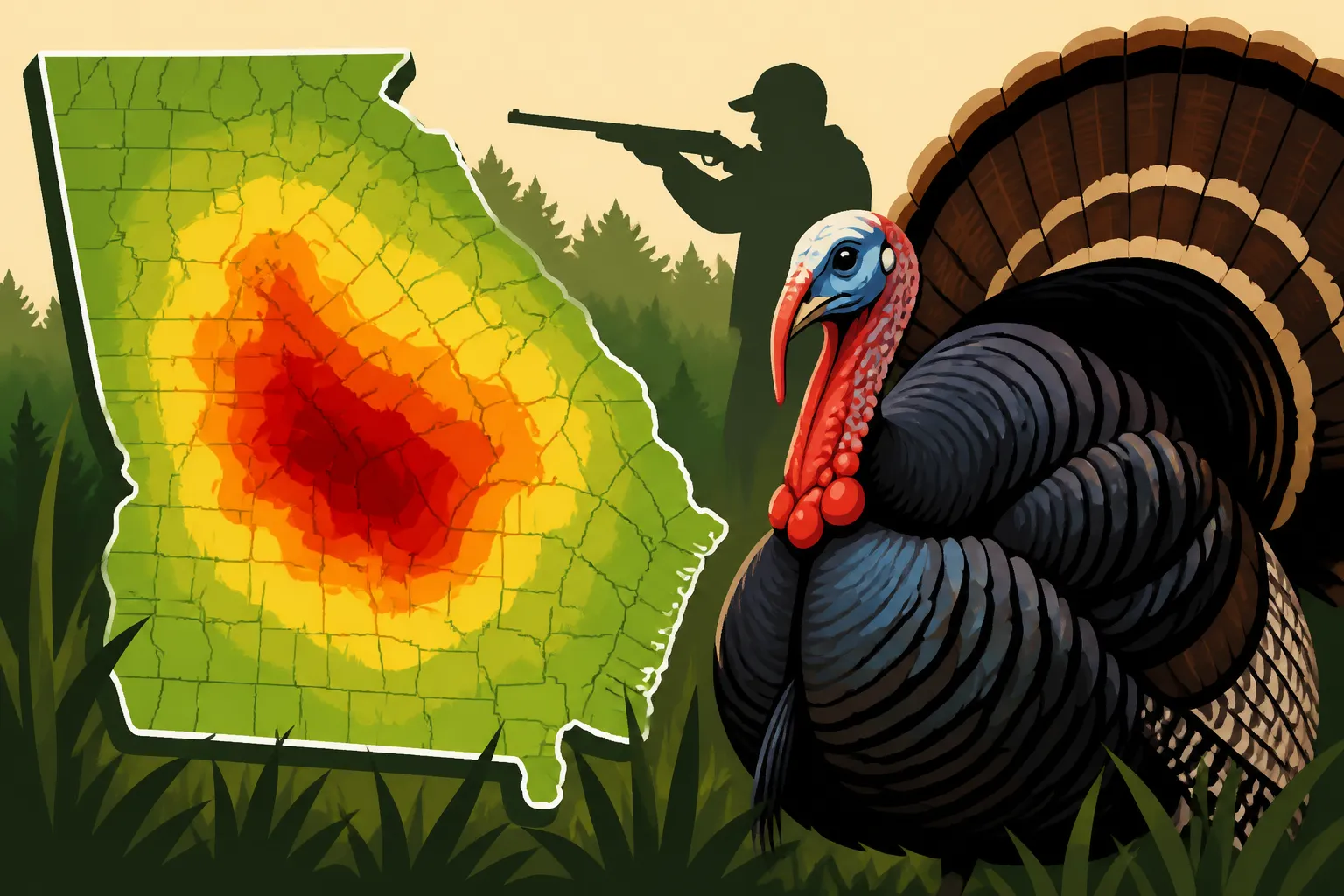
While general principles apply, the "densest" areas can shift based on broader regional ecological factors and hunting pressure. For instance, some of the highest turkey densities are often found in the fertile river bottoms and agricultural areas of the Georgia Coastal Plain, particularly in the southwest. These regions often offer a superior combination of food, water, and diverse cover. However, the Piedmont, with its mix of hardwoods and agriculture, also boasts very healthy populations, often making it the most accessible and popular for hunters, especially those closer to urban centers.
The mountains, while having lower overall densities per acre, can hold localized pockets of extremely active birds if you find the right combination of food and cover. Biologists often track regional population health, looking at factors like poult-to-hen ratios and overall harvest numbers. While specific counties can vary year to year, areas like those in the Southwest (think Sumter, Lee, Crisp, Dooly counties) or parts of the Ocmulgee River basin often consistently rank high for turkey sightings and successful hunts. It’s no surprise that many hunters consider these among the Best Georgia Counties for Turkeys. Ultimately, successful turkey hunting in Georgia, regardless of the region, comes down to understanding the birds' needs and putting in the effort to find where those needs are most abundantly met.
Here's a quick look at general turkey habitat preferences across Georgia:
| Georgia Region | Primary Habitat Features | Turkey Density Potential | Key Scouting Focus |
|---|---|---|---|
| Piedmont | Rolling hills, mixed hardwoods, agriculture, creek bottoms | High | Field edges, creek corridors, mature timber stands |
| Coastal Plain | Pine forests (longleaf), vast river bottoms, agriculture | High to Very High | Riverine hardwoods, managed pine, agricultural fields |
| Mountain Zone | Steep slopes, mature hardwoods, hollows, ridge lines | Moderate to High (local) | Ridge saddles, bench cuts, mast-producing timber, high points |
When you head out for Spring Turkey Hunting in Georgia, remember that adaptability is your best friend. The birds move, the weather changes, and other hunters can affect their patterns. But by understanding these core principles of habitat, food, and scouting, you'll be well on your way to finding those dense pockets of gobblers. Whether you're trying Calling a Georgia Gobbler Off the Roost or trying to locate them during midday, knowing where they generally concentrate gives you a significant advantage.
Disclaimer
This article is for general informational purposes only and does not constitute professional advice. Laws, prices and regulations vary by location and change over time. Consult a qualified professional for guidance on your specific situation.