Wild Turkeys in Georgia
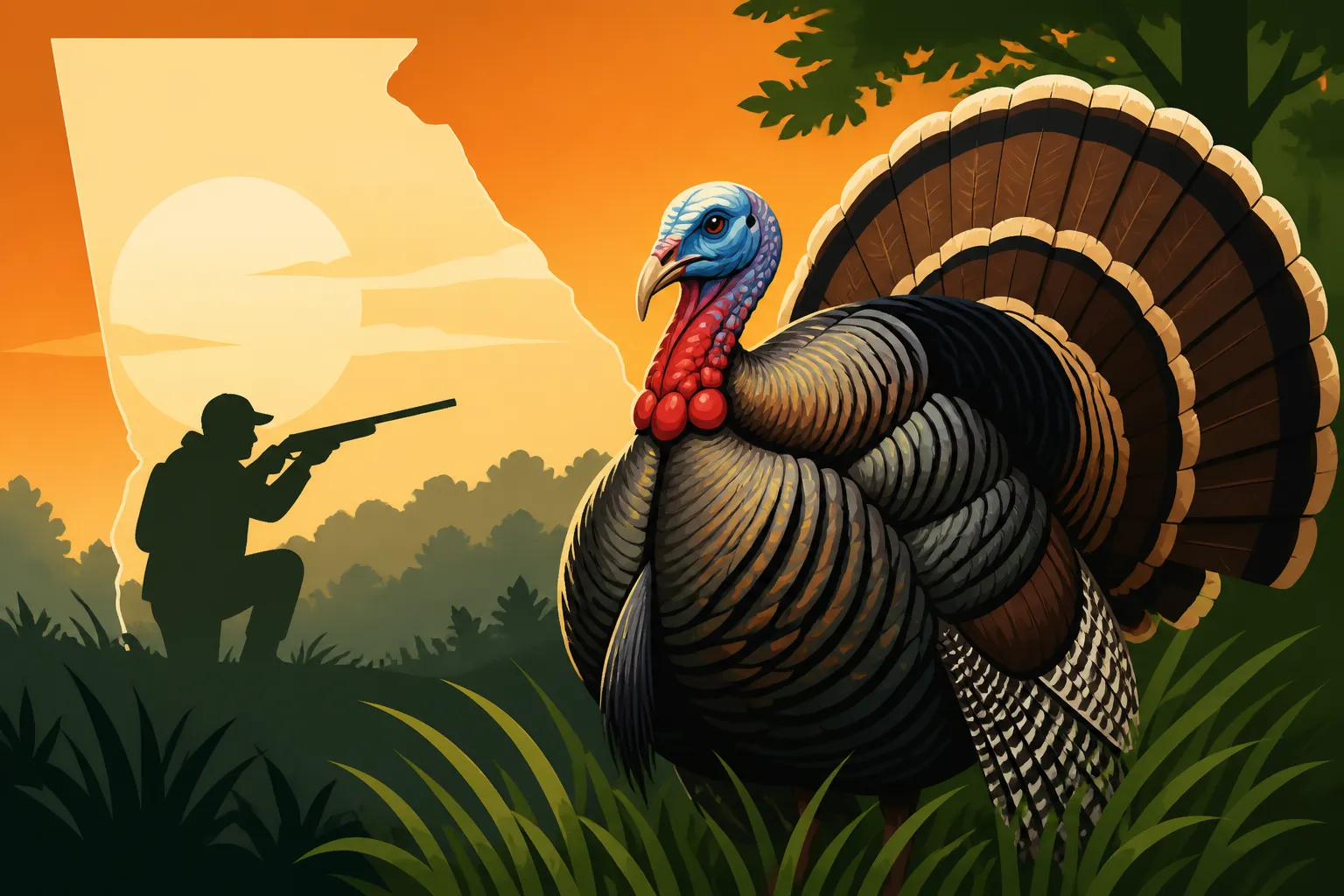
There’s nothing quite like the sound of a wild gobbler breaking the silence of a Georgia spring morning, but lately, many of us have noticed those songs are a little less frequent. Trying to find and call in a wary tom when populations are fluctuating can be incredibly frustrating, especially with varying regulations and diverse habitats across our beautiful state. This comprehensive guide is here to unravel the complexities of wild turkey hunting in Georgia, offering seasoned advice and practical strategies to help you connect with these incredible birds, no matter where you chase them.
Understanding Georgia's Wild Turkey Populations
For many of us who’ve spent decades chasing gobblers across Georgia, there’s been a noticeable shift in turkey numbers. It’s not just anecdotal; wildlife biologists and hunters alike have been tracking these changes closely. Understanding the health of our turkey population is the first step toward becoming a more effective and ethical hunter.
A Look at Georgia Turkey Population Trends
Our state has historically been a stronghold for Eastern wild turkeys, with robust populations that once seemed boundless. I remember springs where it felt like you couldn't walk 100 yards without bumping into a flock or hearing multiple birds gobbling their heads off. However, in recent years, the story has become a bit more complicated. Data collected by the Georgia Department of Natural Resources (DNR) and other research initiatives, like those supported by the National Wild Turkey Federation (NWTF), indicates a statewide decline in turkey populations in many areas. While some regions still boast healthy numbers, others have seen significant drops.
This isn't a simple issue with one easy answer. The decline is multifaceted, influenced by everything from broad landscape changes to localized environmental pressures. Factors like increasing urbanization, changes in timber practices – moving away from diverse, open pine savannas to more dense, less turkey-friendly monoculture plantations – and even the rise of predator populations have all played a role. Hunters, too, sometimes question if hunting pressure, especially on public lands, contributes to the problem. It’s a topic that often sparks passionate debates around the campfire. If you want to dive deeper into what the numbers truly mean, researching Georgia Turkey Population Trends can provide some clarity.
Factors Impacting Reproduction and Survival
At the heart of any population trend is reproduction and survival, and for Georgia's wild turkeys, these metrics are closely scrutinized. One of the most telling indicators is the poult-to-hen ratio, which essentially tells us how many young turkeys (poults) are surviving per hen through the summer. A healthy ratio typically means the population is stable or growing. Unfortunately, many areas in Georgia have seen consistently low poult-to-hen ratios in recent years, indicating that fewer young birds are making it to adulthood.
So, why aren't more poults surviving? It's a combination of challenges. Nest predation is a huge factor, with animals like raccoons, opossums, bobcats, and feral hogs raiding nests before eggs can even hatch. I've personally seen the devastating effect of hogs on ground-nesting birds; they're incredibly efficient egg-eaters. Even after hatching, young poults are vulnerable. They're tiny, slow, and easy targets for a myriad of predators, including coyotes, foxes, and various raptors. Weather also plays a significant role; prolonged periods of cold, wet weather during the critical hatching period can lead to high poult mortality, as they are susceptible to hypothermia and illness. Poor habitat quality, lacking dense understory cover for nesting and escape, or insufficient insect populations for poult nutrition, only compounds these issues.
Conservation Efforts and Management Strategies
Despite the challenges, the Georgia DNR, in partnership with conservation groups and dedicated landowners, is actively working to reverse these trends and ensure the future of wild turkeys in our state. A cornerstone of these efforts is habitat management. Prescribed burning, for example, is a vital tool that mimics natural fire cycles, creating the open, grassy understory that turkeys need for nesting, foraging, and bugging. Restoring longleaf pine ecosystems and managing forest stands for diversity also benefits turkeys immensely by providing a mosaic of cover and food sources.
Predator control programs are another component, though often controversial. Efforts to manage coyote and feral hog populations, while challenging, can significantly improve nesting success and poult survival rates in localized areas. From a regulatory standpoint, the DNR has made adjustments to hunting seasons and bag limits in response to declining populations. For instance, the discussion around Why Georgia Cut the Turkey Bag Limit was a direct result of these concerns, aiming to reduce harvest pressure and allow populations to rebound. Furthermore, groups like the NWTF champion programs that educate landowners on turkey-friendly habitat practices and fund critical research. As hunters, supporting these efforts, being mindful of our harvest, and accurately reporting our birds through Georgia Game Check are crucial ways we contribute to the long-term health of our beloved wild turkeys.
Navigating Georgia's Diverse Turkey Habitats
One of the beautiful challenges of hunting wild turkeys in Georgia is the sheer diversity of our landscapes. From the rugged Appalachian foothills to the sprawling coastal plain, turkeys have adapted to a myriad of environments, and as hunters, we need to adapt our strategies accordingly. What works in a mountain hardwood will likely fall flat in a South Georgia pine flat.
Mountain Turkeys in North Georgia
Hunting turkeys in the North Georgia mountains is an experience unlike any other. The terrain alone presents a significant challenge, with steep ascents and descents that will test your endurance. Birds in the Chattahoochee National Forest often roost high on ridges overlooking deep hollers, making them tough to pinpoint. When they hit the ground, they can quickly move across vast areas, sometimes dropping hundreds of feet in elevation. Calling these birds effectively requires an understanding of how sound travels in elevation, and the ability to project your calls down into a hollow or across a ridge.
I've had days where a gobbler sounds like he's right on top of me, only to realize he's two ridge lines over, his gobble echoing off the peaks. Locating a roost the evening before can be invaluable, but then the challenge becomes getting to that spot quietly and setting up before daylight, often navigating rugged terrain with nothing but a headlamp. These birds tend to be less vocal once on the ground compared to their Southern counterparts, requiring more patient listening and sometimes aggressive walking to strike a bird. Patience, keen hearing, and excellent physical conditioning are non-negotiables for mountain turkey hunting.
Piedmont Region Birds and Farmland Edges
The Piedmont region, stretching across the middle of the state, offers a different kind of turkey hunting puzzle. Here, you'll find a mix of rolling hills, hardwood forests, mixed pine and hardwood stands, and abundant agricultural land. Turkeys in this area often key in on the edges of fields, creek bottoms, and smaller woodlots that connect larger timber blocks. Finding birds often means scouting these transition zones, looking for fresh tracks, droppings, and strut marks where they feed and display. If you're looking for more specific advice on this type of terrain, check out Turkey Tactics for Piedmont Field Edges.
One of the biggest hurdles in the Piedmont is access. Much of this land is privately owned, making permission from landowners crucial. However, there are public land opportunities on Wildlife Management Areas (WMAs) and some National Forest parcels. When hunting near farms, understanding how birds use different crops at various stages – from freshly planted fields to mature corn or soybeans – can be a game-changer. These birds can be highly pressured, especially on public land, becoming very call-shy. Often, a subtle approach, using soft calls and mimicking natural hen sounds, will be more effective than aggressive gobbling. Mapping tools, like those offered by GoHunt, become incredibly useful here for identifying property lines and potential turkey hangouts.
Coastal Plain Gobblers and Swamp Country
Head south of the Fall Line, and you enter the vast Coastal Plain, a region characterized by flat to gently rolling terrain, extensive pine plantations, sprawling river bottomlands, and, in some areas, cypress swamps. This environment demands yet another shift in tactics. Gobblers here can be incredibly vocal, especially during the early morning hours, making them exciting to hunt. Pine plantations, when managed with prescribed fire, provide excellent open understories for bugging and strutting, while the denser hardwoods and swamps offer crucial roosting and escape cover.
Hunting river bottoms and swamps presents unique challenges. Water levels can be unpredictable, requiring rubber boots or even waders, and navigation can be tricky in dense thickets and cane breaks. I've spent many a morning pushing through mucky ground, listening for a distant gobble through the heavy humidity. Birds in these areas might roost over water and be hesitant to fly down if the ground beneath is flooded. Adaptability is key. Knowing where to find Where Georgia Gobblers Roost can give you a distinct advantage. Furthermore, this is where you might encounter other fascinating Georgia wildlife, including alligators, so always be aware of your surroundings. While you're in the area, you might also be interested in Hunting Georgia Swamp and River Bottom Deer, as the habitat often overlaps.
Essential Gear for Georgia Turkey Hunting
Having the right gear won't guarantee a gobbler in your vest, but it sure makes the experience more enjoyable and increases your odds of success. Georgia's varied terrain and often warm, humid weather demand specific considerations when packing your turkey vest.
Shotguns, Chokes, and Ammunition Choices
When it comes to putting a gobbler down, your shotgun setup is paramount. While 12-gauge shotguns remain the most popular choice, the advancements in ammunition technology have made 20-gauge shotguns incredibly effective and a favorite for many, especially those who prefer a lighter carry. The key is finding a shotgun that fits you well and that you can shoot accurately under pressure.
Choosing the right choke is critical. Forget your modified or improved cylinder chokes for turkey hunting; you need a tight, specialized turkey choke, often labeled as "Extra Full" or "Super Full." These chokes are designed to constrict the shot pattern significantly, delivering a dense concentration of pellets at longer ranges. Brands like Indian Creek, Carlson's, and TruGlo make excellent turkey chokes specifically engineered for modern turkey loads. As for ammunition, the game has been revolutionized by Tungsten Super Shot (TSS). While expensive, TSS loads like Federal Premium Heavyweight TSS or Browning TSS produce incredibly dense patterns and lethal energy at distances previously unthinkable, extending your effective range and increasing knockdown power. However, standard lead loads, such as Winchester Long Beard XR, remain highly effective and more budget-friendly. Regardless of your choice, the absolute most important step is to pattern your shotgun at various distances (20, 30, 40, and even 50 yards) with your chosen choke and ammunition. You need to know exactly what your gun is capable of, not just what the box says. For a deeper dive, check out Turkey Shotguns and Chokes.
Calls, Decoys, and Locator Calls
The art of calling is central to turkey hunting. There's a vast array of calls available, each with its own nuances and applications. Mouth calls (diaphragm calls) are incredibly versatile, allowing for hands-free operation and a wide range of sounds, from soft yelps to aggressive cutting. Slate and glass calls, operated with a striker, produce realistic hen sounds, particularly good for crisp yelps and purrs. Box calls are easy to use and produce loud, resonant yelps that carry well through the timber. Learning to use a variety of calls allows you to adapt to different scenarios and the mood of the bird. You might find more specific recommendations in Turkey Calls Worth Carrying in Georgia.
Decoys can be a game-changer, especially for drawing in wary gobblers. A single hen decoy, or a jake and hen setup, can be irresistible to a lonesome tom. For aggressive birds, a full strutter decoy might be just the ticket, though use caution on public land. Decoy placement is crucial; make sure it's visible, positioned to draw the gobbler into a comfortable shooting range, and oriented so he approaches facing away from you, presenting a clean head or neck shot. Finally, don't forget locator calls – owl hoots, crow caws, and even coyote howls are fantastic for getting a shock gobble from a tom without giving away your position.
Clothing, Footwear, and Essential Accessories
Georgia's spring weather can be notoriously fickle – chilly mornings can give way to scorching afternoons, often with high humidity. Layering is key. Choose lightweight, breathable camouflage that can be easily shed or added as temperatures change. Insect repellent is absolutely non-negotiable, especially for early season hunts when ticks, gnats, and mosquitoes are abundant. Consider a Thermacell unit to keep the biting bugs at bay, making those long sits much more tolerable.
Footwear is another critical consideration, particularly in the Coastal Plain and swampy areas. Snake boots are highly recommended for peace of mind and protection from venomous snakes like rattlesnakes and cottonmouths, which are active in spring. In the mountains, comfortable, broken-in hiking boots are essential for navigating uneven terrain. A good turkey vest is more than just a piece of camo; it's your mobile command center. Look for one with ample pockets for calls, shells, water, snacks, and a comfortable, built-in seat cushion or kickstand that allows you to sit comfortably against a tree for extended periods. Lastly, don't underestimate the power of a good mapping app. Services like GoHunt provide detailed topographic maps, public land boundaries, and even satellite imagery that can be invaluable for scouting new areas and navigating dense timber or swamps.
Here's a quick comparison of popular turkey call types:
| Call Type | Pros | Cons | Best Use Scenarios |
|---|---|---|---|
| Mouth Call | Hands-free operation, versatile, wide range of sounds | Requires practice, can be finicky when wet | Close-in calling, subtle clucks/purrs, aggressive cutting |
| Slate Call | Realistic hen sounds, good for soft calls | Requires two hands, sound can be muffled in rain | Yelp sequences, purrs, clucks, general calling |
| Box Call | Easy to learn, loud, carries well | Requires two hands, can be bulky, prone to squeaks | Locating distant birds, loud yelps, cutting |
| Push-Pull Call | Very easy to use, consistent sound, compact | Limited range of sounds, less versatile | Beginner-friendly, soft tree yelps, quick clucks |
| Locator Call | Provokes "shock" gobble, reveals bird's position | Does not imitate turkey, can scare birds if overused | Locating roosted birds, determining general direction of gobbler |
Understanding Georgia's Turkey Season Rules
Before you even step foot in the woods, it's absolutely crucial to know and understand Georgia's wild turkey hunting regulations. These rules are put in place by the Georgia DNR to manage the turkey population sustainably and ensure fair chase. Ignoring them can lead to serious legal consequences and, more importantly, can harm the very resource we cherish.
Licenses, Permits, and Hunter Education
To legally hunt wild turkeys in Georgia, you'll need the proper licenses. Generally, this includes a valid Georgia Hunting License (which can be a basic resident or nonresident hunting license) and a Big Game License. Many resident hunters opt for a comprehensive "Sportsman's License" which bundles all necessary licenses and permits, making things simple. Non-residents have several options, including annual licenses or shorter-duration permits if they're just visiting for a specific hunt. For a deeper dive into the specifics, you can check out details on Georgia Resident Hunting License Options or Georgia Nonresident Hunting License Options.
If you're new to hunting, or haven't taken a course yet, you'll also need to fulfill the Georgia Hunter Education Requirements. This course covers critical safety, ethics, and wildlife management principles. There are exemptions for those born before a certain date or those hunting under an Apprentice Hunter License, but generally, it's a must-have. Always carry proof of your licenses and hunter education (either physical copies or on your phone via the Go Outdoors Georgia app) while in the field. The DNR regularly conducts checks, and being unprepared can quickly turn a great hunt into a bad day.
Season Dates, Bag Limits, and Reporting
Georgia's spring turkey season is typically divided into separate openers for private land and public land (Wildlife Management Areas). The private land opener usually kicks off in late March, with the public land opener following in early April. It's vital to check the current year's Georgia Hunting Regulations guide or the Georgia DNR website for the exact dates, as they can shift slightly from year to year. The season usually runs through mid-May.
Bag limits are perhaps the most crucial regulation for conservation. Currently, Georgia's statewide spring turkey bag limit is two gobblers per season, with a daily limit of one gobbler. This represents a reduction from previous years, a move made by the DNR in response to declining turkey populations to allow for recovery. Understanding the Georgia Spring Turkey Bag Limit and Georgia Daily Turkey Bag Limit is non-negotiable. Once you harvest a turkey, you are required to report it through the Georgia Game Check system within 24 hours. This can be done online or via the Go Outdoors Georgia mobile app. Accurate reporting is incredibly important for wildlife managers to gather data on harvest numbers, which directly informs future management decisions. Don't skip this step!
Legal Weapons and Other Regulations
When it comes to legal weapons for turkey hunting in Georgia, shotguns, bows, and crossbows are permitted. For shotguns, generally, any gauge from 10-gauge to 20-gauge is allowed, provided it’s loaded with shotshells. Rifles and handguns are generally not permitted for turkey hunting. Archers can use traditional bows, compound bows, or crossbows. Ensure your archery equipment meets the minimum draw weight requirements specified by the DNR.
Beyond weapons, there are other important rules to keep in mind. Hunting hours for turkeys are typically 30 minutes before sunrise until sunset. Baiting for turkeys is illegal; you cannot hunt turkeys over any feed, grains, or other attractants. Make sure your hunting location is well away from any bait that might have been placed for other species like deer or hogs. When hunting on public lands, such as WMAs, be aware of specific WMA regulations, which can include sign-in/sign-out procedures, designated parking, and sometimes even restrictions on calls or decoys. Always check the specific regulations for the W WMA you plan to hunt. Remember, safety always comes first; clearly identify your target and know what's beyond it before taking a shot.
Effective Strategies for Hunting Georgia Gobblers
Now that we’ve covered the understanding of the birds and the rules of the game, let’s talk tactics. Getting a wild Georgia gobbler to commit can feel like solving a complex puzzle, but with some tried-and-true strategies and a good dose of patience, you can significantly increase your odds.
Roosting and Morning Setups
The absolute best time to catch a gobbler when he's feeling vocal is right when he wakes up. This is where roosting comes in. "Roosting" involves listening for gobblers as they fly up to their roost trees in the evening, or more commonly, heading out before daylight to listen for their first morning gobbles from the limb. Pinpointing a bird on the roost the evening before can be incredibly advantageous, allowing you to plan your morning setup precisely. However, be cautious not to disturb the bird; a good rule of thumb is to get as close as you dare without being detected, then back out quietly. For a deep dive into this technique, reading Roost Hunting Georgia Gobblers can be incredibly helpful.
On the morning of the hunt, the goal is to get into position silently and well before daylight. Ideally, you want to set up within 100-150 yards of the roost tree, positioning yourself so the gobbler will have to walk past your setup to reach an open strutting area or feeding ground. Choose a tree that's wider than your shoulders for maximum concealment and a good backdrop. Once settled, remain absolutely still and quiet. As the woods begin to lighten, start with soft tree yelps and clucks. When he flies down, often with a thundering gobble, switch to more realistic ground calls, trying to mimic a hen casually feeding or milling about. The challenge is often to keep him interested without over-calling, making him think he needs to come find you.
Run-and-Gun Tactics on Public Land
Sometimes, those roosted birds are silent, or they fly down and go the other way, leaving you with no action after the morning fly-down. This is where the "run-and-gun" strategy shines, especially on large tracts of public land like National Forests or expansive WMAs. This tactic involves covering a lot of ground, listening for distant gobblers, and quickly moving to intercept them. You're essentially scouting and hunting simultaneously. This is often the best approach when Hunting the Georgia Public-Land Turkey Opener as birds can be scattered or pressured.
Start by listening intently for a gobble. If you hear one, quickly analyze the terrain using a good map or GPS app, like GoHunt. Plan a route that uses terrain features (ridges, creek beds, dense timber) to mask your approach, aiming to get within 100-200 yards of the gobbler without being seen. Once in position, quickly set up against a wide tree, facing the direction you expect the bird to come from. Initiate a calling sequence, usually a mix of yelps and cuts, to try and get a response. If he answers and sounds like he’s coming, get ready. If he shuts up or moves away, don't be afraid to pick up and move again. This style of hunting demands good physical conditioning and the ability to read turkey behavior on the fly. You can find more insights on this approach in Run-and-Gun Turkey Tactics on Public Land.
Calling Strategies and Decoy Placement
Calling is an art form, not just pressing a button. There are times for aggressive calling and times for subtle, understated sounds. Early in the morning, when birds are fired up, aggressive cutting and loud yelps can work, challenging a dominant gobbler to come investigate. As the morning progresses, especially if gobblers have been pressured or are with hens, a softer approach often pays dividends. Gentle purrs, soft clucks, and occasional yelps can convince a wary bird that a lone hen is waiting. Always listen to the bird – if he gobbles every time you call, keep calling. If he becomes silent, back off and let him wonder where you went.
Decoys are an excellent tool to give a gobbler visual confirmation, but proper placement is key. When using a single hen decoy, place it in an open area where the gobbler can see it from a distance. If using a jake and hen setup, position the jake so he is facing away from your shooting lane. This encourages the gobbler to circle the jake, presenting a shot at his head and neck as he extends it to challenge the "intruder." However, on heavily pressured public land, sometimes no decoy at all is the best decoy, as birds may associate them with danger. The trick is to Adjusting Turkey Tactics for a Two-Bird Limit by becoming more strategic and less predictable with your setups. Remember that safety is paramount, especially when using decoys on public land; always be aware of other hunters and wear blaze orange when moving through the woods, removing it once you're set up against a tree.
Post-Harvest Care and Conservation Ethic
Successfully harvesting a wild turkey in Georgia is an incredibly rewarding experience, but the job isn't done when the gobbler hits the ground. Proper post-harvest care ensures you get the best quality meat, and upholding a strong conservation ethic ensures future generations can enjoy the same opportunities.
Field Dressing and Meat Care
Especially in Georgia's often warm spring weather, quick and proper field dressing is crucial to preserving the quality of your turkey meat. As soon as you retrieve your bird, the first step is to bleed it out. You can do this by cutting the neck or severing the jugular, allowing the blood to drain. Next, you'll want to gut the bird. Make an incision from the breastbone down to the vent, then carefully reach inside and remove all the internal organs. Be sure to remove the crop and trachea as well. This helps the carcass cool down much faster.
Once field-dressed, you need to get the bird cooled as quickly as possible. If you're near your vehicle, placing it on ice in a cooler is ideal. If you're deep in the woods, consider carrying game bags and breaking the bird down into breasts and legs to make it lighter to carry and easier to cool. Avoid leaving the bird exposed to direct sunlight for prolonged periods. Once home, you can proceed with plucking or skinning and butchering. Many hunters choose to breast out the bird, taking only the breast meat, but the legs and thighs can also yield delicious meat, especially when slow-cooked or braised.
Respecting the Resource and Future Generations
Harvesting a wild turkey is more than just bagging a bird; it's participating in a long-standing tradition and connecting with nature in a profound way. Part of that connection means upholding a strong conservation ethic. This involves practicing fair chase, which means not taking shortcuts or violating regulations to gain an unfair advantage. It also means respecting private property, always asking for permission before entering, and being a good ambassador for hunting.
Beyond the hunt itself, our actions contribute to the future of wild turkeys. Reporting your harvest through Georgia Game Check is a non-negotiable step that provides vital data to the DNR, helping them make informed decisions about season lengths, bag limits, and habitat management. Supporting organizations like the National Wild Turkey Federation (NWTF), which actively funds research, habitat restoration, and hunter recruitment programs, also makes a tangible difference. Every time you hit the woods, you're not just chasing a gobbler; you're also playing a role in the ongoing story of Georgia's incredible wildlife. Let's make sure that story is a good one for generations to come.
Disclaimer
Please note that hunting regulations, season dates, and license requirements can change. Always consult the official Georgia Department of Natural Resources (DNR) website or the current year's Georgia Hunting Regulations guide before planning any hunt. This guide is for informational purposes only and should not be considered a substitute for official regulations.