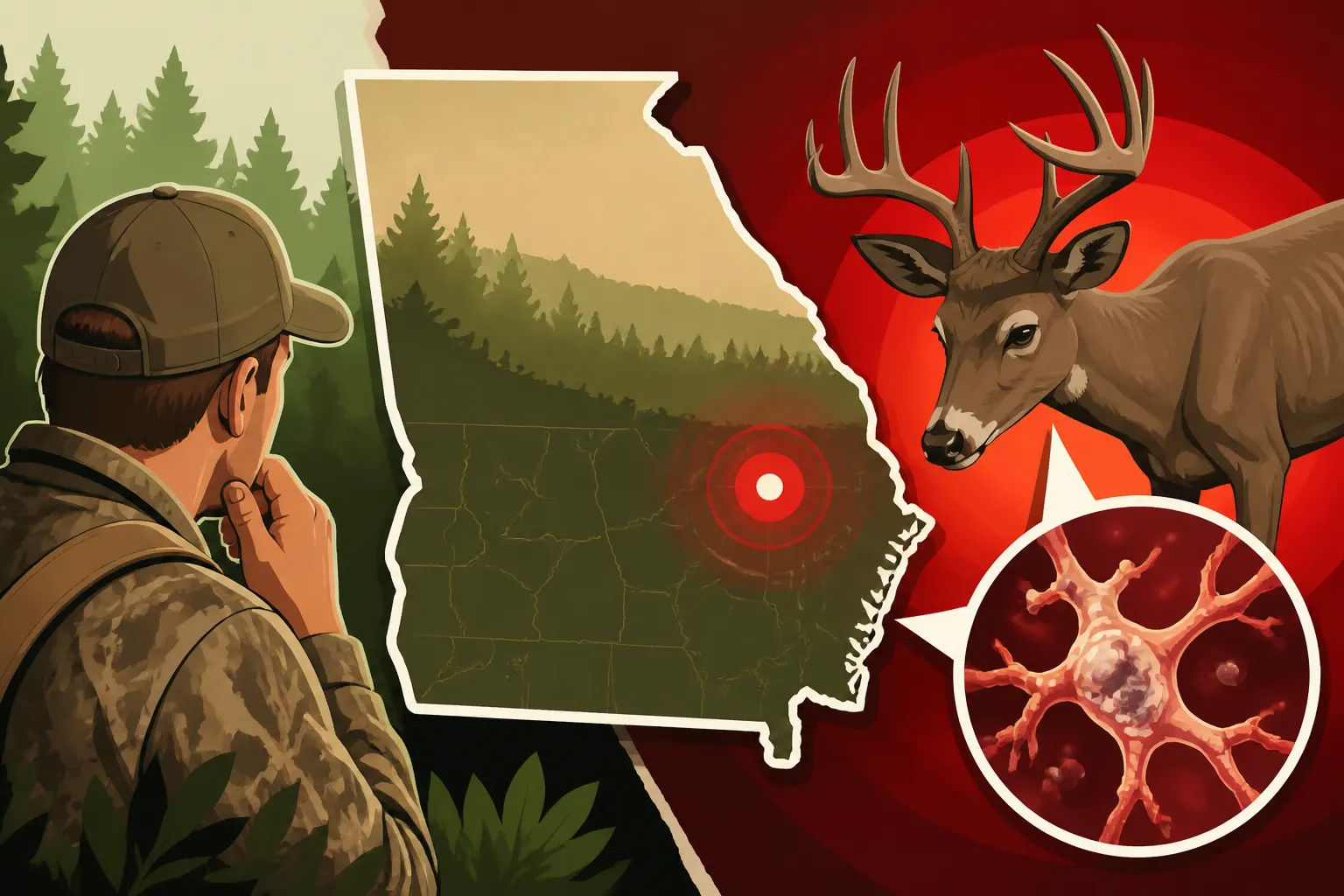
Why Georgia’s CWD Detection Came So Late
When Chronic Wasting Disease (CWD) was finally detected in Georgia, it sent a ripple of concern through the hunting community. For years, we'd watched as this devastating neurological disease crept closer, impacting deer herds in neighboring states. The question on many hunters' minds, beyond the immediate concern, was a natural one: why did it take so long to find it here? It's a valid frustration, feeling like we were always on defense. This guide aims to shed light on the complex reasons behind the delayed detection of CWD in Georgia, from the biological nature of the disease itself to the practical challenges of statewide surveillance.
The Insidious Nature of Chronic Wasting Disease
Let's be brutally honest: CWD is not your typical deer disease that presents with clear, immediate symptoms. It's a stealthy, patient killer, and that fundamental nature is one of the biggest reasons it can spread unseen for years before finally being confirmed.
A Stealthy Invader: Prion Disease Basics
Unlike a bacterial infection that might cause a rapid fever, or a viral illness that can sweep through a population with visible signs, CWD is caused by abnormal proteins called prions. Think of prions like microscopic zombies—they take existing, healthy proteins in a deer's brain and turn them into more abnormal, disease-causing versions. This process is incredibly slow. A deer can be infected with CWD for months, even years, before it shows any outward signs of illness. During this long incubation period, that deer is a walking, breathing, eating, and interacting carrier, shedding prions into the environment through saliva, urine, and feces, all while looking perfectly healthy to the casual observer or even a seasoned hunter. It's a truly insidious characteristic that makes containment and early detection a nightmare.
Diagnostic Hurdles and Limitations
Adding to the challenge is the difficulty in diagnosing CWD. You can't just take a blood sample or do a quick field test to confirm it. CWD is only definitively diagnosed by examining specific tissues—typically lymph nodes or brain stem—after the animal has died. This requires specialized laboratory equipment and trained personnel, a far cry from a simple veterinary check-up. Imagine the logistical and financial undertaking of testing even a fraction of the deer harvested in Georgia each season, let alone attempting to test live deer in the wild. Historically, before CWD was confirmed in Georgia, such widespread testing wasn't deemed necessary or feasible given the absence of known cases. This meant that unless a deer was exhibiting severe clinical signs and was specifically submitted for CWD testing (which wasn't a routine procedure for most harvested deer), the disease could easily go undetected in the early stages of an outbreak.
Georgia's Landscape and Deer Population Realities
Georgia is a vast and ecologically diverse state, a characteristic that while beautiful for hunting, presents significant challenges for CWD surveillance. The sheer scale and varied nature of our deer populations play a huge role in why detection might have been delayed.
Vast, Diverse Terrain and Deer Distribution
From the rugged peaks and valleys of the Hunting North Georgia Mountain Country to the sprawling pine forests and agricultural fields of the Piedmont and Coastal Plain, Georgia's landscape is incredibly varied. This means deer populations aren't evenly distributed. In some areas, particularly in the more remote or mountainous regions, deer densities might be lower, and human interaction, even with hunters, can be less frequent. A sick deer in a secluded swamp or a dense pine thicket in South Georgia could succumb to the disease without ever being seen by human eyes, much less having its carcass sampled. The sheer scale makes it nearly impossible to have eyes on every animal. Even with modern mapping tools like those offered by GoHunt, covering every inch of such a massive and varied landscape for signs of sick animals is a monumental task.
Challenges of Comprehensive Surveillance
Consider the magnitude of trying to monitor every single whitetail across the state. While we have a robust Georgia Deer Population Estimate, actively surveying the entire population for a disease with a long incubation period and non-specific symptoms is simply not practical. Our wildlife agencies, while dedicated, have finite resources. Their efforts are typically focused on managing populations, setting season structures, and addressing more immediate conservation concerns. Until CWD became an undeniable threat on our doorstep, deploying extensive, resource-intensive surveillance across every county was a difficult sell, especially when no positive cases had been identified within the state. It's like looking for a needle in a haystack when you're not even sure the needle is in your haystack yet.
Prioritizing Prevention Over Early Detection (Historically)
For a long time, Georgia's primary defense strategy against CWD was akin to building a wall: preventing it from entering the state in the first place. This focus, while understandable, inevitably meant that resources weren't as heavily weighted toward in-state detection until the threat became imminent.
Focus on Preventing Introduction
Prior to CWD being found within Georgia's borders, the emphasis was heavily placed on keeping the disease out. This meant strict regulations on the importation of cervid carcasses or parts from states where CWD was known to exist. Hunters were (and still are) prohibited from bringing certain deer parts back into Georgia from infected areas, a crucial measure to prevent human-assisted spread. The underlying assumption was that if these preventative measures held, the state would remain CWD-free, and therefore, extensive in-state surveillance beyond targeted "high-risk" areas (like those bordering infected states) wasn't the top priority. This strategy made logical sense on paper but relied on perfect compliance and the disease not making its way in through other, unknown vectors.
Resource Allocation and Sampling Strategies
Wildlife agencies operate with budgets that must stretch across a wide array of conservation and management needs. Allocating significant funds and manpower for widespread, intensive CWD testing before any positive case was identified within the state's borders was a tough call. Consequently, early CWD surveillance efforts in Georgia, like many other states, were often targeted. This meant focusing sampling efforts in specific areas deemed higher risk, such as counties bordering states with known CWD cases, or areas with high deer density that might increase transmission risk. While these targeted efforts are crucial, they can still miss isolated cases in less sampled regions, especially with a disease that is so slow to manifest. It’s a matter of balancing preventative measures with the practical realities of resource constraints.
The Role of Hunter Participation and Evolving Awareness
Hunters are undeniably the boots on the ground, the eyes and ears of our wildlife management efforts. Their participation, combined with evolving public and agency awareness, played a critical role in both the historical context of late detection and the current robust response.
Hunter Education and Reporting
Initially, hunter education focused broadly on ethical hunting practices, safety, and general game laws. While good animal husbandry and reporting sick animals were always part of the message, specific, widespread education on recognizing the subtle, early signs of CWD wasn't as prevalent until the disease became a more pressing concern nationally. It's often difficult for even experienced hunters to distinguish CWD symptoms—like lethargy, emaciation, and abnormal behavior—from other conditions, such as EHD (Epizootic Hemorrhagic Disease), old age, or injuries.
However, as CWD has spread, hunter education has ramped up significantly. Programs on Georgia Hunter Education Requirements now often include information on CWD. Hunters are now much more aware and engaged in monitoring deer health. Platforms like GoHunt and the state's official "Go Outdoors Georgia" system provide resources and avenues for hunters to report sick animals or submit samples, transforming hunters into a vital part of the surveillance network. The ability to easily check Reporting a Deer Through Georgia Game Check has also fostered better communication between hunters and the DNR.
Shifting to Proactive Surveillance Post-Detection
Once CWD was finally detected in Georgia, the response was swift and decisive. The delayed detection quickly gave way to a proactive, aggressive management strategy. The state immediately established a Chronic Wasting Disease Management Area (CMA) in the affected counties. This rapid shift underscores that while detection might have been late due to the disease's nature and past strategies, the commitment to managing it once identified was immediate and robust. This transition from primarily preventative to actively managing and detecting existing cases is a significant undertaking.
What Happens Now: The Path Forward
So, we've talked about why the detection might have been late. Now, what does it mean for us hunters and for Georgia's deer? The focus has shifted from "if" to "how" we manage CWD within our borders.
Living with CWD: Mandatory Testing and Carcass Restrictions
The most immediate and tangible consequence of CWD detection has been the implementation of the Chronic Wasting Disease Management Area. For hunters in these specific areas, new rules apply. There's Mandatory Testing Inside Georgia's CMA for all harvested deer, which is a significant change in how hunters interact with their game. This isn't just a suggestion; it's a requirement to help monitor the spread and prevalence of the disease. Furthermore, strict regulations are in place regarding carcass movement, dictating that whole carcasses or certain parts cannot be moved out of the CMA to prevent further geographical spread. This impacts everything from how you plan your hunt to how you handle your venison, as explored in articles like Handling Venison From a CWD Management Area. Knowing Which Counties Sit Inside Georgia's CMA is critical for any hunter planning to take to the woods.
Continual Monitoring and Research
The discovery of CWD isn't the end of the story; it's just the beginning of a new chapter in wildlife management. Georgia is now intensely focused on continued monitoring, research, and adaptation. This includes expanding surveillance efforts beyond the CMA to understand the true extent of the disease, studying its impact on deer populations, and evaluating the effectiveness of various management strategies. Hunters remain a critical partner in this ongoing effort. Participating in voluntary testing outside the CMA, reporting sick animals, and staying informed through resources like the state's DNR website or hunting platforms such as GoHunt, are all vital. The state also continues to adapt its Georgia Deer Season Structure Explained to respond to new information and disease management needs. The future of hunting in Georgia depends on a collaborative, informed approach to this challenging disease. Hunters might also consider how CWD affects choices when Scouting Georgia Public Land Before Season, knowing that herd health is now a more prominent factor.
Here’s a quick overview of why CWD is so hard to detect early and what current strategies involve:
| Factor Contributing to Late Detection | Current Management/Detection Strategy | Hunter Role |
|---|---|---|
| Long Incubation Period | Increased post-mortem surveillance, targeted sampling in high-risk areas. | Reporting observations of sick/unusual deer, submitting samples during mandatory or voluntary testing. |
| Asymptomatic Carriers | Mandatory testing in CWD Management Areas (CMAs), expanded sampling efforts outside CMAs. | Compliance with mandatory testing, voluntary submission of samples from harvested deer outside CMAs. |
| Difficult Diagnostic Tests | Centralized lab testing, focus on specific tissues (lymph nodes, brain stem). | Proper field dressing and sample collection as per DNR guidelines. |
| Vast & Diverse Landscape | Leveraging hunter network for observations, targeted efforts in specific regions, use of mapping tools. | Serving as eyes and ears in the field, utilizing tools like GoHunt for information and reporting. |
| Historical Prevention Focus | Shift to active detection and management, establishment of CMAs, carcass movement restrictions. | Adhering to carcass movement rules, understanding CWD impact on hunt planning. |
| Limited Resources for Mass Testing | Prioritized sampling, hunter cooperation for sample collection, public awareness campaigns. | Active participation in CWD education, sharing information within hunting communities. |
Disclaimer
This article is for general informational purposes only and does not constitute professional advice. Laws, prices and regulations vary by location and change over time. Consult a qualified professional for guidance on your specific situation.