Turkey Shotguns and Chokes
One of the most frustrating things for a Georgia turkey hunter is when that gobbler finally commits, struts into range, and you take your shot, only to watch him fly away unscathed. The heart-sinking feeling that you messed up the pattern, or your setup wasn't quite right, can haunt you for seasons. This guide is here to walk you through everything you need to know about selecting and optimizing your turkey shotgun and choke combination to ensure you're putting the maximum number of pellets exactly where they need to go for a clean, ethical harvest on those elusive Georgia birds.
Understanding the Turkey Shotgun
Hunting wild turkeys isn't like shooting clays or ducks; it demands a very specialized approach from your firearm. A turkey shotgun isn't just any scattergun; it's often a purpose-built tool designed for accuracy, power, and precise pattern density at ranges often pushing the limits of what a shotgun can do. When you're dealing with a bird that has a brain the size of a pecan and a head the size of a golf ball, every pellet truly counts.
Gauge and Action Types for Turkey Hunting
When we talk about turkey shotguns, the conversation usually starts with gauge. While you can hunt turkeys with various gauges, the 12-gauge has long been the undisputed king. Its ability to handle heavier shot charges and deliver more pellets downrange provides a significant advantage when trying to achieve a dense, ethical pattern. Many hunters will argue that a 20-gauge, especially with modern tungsten super shot (TSS) loads, can be just as effective and much lighter to carry through the Georgia woods, particularly for younger hunters or those who prefer less recoil. Some even venture into 10-gauge territory for its raw power, though these guns are often heavier and more cumbersome. The key is finding a gauge that you can shoot accurately and consistently, knowing that modern ammunition has greatly leveled the playing field for the smaller gauges.
As for action types, reliability and personal preference are paramount. Pump-action shotguns are rugged, dependable, and often more affordable, making them a popular choice. Many hunters appreciate the simplicity and control of a pump. Semi-automatics, on the other hand, offer quicker follow-up shots (though rarely needed for turkeys) and significantly reduced recoil, which can be a real blessing when shooting heavy magnum turkey loads during patterning sessions. Break-action single-shots are ultralight and simple but offer no second chance, while over/unders or side-by-sides are less common for dedicated turkey hunting due to their fixed choke limitations, though some still adapt them. Ultimately, choose an action you're comfortable with and can operate silently and smoothly in the field.
Barrel Length and Weight Considerations
Turkey hunting often involves long walks, sometimes through thick underbrush or up and down the rolling hills of North Georgia. The weight of your shotgun, therefore, becomes a real factor. Lighter shotguns are a joy to carry, but they tend to have more recoil, which can make patterning less enjoyable. Longer barrels, typically 24-26 inches, were once preferred for perceived accuracy, but modern ammunition and choke technology mean shorter barrels (20-22 inches) are now extremely popular. These shorter barrels are much easier to maneuver in dense cover, especially when you're trying to get set up quickly against a tree or adjust in a ground blind.
The balance of the gun is also critical. A well-balanced shotgun feels natural to shoulder and point, allowing for quick, precise movements when that gobbler finally pops into view. Some hunters add aftermarket stocks or forends to achieve better ergonomics or reduce overall weight. Remember, this isn't a long-range rifle shot where minuscule adjustments are made from a rest. Turkey hunting often demands a quick, decisive aim at a moving target, and a gun that feels like an extension of your body will always perform better. Consider how you'll be carrying and aiming your gun – whether from a traditional seated position against a tree, kneeling, or even from a blind – and choose a barrel length and overall weight that complements your style.
The Science of the Shotgun Choke
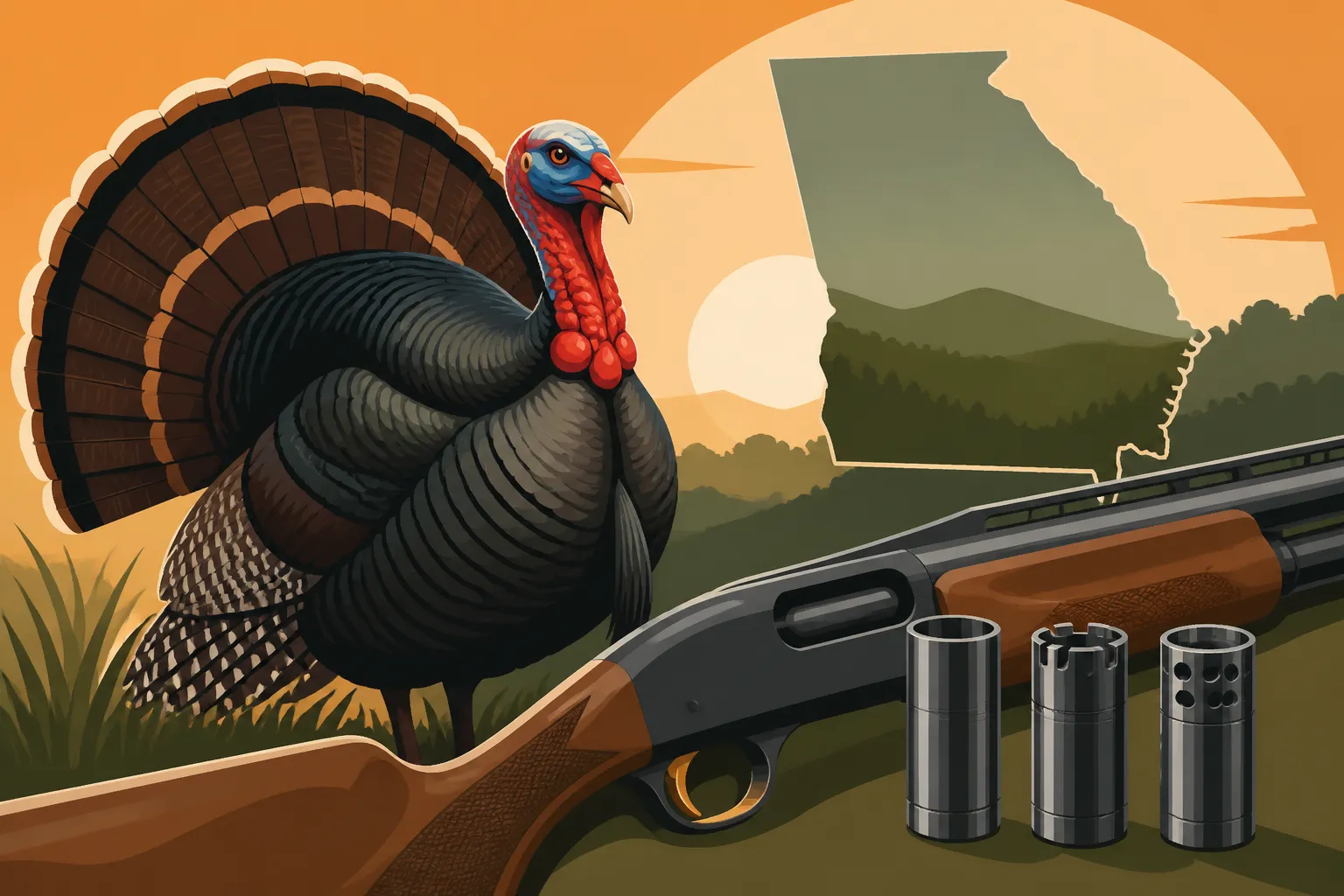
If the shotgun is the engine, the choke tube is the steering wheel, directing the pellets where they need to go. For turkey hunting, the choke is arguably the most critical component for achieving those dense, lethal patterns. It's not just about constricting the barrel; it's about shaping the shot cloud to deliver maximum energy to the turkey's vitals.
Choke Constriction Explained: From Cylinder to Super Full
Choke tubes work by constricting the barrel's diameter at the muzzle, forcing the shot charge into a tighter column. The degree of this constriction determines how tight or open your shot pattern will be. Here’s a quick rundown of common constrictions:
- Cylinder: No constriction. Widest pattern, shortest effective range. Not suitable for turkeys.
- Skeet: Slight constriction. Designed for close-range clay target shooting. Still too open for turkeys.
- Improved Cylinder: More constriction than skeet. Good for close-range upland birds or doves.
- Modified: Moderate constriction. A versatile choke, but generally too open for turkey hunting.
- Improved Modified: More constriction than modified. Getting closer to what's needed for turkeys, but still usually not enough.
- Full: Significant constriction. This is where turkey hunting starts. A full choke can be effective with certain loads, especially traditional lead shot.
- Extra Full/Turkey Choke: Even tighter constriction. These are specifically designed for turkey hunting, often labeled "Turkey," "Super Full," or "Gobbler Getter." They are engineered to deliver extremely tight patterns at extended ranges.
For Georgia turkeys, you'll almost certainly be looking at a choke in the Full to Super Full range. The goal is to put as many pellets as possible into a 10-inch circle at your maximum effective range (typically 30-40 yards, but potentially more with modern loads and tight chokes). Remember, a tighter choke doesn't necessarily mean more pellets hit the target; it means the pellets are concentrated in a smaller area. This concentration is what you need to penetrate the dense feathers and bone of a turkey's head and neck.
Material and Porting: What Else Matters in a Choke?
Beyond constriction, the material a choke tube is made from and whether it's ported can influence performance. Most factory chokes are made from steel, but aftermarket turkey chokes often use harder alloys like stainless steel or even titanium. These harder materials can stand up better to the pressures of dense, heavy turkey loads, which can sometimes deform standard chokes. They also maintain their precise dimensions more effectively over time.
Porting refers to small holes or slits near the muzzle end of the choke. The idea behind porting is to vent gases, which can reduce muzzle jump and felt recoil. While a reduction in recoil is certainly welcome when shooting heavy magnum loads, the effect on pattern performance is debated among serious turkey hunters. Some claim it helps, others say it has no noticeable impact, and a few even suggest it can slightly disrupt the pattern. For a turkey hunter, felt recoil is secondary to pattern density, so if porting does affect pattern negatively, it's generally not worth it. Many top-performing turkey chokes are unported, focusing solely on constriction and interior geometry to deliver the best possible patterns. Ultimately, the best way to know is to test ported and unported chokes with your specific gun and ammunition combination.
Ammunition Selection for Georgia Turkeys
Your shotgun and choke are a team, but the ammunition is the third, equally vital player in securing that Georgia gobbler. The advancements in turkey loads over the last decade have been nothing short of revolutionary, fundamentally changing what's possible in terms of range and pattern density.
Lead vs. Tungsten Alloys: Performance and Cost
For years, lead shot was the standard for turkey hunting. It's effective, affordable, and readily available. Lead magnum loads with shot sizes like 4, 5, or 6 can produce lethal patterns at typical turkey ranges (up to about 40 yards) when paired with the right choke. However, lead has a relatively low density compared to newer materials.
Enter tungsten super shot (TSS). TSS is a game-changer. It's significantly denser than lead (sometimes twice as dense), meaning that smaller TSS pellets retain more energy downrange and penetrate deeper. A #9 TSS pellet can carry as much energy as a #5 or #6 lead pellet, but because it's so much smaller, you can fit many, many more #9 TSS pellets into a standard shell. This results in dramatically denser patterns and extended effective ranges, often pushing out to 50 or even 60 yards for skilled shooters with perfectly matched setups. The downside? TSS is considerably more expensive than lead, often costing several dollars per shell. For many hunters, especially those looking to fill their Georgia Spring Turkey Season Rules quota, the increased cost is well worth the enhanced performance and confidence it provides. It's a prime example of where specialized gear truly makes a difference.
Shot Size and Pellet Count for Maximum Impact
When choosing turkey loads, shot size is critical. For traditional lead loads, #4, #5, or #6 shot are common choices. Larger pellets (like #4) carry more energy but result in fewer pellets per shell, potentially leading to thinner patterns. Smaller pellets (like #6) increase pellet count for denser patterns but might lack the individual pellet energy for deep penetration at longer ranges. Balancing these factors is key with lead.
With TSS, the rules change. Due to its extreme density, much smaller shot sizes are used, typically #7, #8, or #9. A #9 TSS pellet has enough individual energy to cleanly dispatch a turkey, and because they are so small, a 3-inch 12-gauge shell might contain hundreds more pellets than a comparable lead load. This massive increase in pellet count translates directly to an exponentially denser pattern, dramatically increasing your chances of hitting the turkey's small head and neck vital zone. Many hunters find that #9 TSS offers the best balance of pellet count and energy, providing lethal patterns that were previously unimaginable. This is where brands that focus on these high-density loads, and tools like the ones GoHunt offers to track patterning results, can really help optimize your choice.
Patterning Your Turkey Gun: The Critical Step
You can have the best shotgun, the tightest choke, and the most expensive ammunition, but if you don't pattern your gun, you're essentially guessing. Patterning is the process of test-firing your chosen setup at various distances to see exactly how your gun, choke, and ammunition combination performs. It's non-negotiable for turkey hunting success.
Setting Up Your Patterning Board
To pattern your gun, you'll need a large piece of paper or cardboard, at least 30×30 inches, with a visible aiming point drawn in the center. A simple dot or crosshair will suffice. Set this target up securely against a safe backstop at specific distances you anticipate hunting at, typically starting at 20 yards, then 30, 40, and potentially 50 yards or more if you're exploring extended ranges with TSS. Consistency is key here. Make sure you are shooting from a stable rest, just as you would aim from your chosen hunting position – whether that's sitting with your back against a tree or from a ground blind. Any wobble or flinch during patterning will give you inaccurate results.
Bring plenty of shells – you'll want to fire at least 3-5 shots at each distance with each choke/load combination you're testing to get a representative average. Remember, patterning heavy turkey loads can be taxing, both on your shoulder and your wallet. Take breaks, let your barrel cool, and focus on consistent shooting mechanics. This is a crucial step that will build your confidence in the field. Don't rush it. When considering specific patterns and shot densities for different scenarios, sometimes looking at resources or apps that help you visualize these patterns can be beneficial, much like how GoHunt helps hunters with other aspects of their scouting and gear choices.
Analyzing Your Pattern and Making Adjustments
After each shot, carefully examine your target. The goal for turkey hunting is to put a sufficient number of pellets (usually 8-10 or more) into a 10-inch circle, specifically into the head and neck region, at your maximum ethical range.
Here’s what to look for:
- Point of Impact: Is the center of your pattern hitting exactly where you aimed? If not, you might need to adjust your shotgun's sights or red dot. Many turkey shotguns come with adjustable fiber optic sights, or you might opt for a scope or red dot sight for precision aiming.
- Pattern Density: How many pellets are in that critical 10-inch circle, and how evenly distributed are they? Are there any significant "holes" in the pattern where a turkey's head could slip through?
- Fliers: Are there any pellets that seem to be wildly outside the main pattern? A few are normal, but excessive fliers can indicate an issue with your choke or ammunition.
If your pattern isn't what you need, it's time to make adjustments. This might involve:
- Changing choke tubes: Try a different constriction, or a choke from another manufacturer.
- Changing ammunition: Different brands, shot sizes, or formulations can perform wildly differently through the same choke and gun. Tungsten Turkey Loads Worth the Price are often a good investment here.
- Adjusting sights: If your pattern is consistently off-center, adjust your sights to bring the point of impact to your point of aim.
- Re-evaluating your form: Sometimes, a slight change in how you hold or shoulder the gun can impact the pattern.
It's an iterative process, but finding that perfect combination that puts a devastating pattern on target at all realistic hunting distances is incredibly rewarding. You'll thank yourself when you're Calling a Georgia Gobbler Off the Roost and can make a confident shot.
Here's a quick comparison of common choke types for turkey hunting:
| Choke Type | Constriction Level | Typical Shot Sizes (Lead) | Typical Shot Sizes (TSS) | Best Use Case | Max Effective Range (Approx.) |
|---|---|---|---|---|---|
| Full | Significant | #4, #5, #6 | N/A | Traditional lead loads, up to 40 yards | 30-40 yards |
| Extra Full (Turkey) | Very High | #4, #5 | #7, #8, #9 | Dedicated turkey hunting with lead or TSS | 40-50 yards |
| Super Full (Turkey) | Extreme | N/A | #7, #8, #9 | Max pattern density, best with TSS, longer ranges | 50-60+ yards |
Note: Ranges are approximate and highly dependent on gun, choke, and ammunition combination. Always pattern your own setup.
Optimizing Your Setup for Georgia's Diverse Terrains
Georgia offers a wide variety of turkey hunting environments, from the sprawling open agricultural fields of the Piedmont and Coastal Plain to the dense, rolling mountains of North Georgia. The terrain you hunt will influence your strategy, and in turn, how you might want to fine-tune your shotgun setup. Knowing your hunting environment can help you make smart choices. Run-and-Gun Turkey Tactics on Public Land in thick woods will demand different considerations than sitting patiently in a field edge blind.
Long-Range Setups for Open Fields
If you primarily hunt open fields, agricultural lands, or clear-cuts common in South Georgia, you might encounter situations where a gobbler hangs up at 50-60 yards, just outside the range of a traditional lead load. This is where a truly optimized, long-range setup shines. For these scenarios, a 12-gauge or even a 20-gauge loaded with premium TSS ammunition is almost a necessity. Pair this with a highly constrictive "Super Full" choke tube, often from a specialized aftermarket manufacturer, specifically designed for these dense, high-performance loads.
To maximize precision at these longer distances, many hunters opt for a red dot sight or a low-power shotgun scope. These optics allow for a much finer aiming point than open sights, reducing the chance of missing the turkey's small head. You'll need to spend considerable time Patterning a Turkey Gun at 40 Yards and beyond, meticulously checking your point of impact and pattern density at all realistic ranges. The goal isn't just to hit the turkey, but to deliver a devastating pattern to the head and neck. This meticulous preparation will give you the confidence to make those challenging shots when that tom decides to hang up just a little too far out.
Close-Quarters Considerations for Thick Woods
Conversely, if you find yourself hunting the dense pine and hardwood bottoms of the Oconee National Forest or the thick cover along a creek in the Piedmont, your shot opportunities are likely to be much closer, often inside 35 yards. In these environments, maneuverability and quick target acquisition are more important than extreme long-range capability. A shotgun with a shorter barrel (20-22 inches) will be easier to swing and position when a gobbler suddenly appears through the timber.
While a tight turkey choke is still recommended to ensure a dense pattern, you might not need the absolute tightest constriction designed for 60-yard shots. A good "Extra Full" choke, coupled with quality lead or TSS loads (perhaps a #7.5 or #8 TSS for ample pellet count), will provide more than enough lethality at closer ranges. Open sights or a simple fiber optic bead can be perfectly adequate for quick, close-range target acquisition. The key here is readiness and the ability to get the gun on target quickly and accurately. Your setup should feel balanced and be easy to handle in tight spots, like when you're Setting Up Against a Big Pine and a gobbler busts out unexpectedly. Knowing your limits and the typical shot distances in your hunting area is paramount to selecting the best setup for success.
Disclaimer
This article is for general informational purposes only and does not constitute professional advice. Laws, prices and regulations vary by location and change over time. Consult a qualified professional for guidance on your specific situation.