Hunting Piedmont Creek Bottom Funnels
Hunting Georgia's Piedmont creek bottom funnels can be one of the most rewarding, yet frustrating, pursuits for any deer hunter. These areas, often overlooked or deemed too thick by many, are absolute magnets for deer movement, especially as the season progresses. If you've ever felt like you're missing out on prime deer activity because you can't quite crack the code of these low-lying areas, this guide is for you. We'll dive deep into understanding these unique habitats and equipping you with the strategies to turn those overlooked creek bottoms into your personal hunting hotspots.
Understanding Piedmont Creek Bottoms and Their Allure
The Georgia Piedmont is a unique landscape, a transitional zone between the Appalachian Mountains and the Coastal Plain, characterized by rolling hills, a mix of hardwood forests, pine plantations, and a fair share of agricultural land. Creeks, streams, and small rivers weave their way through this terrain, carving out depressions and creating what we affectionately call "creek bottoms." These aren't always grand, sprawling river swamps; often, they're smaller, intimate drainage systems that can be just a few dozen yards wide.
What makes these seemingly insignificant waterways so vital for deer? It boils down to a combination of factors that deer simply can't resist. First and foremost, water is life, and these bottoms provide a consistent, year-round source. Beyond that, the unique microclimate and vegetation found within these corridors offer unparalleled cover and food sources. The dense undergrowth, often comprised of cane, briars, and thick young hardwoods, provides excellent bedding areas and security cover, allowing deer to move with confidence, often undetected. This dense cover also provides thermal regulation, offering cooler temperatures in the early season heat and a bit of a buffer from the cold winds later in the year.
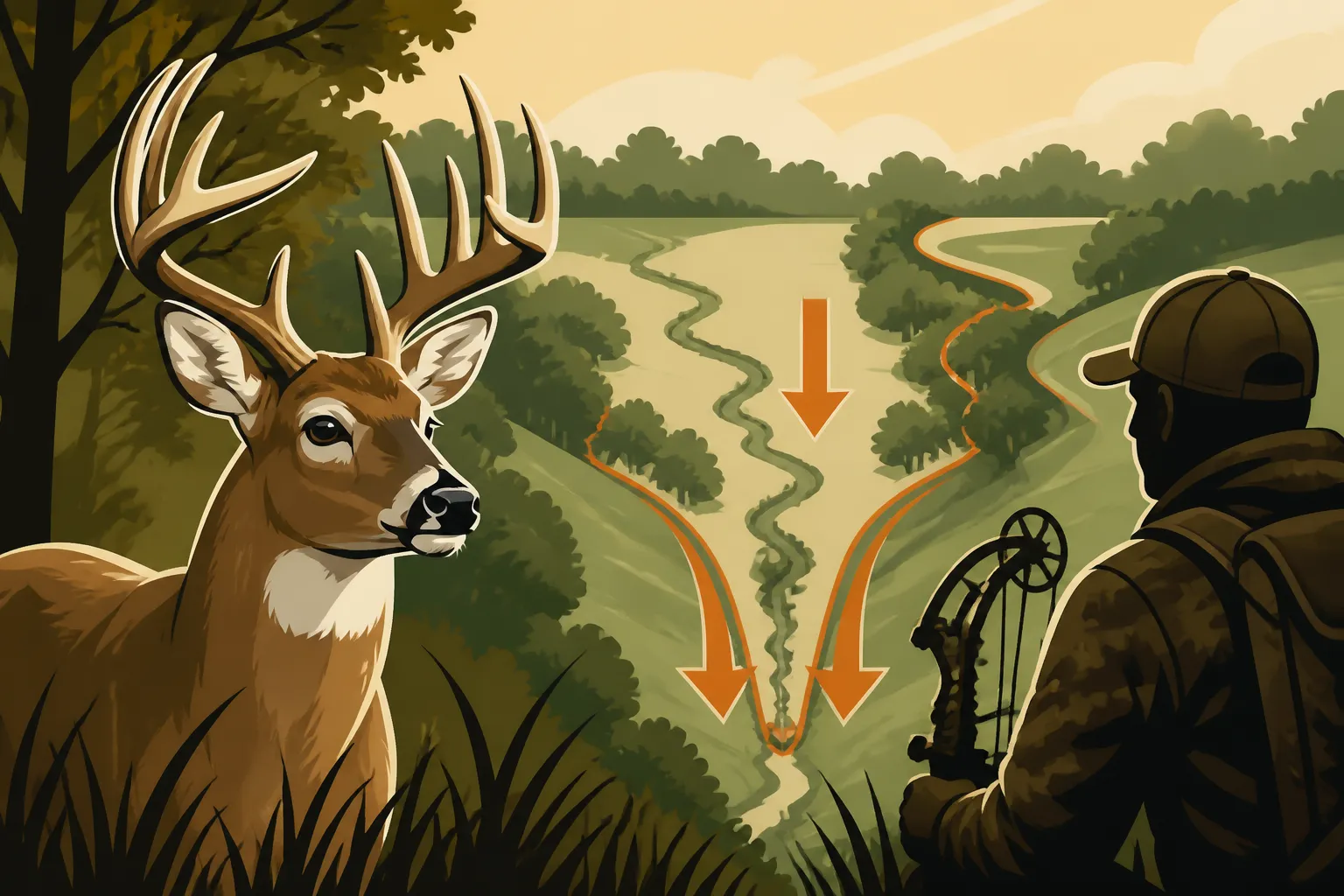
The real magic, however, lies in their function as natural travel corridors and funnels. Deer are creatures of efficiency; they prefer the path of least resistance or the path of most security. A creek bottom, especially one with somewhat defined banks, often acts as a natural highway, channeling deer movement between bedding areas, feeding grounds, and water sources. When two drainages merge, or where the banks narrow significantly, these become classic "funnels" – pinch points that concentrate deer movement into predictable pathways. Learning to identify these funnels, both on a map and on the ground, is the first critical step to success. Many hunters will simply walk past these areas, thinking they're too thick or noisy, but that's exactly why they hold so much potential.
Reading the Ground: Identifying Deer Movement in Creek Bottoms
Once you understand why deer use creek bottoms, the next step is learning to read the specific signs they leave behind. This isn't just about finding a random track; it's about interpreting patterns, understanding routes, and recognizing high-traffic areas that function as prime funnels. Effective scouting, especially before the season, is absolutely paramount here. You'll want to get down in those bottoms, get your boots wet, and really observe.
Start by looking for obvious travel lanes. Deer, when moving through dense cover, will often create faint trails, sometimes called "deer runs." These will be more pronounced in areas of heavy use, especially where they are crossing the creek itself or traversing a narrow stretch of timber along its edge. Look for tracks in soft mud near water sources or crossing points. Pay attention to the size and freshness of the tracks – bigger, fresher tracks indicate recent use by mature animals. Rubs and scrapes are also critical indicators. Rubs, where bucks strip bark from trees, indicate aggressive behavior and often mark travel corridors. Scrapes, patches of ground pawed clear with an overhanging branch worked above, are communication hubs, especially during the rut. Finding these signs within a creek bottom confirms its status as a high-traffic area. For example, a heavy rub line following a creek bank, or a series of scrapes along an old logging road that crosses the creek, are screaming at you to set up a stand.
Beyond physical signs, understanding how deer navigate the terrain is key. Use aerial maps, perhaps with a tool like GoHunt, to identify natural pinch points. Look for areas where the creek makes a sharp bend, where a ridge pinches down towards the water, or where two smaller drainages converge. These topographical features naturally constrict deer movement, forcing them into predictable patterns. Also, consider the vegetation changes. Where a dense thicket suddenly thins, or where a hard-to-navigate briar patch forces deer around it, these create funnels. During your scouting, mark these points on your map, noting prevailing wind directions and potential access routes. This detailed groundwork during the off-season will pay huge dividends when it's time to hunt. Understanding these subtleties is how you start to truly unlock the secrets of Hunting Piedmont Farmland Deer that often use these very creek bottoms for cover.
Strategic Stand Placement and Entry/Exit Routes
Now that you've identified those prime creek bottom funnels and seen the signs of heavy deer traffic, the next crucial step is choosing the perfect stand location and, just as importantly, planning your entry and exit. This is where many hunters make mistakes, blowing out their spots before they even get a chance to see a deer. The unique thermals and dense cover of creek bottoms require a very specific approach.
Selecting Your Stand Location
When picking a tree, think about visibility, cover, and wind. You want to be elevated enough to see over the undergrowth but still have enough cover to break up your outline. Look for trees along the edge of the densest cover, giving you a view into the travel corridor without being directly in the thick stuff. Often, being slightly off the main trail, perhaps 15-20 yards, is better than right on top of it. This gives you a little more leeway for slight wind shifts and quieter movement. Consider the sun's position throughout the day; you don't want to be staring directly into it at prime hunting hours. Also, think about your shooting lanes. Can you get a clean shot at various points along the funnel? You might need to do some selective trimming during the off-season or before the hunt, but be judicious – you don't want to clear out so much that you expose yourself.
For creek bottom hunting, different stand types offer various advantages. A traditional hang-on stand with climbing sticks offers versatility to choose the perfect tree. A good climbing stand can be quick to deploy if the trees allow. Ground blinds can also be effective, especially if you can brush them in naturally, taking advantage of the thick cover. However, a ground blind demands even more attention to scent control and quiet entry/exit. When considering Treestand Setups in North Georgia Mountains, many of those same principles regarding elevation and cover apply to the Piedmont, just on a smaller scale.
Here's a quick comparison for stand selection in creek bottoms:
| Stand Type | Pros | Cons | Optimal Use Case |
|---|---|---|---|
| Hang-on Stand | Versatile, can pick any suitable tree | Requires climbing sticks, more setup time | Specific pinch points, uneven terrain, irregular trees |
| Climbing Stand | Quick to deploy/remove, minimal gear | Limited to straight, limbless trees | Areas with consistent, mature hardwoods along creek |
| Ground Blind | Excellent concealment, comfortable, mobile | Poor visibility, scent retention, brushing in required | Dense thickets, near water crossings, areas with low branches |
| Saddle Hunting | Lightweight, maneuverable, 360-degree shots | Learning curve, not for everyone | Stealthy approach, frequent repositioning, tight cover |
Critical Entry and Exit Strategies
This is arguably the most important aspect of hunting creek bottoms. Deer live in these areas because they feel secure. If you consistently blow them out going to or from your stand, they'll adjust their patterns or simply move to a different sanctuary.
Always, and I mean always, approach and exit your stand with the wind in your favor, or at least a crosswind that won't carry your scent directly into the likely travel routes. This often means taking a longer, more circuitous route. Use existing terrain features, like a small ridge above the creek bank, a logging road far from the primary funnel, or even a ditch, to shield your approach. Early morning thermals will generally pull scent down into the creek bottom, so approaching from above the creek bank and waiting for the sun to rise and reverse the thermals can be effective. Conversely, evening thermals rise, so an approach from below the creek and moving up as thermals rise might be advantageous. Knowing Wind and Thermals on a Mountain Ridge also helps understand these subtle air movements in creek bottoms.
Wear quiet clothing, like fleece or wool, to minimize noise as you brush past vegetation. Avoid crunching leaves or breaking branches. If you can, pick an entry route that parallels the creek but is far enough away not to disturb the immediate funnel. Consider wearing snake boots, like those from Lacrosse or Danner, especially during warmer parts of the season, as creek bottoms are prime snake habitat. After the hunt, don't just blunder out. Wait until you're sure no deer are in the immediate vicinity, and again, use a route that minimizes disturbance to the core hunting area. The goal is to leave as little trace as possible, making the deer feel like their safe haven remains untouched. This level of meticulous planning starts long before the season even opens, often while Scouting Georgia Public Land Before Season.
Tactical Approaches for Hunting Creek Bottom Funnels
Sitting quietly and patiently is always a core component of deer hunting, but creek bottom funnels in the Piedmont often lend themselves to more active or nuanced tactics. Understanding when to employ these, and how they interact with the specific environment of the creek bottom, can significantly increase your success.
Still-Hunting the Bottoms
Still-hunting is a highly effective tactic in dense creek bottoms, particularly if you've done your scouting and know the general direction deer are likely to travel. This involves moving incredibly slowly, taking a few steps, and then pausing for several minutes, scanning your surroundings before taking a few more steps. Your eyes should be constantly searching for horizontal lines (a deer's back) in a vertical world (trees and saplings). The key here is patience and stealth. Move into the wind, or with a slight crosswind, to prevent deer from smelling you. Use the natural cover to your advantage, slipping from tree to tree, or through a thicket, always mindful of noise.
Still-hunting is particularly effective during the mid-day lull when deer might be shifting between bedding areas or casually browsing. It also shines during the rut when bucks are actively cruising for does. Imagine slipping silently along a creek bank, just above the densest cover, eyes peeled for a buck crossing a small opening or scent-checking a scrape line. This method allows you to cover more ground than a fixed stand, adapting to fresh sign as you encounter it. Just be prepared for quick, close-range shots, as visibility can be limited.
Leveraging Calls and Decoys
Deer calls can be incredibly effective in creek bottoms, especially during the rut, or even during the early season to pique a buck's curiosity. Grunt calls are versatile and can mimic a buck looking for companionship or trying to assert dominance. Try a few soft grunts, wait 10-15 minutes, and then repeat. Bucks moving along the creek often respond well to these sounds, especially if they believe another deer is in their travel corridor. Rattling can also be deadly. The sounds of bucks fighting can draw in curious deer, particularly younger bucks or even a mature buck looking to break up a fight or claim territory. Because of the dense cover, the sound of rattling can be muffled, making it seem closer than it is. Refer to Rattling and Grunting in Georgia for a deeper dive into these techniques.
Decoys can be a bit trickier in dense creek bottoms due to limited visibility, but they aren't out of the question. A doe decoy placed subtly in a small opening can be a magnet for a cruising buck, especially during the peak of Hunting the Rut in Mid-October. Make sure the decoy is visible from a reasonable distance down the funnel and positioned to give you a good shot opportunity. Always consider the wind direction when using a decoy; you want the buck to approach from downwind, giving you the best chance for a shot before he winds your scent.
Seasonal Adaptations
The way deer use creek bottoms shifts throughout the season, and your tactics should too.
- Early Archery Season (Late September/Early October): During the warmer months of When Georgia's Archery Season Opens, deer will frequently use creek bottoms for water and cooler temperatures. Focus on fresh tracks near water sources and transitional feeding areas. Consider lightweight, breathable camo and plenty of bug spray.
- Mid-Season (Late October/November): This is often the peak of the rut in many parts of the Piedmont. Creek bottoms become high-traffic highways for bucks cruising for does. Aggressive calling and rattling can be very effective. Focus on those funnels where does are likely to travel.
- Late Firearms Season (December/January): After the rut, deer are focused on recovering and finding reliable food sources. Creek bottoms often hold pockets of browse, leftover acorns, or green browse that persist through colder weather. Deer will also seek the thermal cover provided by thick bottoms during colder periods. Focus on areas connecting these food sources to thick bedding cover. This period often overlaps with Georgia's Long Firearms Deer Season, meaning hunters must be extra vigilant and aware of other hunters, especially on public land.
Ultimately, hunting Piedmont creek bottom funnels requires a blend of meticulous scouting, strategic setup, and a willingness to adapt your tactics. It's not always easy, but the rewards of outsmarting a wary Georgia whitetail in its sanctuary are truly unmatched.
Disclaimer
Hunting involves inherent risks, including but not limited to those associated with firearms, archery equipment, treestands, and outdoor conditions. Always prioritize safety, follow all local and state hunting regulations, and obtain proper landowner permissions. This content is for informational purposes only and does not substitute for professional instruction or official wildlife department guidelines.