Predator Calling in Georgia Pine Plantations
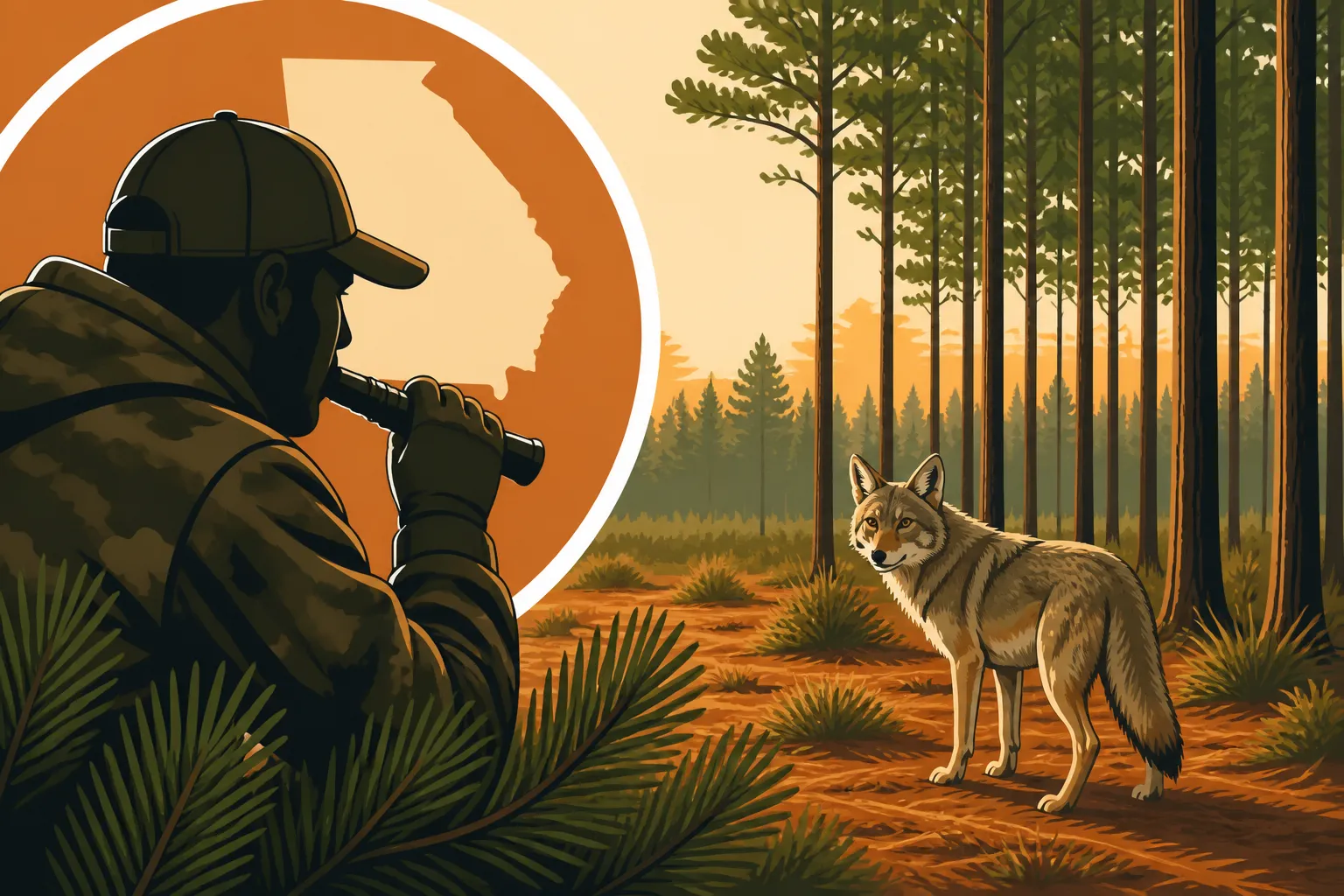
It’s a frustration many of us face out in the Georgia woods: you’re working tirelessly to manage your deer herd or bring in a gobbler, only to feel like a constant stream of coyotes and bobcats are undermining all your efforts. These elusive predators can decimate fawn crops and turkey poults, making it feel like an uphill battle. This guide is here to equip you with proven strategies and practical advice for effectively calling and managing predators in Georgia’s sprawling pine plantations, turning that frustration into successful control.
Understanding the Predator Landscape in Pine Plantations
Georgia’s pine plantations, with their dense rows of trees, varying stages of growth, and interspersed clear-cuts, create a unique and often ideal habitat for predators. Unlike open agricultural fields or mature hardwoods, these areas offer a mix of dense cover, travel corridors, and abundant prey, making them prime territory for coyotes and bobcats. To effectively hunt these animals, you first need to understand why they thrive here and how they behave within this specific environment.
Prey Abundance and Cover
One of the primary reasons predators gravitate towards pine plantations is the sheer abundance of prey animals. Young pine stands, especially those in the 3-10 year growth stage, provide incredibly dense cover for whitetail fawns, turkey poults, rabbits, and rodents. This thick undergrowth acts as a nursery and a cafeteria all in one. Coyotes and bobcats don't have to travel far to find a meal. They learn to patrol the edges of these thickets, the logging roads that crisscross them, and the clearings where fresh browse attracts deer. A keen eye, often aided by scouting tools like the GoHunt app, can help identify these prime areas before you even set up. When you're scouting Georgia public land before season, pay close attention to the transition zones between different ages of pine stands or where pines meet a creek bottom – these are often superhighways for predators looking for an easy meal.
Older pine plantations, while not as dense at ground level, still provide excellent overhead cover from avian predators for turkeys and offer clear sightlines for coyotes to stalk deer. The open understory in mature pines can also be surprisingly productive, often having a carpet of pine straw that makes for silent travel for a stalking predator. It’s a delicate balance: enough cover for their prey to hide, but also enough open space for the predators to hunt efficiently. This understanding of prey distribution and cover density is your first step in predicting where a predator might be lurking.
Coyote and Bobcat Behavior in Planted Pines
Coyotes, being highly adaptable and intelligent canids, utilize pine plantations by often sticking to the rows of trees for concealment and using logging roads as their personal highways. They're opportunistic hunters, and the dense cover allows them to approach prey undetected. In a pine plantation, you'll often find them working edges, scent-marking prominent stumps, and traveling along the fringes of thicker bedding areas. Their home ranges can be quite large, especially in areas with lower prey density, so they're constantly on the move. They respond well to distress calls because they're always on the lookout for an easy meal or a competitor to dispatch. If you're looking for signs, keep an eye out for scat, tracks on logging roads, or even the distinct yips and howls that echo through the pines at dawn or dusk, giving you clues to their presence and density, which you can also cross-reference with information on Georgia coyote range and density.
Bobcats, on the other hand, are much more secretive and ambush-oriented. They prefer the thickest cover available, often lurking deep within dense pine regeneration or brushy creek bottoms. They're primarily interested in smaller prey like rabbits, squirrels, and birds, but they won't pass up a fawn or turkey poult if the opportunity arises. Their presence is often indicated by tracks in soft earth or sandy roads, or by the occasional scratch marks on trees. When calling for bobcats, patience and extreme stealth are paramount. They might circle downwind for an extended period, moving like a phantom through the shadows of the pines. You'll rarely see a bobcat casually strolling down a logging road like a coyote might; they prefer the shadows and the tight squeezes only they can navigate.
Essential Gear for Calling Predators in Pine Plantations
To be successful at predator calling in Georgia's pine plantations, having the right gear is just as important as knowing where and when to call. The unique environment—ranging from thick, chest-high saplings to more open, mature pine stands—demands specific equipment choices for calls, optics, and concealment. Don't just grab any old gear; think about how it will perform in the dense, often humid, conditions of a Georgia pine forest.
Choosing the Right Calls and Decoys
When it comes to calls, you generally have two main choices: electronic calls and mouth calls. Both have their place in a pine plantation.
Electronic Calls: These are incredibly versatile and are often the preferred choice for many predator hunters. Brands like FOXPRO and Lucky Duck offer a wide range of sounds, from rabbit distress to fawn bleats, and even coyote howls and barks. The advantage here is the ability to place the speaker away from your position, drawing the predator's attention away from you. This is especially crucial in pine plantations where dense cover can obscure your view until the last minute. Being able to remotely control the volume and change calls without moving is a game-changer. Imagine a coyote coming into a distressed rabbit call, but then hanging up just out of sight. A quick switch to a coyote challenge howl can often bring him in the last few yards, or send him packing if he's feeling shy. For hunters serious about maximizing their chances, investing in a quality electronic call with a diverse sound library is a must. These are particularly effective when you are trying to attract coyotes across larger, more open sections within the plantation, allowing the sound to carry further.
Mouth Calls: While electronic calls offer convenience, mouth calls (like diaphragms, open-reed, or closed-reed calls) provide a raw, authentic sound that some hunters swear by. They also require no batteries, are lightweight, and can be used to add realism or subtle nuances that an electronic call might miss. A good mouth call can imitate a wide range of distressed prey sounds, from a cottontail rabbit squeal to a bird in distress. For bobcats, a very soft, high-pitched mouse squeak can be incredibly effective, and this is often best achieved with a mouth call. They are also excellent for follow-up calls when a coyote or bobcat hangs up, allowing you to make small, subtle sounds without reaching for a remote. Many experienced callers will use an electronic call for their primary sequence, then switch to a mouth call for those critical final seconds as the predator closes in, providing hyper-realistic sounds that can seal the deal.
Decoys: Motion decoys, often resembling a flailing rabbit or a fluttering bird, can add a visual element that is often the final piece of the puzzle for a wary predator. Placed near your electronic call, a decoy can help predators pinpoint the source of the sound and keep their eyes off your hiding spot. In a pine plantation, where sight lines can be limited, even a subtle motion can be enough to draw a predator's gaze away from your concealed position. They work exceptionally well for both coyotes and bobcats, tapping into their predatory instincts.
Optics, Scent Control, and Concealment
These three elements are crucial for any successful predator hunt, especially in the challenging environment of a pine plantation.
Optics: Good binoculars are indispensable. You'll be scanning dense cover for any flicker of movement or the tell-tale shape of an ear or tail. An 8×42 or 10×42 binocular is ideal for picking apart the shadows and rows of pines. Since predators often approach stealthily and try to circle downwind, you need to be able to spot them at a distance before they spot you. A rangefinder can also be useful, especially in more open sections, to gauge distances for ethical shots. When you're glassing for any movement, especially in low light conditions common at dawn or dusk, quality optics make all the difference. Many hunters rely on these tools when still-hunting South Georgia pine flats for deer, and the principles translate perfectly to predator hunting.
Scent Control: Coyotes and bobcats have an incredible sense of smell. Ignoring scent control is a surefire way to educate local predators and send them packing before they even appear. Wear scent-free clothing, use scent eliminator sprays, and be mindful of wind direction at all times. In the humid Georgia air, your scent can hang heavy and travel surprisingly far. Consider showering with scent-eliminating soap before your hunt and storing your hunting clothes in airtight bags with natural scent-absorbing materials. Even the slightest whiff of human odor can cause a predator to veer off course or spook entirely.
Concealment: Camouflage is key. While full camo is essential, it's just the starting point. In pine plantations, blending in with the vertical lines of the trees is crucial. A good head net and gloves are non-negotiable to break up your human outline. Ground blinds can be extremely effective, particularly those brushed in with natural vegetation from the area. If you're sitting without a blind, always break up your silhouette against a wide tree trunk or in a thicket. Remember, predators are constantly scanning for anything out of place. The uniform rows of pines can sometimes work against you if you're not well-hidden. Think about how hunters set up for turkey tactics for Piedmont field edges; the same careful attention to breaking up your outline applies here.
| Call Type | Pros | Cons | Ideal Scenario in Pine Plantation |
|---|---|---|---|
| Electronic Call | Wide sound variety, remote placement, volume control, hands-free operation | Battery dependent, can be costly, less "raw" sound | Covering large areas, shy predators, drawing attention away from hunter |
| Mouth Call | Authentic sounds, lightweight, no batteries, subtle nuances | Requires practice, limited volume/range, requires hand movement | Close-range calling, finishing wary predators, bobcats |
| Decoy | Adds visual realism, distracts predator's attention | Can get tangled in dense cover, additional gear to carry | Openings within pines, complementing calls, especially for wary animals |
Effective Calling Strategies and Setups
Calling predators in Georgia's pine plantations isn't just about making noise; it's about executing a well-thought-out strategy. The dense environment, coupled with the wary nature of coyotes and bobcats, requires careful planning of your calling sequences, optimal stand placement, and diligent wind management.
Mastering Calling Sequences
The art of predator calling lies in the sequence. Most hunters start with a general distressed prey sound, typically a rabbit in distress, at a moderate volume. After a minute or two, if nothing appears, increase the volume slightly and try another minute or two. This mimics a struggling animal that might be further away or having a more intense struggle. Wait quietly for about 5-10 minutes between sequences, constantly scanning your surroundings. Patience is your best friend here. If nothing shows up after 15-20 minutes, consider switching to a different distressed sound – perhaps a bird in distress or a fawn bleat – to see if a different appeal sparks interest.
For coyotes, don't be afraid to incorporate howls. A lonesome howl can bring in a curious coyote, or a challenge howl can antagonize a territorial male. Sometimes, starting with a series of soft, inquisitive howls, followed by a distressed prey sound, can mimic a coyote investigating a potential meal. Then, if they respond or if you hear howls in the distance, you might transition to a more aggressive challenge howl. Remember, coyotes are social animals, and they are keenly aware of other coyotes in their territory. Using a mix of prey distress and coyote vocalizations can be very effective. Many of the same principles apply when calling a Georgia gobbler off the roost, needing to adjust your volume and tone.
Bobcats, however, respond best to subtle, high-pitched rodent or bird distress calls. Think soft mouse squeaks or chick distress. These animals are much more cautious than coyotes, and loud, aggressive calls can often spook them. Keep your sequences shorter and quieter for bobcats, often only 30-60 seconds of calling, followed by extended periods of silent scanning. A bobcat might take 20-30 minutes, or even longer, to slowly work its way in, using every piece of cover available. They are masters of stealth, so you need to be even stealthier. Using an electronic call allows you to control these subtle nuances much more easily, and placing it out away from your position gives you a better chance.
Optimal Stand Placement and Wind Management
Where you set up your stand is perhaps the single most critical factor in predator calling success. In pine plantations, you're constantly battling limited visibility. You need to find a spot that offers the best possible view of multiple travel corridors while still providing excellent concealment.
Elevation and Visibility: Look for any slight elevation change – a small ridge, the top of a subtle rise, or even just the highest ground available – that allows you to see over the undergrowth. Clear-cut edges, where you can overlook the new growth, are often prime locations. Remember to scout these areas beforehand, potentially using aerial maps from the Georgia Outdoors App or GoHunt to identify potential travel routes, bottlenecks, and natural funnels. The goal is to see the predator before it sees you, and ideally, before it smells you.
Wind is King: This cannot be stressed enough. Always, always, always set up with the wind in your favor. Predators will almost always try to circle downwind to get a whiff of the "dying animal" before committing. This means they will be trying to get your scent. You need to position yourself so that any approaching predator, especially a coyote, will have to come within shooting range before it can get downwind of your exact location. This might mean setting up with the wind directly in your face, or a slight crosswind that blows your scent away from the expected approach. If you find a perfect setup spot but the wind is wrong, move. It's better to hunt a less-than-ideal spot with the right wind than a perfect spot with bad wind. Wind and thermals on a mountain ridge are a classic example of this principle, and it applies just as much in flatter pine country.
Concealment is Non-Negotiable: Once you've chosen your spot based on wind and visibility, focus on concealment. Set up against a thick tree or in a dense clump of pines to break up your outline. Use natural vegetation to further brush in your position. Minimize movement once your calling sequence begins. Every twitch or shift can be picked up by the keen eyes of an incoming predator. This might mean sitting in a pop-up ground blind on Georgia public land or climbing into a treestand if the terrain allows, especially if you expect longer shot opportunities.
Common Pitfalls to Avoid
Even experienced callers make mistakes, and pine plantations can amplify them.
Calling Too Loudly or Too Long: This is a classic rookie error. Overcalling can overwhelm predators, especially bobcats, and make them suspicious. Start soft and build up if needed. Also, resist the urge to call continuously. Predators often take time to investigate. Giving them silent periods to approach, thinking the "coast is clear," is crucial. When hunting feral hogs over bait at night, you learn to be patient; the same applies here.
Ignoring the Wind: As mentioned, this is the biggest mistake. A predator's nose is its most powerful tool. If they smell you, they're gone, and they often become educated to your specific calling location. Always confirm wind direction before and during your setup.
Lack of Patience: Predator hunting requires immense patience. Animals rarely charge in immediately. Coyotes may circle for minutes, while bobcats might take half an hour to appear, moving in agonizingly slow increments. Don't pack up after ten minutes; give each setup at least 20-30 minutes, and often longer for bobcats.
Poor Concealment and Movement: Predators are constantly looking for danger. Any unnatural movement or outline will send them scattering. Remain still, keep your face and hands covered, and avoid fumbling with gear.
Not Varying Your Calls: If one call isn't working, don't stick with it indefinitely. Switch it up. Try different distress sounds, add some coyote vocalizations, or alter the intensity. Sometimes, a change is all it takes to pique a predator's interest.
Safety and Regulations for Predator Hunting
Just like with any other form of hunting in Georgia, understanding and adhering to the safety guidelines and legal regulations for predator calling is paramount. Not only does it ensure your personal safety and the safety of others, but it also helps preserve the integrity of our hunting heritage. The state of Georgia has specific rules, and being informed is your responsibility.
Licensing and Legal Considerations
Before you even think about heading into a pine plantation with a call, you need to ensure you're properly licensed. In Georgia, a basic hunting license is required for residents and non-residents alike to hunt coyotes and bobcats. You can easily purchase these online through the Go Outdoors Georgia platform. This license typically covers a wide range of game, but always double-check the specifics. For example, a Georgia resident hunting license option often bundles various privileges, but it's essential to confirm that predator hunting is included.
One of the great things about predator hunting in Georgia is that coyotes, being a non-native, invasive species, can be hunted year-round with no bag limit. This offers incredible flexibility. Bobcats, as a native furbearer, have a defined season, typically running from October through February or March, and usually require a trapping license or a hunting license with a furtaker endorsement, depending on how you pursue them. Always consult the current Georgia Hunting Regulations guide published by the Georgia Department of Natural Resources (DNR) to confirm specific season dates, bag limits, and licensing requirements for bobcats, as these can change. There are no restrictions on hunting hours for coyotes, but for other species, like bobcats, legal hunting hours are typically from one-half hour before sunrise to one-half hour after sunset. If you're considering night hunting for coyotes, which is permitted, be aware of Georgia night hog hunting light rules as similar considerations may apply, often requiring specific light sources.
Firearm regulations also apply. Generally, any legal hunting firearm can be used for coyotes and bobcats. However, always be mindful of local ordinances, especially if you are hunting near populated areas or within suburban archery-only zones. When considering a firearm, understanding Georgia minimum rifle caliber rules can ensure you’re using an appropriate and ethical tool for the job.
Ethical Hunting Practices
Ethical hunting goes beyond just following the law; it's about respecting the animals you pursue, the land, and your fellow outdoorsmen.
Shot Placement: Always strive for a clean, humane kill. This means taking shots only when you have a clear, unobstructed view of the animal and are confident in your ability to place the shot accurately. In dense pine plantations, this often means waiting for a closer shot than you might take in more open terrain. Never take a Hail Mary shot into thick cover, hoping to connect. You risk wounding an animal and losing it, which is the antithesis of ethical hunting.
Respecting Property Lines: Always know where you are hunting and ensure you have permission if you're on private land. Tools like GoHunt or the Georgia Outdoors App with their mapping features can clearly show property lines, helping you avoid accidental trespassing. If you're on public land, understand the boundaries and any specific regulations for that Wildlife Management Area (WMA) or National Forest land. For instance, knowing what Georgia trespass law requires is crucial.
Public Perception: Predator hunting can sometimes draw negative attention from those unfamiliar with its purpose. Conduct yourself professionally and ethically to uphold a positive image for hunting. This means being discreet, cleaning up any spent casings or trash, and never flaunting your harvest in a disrespectful manner. Remember, we are stewards of the land and its wildlife, and our actions directly impact public opinion of hunting.
Blaze Orange Requirements: While not always mandatory for predator hunting in Georgia, if you are hunting during a firearms deer season, blaze orange requirements are in effect. Even if not required, wearing blaze orange or blaze pink can significantly increase your visibility to other hunters, especially if you are hunting on busy public land. When considering how much blaze orange Georgia requires, it's typically a minimum of 500 square inches above the waist, visible from all sides. Safety should always be your top priority, particularly when hunting areas that might also see other recreational users or other hunters pursuing different game.
Disclaimer
Always consult the most current Georgia Department of Natural Resources hunting regulations before heading afield. Laws and seasons are subject to change, and it is the hunter's responsibility to be informed and compliant.